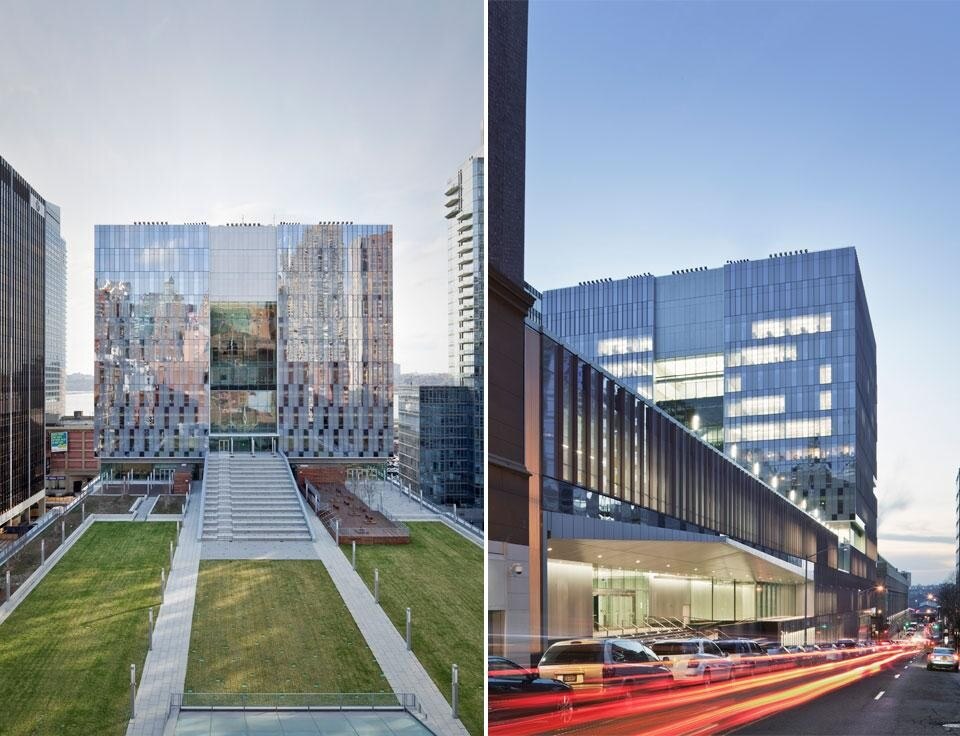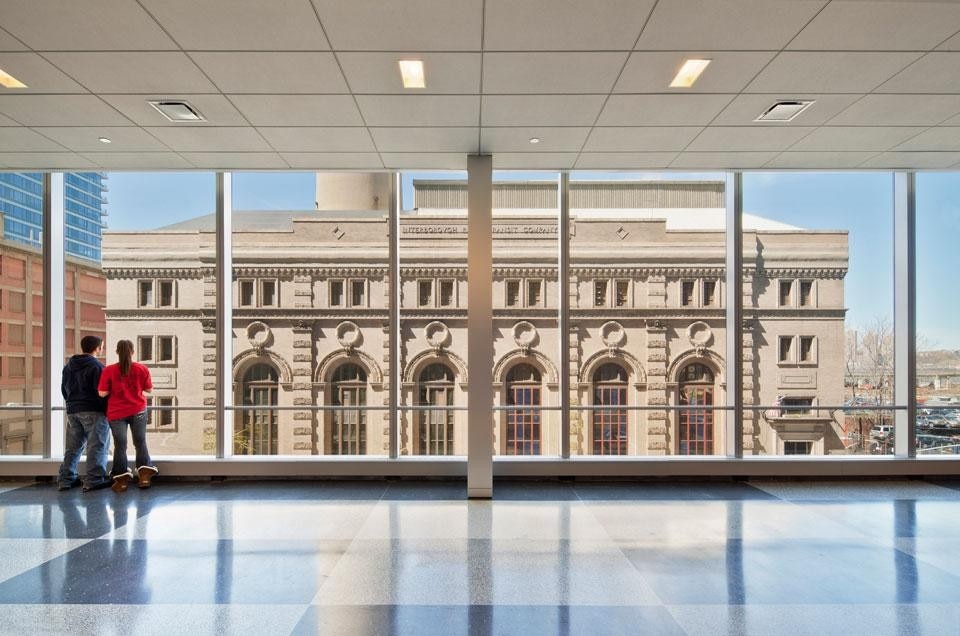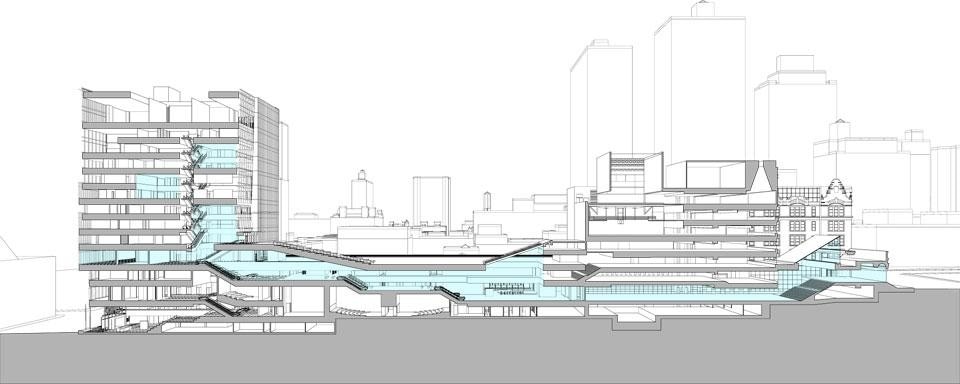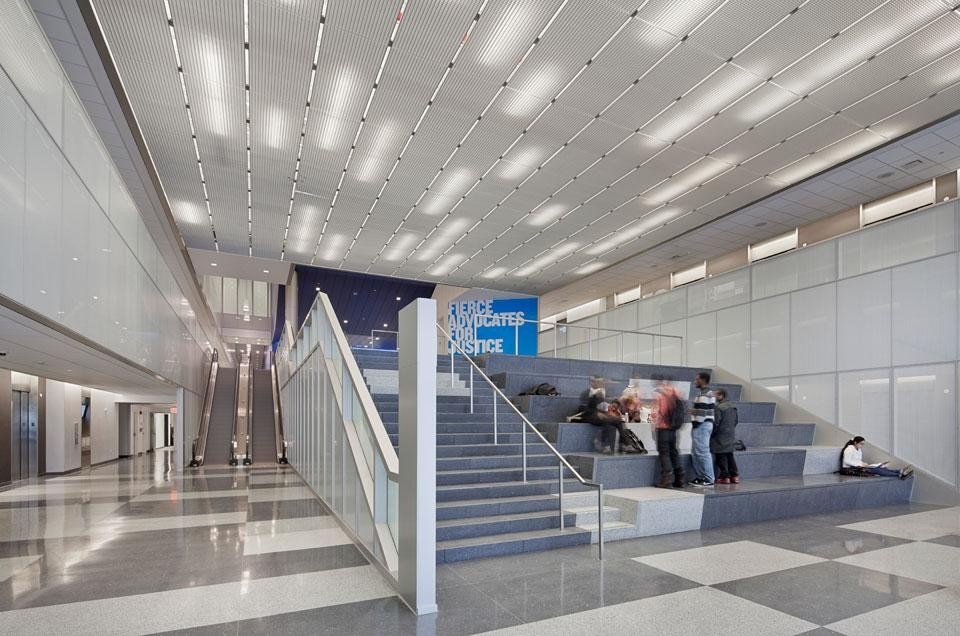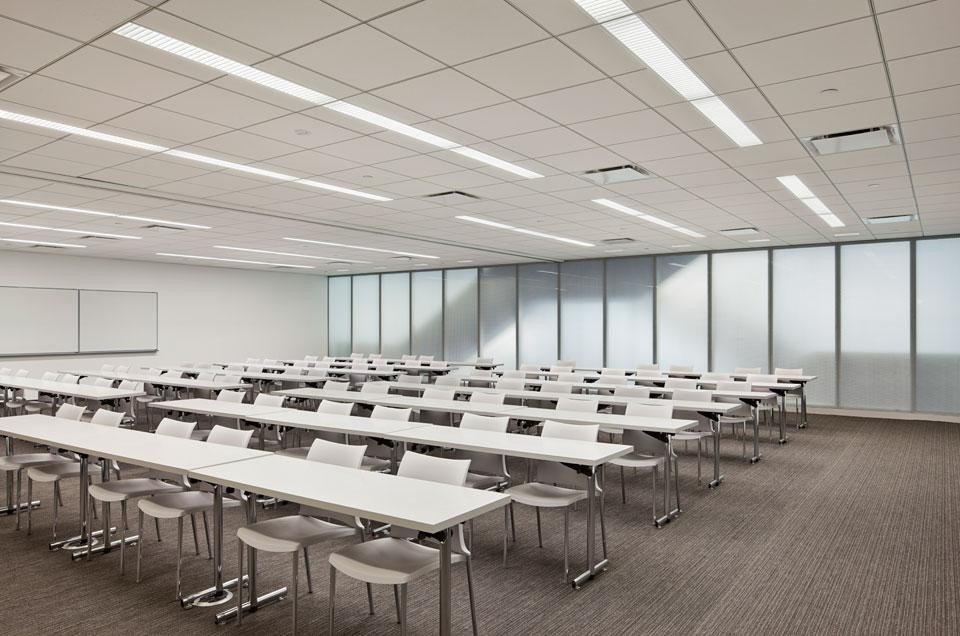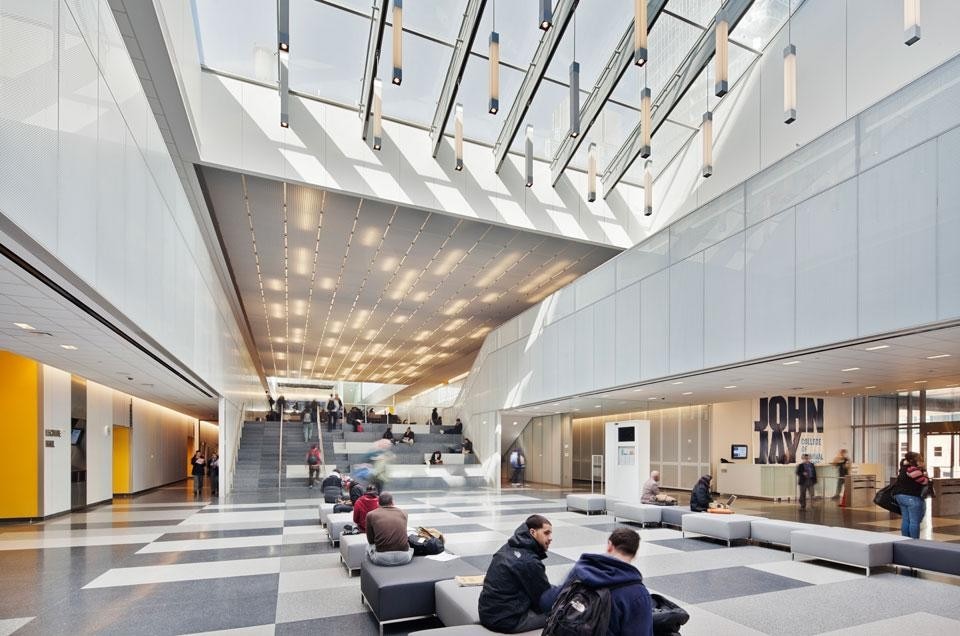
A handful of blocks northwest of the institutional site of Manhattan's entombed heart, Skidmore Owings & Merrill's (SOM) new 58,000 square metre extension of the John Jay College of Criminal Justice, described by design partner Mustafa K. Abadan as a "campus within a building", is a work that consciously attempts to conjure a range of associations, from the pulsating canvas of Boogie-Woogie to the organizational potential offered by the city's street grid. It is also a project that by virtue of its pedigree must invariably contend with the storied legacy of SOM New York, a firm whose faceless conceit belies a strong track record of elevating the mundane to a level approaching art in a city with a history of doing the same. In a list that hardly bears repeating, but whose recitation is demanded if for no other reason than New York hubris, projects such as Lever House, Manufacturers Hanover Trust, Chase Manhattan Bank, Pepsi-Cola World Headquarters, 9 West 57th, and more recent additions such as 101 Warren Street, 7 World Trade Center, and the Time Warner Center have come to define the built environment of post-war Manhattan and comprise a Modernist canon so insular, that evolution by means of escape seems both daunting and criminal. If in 1947 Henry-Russell Hitchcock proposed that architectural production would assemble its ranks behind the "genius" and "bureaucracy" divide, one wonders today that as the named "geniuses" have as often as not flagged in their capacity to deliver genuine surprise, the bureaucratic anonymity of firms such as SOM might exist to deflect the burden of perpetual innovation away from the individual architect, engendering both the freedom to fail and, if fully embraced, the opportunity to produce unexpected moments of quality, or at the very least, interest. In many respects, John Jay delivers such a moment.
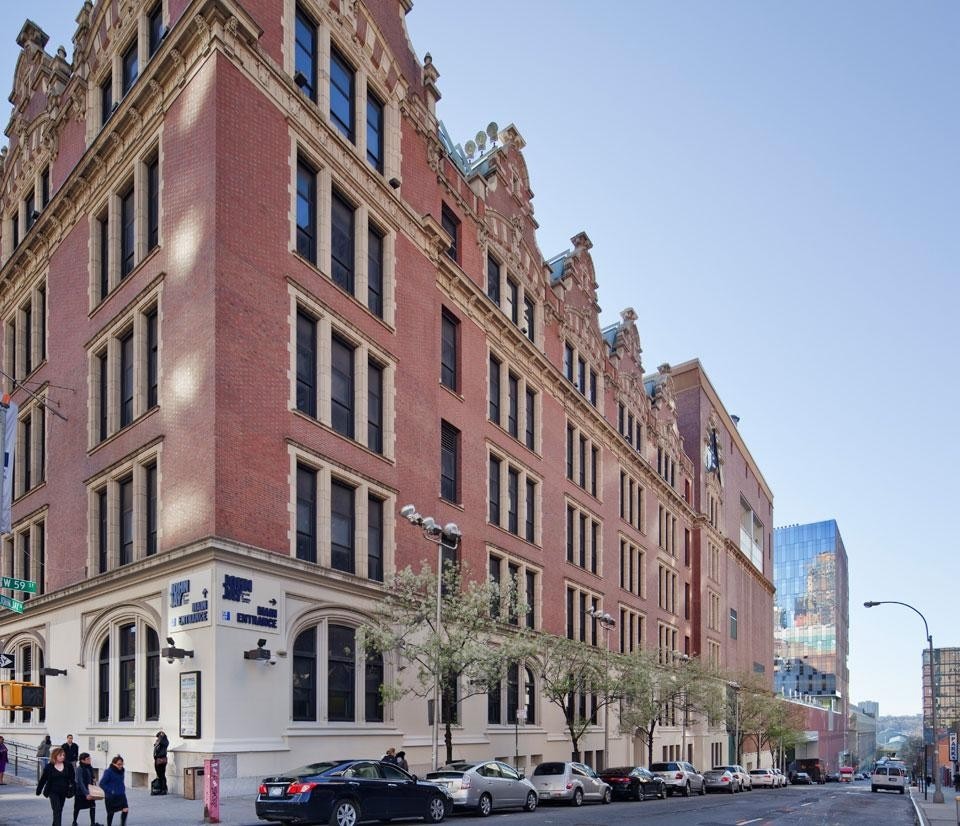
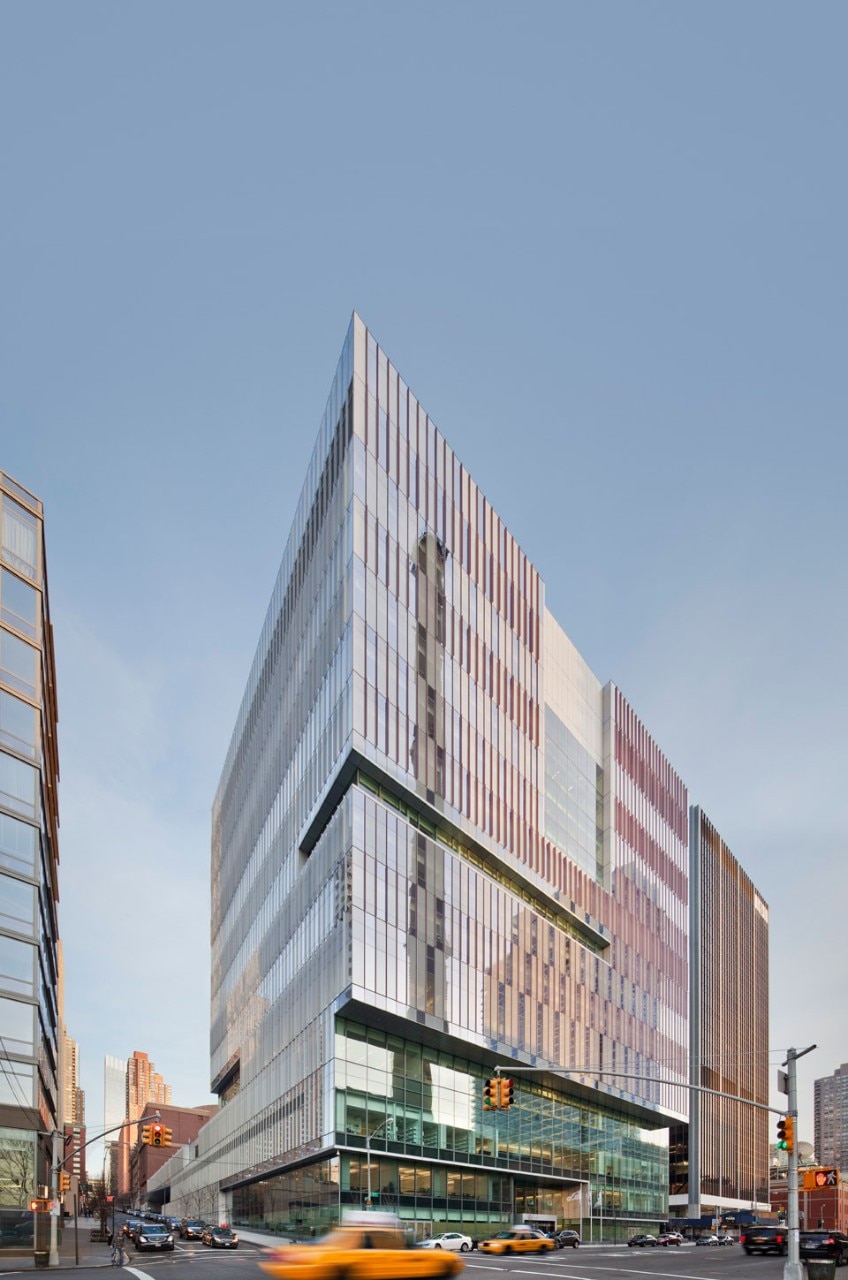
With John Jay, SOM has composed an inspired work that raises the neighborhood's architectural stakes largely from within the terms set forth in the city's familiar game