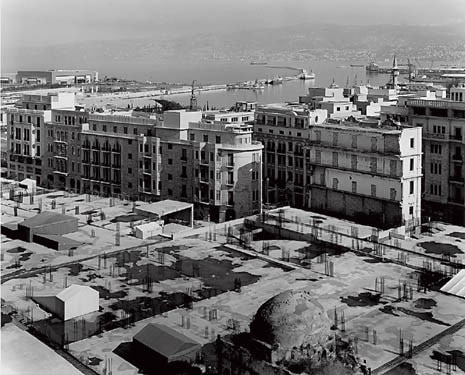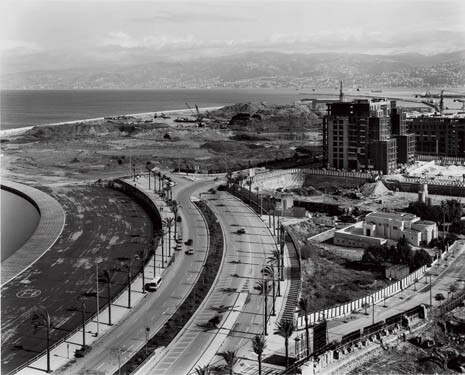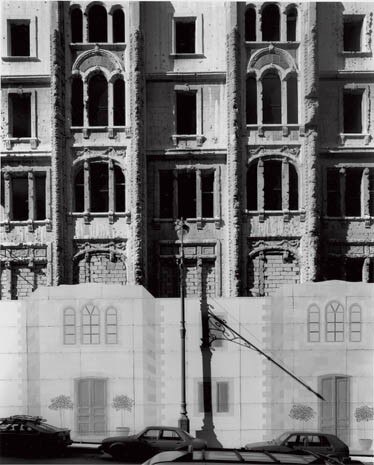
Building on the ruins. Rita Capezzuto looks at the strategy for bringing life back to the city.
The sarcastic suggestion that cities badly damaged in more or less recent wars are destroyed twice over, first by bombs and shellfire and then by reconstruction, has become a polemical commonplace. The Prince of Wales has actually claimed that the Luftwaffe’s contribution to the face of contemporary London was less damaging than that of post-war planners, and similar arguments have been made for both Berlin and Beirut. Although calculated to spark debate, comments of this kind clearly demonstrate the complexity of the cultural and strategic climate in which devastated urban areas that have been stripped of their identity must be rebuilt.
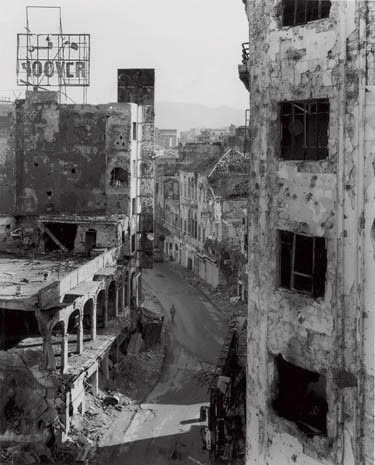
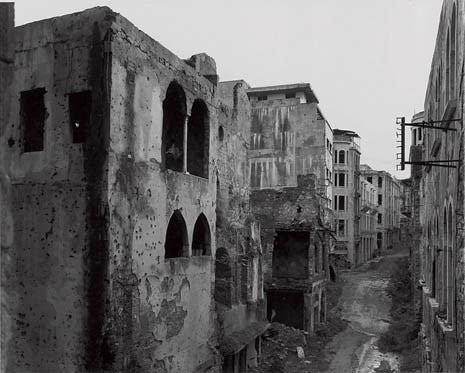
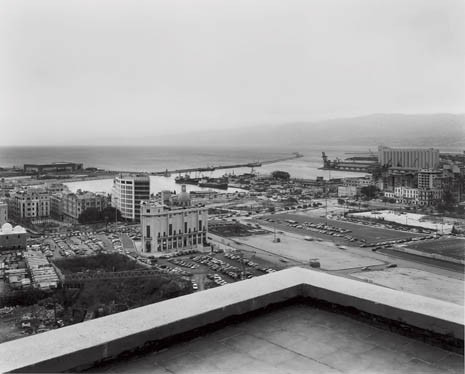
In the absence of colossal vested interests that stand to make massive profits from redevelopment, it might just be possible to say a few positive things for tabula-rasa replanning and historical amnesia as means of helping to erase a painful past. It is harder to justify such an approach when a city’s urban history is so dense and so clearly and richly marked by its traces as it is in Beirut. Along the 4.5-kilometre green line – an almost romantic term for the border that divides the city centre into east and west and where, for 15 years, the civil war between Christians and Muslims raged with appallingly brutal violence – there was too much archaeology, too dense an historical fabric and too many remnants of surviving buildings to allow a clean sweep to be made.
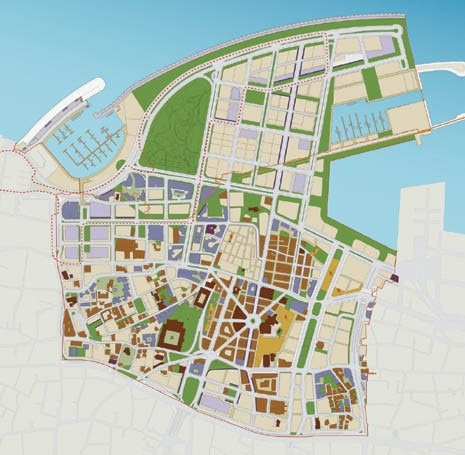
To its credit, Solidere, the development company appointed to rebuild Beirut’s city centre, understood this. At the end of the conflict, Solidere rejected the first master plan, drafted in 1991 by the architect Henri Eddé, because it did not do justice to the city’s historic remains. A second plan, more sensitive to the protection of ancient monuments and to the restoration of the distinctive qualities of the area, was published in 1993.
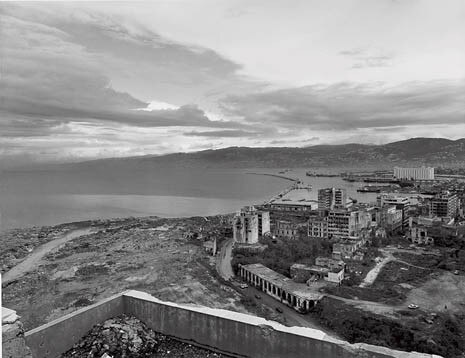
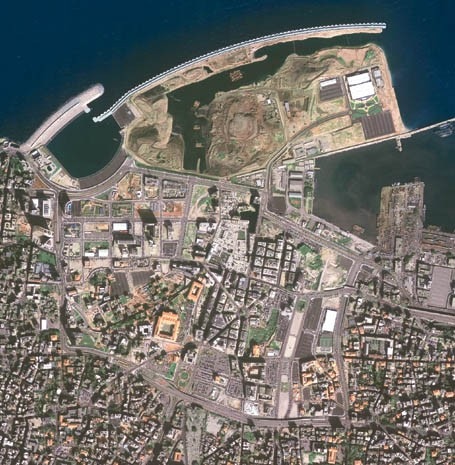
But in the meantime, what was left of the souk (already partly demolished in 1983) had been razed to the ground, and many other ruins had been removed, the rubble used to build a peninsula of land reclaimed from the sea north of the city. This created extra land for construction but dramatically altered the natural coastline.
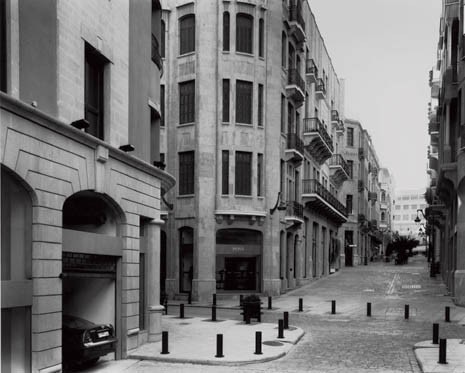
In the ten years that have passed since the second plan was published, central Beirut has taken on the appearance of a jigsaw puzzle, pieced together with difficulty. There are the elegant, carefully restored urban blocks around Place de l’Etoile, where luxury shops and restaurants accommodate Solidere’s expressed desire to create a ‘centre for shopping and leisure’. In these yellowish-pink stone buildings with high porticos, offices and homes manifestly cater only to the well heeled.
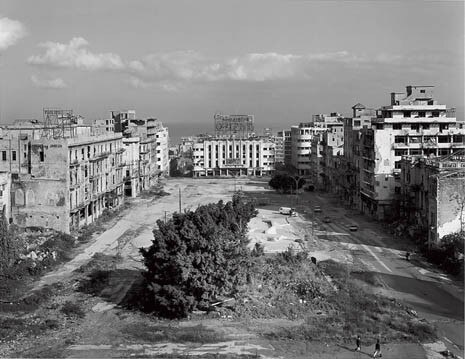
There are also areas waiting to be rebuilt: remains of walls still riddled with bullet holes and overgrown with vegetation, and spectral concrete skeletons, such as Murr Tower, where snipers once lurked. The large and once pivotal Place des Martyrs is now a shapeless clearing surrounded by highways. The only landmark here is the old Opéra Cinema, built in the 1930s and now restored and occupied by a Virgin Megastore. To rebuild this square, Solidere is considering an international invitational architectural competition.
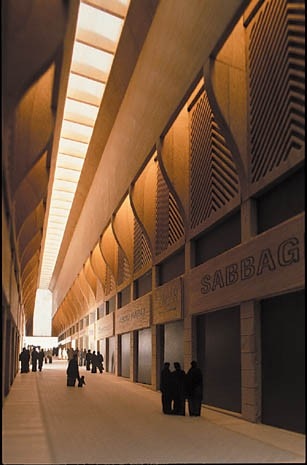
Then there are the building sites. Some are recently finished, such as the restored Emir Munzer mosque, dating from the Omayade and Mameluke periods, while others have been blocked for years. Rafael Moneo’s new souk, the winner of an architectural competition in 1996, is still undergoing excavation; it has been held up by a two-year delay caused by problems related to regulations governing what Angus Gavin, the manager of the urban development division at Solidere, calls ‘the city’s largest concentration of retail and entertainment activity’.
A special decree is awaited from the Lebanese cabinet before work can restart. Yet this project is crucial to any revitalization of the urban centre, especially in view of the deep social significance associated with this traditional feature of Middle Eastern life. Near Moneo’s souk will be located other smaller markets that will trade in gold and jewellery. These were designed by the architect Kevin Dash, who is also responsible for the well-regarded, newly completed Audi Bank building a few blocks away. The underground structures for the large retail area, including parking for 2,000 cars, have already been built, and the first building lot will probably be delivered by the end of next year.
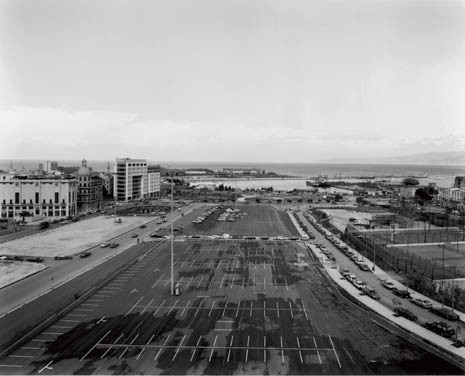
The stretch of seafront built of excavated rubble, a particularly delicate spot on the master plan, is still very much liable to variation. Besides criticism from those who believe the alteration of the seashore is invasive and purely speculative, the Port Authority has taken it upon itself to control the first of the two docks soon to be built, thereby necessitating a planning amendment. Skidmore, Owings & Merrill, Sasaki Associates and Parsons Brinckerhoff have been involved in the drafting of the project for a park and probably a world trade centre. There is even talk of fitting in a Formula One racetrack in the engineering style of the one in Monte Carlo. The need to protect this new land from water entailed a massive engineering effort. The result is a dam of prefabricated concrete blocks and treatment of the seabed along a front one kilometre in length and a hundred metres wide to combat breaking waves.
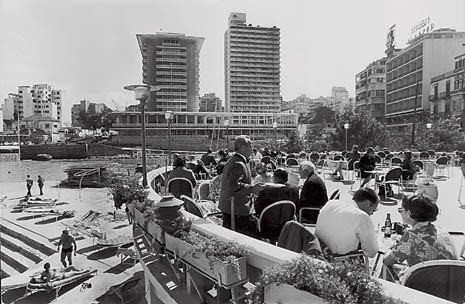
The costs of the central district are high, but investors are not lacking. Infrastructure improvements will undoubtedly bring with them important boosts to land values and rents for the area, which is directly linked to the Corniche and its luxury hotels and holiday beaches for rich visitors.
Solidere has embarked on a policy of gradually attracting some of the world’s most distinguished architects to create some of the area’s new landmarks. Steven Holl will be laying out the sea promenade; Giancarlo De Carlo and the Egyptian Abdel Wahed Al-Wakil have been consulted for residential buildings in the Jewish quarter of Wadi Abu Jamil; and Terry Farrell has worked on a business and office building in the historic heart of the district. Jean Nouvel and Norman Foster are also working here. According to Gavin, when Solidere sells major sites to other developers in the area, a condition of the sale is the use of architects specified from an approved list of ten or twelve names. ‘These are carefully selected and specific to each site. We require the purchasers to select from the list or undertake a limited design competition among a minimum of three from the list’, says Gavin. Solidere is using local firms mainly on secondary sites, in an attempt to encourage a younger of generation architects. Nevertheless, not all of the results are particularly impressive.
Outside the gilded cage of the central district, whose former inhabitants, least of all the squatters paid off to move out, are unlikely to be able to afford to enjoy it, the Lebanese capital evidences the busy and chaotic activity that has always made it one of the most vibrant centres of the Eastern Mediterranean. Still marked by the period of the French mandate, the city’s growth and densification seem unaffected by any planning regulations at all, and the many different faiths of its one and a half million inhabitants seem to be reflected in a eclectic yet somehow cohesive urban image.
Prime Minister Rafik Hariri, in office since 1992 and currently heading his fifth government, is an adroit businessman and very closely identified with Solidere. With an eye on the international stage, he is more inclined toward grand image projects for the capital, such as the mammoth stadium or airport, than dealing with the less eye-catching side of urban policy. His non-profit Hariri Foundation, set up in 1979 to promote the education of young Lebanese with generous scholarships abroad, announced in December 1992 its intention to donate $1 million to the Unesco project ‘Historical aspects of rebuilding downtown Beirut’. Beirut is, in short, indeed an intricate affair.
A missed opportunity. The physical damage may have been repaired, but what happened to the people of the city, asks Assem Salam.
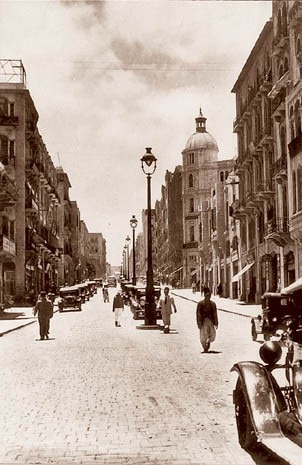
With its history spanning more than 2,000 years, Beirut’s central district remained the city’s soul and its beating heart until the start of Lebanon’s tragic 16-year civil war in 1975. It has mostly been rebuilt now, but it is hard to see it in those terms anymore. The area that has undergone reconstruction represents the oldest part of the city. Parts of its physical structure dated to the Middle Ages and to the Ottoman Empire of the mid-19th and early 20th centuries. In certain places one could still see the archaeological riches of the Hellenistic period, while many more artefacts had been buried by the growth of the medieval city. This heritage gave the area its identity and its special character, which reflected the nature of cities throughout the Mediterranean.
What is more, this remarkable history supported a diverse and dynamic social fabric. More than 130,000 people lived or worked in this 120-hectare area, representing a variety of social classes and conditions. Beirut expanded away from the centre in two opposite directions: the west was a Muslim area, while Christians concentrated in the east. But the historical heritage of the centre meant that it remained the meeting place for both communities, which lived and worked side by side. As such, it became a binding place for the two main communities of Lebanon, not to mention a physical anchor for the rapid urban development that accompanied the growth of the city in the 1950s and 1960s.
There can be no doubt that Lebanon’s prolonged civil war left considerable damage in central Beirut. However, while extensive physical damage was caused by violent acts of war, much of the widespread degradation of the area was the result not of shellfire or bombing, but of neglect. The war forced Beirut residents to move out, even as southerners displaced by the Israeli occupation flooded into the area as squatters. The most damaging result of the civil war was the loss of the city centre as a unifying meeting ground for Lebanon’s two factions. For nearly 16 years Beirut remained a city divided, both physically and culturally. The prolonged sectarian civil war nearly destroyed the foundations of the state. It ended with a political reconciliation that brought the two warring factions to accept a unified country and a commitment to heal the scars of segregation.
The process of the reconstruction of Beirut after the end of the civil war was an attempt to translate into reality the aims set out in the constitutional pact of reconciliation. Successive governments directed every effort toward the rapid rehabilitation of the city’s infrastructure, the reconstruction of destroyed urban fabric and the rapid return of refugees to their original homes. This attempt to undo the homogenization of the population that resulted from the civil war was the basis of the political strategy for reunifying the country.
The reconstruction of the capital’s central district became, symbolically, the most important challenge for the unification of the nation. The reconstruction of any war-torn city offers an opportunity to improve the quality of life and upgrade the physical fabric. The reconstruction of a city that has been divided, as well as damaged, by war is an even greater responsibility; neglecting it may result in permanent harm to the nation as a whole. If war is too serious to be left to the generals, the reconstruction of a city destroyed by war should certainly not be left in the hands of developers.
The new Beirut is the creation of Rafic Hariri, who made his fortune as a developer and builder in Saudi Arabia. He has been the prime minister of Lebanon since 1992, overseeing the implementation of the city-centre plan while at the same time holding the majority of Solidere, the private development company responsible for the project. Hariri’s urban vision seems to have been inspired by his experiences in oil-rich countries lacking in architectural or urban heritage. A full evaluation of the reconstruction plan for central Beirut, as it has been executed, must deal with the mechanisms used to carry it out, including their sometimes questionable constitutional, legal, financial and social aspects. But it is clear even without that kind of audit that some very basic issues were neglected – or rather sacrificed – during the reconstruction process.
Reconstruction cannot be carried out in isolation from neighbouring areas or by ignoring its impact on the city as a whole. The actual reconstruction plan, however, has neglected the wider city and has set itself an arbitrary limit defined by the existing ring road, at the expense of equally damaged areas outside the ring. Turned into a rapid-transit trench, this boundary will inevitably act as a moat, protecting the glossy centre from the underprivileged areas outside. Any attempt to rebuild medieval cities should not ignore the value of their urban and social heritage. No effort should be spared for rehabilitation and preservation, whatever the cost. Memory and cultural continuity are invaluable in their significance to the history of the nation as a whole, and the urban heritage is the keystone for their preservation. Especially in a city that has already seen so much destruction. Unfortunately, the execution of the reconstruction plan has brutally demolished 80 per cent of the old built environment of Beirut.
It has completely wiped out the medieval and post-medieval areas, dealing a fatal blow to the memory of a city with more than two millennia of history. Having failed to address the issue of preservation in this very special city, sacrificing it for the profits of land speculation, the scheme has dealt an irrepairable blow to the capital, wiping out its memory and identity. The plan relies entirely on the displacement of the original resident population, without giving them the right of return. It has thus emptied the centre of the human factor that once unified the city. Beirut now is more divided than ever before, and it will most likely remain so as long as the character of the future occupants remains undetermined. This is badly damaging efforts at national reconciliation.
With its highly sophisticated infrastructure, the new city centre is intended for the privileged. Such discrimination is creating severe social tensions with neighbouring areas. The original city centre had a plot-plan ratio of approximately two; widespread demolition has raised this to seven. It is extremely doubtful that reactivating the centrality of Beirut in this manner is the right decision in light of the harmful effects it will have on existing access, the public-transport system and the commercial zones that have sprung up in adjacent areas. This excessive densification seems to have been dictated more by the interests of property developers than by pure planning issues. Their negative impact is already apparent in certain areas along the seafront currently in development.
An organized, regimented network of avenues – wide roads lined with trees – has replaced Beirut’s medieval fabric. Well-defined parcels are offered to developers with sophisticated infrastructure and generous densification factors. Thus far, two small areas have been preserved and rehabilitated, one dating from the Ottoman period and the other from the 1930s and 1940s. One stands as a mute witness to the death of a city, serving as a backdrop for an inappropriate food court. The other, rebuilt in mock vernacular style, is being sold off at exorbitant prices for use as yuppie flats.
While the engineering aspects of the plan may look impressive, from the urban planning point of view it is a banal exercise in the commonplace. It lacks freshness, spontaneity and surprise, elements that could have revived the memory of the old centre. It would have been better to bring the project closer to human scale, to create an environment rooted in the Mediterranean rather than the kind of insipid developments that sprawl from Miami to the oil-rich countries of the Gulf. The reconstruction of an area as sensitive as central Beirut should not have been carried out without a well-defined and controlled government policy. This policy should have responded to political options related to the history of the site and the future role of Lebanon in the region. Eclipsed by 16 years of war, this role remains undefined, threatened by prevailing political uncertainties and the rapid development that is taking place in many neighbouring countries, whose cities are beginning to rival Beirut in its former role as a metropolis for the Arab world. Instead of implementing such a grandiose speculative project, it would have been much less risky to adopt a more flexible approach. But Beirut opted for all or nothing rather than a more organic plan capable of adjusting to future circumstances. It’s a gamble based on a vision of oil-rich Middle Eastern countries, one that is not tailored to the specifics of Lebanon.
When considering the plan of Beirut, it is impossible not to compare the city with Barcelona. Beirut misses the old centre that Barcelona still has in its Gothic quarter. It misses the old martyrs’ square that Barcelona has in Las Ramblas. It misses the historical connection it had with the sea, now obliterated by 60 hectares of landfill. And above all it misses the people that no city can pretend to exist without.