

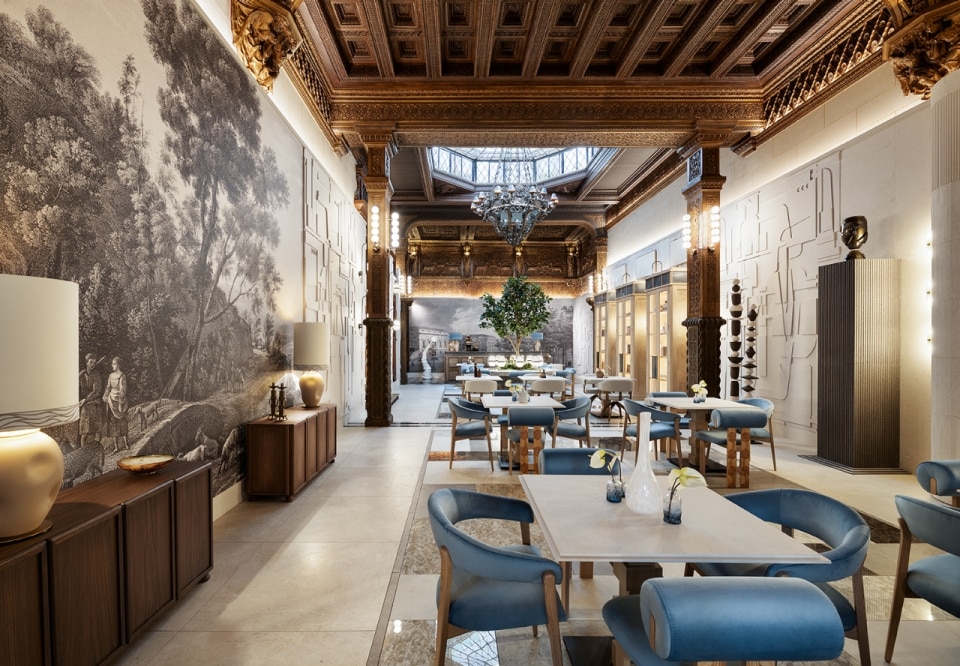
On the occasion of Casa Decor 2026, Iris Ceramica Group transforms the former chapel of a historic building in Madrid into "The Silent Chapel", a restaurant where ceramics and design dialogue with the original architecture.
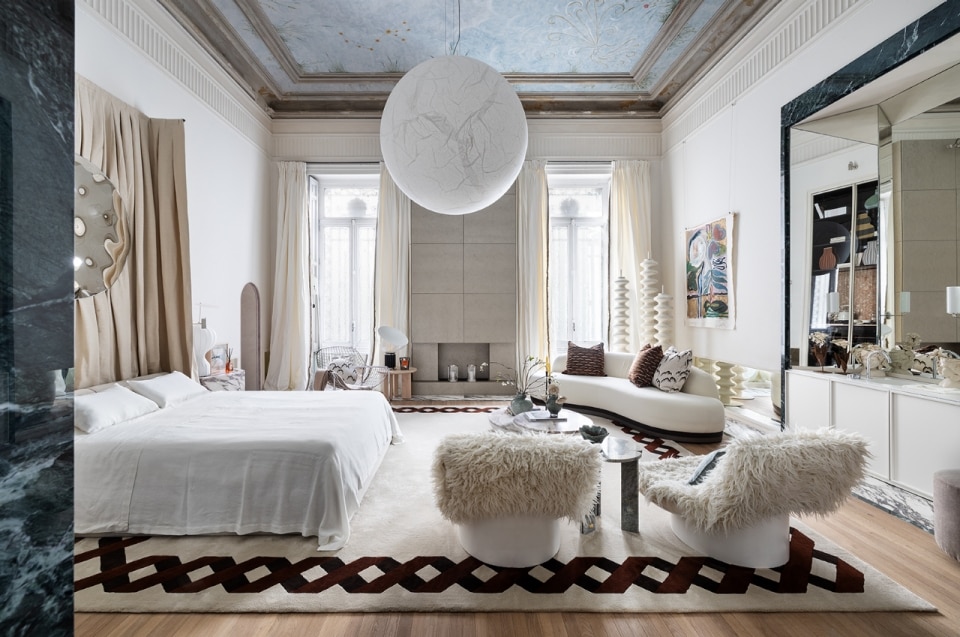
Is there a way to make the industrial avant-garde dialogue with the weight of history without one overpowering the other? Iris Ceramica Group's answer at Casa Decor 2026 is not a simple product exhibition, but a diffuse installation that runs through the rooms of a 19th-century building in Barrio de las Letras. Here, the ceramic material is stripped of its purely technical function to become a design language, capable of stitching together the different environments of the exhibition itinerary - from the conceptual kitchen of the Bauhaus space to the immersive atmospheres of the bathroom designed for ITA - through a coherent chromatic and material narrative.
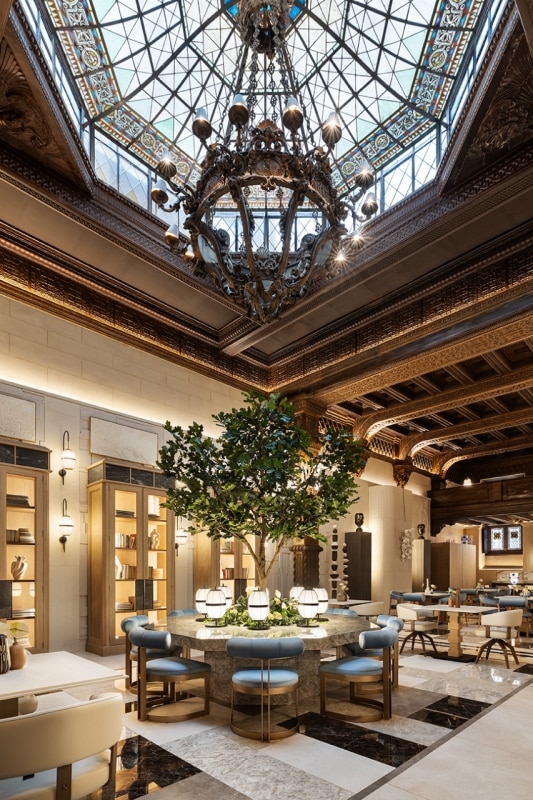
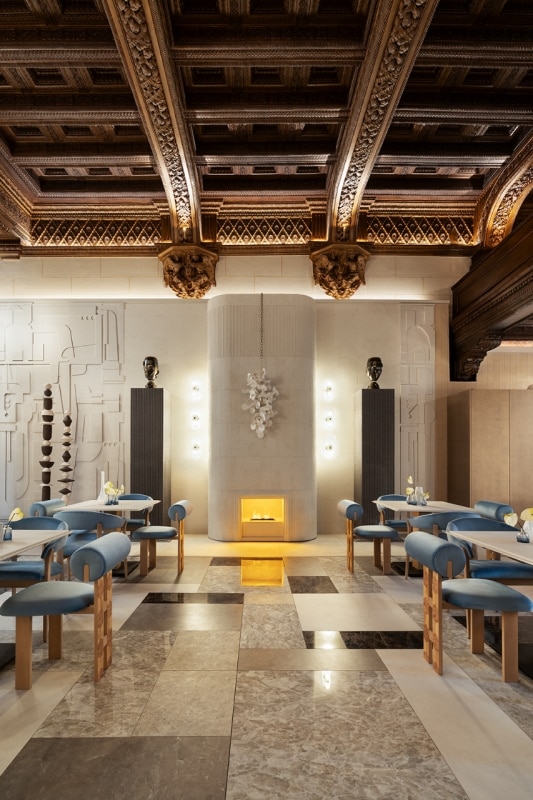
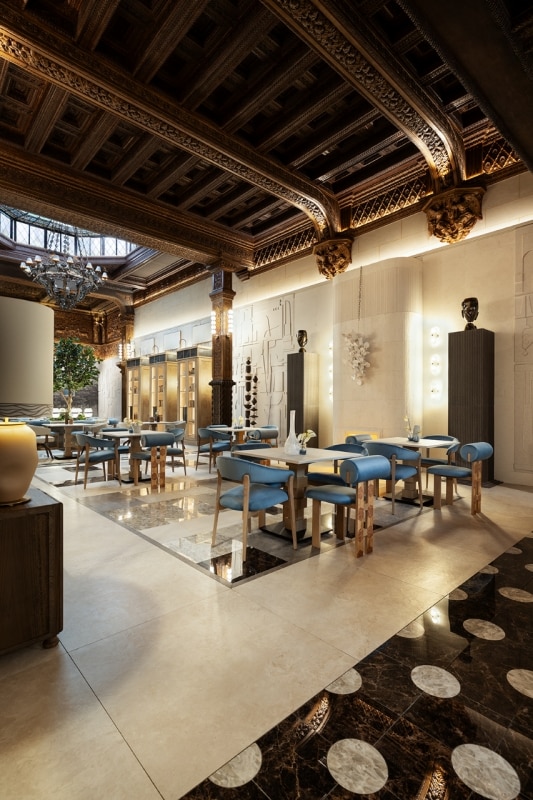
The culmination of this journey is "The Silent Chapel" a haute cuisine restaurant carved out where the Calle San Agustín school-convent once stood. Rather than simply restyling, interior designer Raúl Martins chose the path of layering: the 164-square-meter room retains the neo-Renaissance breath and natural light of the large skylight, but is reinterpreted through surfaces that evoke classical patterns and contemporary geometries. It is an intervention that respects the identity of the place, adding a new layer of memory without erasing the previous ones. Ceramic surfaces dress the space, personalizing floors, wall coverings, and even fireplaces and furniture.
An intervention that respects the identity of the place, adding a new layer of memory without erasing the previous ones.
The project is distinguished by a sartorial approach to furniture. In a collaboration that smacks of an old-fashioned workshop, Iris Ceramica Group teamed up with Galician cabinetmaker Mogno Woods, combining ceramic with natural wood. The result is unique pieces - sideboards, tables and a bookcase - where the technological stone meets the warmth of wood fiber. This "mix&match" material transforms the furniture into an extension of the architecture itself, eliminating the boundary between structure and decoration.
On the technological front, the reception and bar area becomes the stage for Sapienstone's large 4D slabs. Surfaces such as Jatoba Brown and Calacatta Aureo (in the soft Cashmere finish) cover the operational volumes of the kitchen and desk with a thickness that conveys solidity and realism. It's not just aesthetics: it's a demonstration of how ceramic technology today can compete with natural stone materials, while offering design flexibility that allows every detail, from countertops to the thinnest profiles, to be covered.
The project is distinguished by a sartorial approach to furniture.
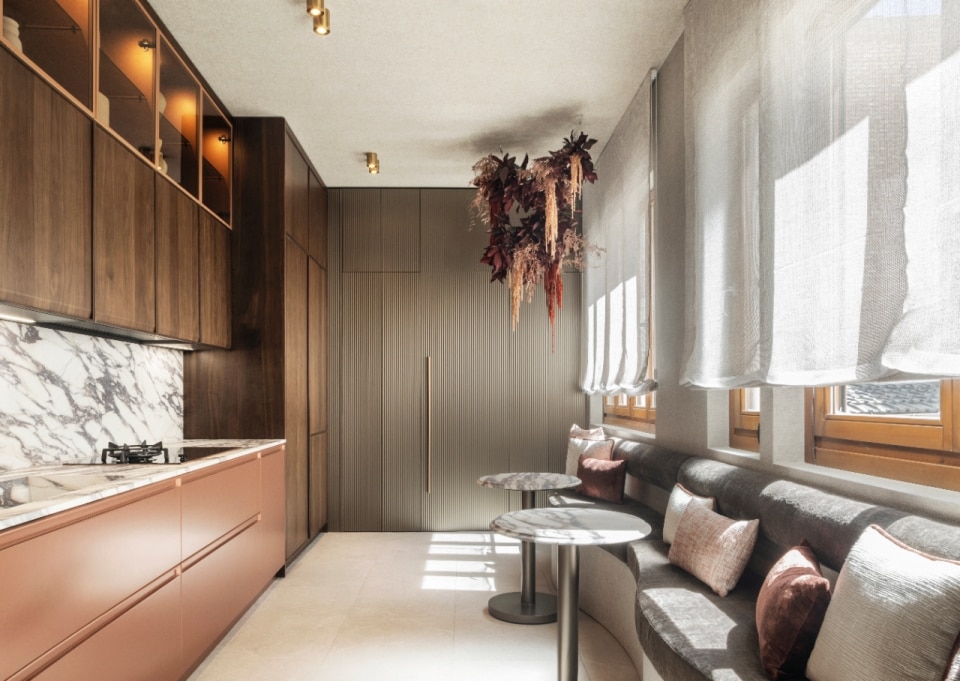
Beyond the chapel, the narrative continues with focused interventions that explore the Group's versatility. In the space "Orbit and Matter", the violet hues of marble become floor and furniture detail, while in Mar Gausachs' project for Bauhaus, ceramics become "architecture of flavor", transforming the countertop and sink into sculptural elements. Each room in the building thus becomes a cell of a larger organism, where the brand confirms its ability to adapt to different styles and needs.
The operation conducted in Madrid for this edition of Casa Decor reiterates a clear vision: innovation does not have to break with the past. Through the work of Martins, Iris Ceramica Group demonstrates that ceramics is a "living" material, capable of acting as a conduit between the noble legacy of the Marquises of Vélez and the demands of global design. "The Silent Chapel" thus remains a suspended space, where the silence of history is filled by the discreet, yet decisive voice of contemporary material.
- Project:
- "The Silent Chapel" at Casa Decor 2026
- Brand:
- Iris Ceramica Group
- Web site:
- www.irisceramicagroup.com/en