



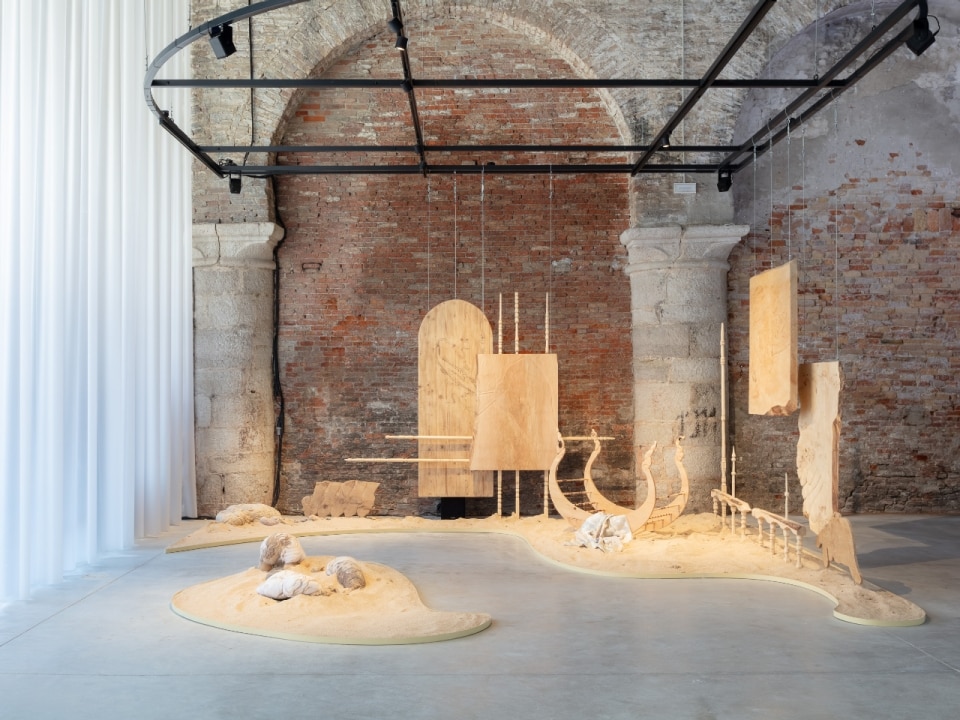
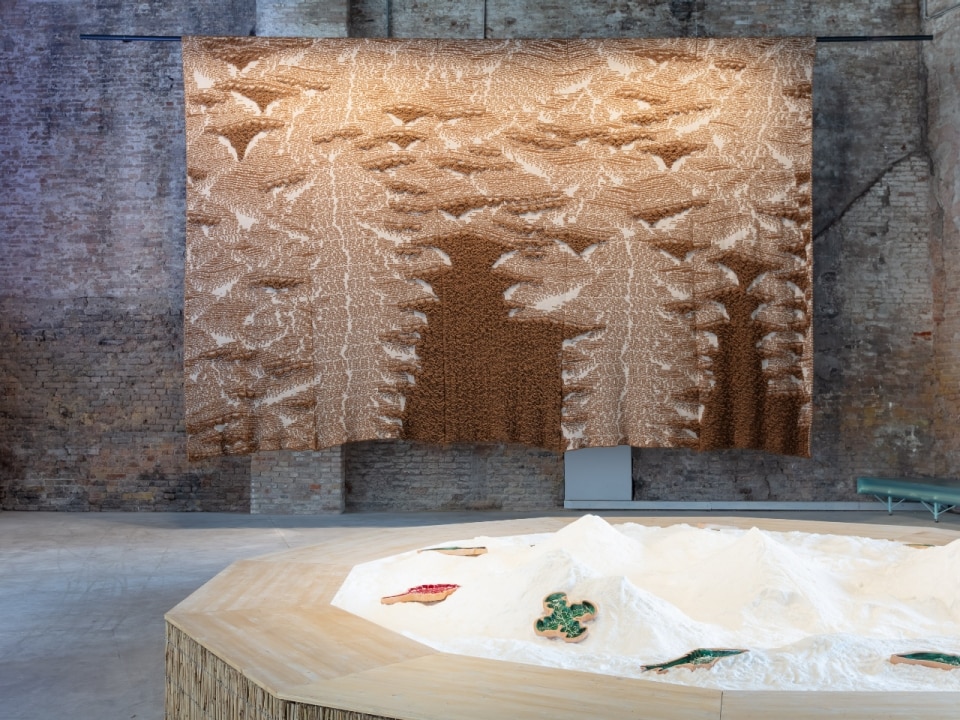
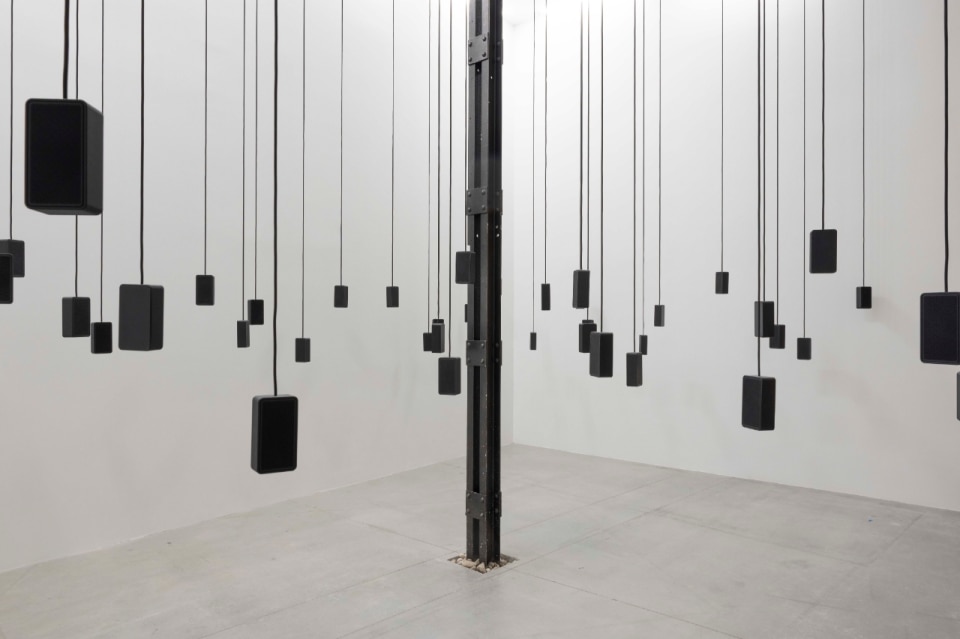
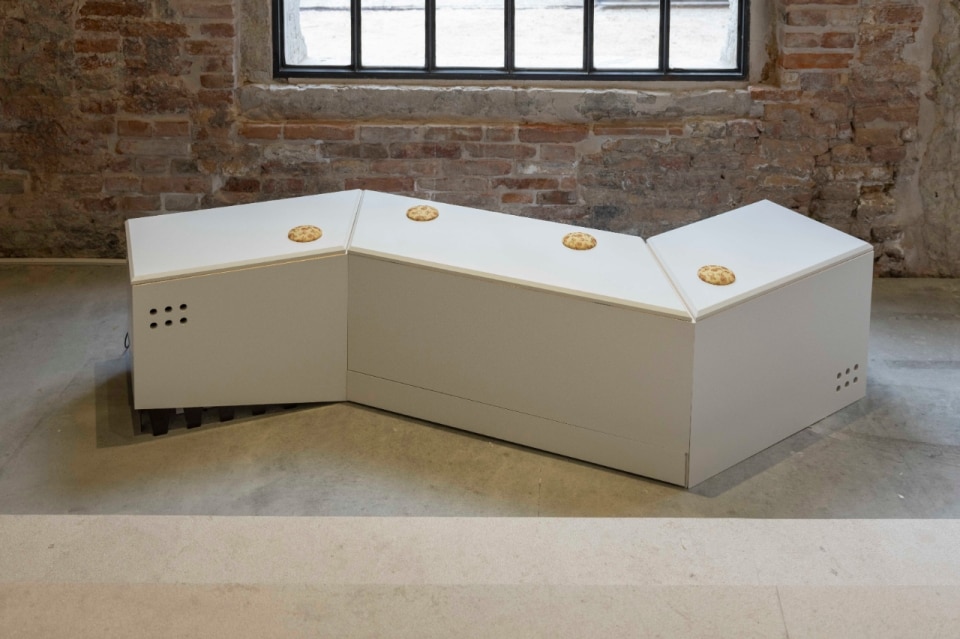
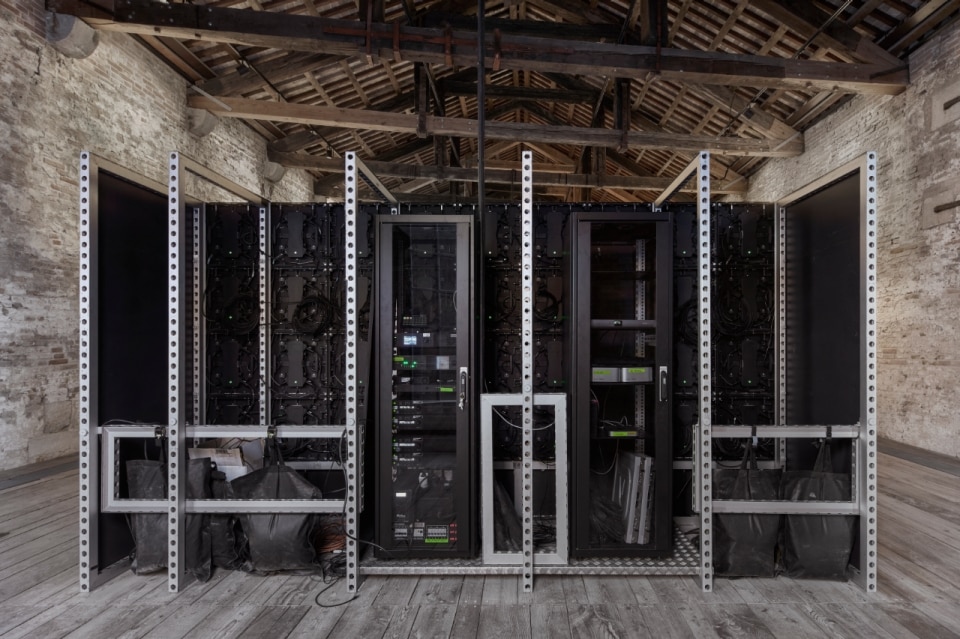
In front of the Russian Pavilion — the most talked-about alongside Israel’s at this Biennale, and not for artistic reasons — there are guards and piles of empty beer bottles. The Pussy Riot, the Moscow feminist collective known for their protests against Vladimir Putin, have just passed through with pink balaclavas, smoke bombs, and a punk rock soundtrack. A few meters away, the Dutch Pavilion tells the story of the oppression of an underground bunker, Czechoslovakia’s speaks of the world’s inability to regenerate, while Austria’s focuses on the high tides that flood Venice. On the Venezuelan pavilion, a message says that it “will be reborn soon.”
We are only at the Giardini, the second Biennale space established by Napoleon Bonaparte which hosts the historic national pavilions, and already the situation is clear: the 61st Venice Art Biennale, open from May 9 to November 22, 2026, is a context of strong messages. Even very strong ones. If during Milan Design Week geopolitics was only seen by its absence — with the almost total lack of Asian visitors — here the situation is different.
The numbers are high: 111 artists from 110 nations, with 7 countries participating in the Biennale for the first time — Guinea, Equatorial Guinea, Nauru, Sierra Leone, Somalia, Vietnam, and Qatar — which inaugurates its Venetian presence with an exhibition by Rirkrit Tiravanija while awaiting the future pavilion designed by Lina Ghotmeh. Meanwhile, collateral events and parallel exhibitions are multiplying throughout Venice, from Marina Abramović at the Gallerie dell’Accademia to Anish Kapoor at Palazzo Manfrin. And then the beautiful Canicula. Perhaps there are even too many: more than 150, the highest number in the history of the event.
The theme of this Biennale, more than in ‘minor keys’, seems to be that of a continuous tension, both political and emotional, where wars, climate collapses, colonial memories, and national identities return to violently occupy the space of art.
But these are not the only novelties: it is the first year in which the Golden Lions will be awarded by the public, following the resignation of the international jury, and one of the historical pillars of the event, the Central Pavilion at the Giardini, has just reopened after a restoration by Labics. To all this is added a sense of an epochal end: during the opening days, news arrived of the death of Georg Baselitz, one of the artists who most marked the relationship between Europe and painting in recent decades, while a large exhibition dedicated to him is on view in Venice.
Returning to the Arsenale, the first space of the event, the artist chosen for the Italian Pavilion is Chiara Camoni, in an edition much criticized for the almost total absence of Italian artists from the international exhibition. But her project ends up almost disappearing within a path dominated by much more radical and immersive works: Canada transforms its pavilion into a colonial aquatic greenhouse populated by imperial water lilies, Uzbekistan builds a universe between ecology, folklore, and speculative fiction around the Aral Sea disaster, while Chile converts the white cube into a perceptual spaceship made of wreckage, glimpses, and uncanny bodies. The United Arab Emirates Pavilion, built almost entirely on sound and listening, also contributes to this widespread sensation: at the Arsenale, you don’t just look; you step inside environments that seem to already belong to another world.
It seems (and has been) years since the theme was supposed to be “In Minor Keys,” following the death of curator Koyo Kouoh. In the meantime, many things have happened and the pavilion proposals have changed deeply following this flow. It was inevitable: art — even Italian art, which is often said to be immobile and censored — always has reactions, even if they are involuntary. And so, the theme of this Biennale, more than in “minor keys,” seems to be that of a continuous tension, both political and emotional, where wars, climate collapses, colonial memories, and national identities return to violently occupy the space of art. The “minor” key has embraced the maximalism of a world in tension and redefinition.
After years of often more controlled and predictable editions, the event returns to being a place full of contradictions, crossed by real conflicts, irreconcilable positions, and works that react directly to the present.
One final note: never before has covering the Biennale been this physically difficult. Even during the press preview days, the queues at the Giardini and the Arsenale were enormous, and the audience extended far beyond the usual art-world crowd. Some pavilions designed for a limited number of visitors — like the Dutch Pavilion, conceived as an almost claustrophobic underground bunker — inevitably become difficult to navigate and report on once they are overwhelmed with people. Perhaps this, too, is part of the atmosphere of this edition, even if it certainly does not make our work as journalists any easier.
What follow are the pavilions and exhibitions that, in our opinion, will remain from this finally “fractured” Biennale.
At the Giardini, Austria tells the story of a sinking Venice
Austria Pavilion, "Seaworld Venice" (Giardini)
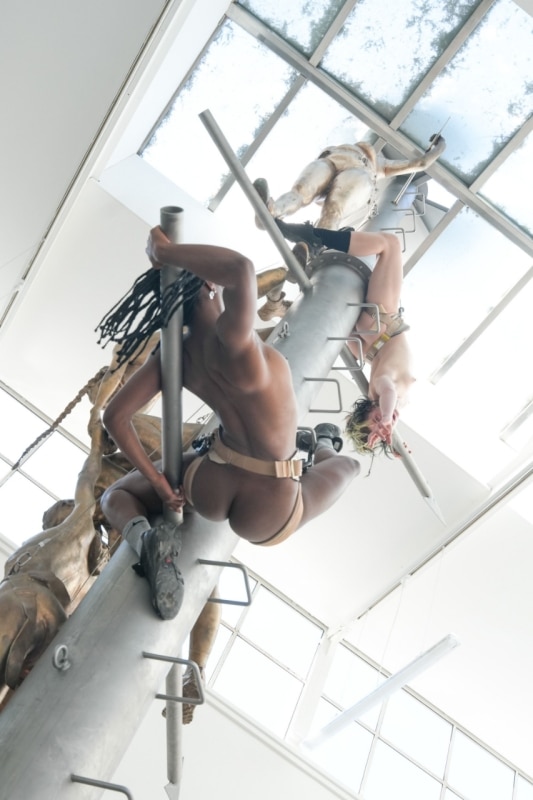
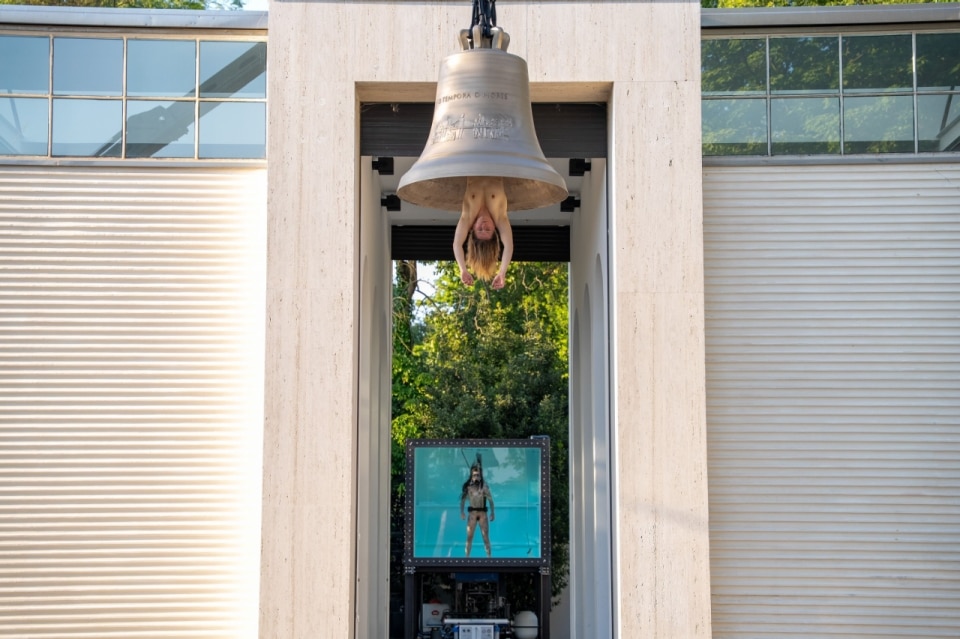
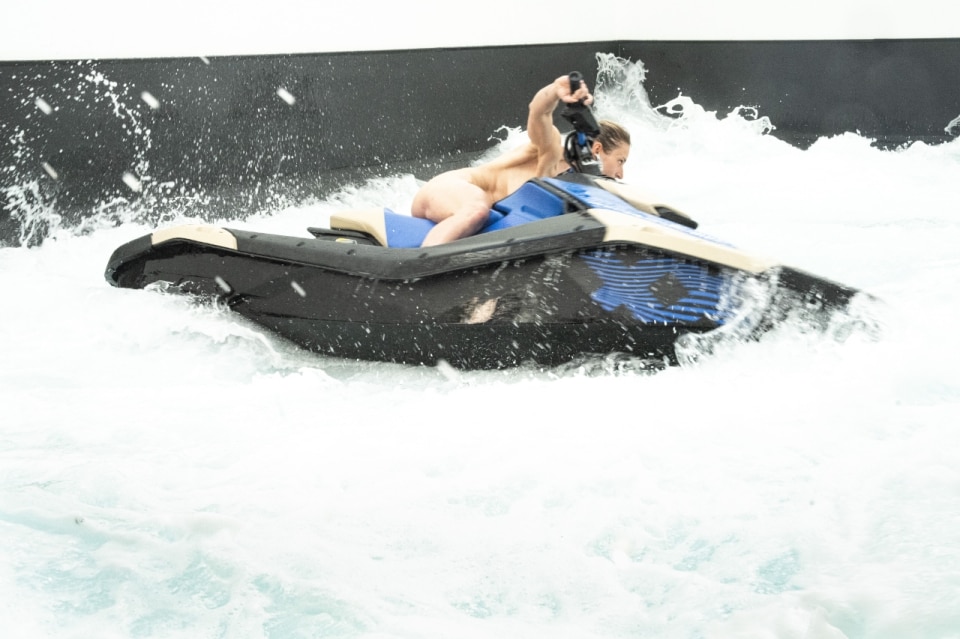
Among the most discussed pavilions of this edition, Austria signs with “Seaworld Venice” by Florentina Holzinger one of those projects that promise to remain in the history of the Biennale. The pavilion becomes a flooded landscape, halfway between a water park, a sanctuary, and a purification plant. At the entrance, a bell recovered from the lagoon is operated by a performer suspended upside down in place of the clapper, transforming the sacred toll into a secular, physical, and political gesture. Inside, performances and appearances alternate: a jet-ski circles in the water as a monument to overtourism; a contortionist bends a bow and arrows in an almost non-human pose; naked bodies climb a rotating pole-sculpture. In the courtyard, performers and robot dogs guard an altar-aquarium flanked by chemical toilet drains, where a naked woman lives in a tank with a snorkel, staring down at viewers and making the waste recycling system literal. A disturbing and post-apocalyptic rite that speaks of a humanity submerged by its own waste, and which is not that hard to perceive as real.
Giorgia Aprosio
The Biennale’s real tragic hero lives inside the Czech and Slovak Pavilion
Czechia and Slovakia Pavilion, "The Silence of the Mole" (Giardini)
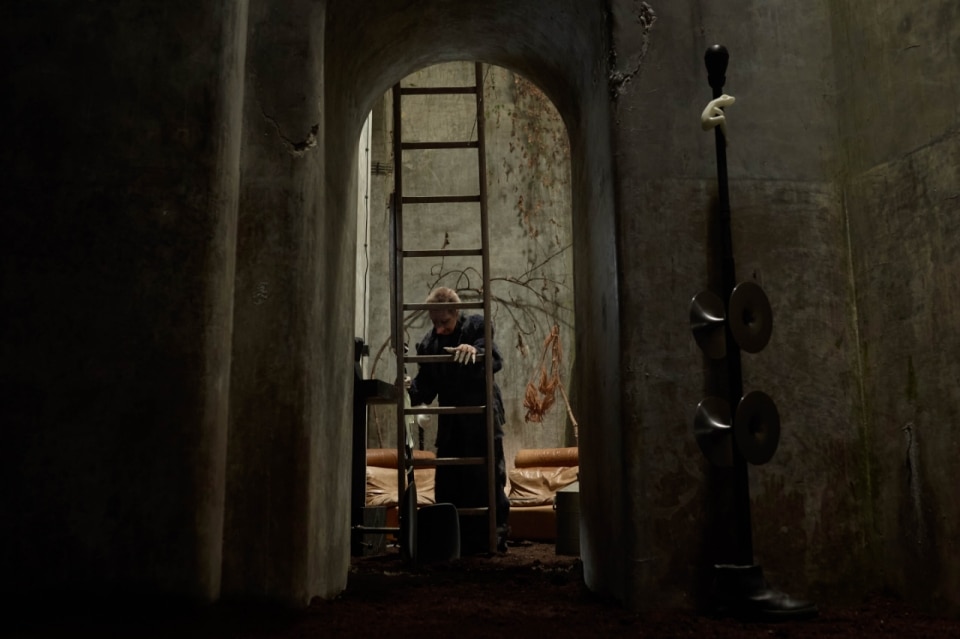
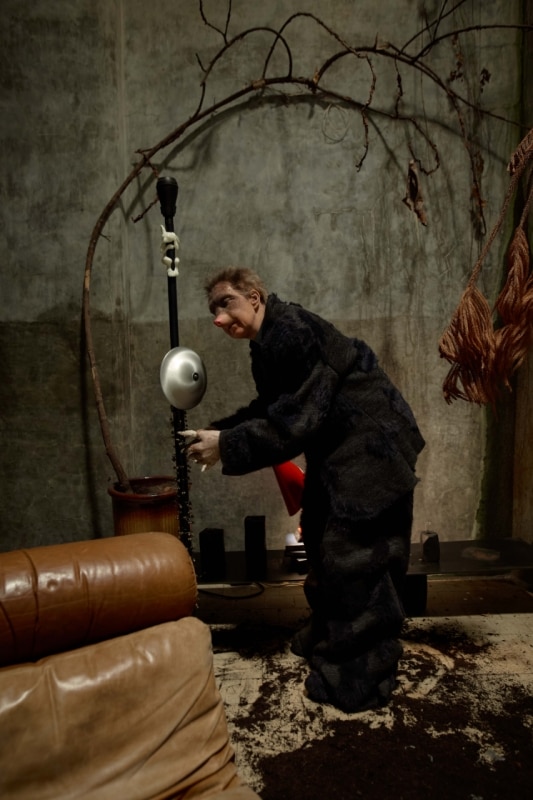
Maybe it is a coincidence or maybe it is a very lucid choice. The Pavilion of Czechia and Slovakia, with “The Silence of the Mole,” decided to stage one of the clearest interpretations of what has happened at the Biennale in recent months. It does so through the resurrection of a character who seems to have come out of a children’s fairy tale, Mr. M, or “the mole man”: a street artist who turns from a childhood idol into a defeated, silenced, and unheard figure. The Pavilion, curated by e-flux art director Peter Sit, is built like his underground home: in one room there are the sound instruments of his shows, in the other a video that tells of his vicissitudes — respectively the works of Jakub Jansa and Selmeci Kocka Jusko. Mr. M lives in the sewers of a small town, like Joker or the clown from It, but he is good and continues to perform for an audience of imaginary children. Unfortunately, he also lives in an imaginary world, where empathy and kindness are still a common language. In the real world, however, he remains voiceless. The result is a visually and sonically incredible cross-section of a world of lonely people like ours, created by one of the historically most important pavilions of the Biennale, which this year turns one hundred and chooses to remember it with a phrase that seems to speak also to the present: “Fight for the shape of what the world could be.”
Alessia Baranello
India’s return to the Biennale is about home, memory and distance
Indian Pavilion, "Geographies of Distance: remembering home" (Arsenale)
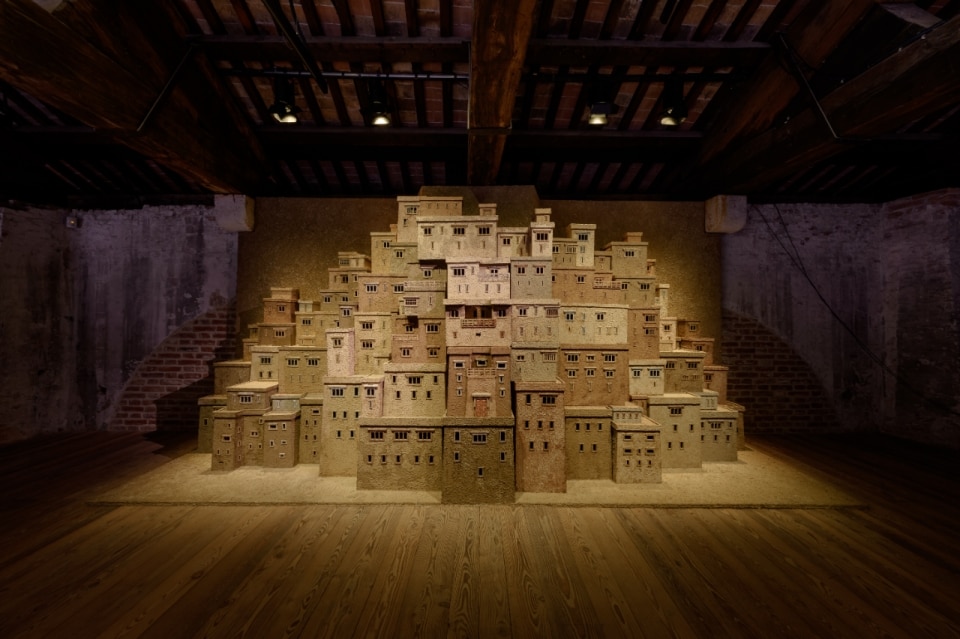
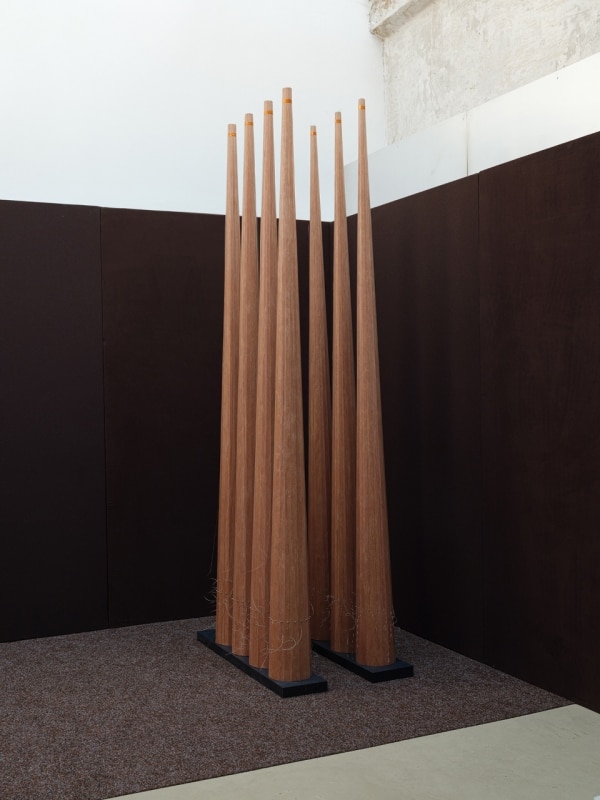
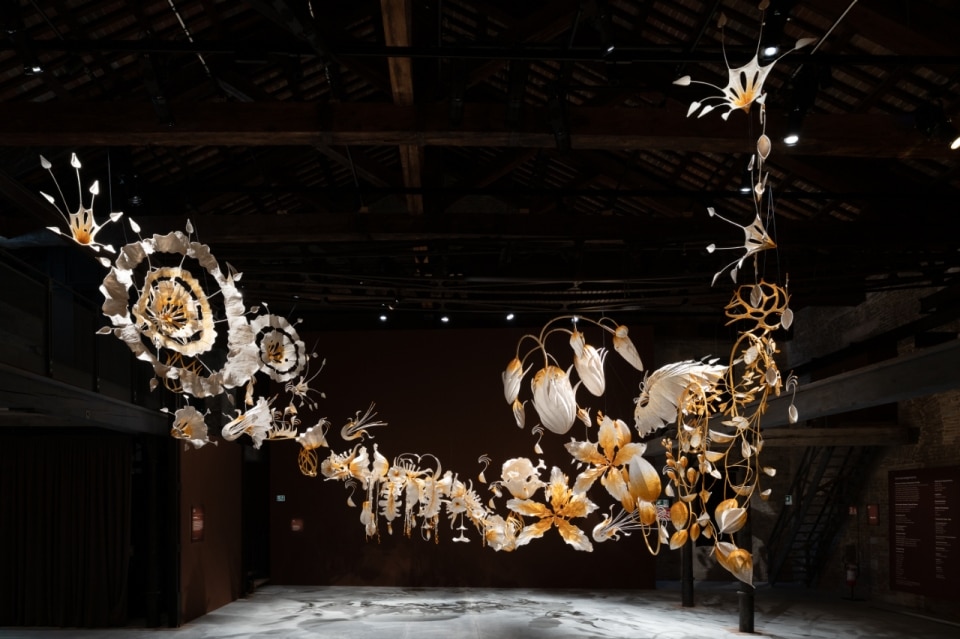
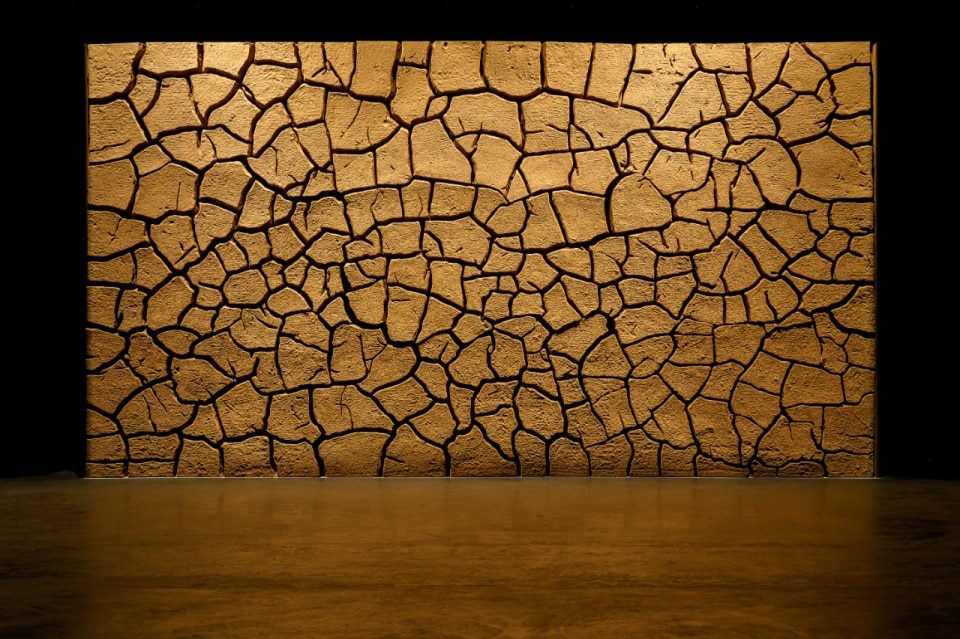
The India Pavilion marks its long-awaited return to the Venice Art Biennale with the exhibition “Geographies of Distance: Remembering Home,” curated by Amin Jaffer and presented by the Indian Ministry of Culture in collaboration with Nmacc and Serendipity Arts. Set in a dimly lit space that invites visitors to enter and linger for a while, the exhibition reflects on the concept of home understood not as a stable physical space, but as a fluid place made of memory, ritual, and mythologies, especially for those who move away from their place of origin. The exhibition path brings together the works of five important contemporary artists — Alwar Balasubramaniam, Ranjani Shettar, Sumakshi Singh, Skarma Sonam Tashi, and Asim Waqif — who use materials and techniques deeply rooted in Indian tradition, such as clay, bamboo, and embroidery, to respond to a global context in transformation without losing the value of their origins.
Carla Tozzi
Chile’s Pavilion looks like a spaceship crashed into the Biennale
Chile Pavilion, "Inter-Reality" (Arsenale)
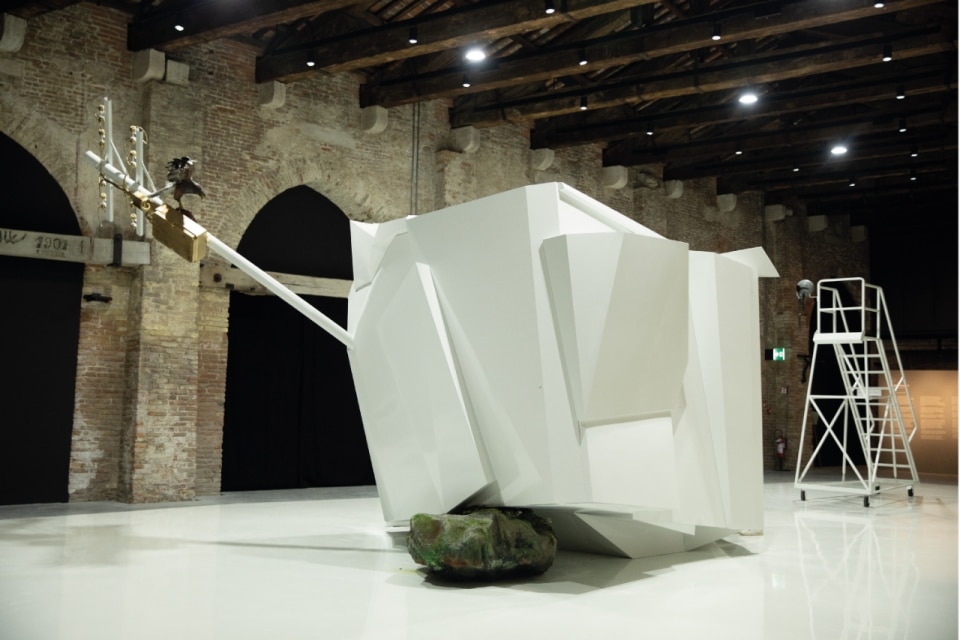
In the Chile pavilion, the white cube is completely occupied by other white objects: a sort of spaceship crashed inside the Arsenale, a staircase that seems to promise access but leads nowhere, a white floor that you enter only by taking off your shoes. And it is precisely this minimal gesture that immediately changes the perception of the space: the pavilion slows down the body even before the gaze. The installation “Inter-Reality” by Norton Maza works more on the idea of a mental crossing than on that of a frontal spectacle. The true discovery is not the central object, but what it hides inside: small worlds visible through openings and glimpses, as if the final destination were contained within the journey itself. Around it, a hyper-realistic human presence introduces a disturbing element, almost like the uncanny valley, which breaks the almost ascetic purity of the environment. The result is one of the strangest and most suspended pavilions of the Venice Biennale: a scene that seems at once a sci-fi wreck, a contemporary ruin, and a perceptual device. And it works especially when it forces you to slow down, lean down, peek, and doubt what you are really looking at.
Alessandro Scarano
Taiwan’s exhibition feels like a video game gone terribly wrong
Taiwan, "Screen Melancholy" (Palazzo delle Prigioni)
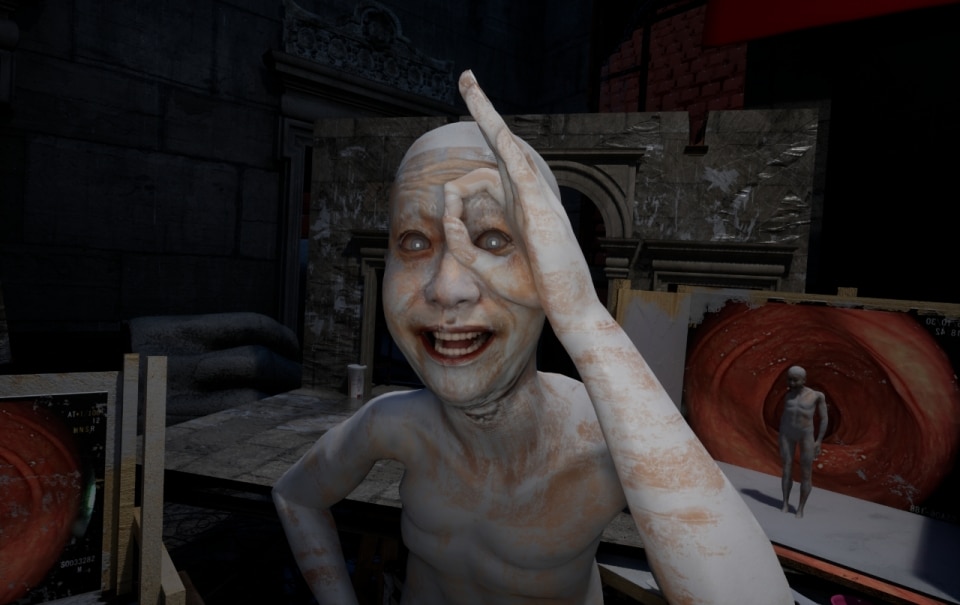
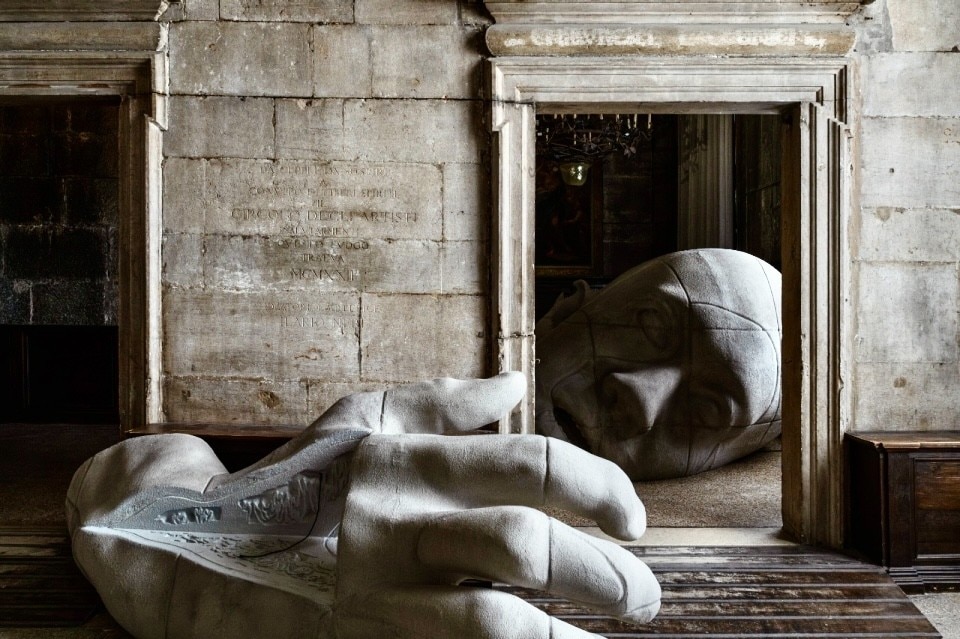
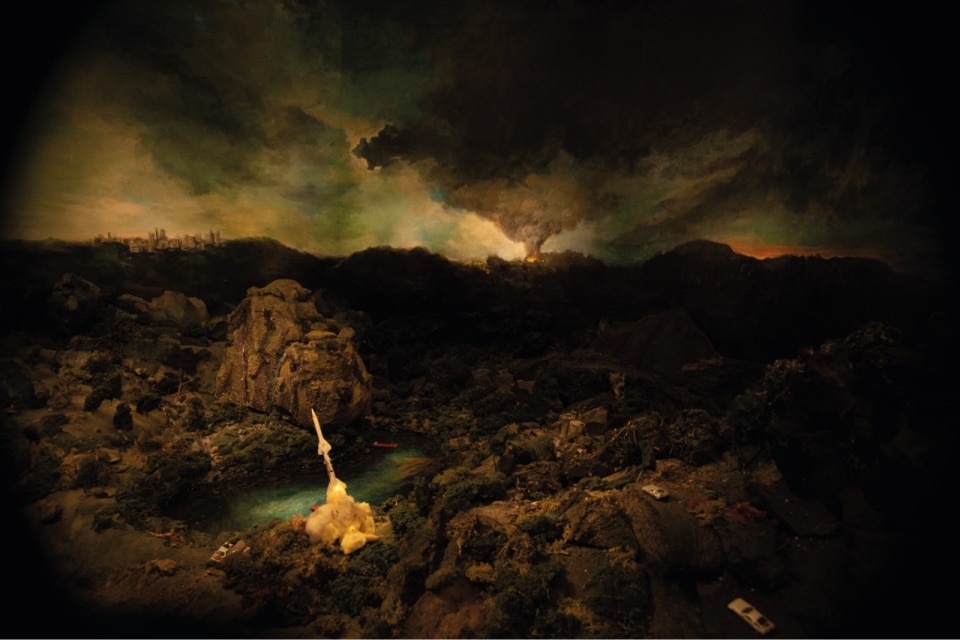
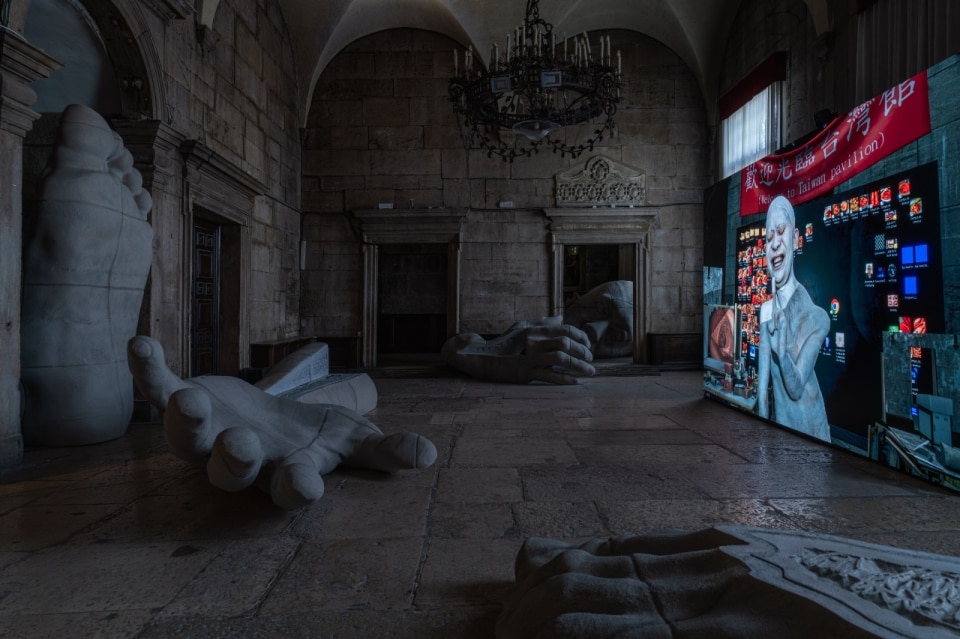
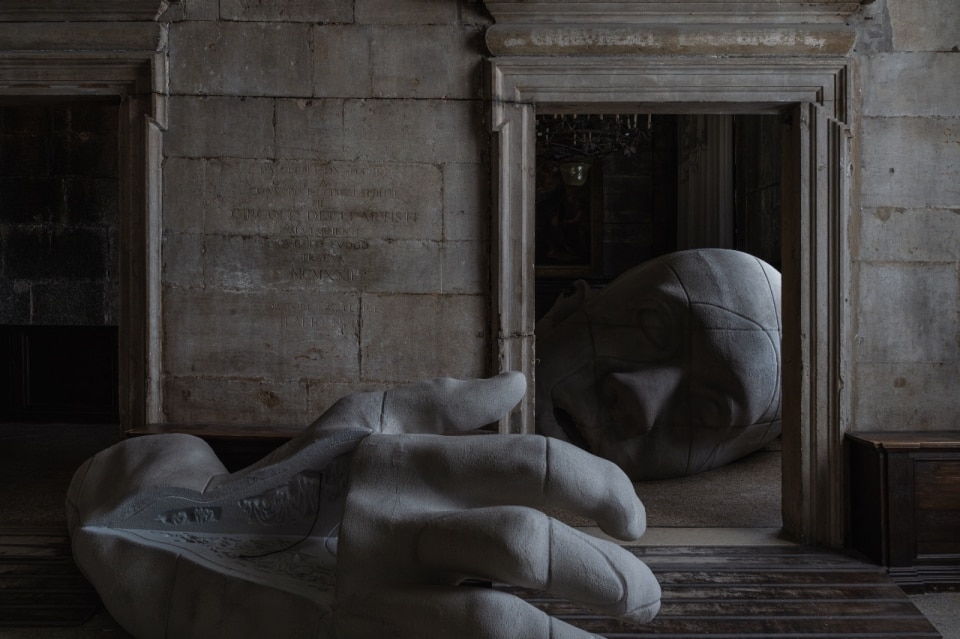
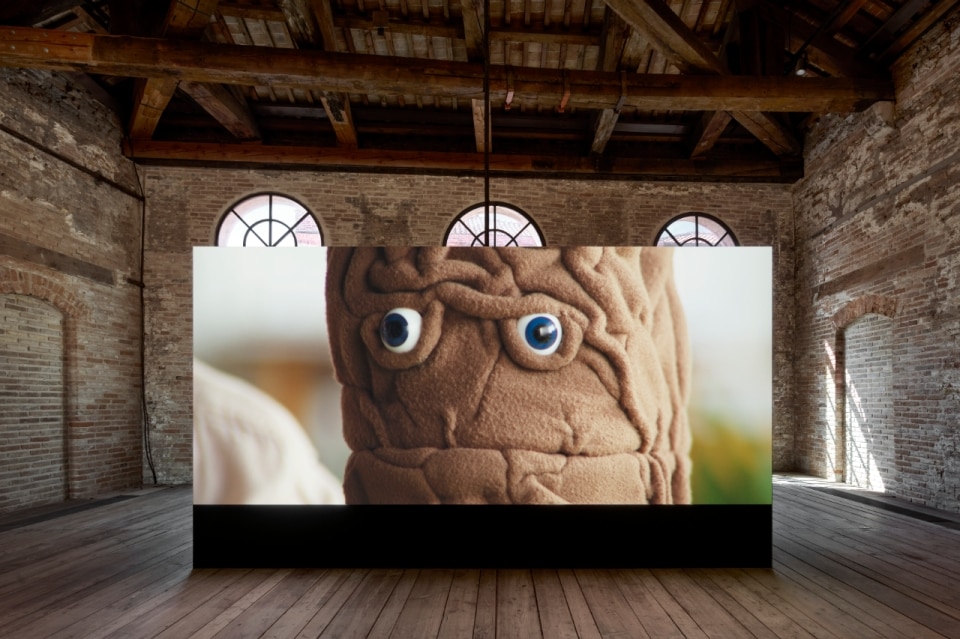
At Palazzo delle Prigioni, Taiwan presents “Screen Melancholy” by Li Yi-Fan, an exhibition that looks like it came out of a video game gone wrong. The artist works with graphics engines, animation, and generated images, building a 60-minute video installation populated by puppet-characters, deformed bodies, digital rooms, and absurd situations. The images flow with black humor and sudden cuts, while large sculptures of fragmented limbs appear in the space, creating a continuous short circuit between the physical environment and the video work. The point is precisely this shift between real and virtual: we look at a screen, but we also have the feeling of being watched.
Giorgia Aprosio
At the Danish Pavilion, the birth crisis becomes a disturbing spectacle
Denmark Pavilion, "Things to come" (Giardini)
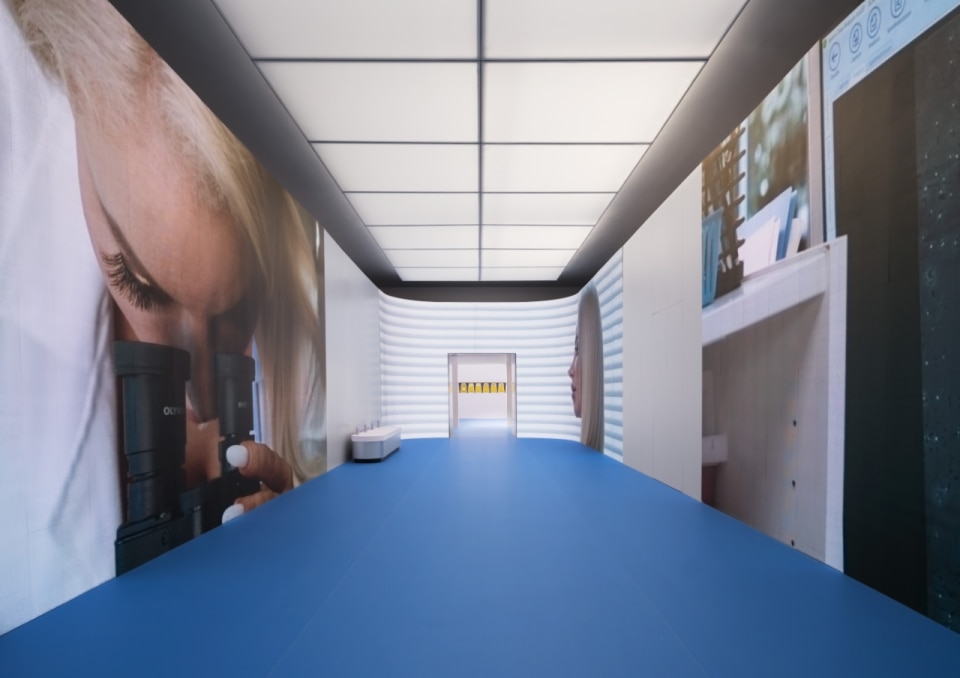
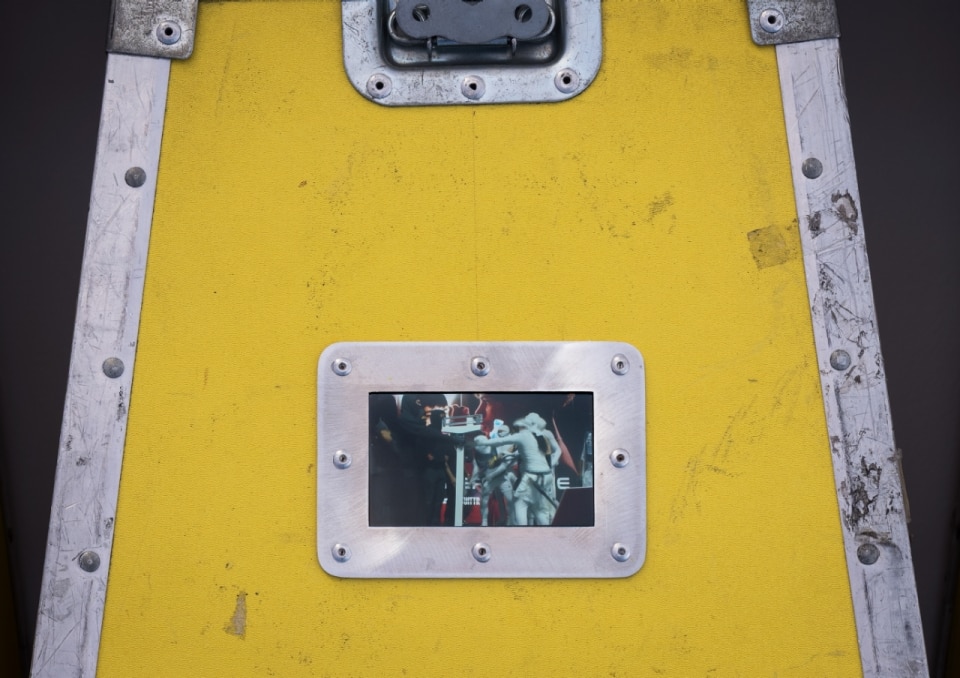
Some fertility clinics are starting to invest in digital pornography to improve the quality of donor sperm. Meanwhile, a group of American teenagers led by Eric Zhu is busy transforming “sperm racing” into the next big form of sports entertainment. This is the starting point for “Things to Come,” the exhibition by Maja Malou Lyse at the Danish Pavilion. Two works — a video shot in a fertility clinic and a series of cryogenic containers used for transporting sperm — occupy the two galleries of the pavilion, questioning what will happen when the decline in birth rates becomes irreversible. As in the 1936 science fiction film that gives the exhibition its title, society seems destined to be rebuilt through science and technology, pornography, and the de-sexualization of sex. For now, the pavilion succeeds primarily in one thing: transforming the catastrophe we all feel approaching into a disturbing and irresistible form of entertainment, just like online sperm races. Not surprisingly, to inaugurate it last night, there was Cicciolina.
Alessia Baranello
Argentina builds a landscape made of salt, coal and sound
Argentine Pavilion, "Monitor Yin Yang" (Arsenale)
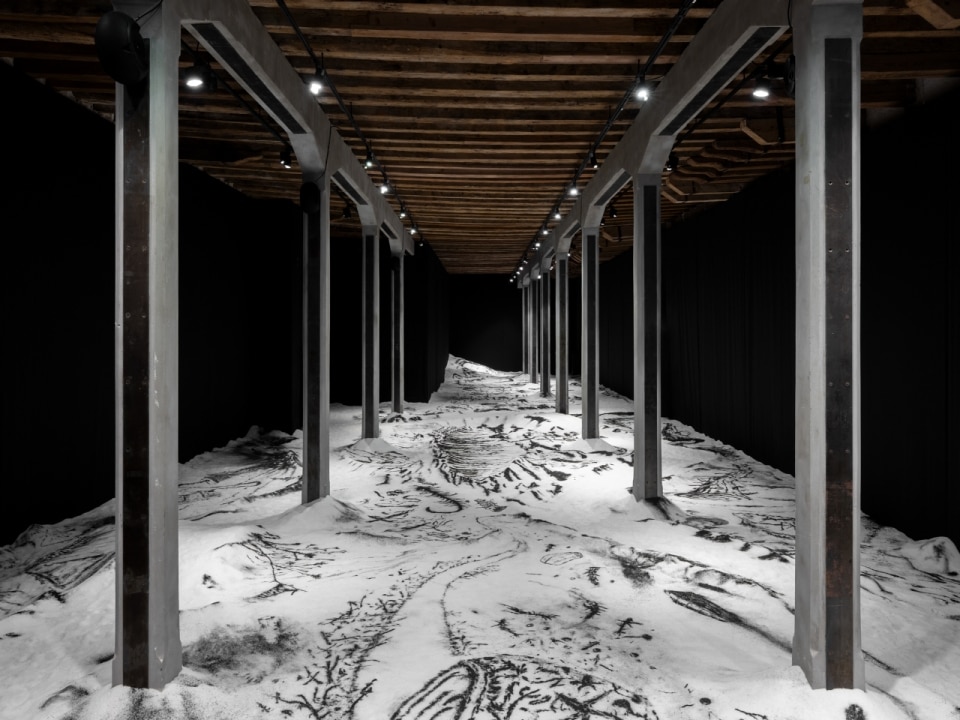
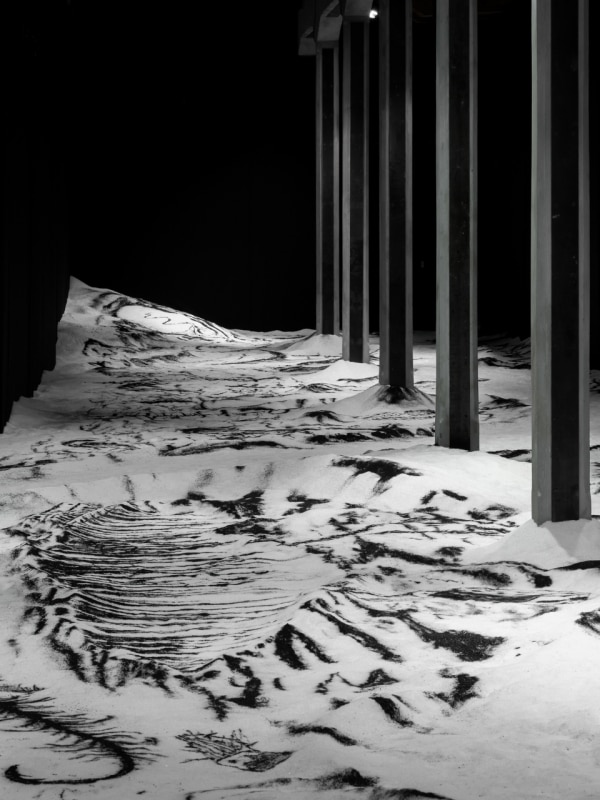
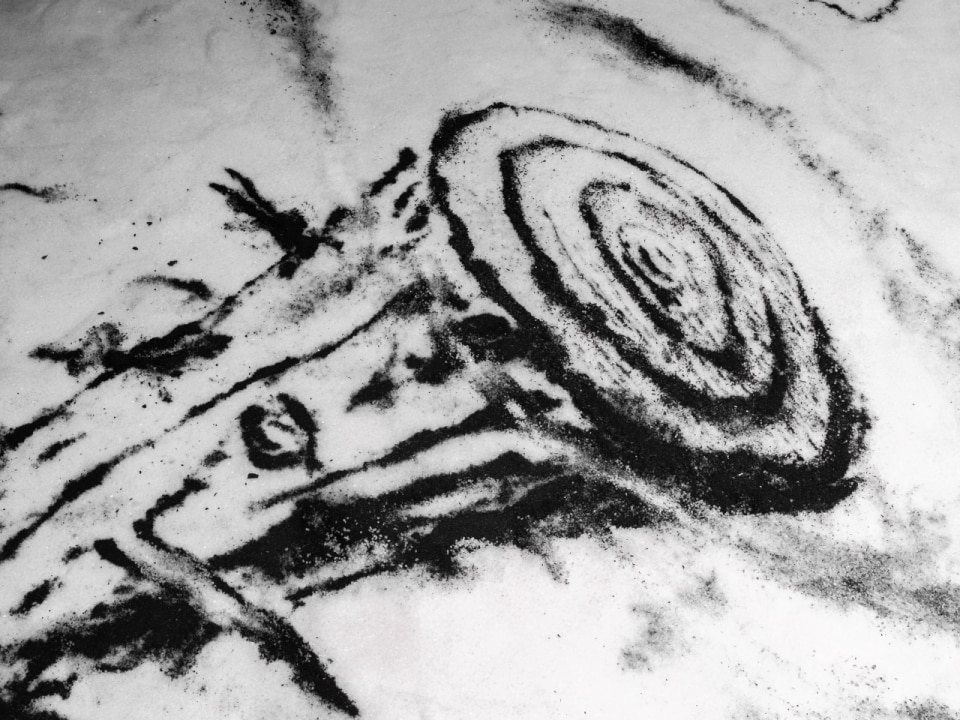
“This project was born from the idea of thinking of drawing as a walkable territory. Instead of an image on a wall, I was interested in building a landscape. I replaced paper with salt and charcoal because they are materials that already contain time: salt as a remnant of ancient oceans and charcoal as organic matter transformed into energy.” This is how the artist Matías Duville introduces the site-specific work that represents Argentina at the 61st Venice Art Biennale. Curated by Josefina Barcia, the project brings drawing to a spatial, sonic, and performative dimension. In the dimly lit environment, an expanse of salt creates an almost desert-like landscape marked by traces of charcoal. Starting from the cosmic vision of yin and yang, one finds oneself walking immersed among opposing forces: black and white, light and shadow, the immutable and change. The work is completed by a multi-channel sound composition that translates the lagoon’s environmental data in real time, such as air quality and atmospheric conditions, into a dynamic acoustic landscape.
Carla Tozzi
At night, Venice stops in front of a modernist palace turned into a cinema
Pier Luigi Nervi Foundation, "If All Time Is Eternally Present" (Campo Manin)
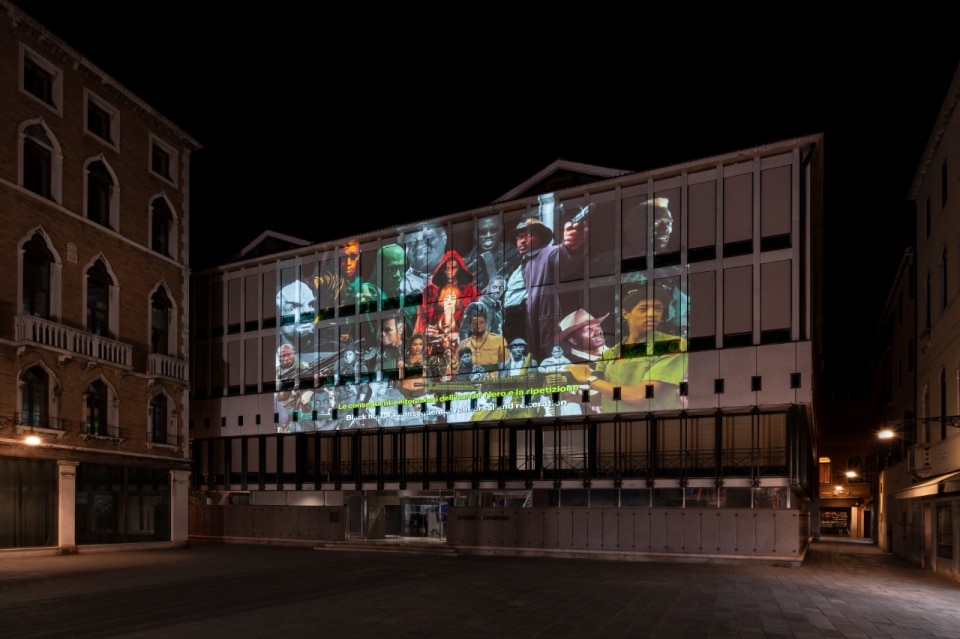
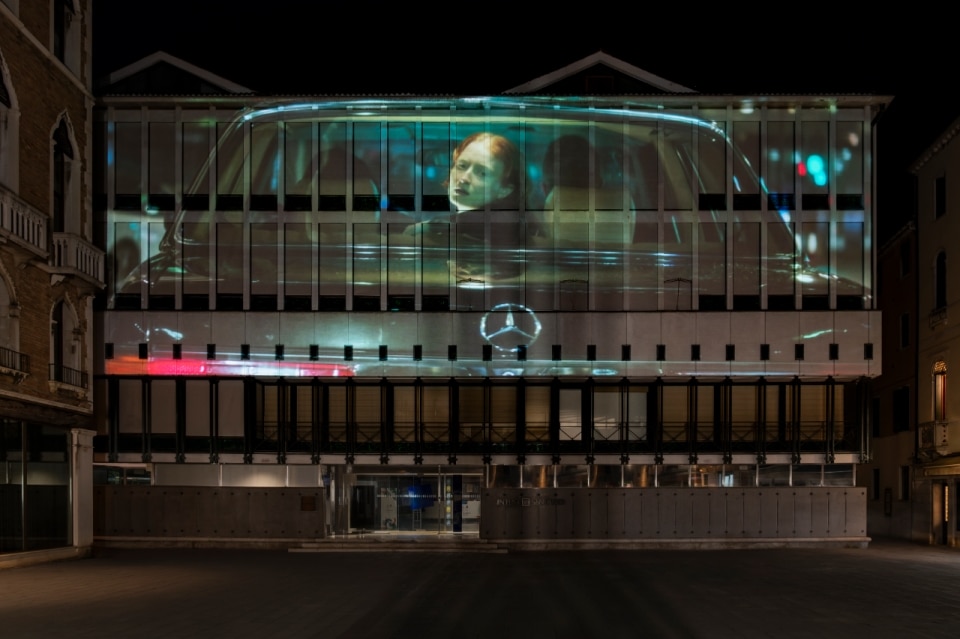
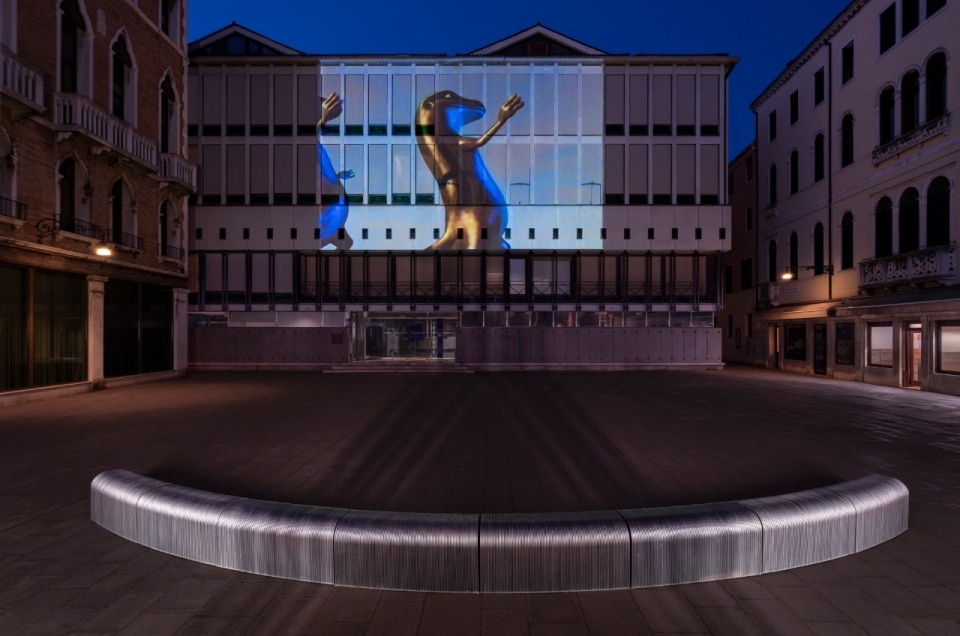
In the evening, in Campo Manin, one of the most unexpected things of this Venice Biennale happens: the modernist facade of Palazzo Nervi-Scattolin becomes a giant urban screen. And suddenly Pier Luigi Nervi — the most radical and visionary of Italian engineers — seems to dialogue with some of the most powerful video languages of the contemporary era. The project “If All Time Is Eternally Present,” curated by Chiara Carrera and Marta Barina, transforms the building into a night-time public device: not a simple projection, but a collision between architecture, city, and moving images. The works of Kandis Williams, Meriem Bennani with Orian Barki, and Tai Shani cross Korean horror, post-pandemic avatars, gothic sci-fi, diasporic memories, and digital cultures. But the most beautiful thing is perhaps something else: seeing Venice stop at night in front of a twentieth-century building as if it were a collective open-air cinema. Nervi’s elegant rationalism absorbs images, bodies, and lights without losing strength; on the contrary. For a few hours, the city stops being just a monumental backdrop and returns to being a living, ambiguous, even surprising public space.
Alessandro Scarano
At the Japanese Pavilion, you are asked to take care of a doll
Japan Pavilion, "Grass Babies, Moon Babies" (Giardini)
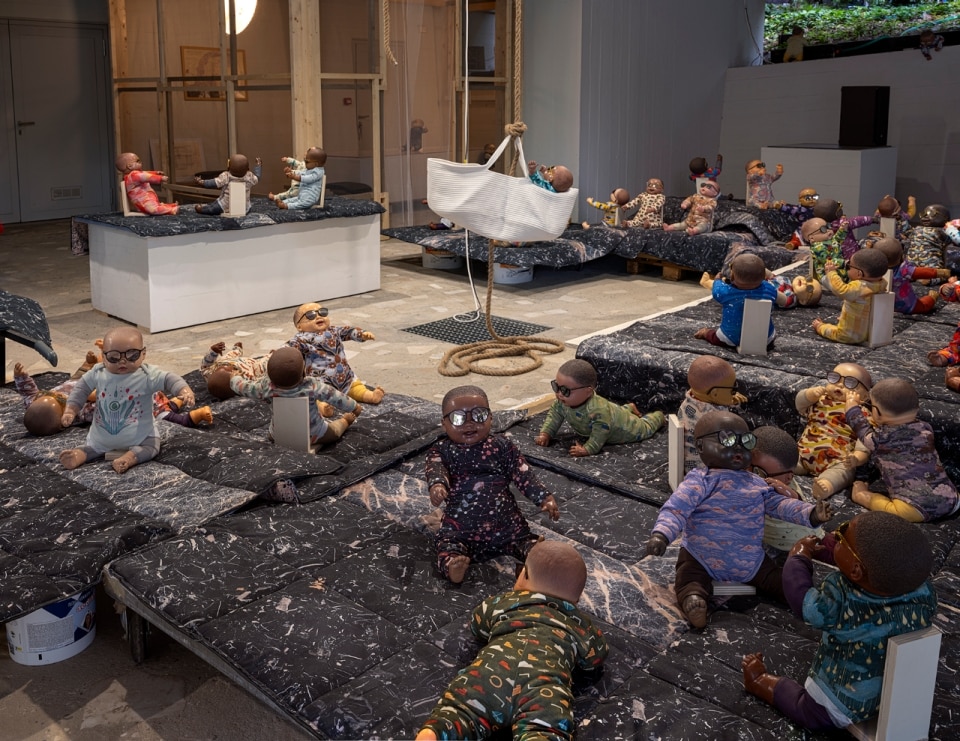
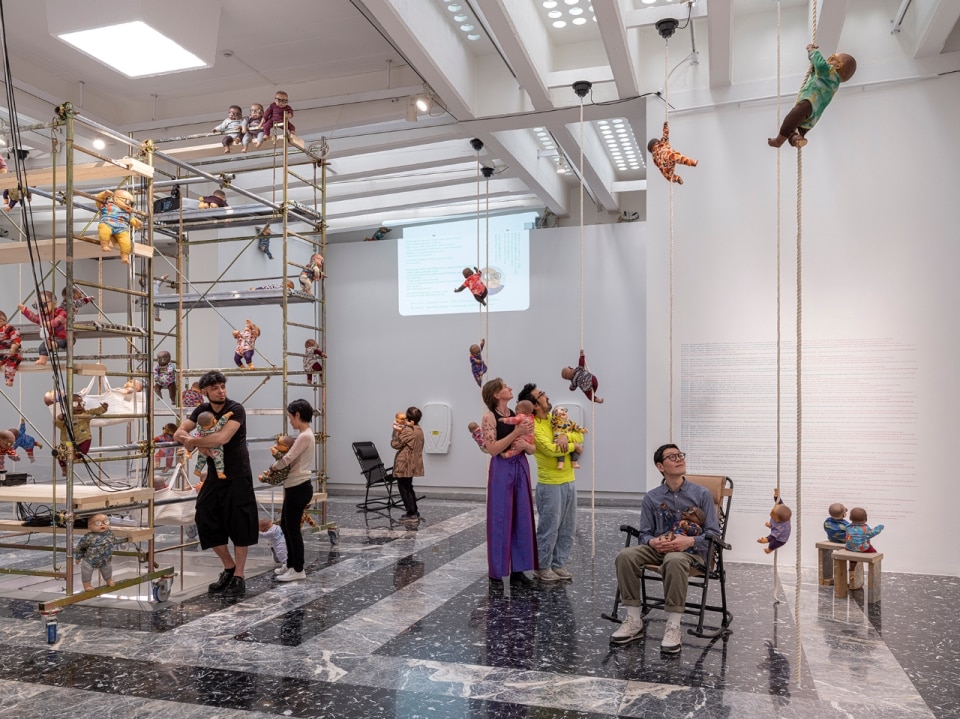
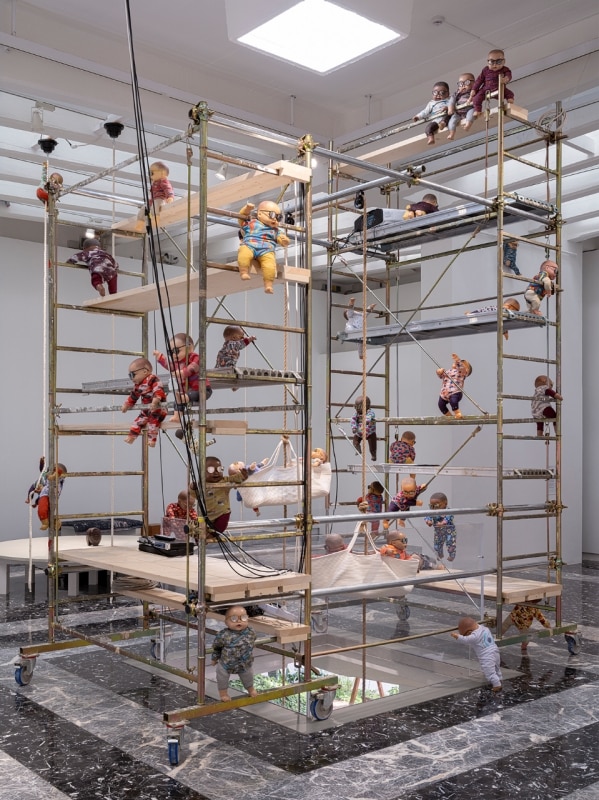
The Japan Pavilion focuses on a participatory mechanism as simple as it is disturbing. In “Grass Babies, Moon Babies,” Ei Arakawa-Nash arranges 208 dolls that visitors are invited to pick up and carry with them through the pavilion, from the pilotis to the interiors, passing through the garden. The path transforms the public into part of the work: you don’t just observe, you perform a task of which the work itself is the result. Visitors move with dolls wearing mirrored sunglasses, inside an exhibition populated by other dolls climbing on ropes and on the architecture of the space. In this brief experience of parenthood there are almost tender passages, like the Qr code that activates a poem linked to the birth date assigned to the doll, and other more uncomfortable ones, like the final diaper change. The artist, Japanese-American and queer, uses this domestic and alienating device to speak of nikkei diaspora, family legacies, and social bonds that cross Japanese history.
Giorgia Aprosio
Behind Canada’s water lilies lies a colonial story
Canadian Pavilion, "Entre chien et loup" (Giardini)
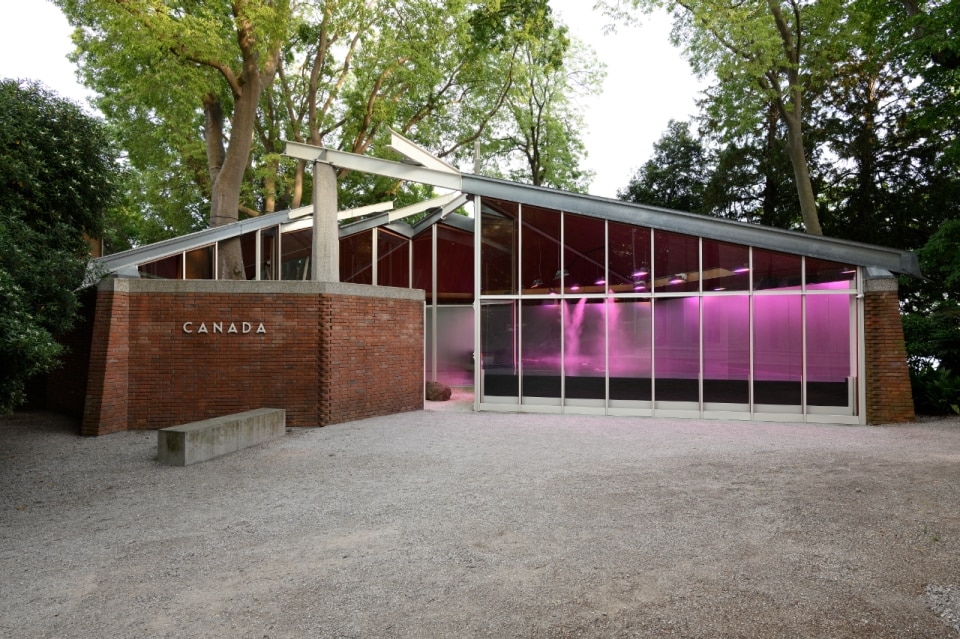
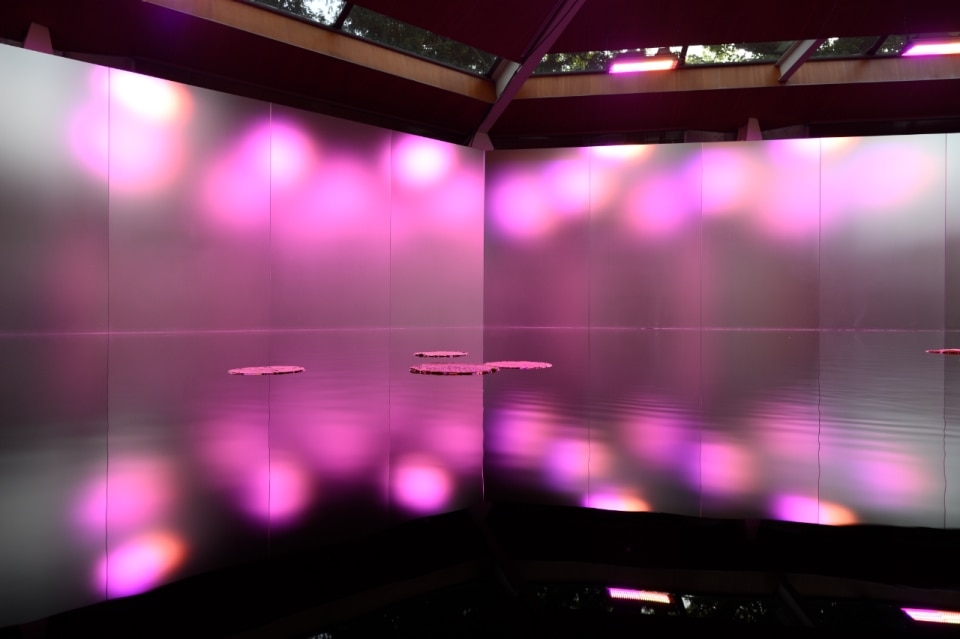
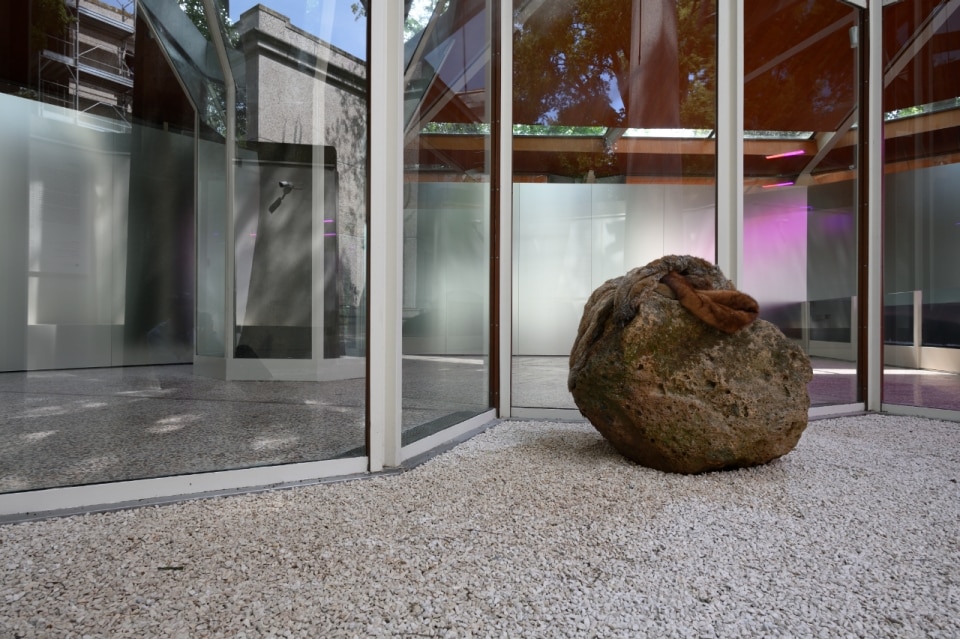
The Canada Pavilion is a kind of greenhouse inside the Biennale. Abbas Akhavan with “Entre chien et loup” has transformed the space into an environment for growing large Victoria water lilies, huge and spectacular plants, arranged in a tank with artificial lights. The facade is made of glass and the water lilies can also be seen from the outside, as if the pavilion were a large showcase-aquarium. The image is not just poetic: this type of water lily, native to South America, was brought to Europe in the nineteenth century through the botanical networks of the British Empire and was renamed in homage to Queen Victoria. From an exotic plant they thus became a new imperial symbol, a wonder to be exhibited, nature to be possessed. Similarly, the seeds of the plants exhibited in the show come from Kew Gardens, were germinated at the Padua Botanical Garden, and then transferred to Venice.
Giorgia Aprosio
Uzbekistan uses art to rewrite its image in the world
Uzbekistan Pavilion, "The Aural Sea" (Arsenale)
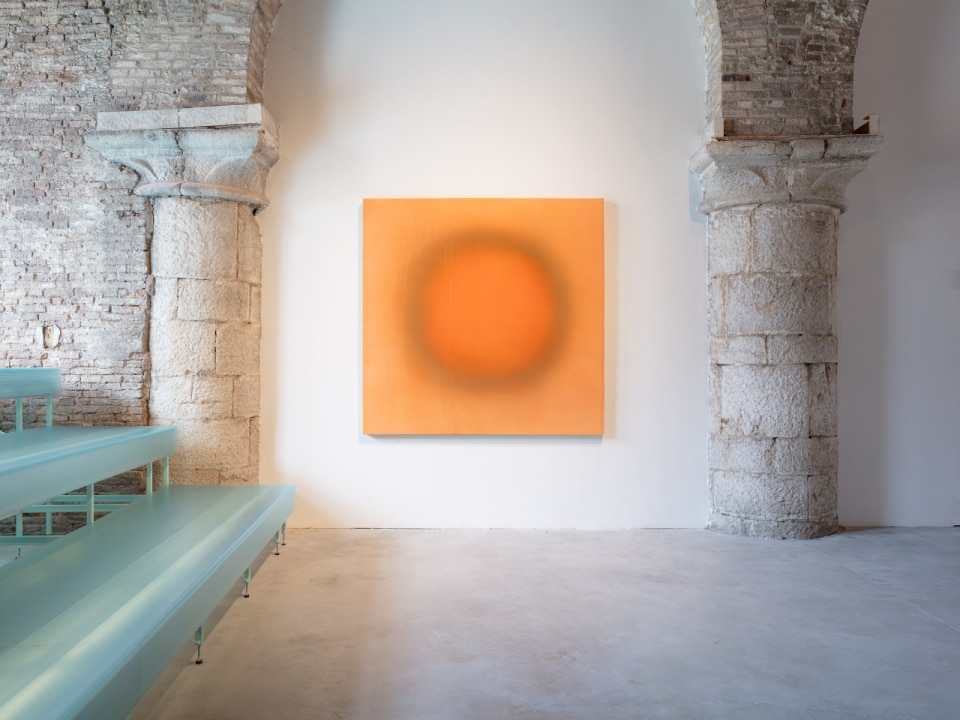
There is a country that for some years has been using art, architecture, and design to redefine its place on the global cultural map: it is Uzbekistan. And the Venice Biennale seems almost like the point of arrival — or perhaps a new stage — of this very precise cultural strategy. At the Arsenale, the national pavilion “The Aural Sea” returns to the theme of the Aral Sea, one of the greatest contemporary ecological disasters, already at the center of the beautiful installation presented during Design Week at Palazzo Citterio. But here the tone changes completely: no documentary or simply scientific approach. The five curators and seven artists involved work instead between myth, listening, folklore, installation, and speculative fiction, treating the landscape as a living archive of stories, memories, and future possibilities. Then there is “Instruments of the Mind,” the large exhibition dedicated to Vyacheslav Akhunov at Palazzo Franchetti: an artist who seems to come from a parallel timeline. Soviet conceptualism, hand-written mantras, political irony, spirituality, deformed propaganda, monumental arches full of scissors: his work crosses fifty years of history while remaining strangely contemporary. The point, however, is broader than the individual exhibitions. Through the Uzbekistan Art and Culture Development Foundation — between the Venice Biennale, Bukhara Biennial, research on Tashkent modernism, and the new museum designed by Tadao Ando — the country is building a consistent and surprisingly sophisticated international cultural presence. Not simple soft power, but a way to tell its story to the world through imagination, research, and design.
Alessandro Scarano
The UAE Pavilion turns sound into invisible architecture
United Arab Emirates Pavilion, "Washwasha" (Arsenale)
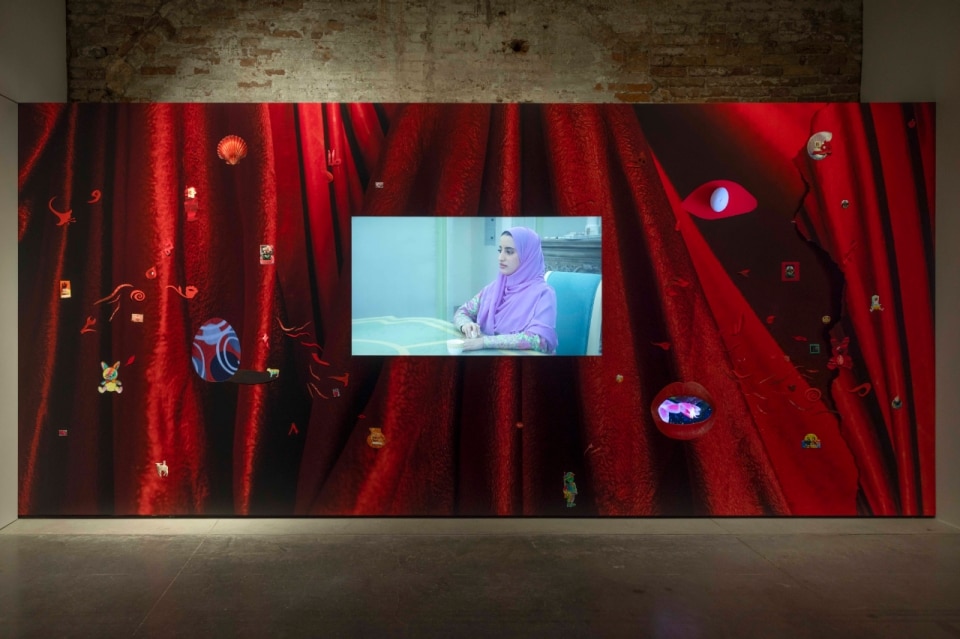
“Washwasha” is an Arabic word that could be translated as “whisper,” but its meaning is not limited to the sound sphere; it also expands to recall minimal forms of communication, murmurs, and background noises that go unnoticed every day. Curated by Bana Kattan, the pavilion of the United Arab Emirates brings together six artists – Mays Albaik, Jawad Al Malhi, Farah Al Qasimi, Alaa Edris, Lamya Gargash, Taus Makhacheva – who through sound explore themes that today reflect the cultural landscape of this country. Designed by the architecture studio Büro Koray Duman (B–KD), the exhibition space accompanies visitors from areas of quiet and attentive listening to areas pervaded by noise and sonic overlaps, with works – videos, sculptures, installations – that tell one after another of a sonic universe linked to tangible stories, the evolution of urban landscapes, and the bond between sound, oral traditions, and migratory processes.
Carla Tozzi
The strangest pavilion at the Biennale is called “La Merde”
Luxembourg Pavilion, "La Merde" (Arsenale)
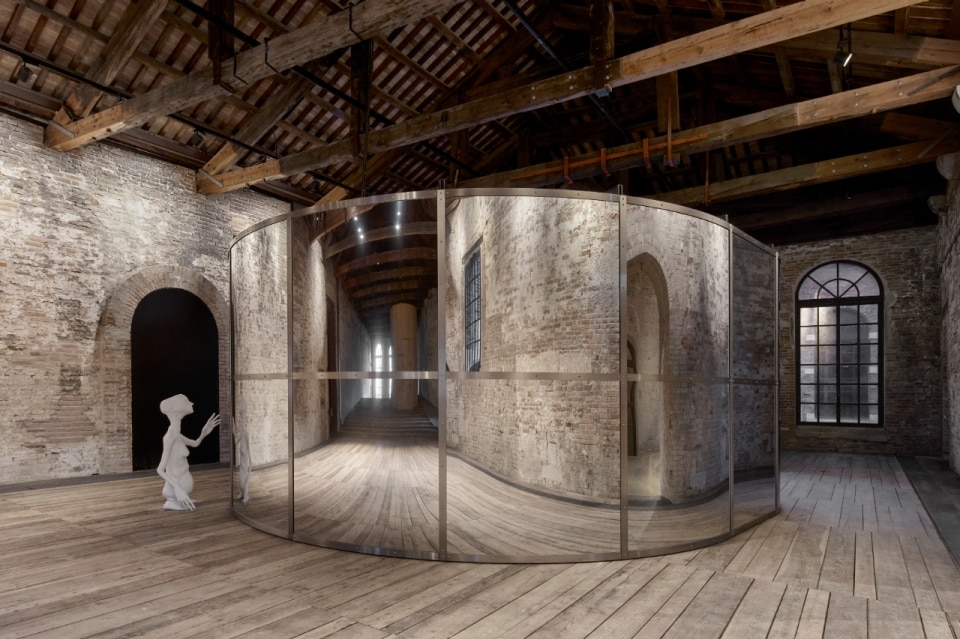
Yes, you read that right. The title of the audiovisual installation presented by Luxembourgish artist Aline Bouvy is indeed “La Merde.” It is a cinematic essay that explores shame as a social construct through the figure of an “excrement-being” who goes through different stages of life, embodying what society tries to repress. Halfway between the absurd, the grotesque, an inexplicable sense of familiarity, a good dose of repulsion but also of empathy, the work analyzes the concept of the “abject,” through something so universal and so linked to the sense of shame, transforming the body that can no longer hold back into a powerful political and subversive instance. Punctuating the narrative is a rich selection of images from art history, pop culture, and scientific iconography depicting bodies caught in the act of expelling, losing control, or transgressing the norms of decorum. These visual fragments compose a collective memory of everything that is morally discarded and pushed to the margins. The viewing of the film is enriched by a sound spatialization component, developed with composer Pierre Dozin.
Carla Tozzi