


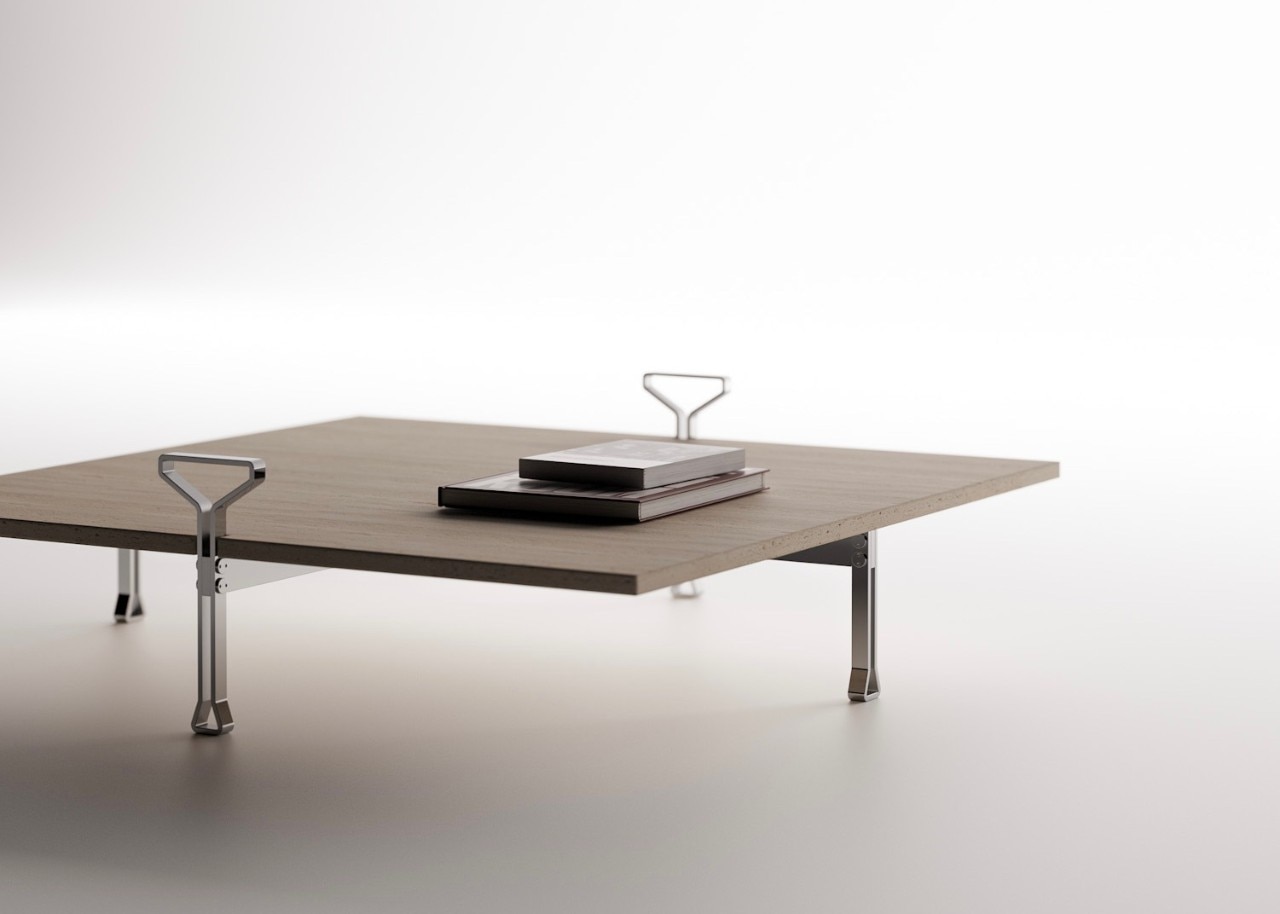

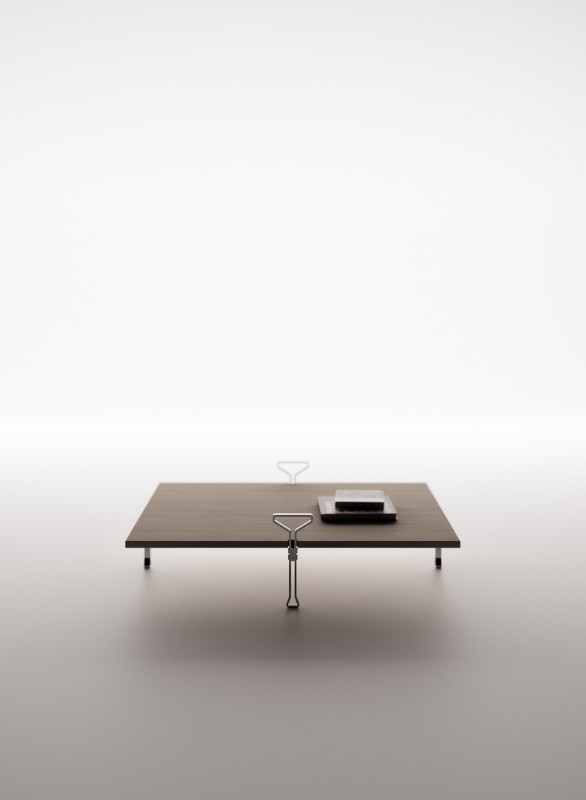
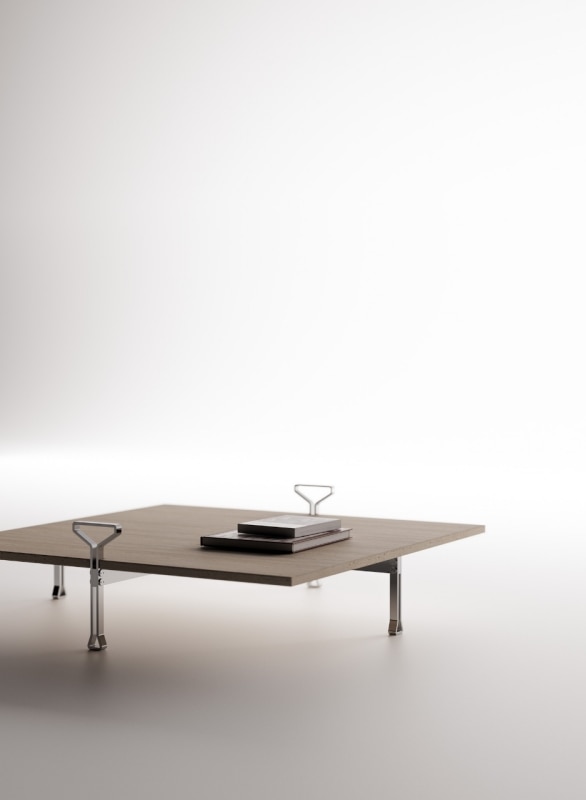
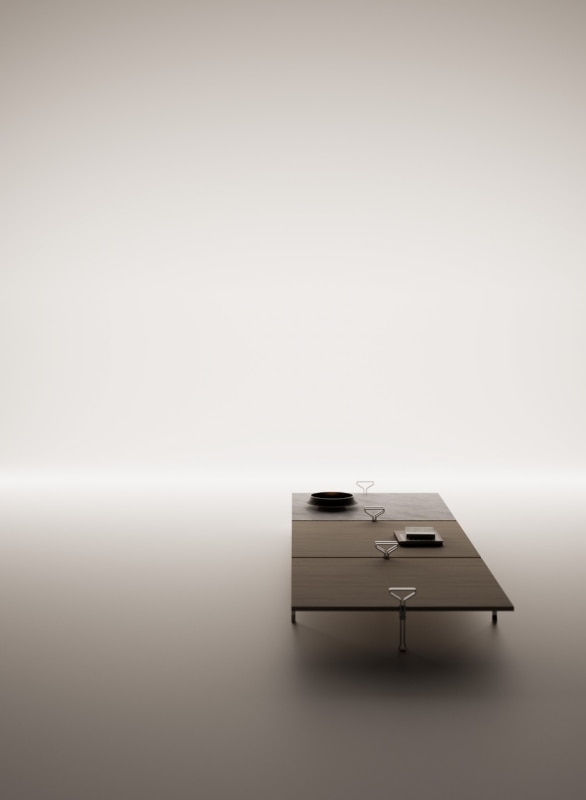
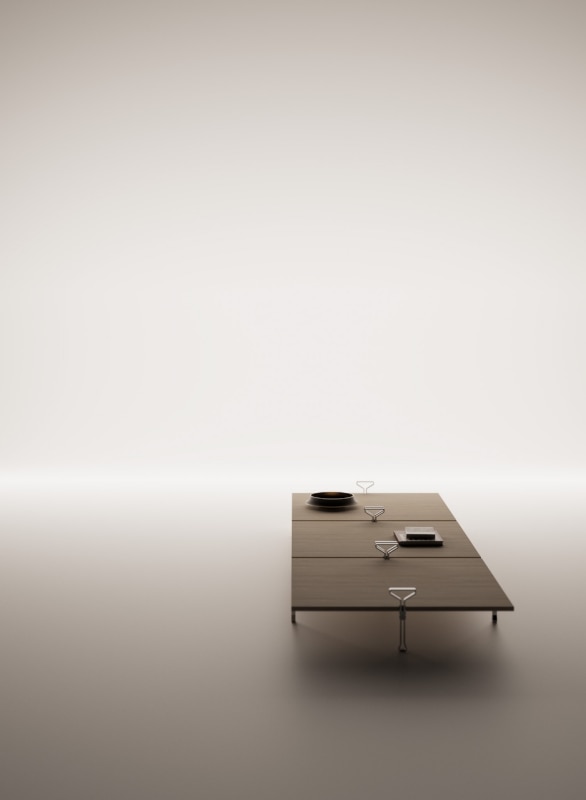
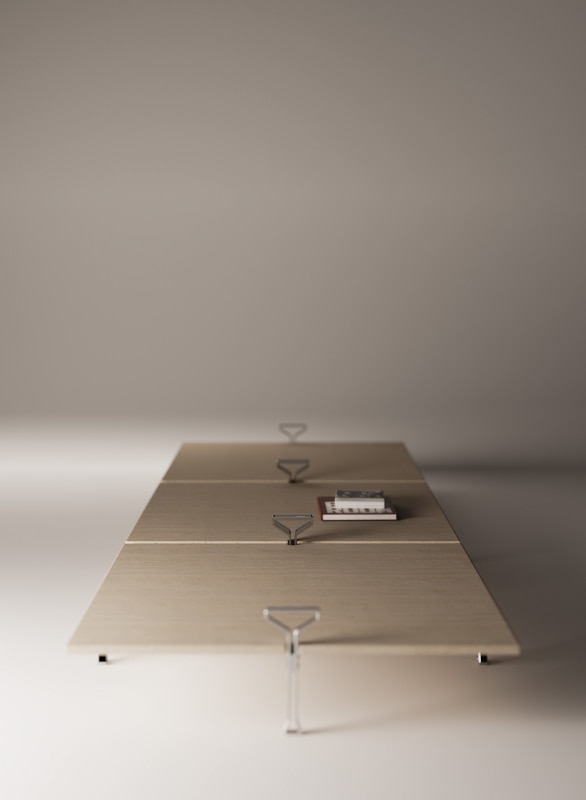
If we were to distill the language of the symbiotic collaboration between Angelo Mangiarotti and Bruno Morassutti, who worked together for five years, we could tell it through this table.
They designed it together in 1959, when they were asked to rethink the interiors of Villa Schwob, the last major work of Le Corbusier’s Swiss period, built between 1916 and 1917. Their approach was measured, respecting the building’s morphology and intervening with solutions and furnishings consistent with its formal vocation.
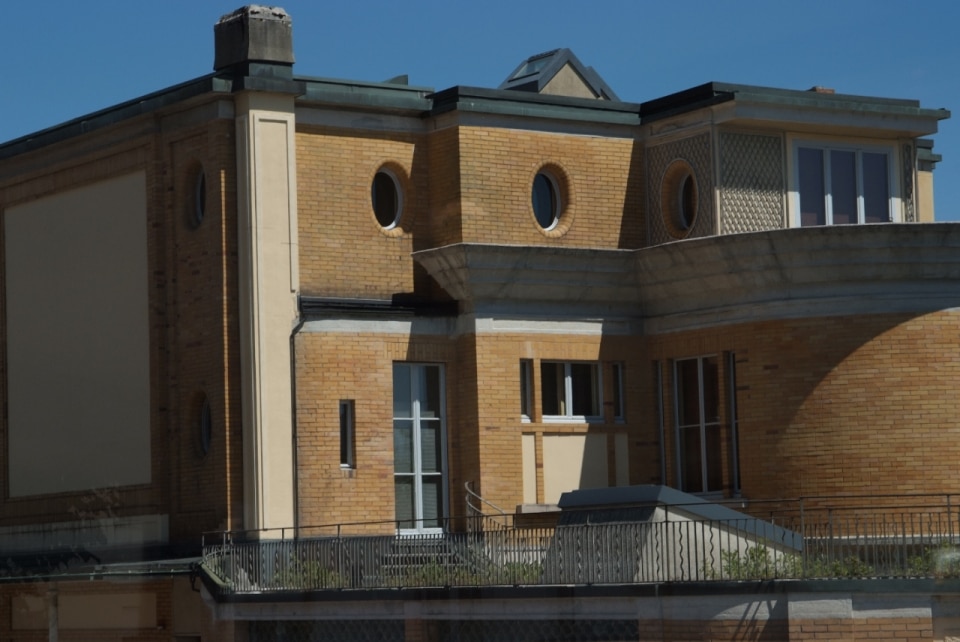
In the main space, a double-height hall with the sacral quality of a religious architecture, the perimeter is defined by sinuous volumes, while the center is marked by the presence of a large sculpture. It was for this room that Mangiarotti and Morassutti conceived the table that today enters production for the first time, thanks to Agapecasa, under the name Schwob Table.
In the dialogue between metal and marble, between practicality and sculptural character, between engineering and surface purity, the poetic vision of the two architects emerges clearly.

For years it existed only in the memory of those who had seen it and in the record of photographs and drawings; the table had been produced in just a few examples exclusively for the villa in La Chaux-de-Fonds, a town about an hour from Bern. With a philological approach and meticulous attention, the first reissue of the Tavolo Schwob respects the original proportions, craftsmanship, and constructive intentions.
An aluminum structure, designed in a cross shape with exposed mechanical joints, supports the large square marble top, simply resting on the base by gravity. The metal handles do not try to hide or disguise their form, which is also their function: to facilitate the movement of the piece.
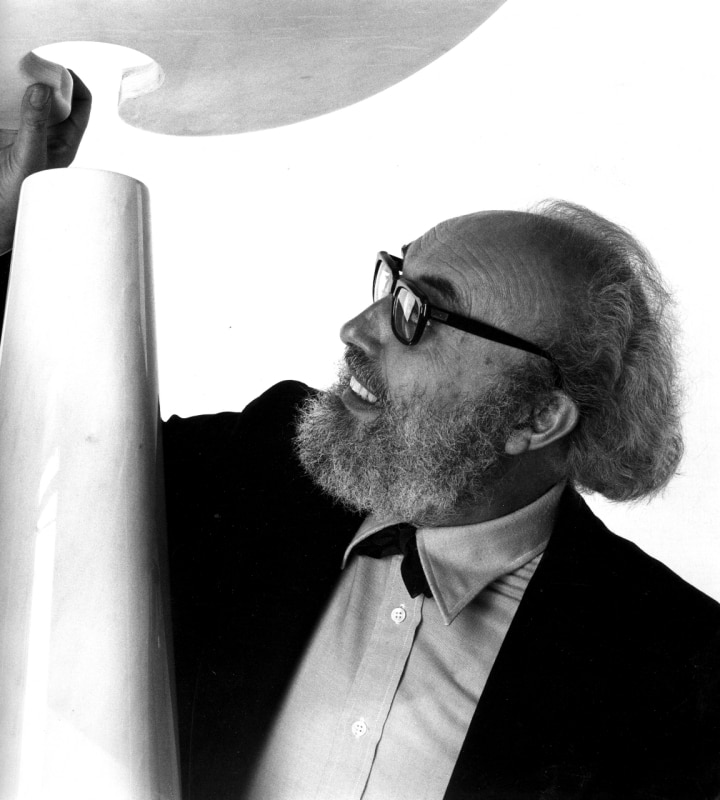
In the dialogue between metal and marble, between practicality and sculptural character, between engineering and surface purity, the poetic vision of the two architects emerges clearly. It is a vision that embodies the deepest essence of Italian design: the ability to express beauty as an intrinsic value of every element in a project.