OK
Domus Domus
newsstand
SUBSCRIBE
  • Magazine
  • Digital Edition
  • Digital Archive
LANGUAGE
  • it
  • en
Hi Logout
Sign up / Log in
  • News
  • Architecture
  • Interiors
  • Design
  • Art
  • Archive
  • Products
  • Design Essentials
  • Design Stories
  • Submit your project
Sections
  • News
  • Architecture
  • Interiors
  • Design
  • Art
  • Archive
  • Products
  • Covers
  • Biographies
  • Architecture Firms
  • Sustainable Cities
  • Gallery
  • Design Stories
  • Domus for Design
Magazine
  • Subscriptions
  • Digital Edition
  • Current Issue
  • Guest Editor
  • Digital Archive
  • Nordic Design
Specials
  • Design Essentials
  • Modern Work
  • DomusAir
  • Milano Design Week
  • Worldesign
Current Issue

Domus 1107 hits the shelves

Follow us
LANGUAGE
  • it
  • en
Hi Logout
Sign up / Log in
newsletter Icon
results No results Please enter a long search term

      11 unexpected objects from MoMA′s design collection

      11 unexpected objects from MoMA′s design collection

      Next gallery

      OMA′s Taipei Performing Arts Center “will inspire unimagined theatrical possibilities”

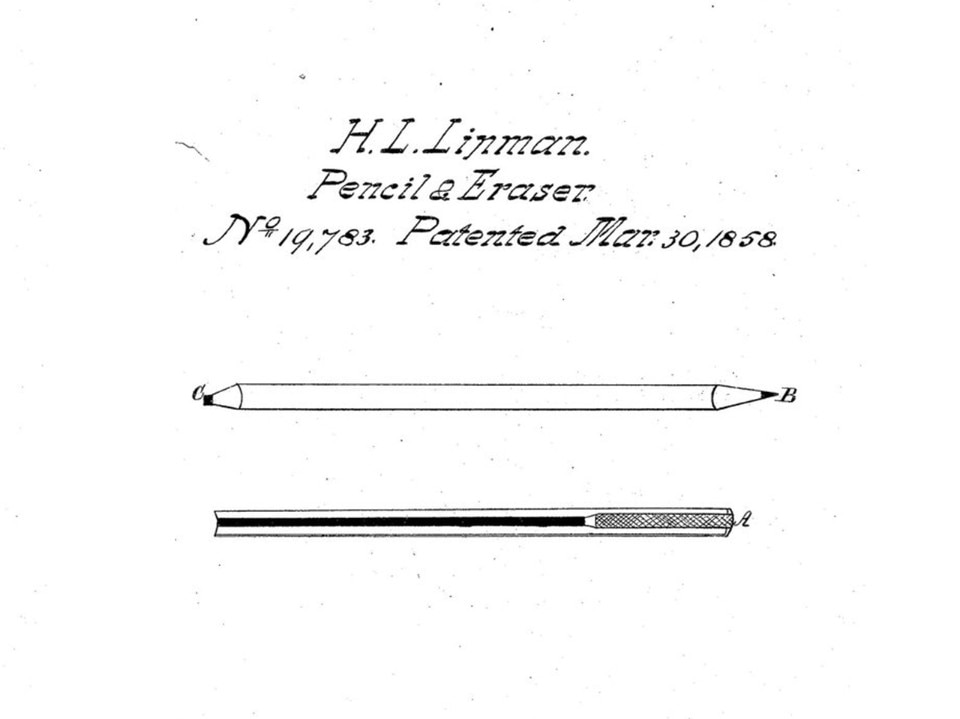
      Hymen Lipman, Wooden Pencil with Eraser, 1858

      On March 30, 1858, Hymen Lipman was granted a patent for creating the first wood-cased pencil with an attached rubber eraser, revolutionizing classrooms and art studios alike. Basically, at one end of the wood casing the lead or graphite is laid in a hollowed out interior groove, forming what would be considered half of a modern pencil. On the other end of the casing a wider groove is carved and a stick of rubber eraser is laid and glued. By constructing the pencil this way either end could be sharpened. Unfortunately, the patent was later revoked by the Supreme Court when it was challenged by a German firm, Faber-Castell, that attached the eraser using a metal ferrule.  Lipman invented neither the pencil nor the eraser, he simply combined the two so the invention was considered invalid.  Still, Hyman Lipman greatly contributed to the prevailing design of our beloved pencil.

      View article
      View article
      • SHARE
      • PIN IT

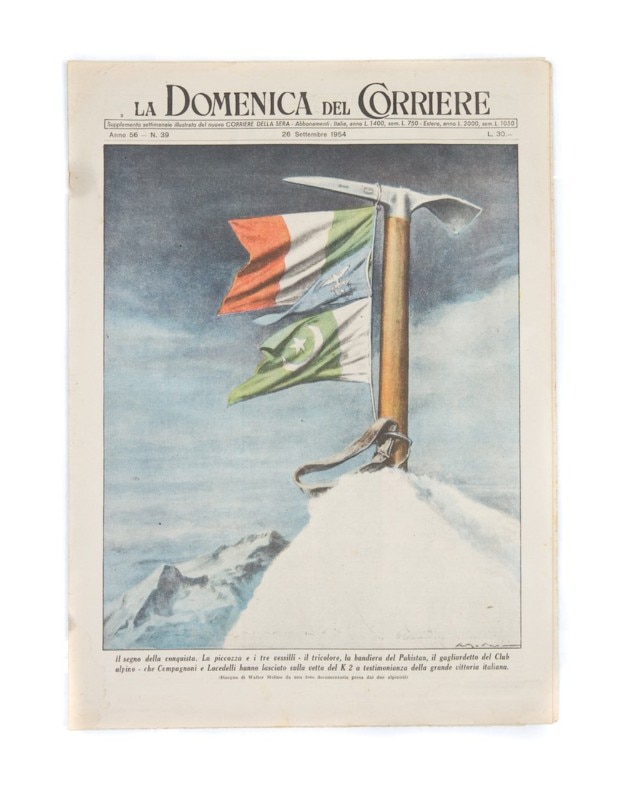
      Fratelli Grivel (now Grivel s.r.l.), Ice Axe, 1900-1962

      The ice axe is a tool used in alpinism, born of the need to integrate two tools: pole and axe. MoMA’s collection includes an artefact used for the famous ascent of K2 on 31 July 1954. It was made by Grivel, the historic Italian manufacturer of ice axes and crampons and now of other mountaineering equipment, which celebrated its 200th anniversary in 2018.

      View article
      View article
      • SHARE
      • PIN IT

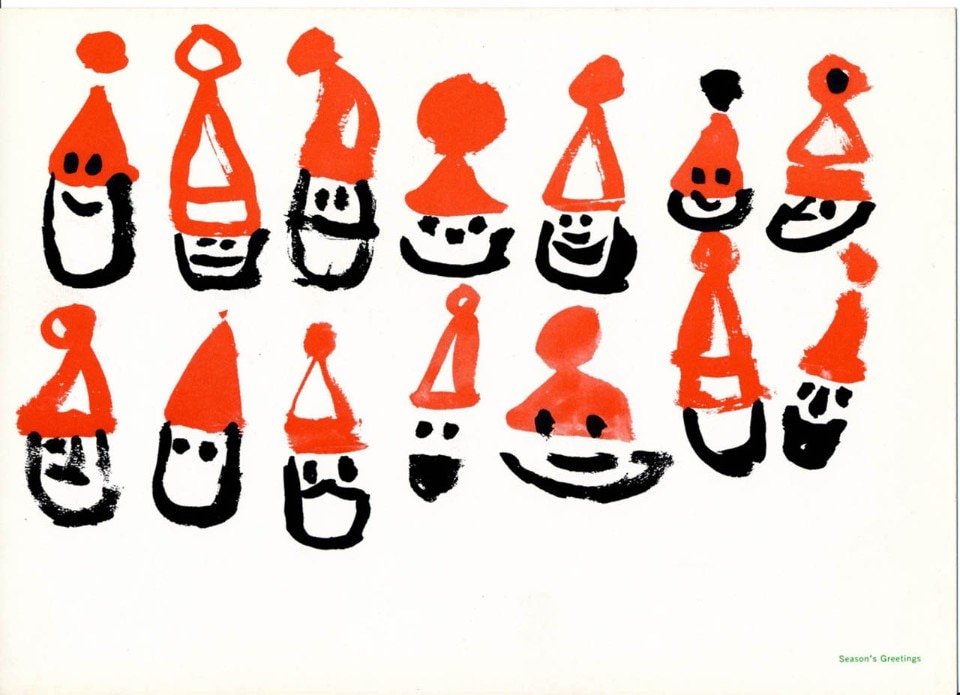
      Risultati della traduzione Robert Brownjohn, greeting card, New York, 1950s

      Exchanging gifts and greetings on holidays is an old and widespread tradition (at least in the Western world). Greeting cards are a seemingly trivial tool, but can be considered a design object. Among the MoMA Collection are those created by US graphic designer Robert Brownjohn for various companies.

      View article
      View article
      • SHARE
      • PIN IT

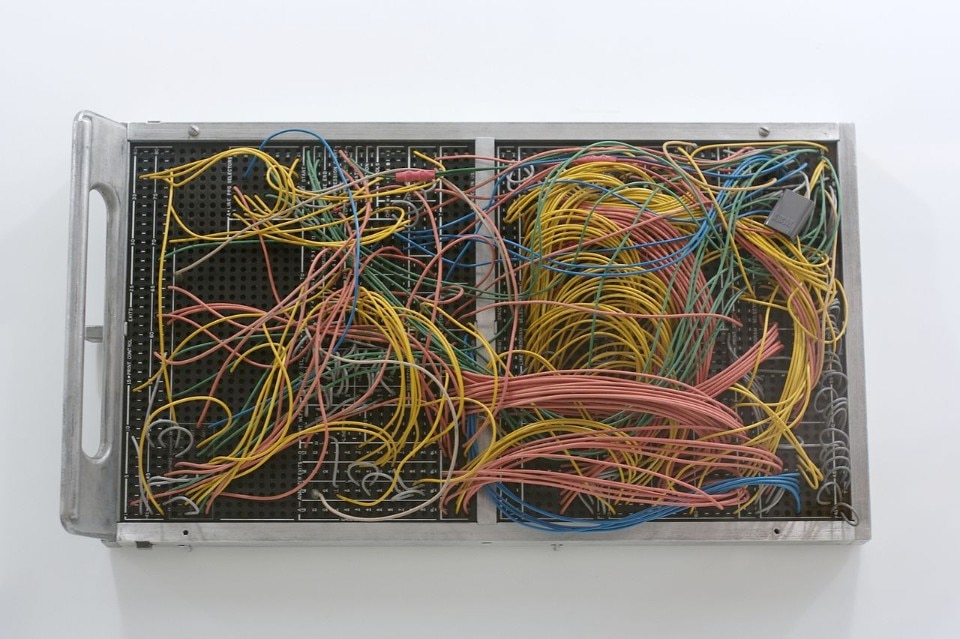
      The IBM 305 RAMAC (Random Access Method of Accounting and Control) was the first commercial computer (1956) with a magnetic disk memory with moving heads. The computer occupied a room measuring 9x15 m, and was one of the last valve computers built by IBM. Its control panel is preserved at MoMA as a testimony to the emerging "computer age".

      View article
      View article
      • SHARE
      • PIN IT

      Jock Kinneir and Margaret Calvert, Cow crossing sign for British roadways, designed 1957–1967

      One of the most ambitious and effective information design projects ever executed in Britain is the road and motorway signage system designed by Jock Kinneir and Margaret Calvert from 1957 to 1967. Intellectually rigorous yet inclusive and engaging, their system has become a role model for modern road signage all over the world.

      View article
      View article
      • SHARE
      • PIN IT

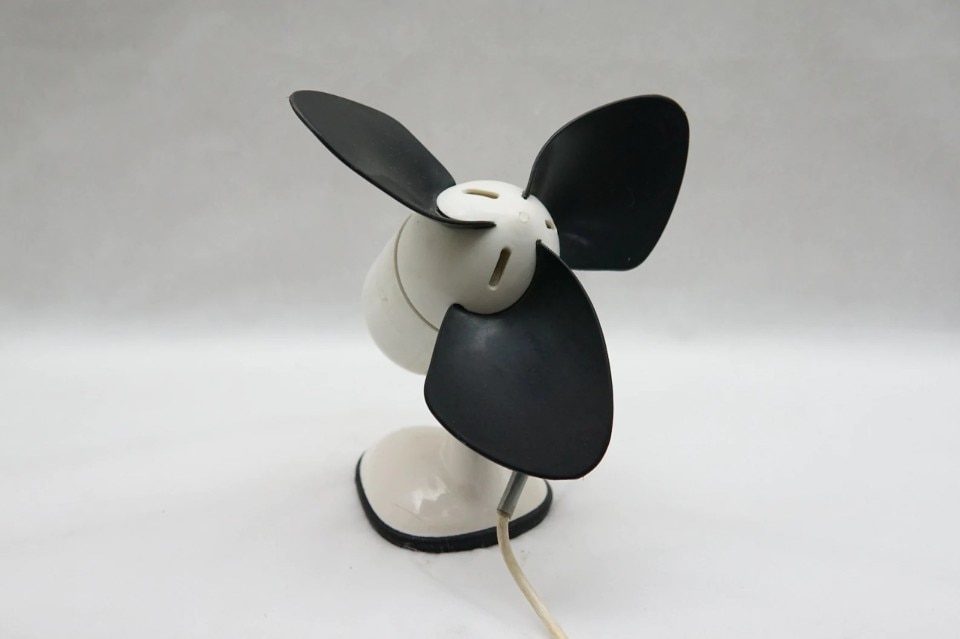
      G. Byrn Company, Air Flow Desk Fan, c. 1965

      A simple desk fan at MoMA? Yes. Obviously it is no longer in production but you can buy it in various online markets for a few dozen euros.

      View article
      View article
      • SHARE
      • PIN IT

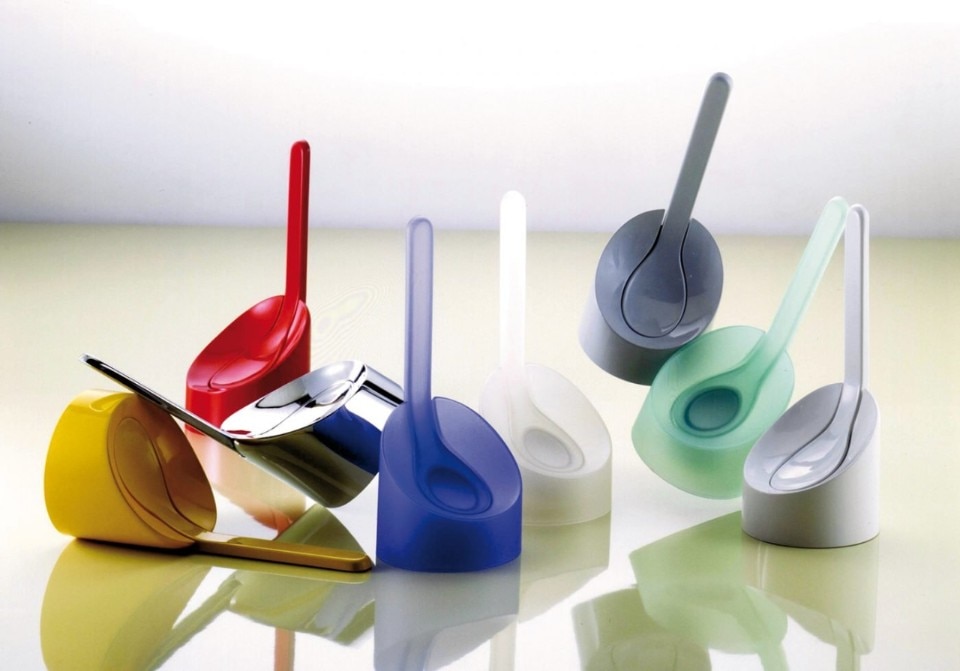
      Makio Hasuike, Cucciolo Toilet Brush Holder, 1976

      A product that uniquely interprets an everyday object and has become iconic in its field. A best seller, still on the market today. It has been part of MoMA's permanent design collection since 1977. 

      View article
      View article
      • SHARE
      • PIN IT

      Rocky Morton, Annabel Jankel, George Stone, Matt Frewer, The Max Headroom Show, 1985

      The Max Headroom Show is a cult TV series, first broadcast in 1985 and considered to be a pioneer of CG digital entertainment: a symbol of the future and what the computer could create if properly programmed. All this despite the fact that the main character was actually a very well made-up actor. Max Headroom was a prescient look at the instant gratification of the internet age. Recorded in the 1980s, it was set in a future that turned out to be very near.

      View article
      View article
      • SHARE
      • PIN IT

      Jens Eilstrup Rasmussen, Google Maps Pin, 2005

      The unique upside-down teardrop design of the Google Maps Pin was created to be both recognizable and functional, precisely indicating a location without obscuring the area nearby. This ubiquitous digital icon bleeds into real life in the work of artists such as Aram Bartholl, who creates physical Google Maps Pins to mark sites in the material world.

      View article
      View article
      • SHARE
      • PIN IT

      Kate Crawford and Vladan Joler, Anatomy of an AI System, 2018

      Explaining how AI systems connect and the effect they have on the world is not an easy task. But it’s what professors Kate Crawford and Vladan Joler have attempted to do in this artwork and with an essay.

      View article
      View article
      • SHARE
      • PIN IT

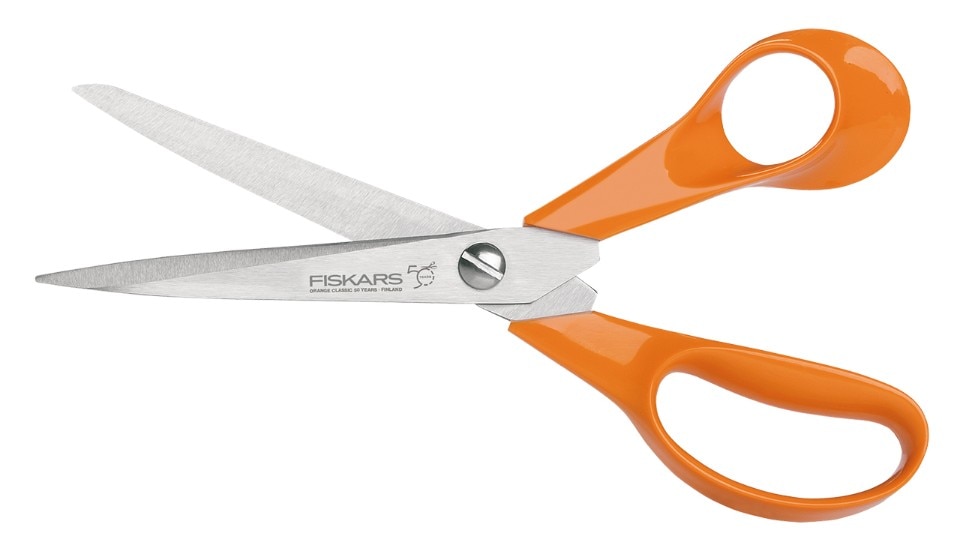
      Olof Backstrom, Fiskars Scissors, 1960-1967

      The scissors "with the orange handle". They are produced by Fiskars, a Finnish brand named after the village where the company was founded in the 19th century (it was originally a cutlery factory). More than a billion of these scissors – designed by Olof Backstrom and now considered a true icon of Nordic design – have been sold worldwide. In addition to the colour, the product's key feature is its ergonomics. The company was the first company in the world to use plastic to make the handles.

      View article
      View article
      • SHARE
      • PIN IT

      View article
      View article
      • SHARE
      • PIN IT
      Loading
      Share
      • Sections
        • Design
      • Keywords
      • News
      • Architecture
      • Design
      • Art
      • Opinion
      • Archive
      • Products
      • Foreign Editions
      • Biographies
      • Architectural movements
      • Buildings
      • Architecture Firms
      • Design Essentials
      • Urban stories
      • Gio Ponti
      • Contacts & Editorial Team

      • Follow us
      Legal Note

      Editorial DomusEditoriale Domus Spa
      Via G. Mazzocchi, 1/3
      20089 Rozzano (Mi) -
      Codice fiscale, partita IVA e iscrizione al Registro delle Imprese di Milano
      n. 07835550158
      R.E.A. di Milano n. 1186124
      Capitale sociale versato € 5.000.000,00 - All rights reserved - Privacy - Informativa cookie completa - Gestione Cookies

      China Germany India Mexico, Central America and Caribbean Sri Lanka Korea icon-camera close icon-comments icon-down-sm icon-download icon-facebook icon-heart icon-heart icon--mobile-logo icon-next-sm icon-next icon-pinterest icon-play icon-plus icon-prev-sm icon-prev Search icon-twitter icon-views icon-instagram