-
Sections
-
Keywords
The essentials: 20 unmissable typewriters
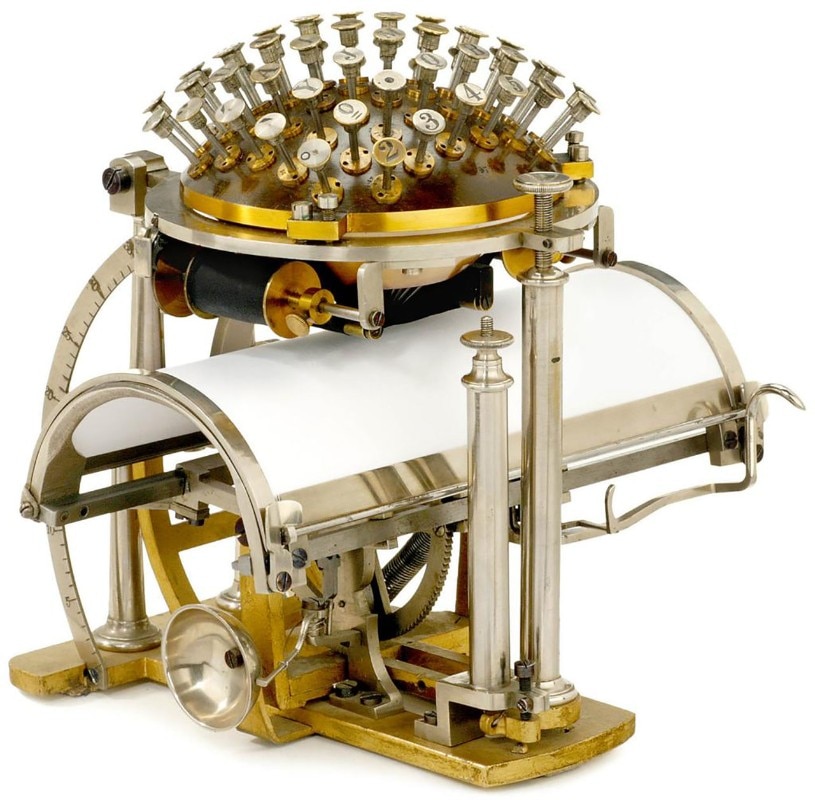
Writing Ball, Malling Hansen, 1867
Considered the precursor of the typewriter - although many models were already being tested in different parts of the world by the early 1800s, often without being aware of each other - and the first commercially produced model, it was prototyped in 1865 and launched in 1870. The name well describes its peculiarity compared to later models: the keys are positioned on a portion of a sphere - hence the reference to the 'ball' - and impress the paper positioned on a sliding surface below. It was used by Friedrich Nietzsche.
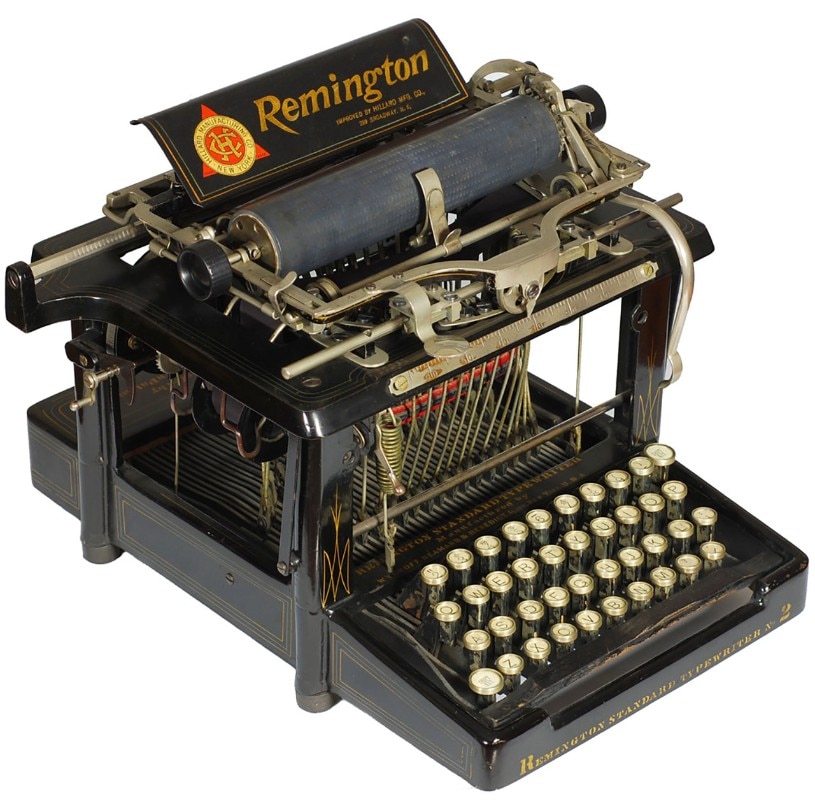
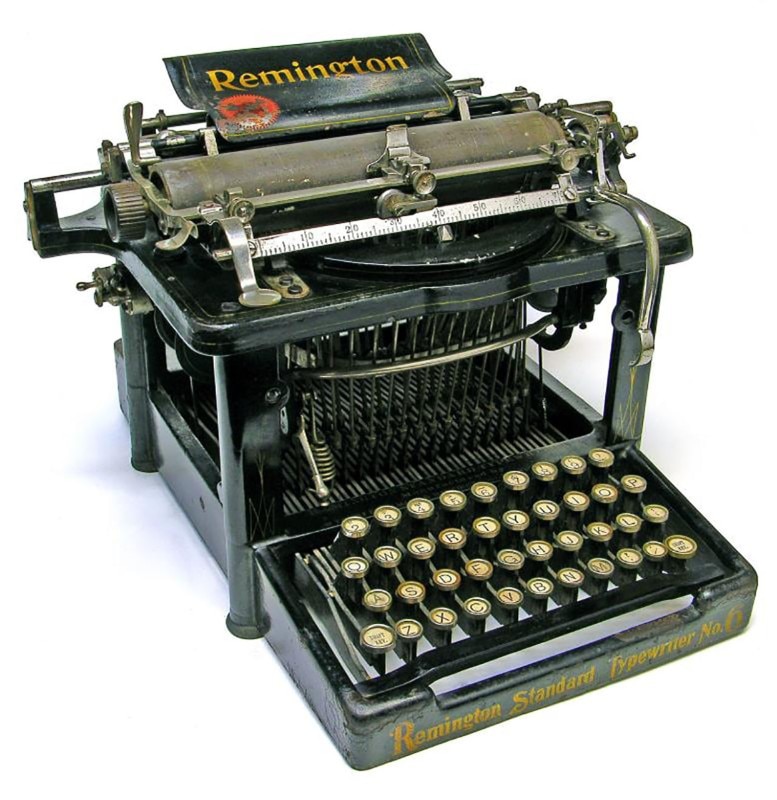
Remington No. 2, 1878
An evolution of the previous model - this one a great market success launched with a real publicity campaign - it introduced the lower case key, which allowed the user to write in lower case, and helped to establish the QWERTY keyboard as the reference standard.
Remington No. 2, 1878
An evolution of the previous model - this one a great market success launched with a real publicity campaign - it introduced the lower case key, which allowed the user to write in lower case, and helped to establish the QWERTY keyboard as the reference standard.
Oliver No. 3, 1895
American typewriter manufactured in Chicago by Thomas Oliver, it has its hammers on both the right and the left side of the roller. It revolutionised the existing models because it allowed the user to view the written text, which however quickly disappears under the left wing of the characters. It is also characterised by an iconic bottle green in the covering of the cast iron frame.
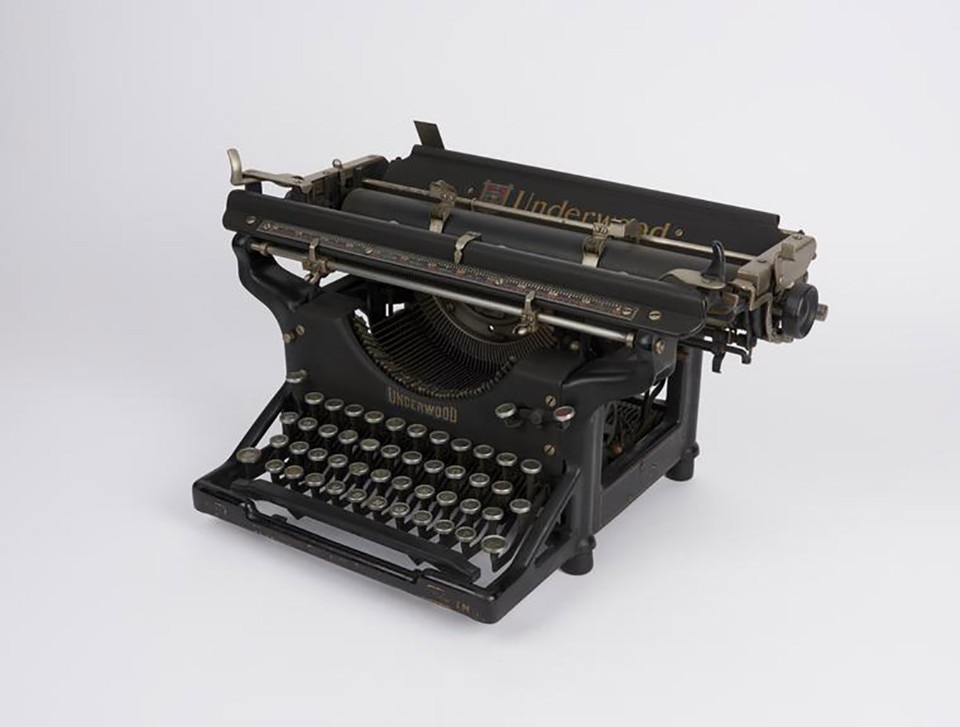
Underwood No.5, Franz Xavier Wagner, Underwood, 1900
The most famous model of those produced by the renown American company, the No.5 was one of the most commercially successful - for three decades, in the time typewriting became established as a profession and as a practice in the filing and sharing of documents, millions were sold - and thanks to its compactness compared to previous models it established itself as the ideal typing machine. Underwood was responsible for the semi-circular arrangement of the levers, which became the standard for almost all subsequent models.
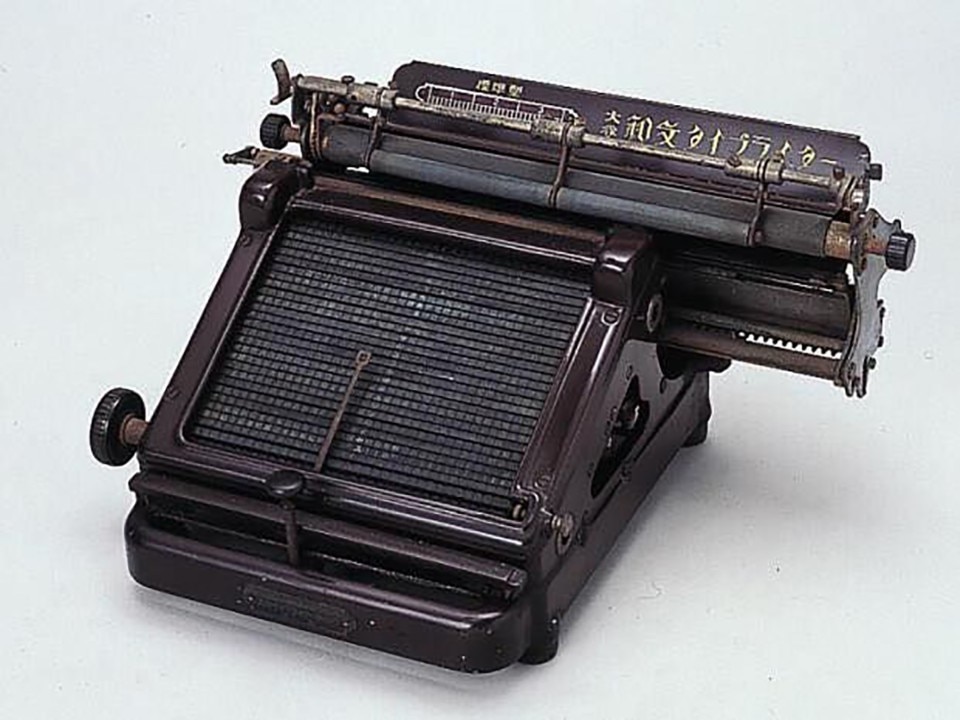
Wabun taipuraitā, Kyota Sugimoto, 1915
Typewriters were by no means a specific feature of the Western world: from India to Japan, there were many projects and industries that adapted the machines to their own alphabets and production specificities. In the Land of the Rising Sun, the Wabun Taipuraitā (transliteration of 和文タイプライタ) was capable of using 2400 kanji characters. In order to use it, it was necessary to locate and then retrieve the desired symbols from a large matrix of metal characters.
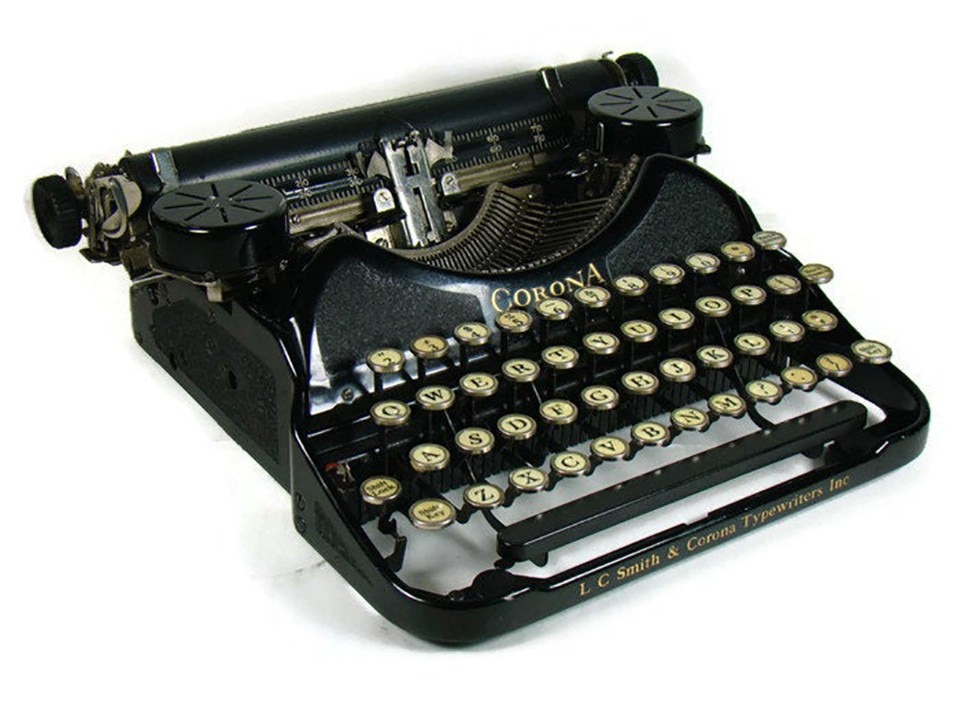
LC Smith &Corona, 1930
The typewriter of Karen Blixen, Kurt Vonnegut and Ernest Hemingway, with its unmistakably art deco lines, was distinguished from previous models by one main feature: its (relative) silence.
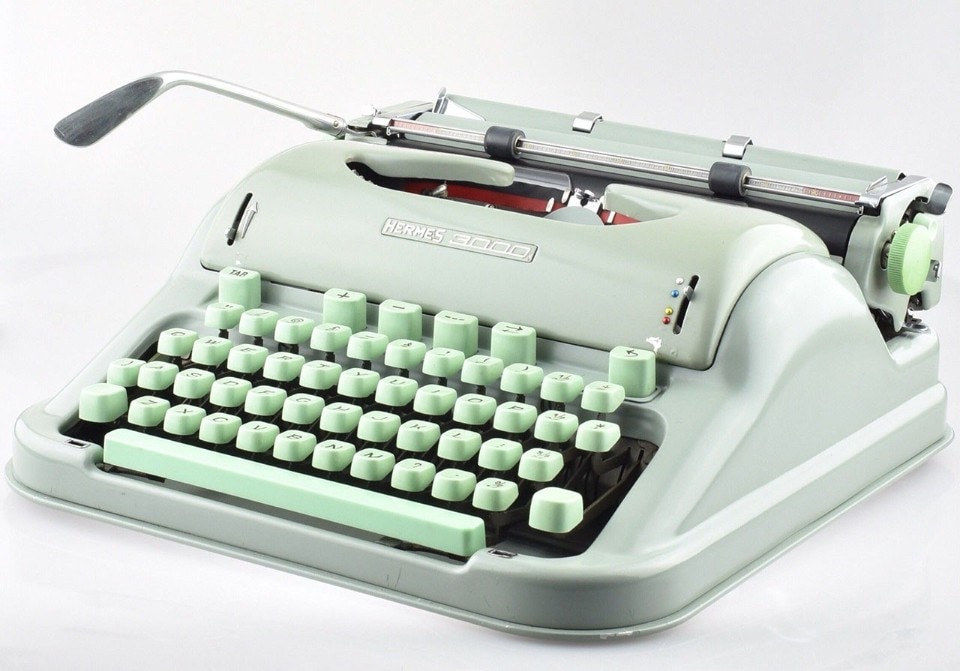
Hermes 3000, Paillard Bolex, 1950
Developed by a Swiss company that already produced mechanisms for watches, the Hermes is the first truly portable machine, as well as being highly ergonomic. It is equipped with a case whose cover hooks directly onto the back of the machine.
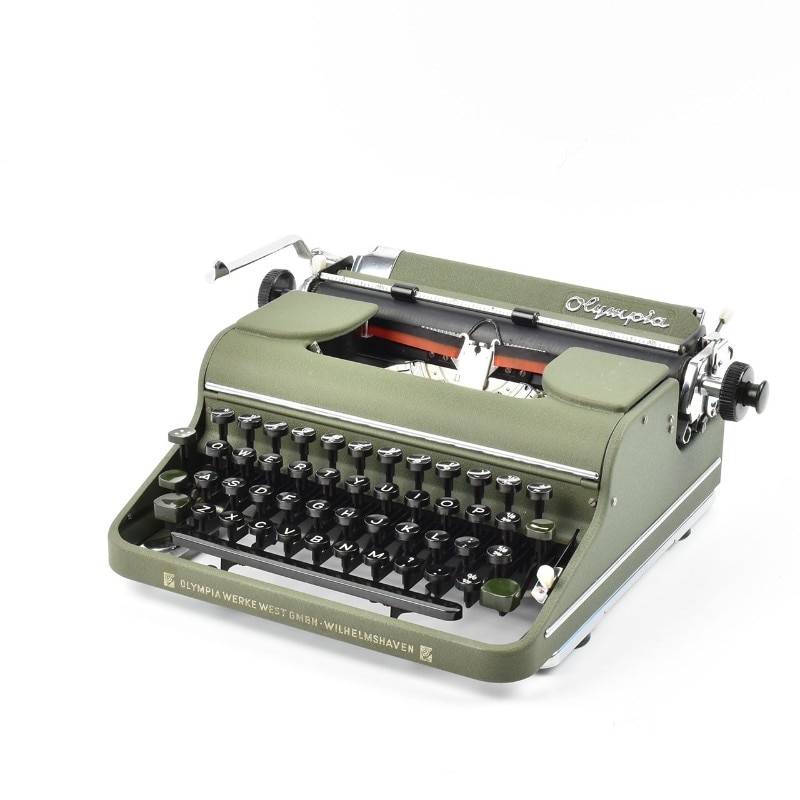
Olympia SM1, 1951
A formal synthesis of the old typewriter models and the more compact models of the second half of the 20th century, it is one of the most emblematic models of the 1950s. Curiously called "the Mercedes of typewriters", it combined professional and personal use thanks to its compact size.
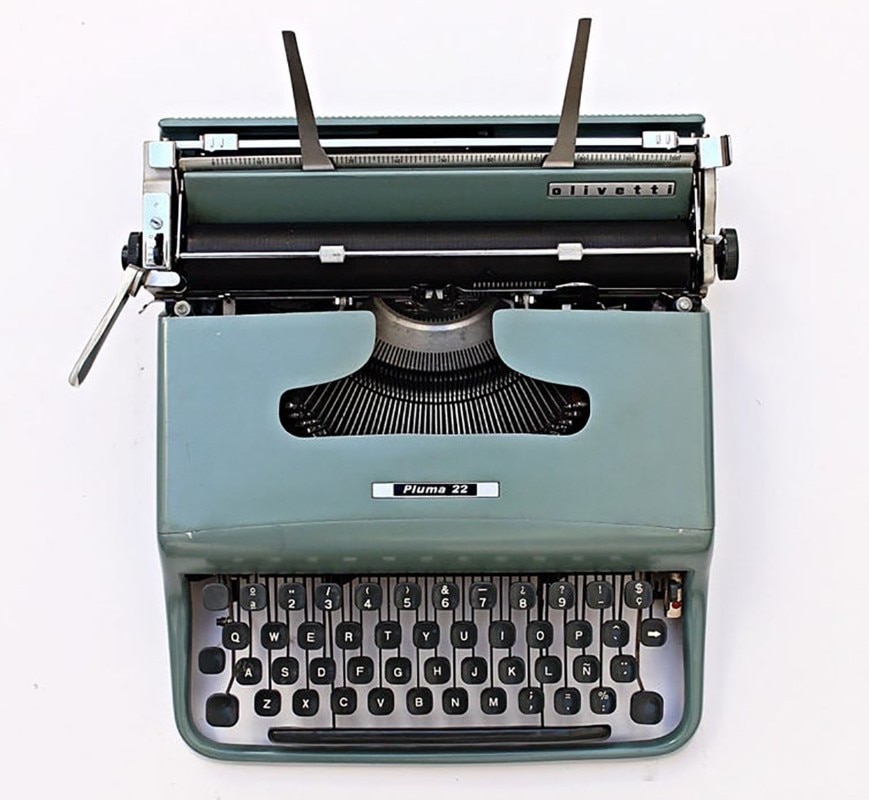
Lettera 22, Marcello Nizzoli, Giuseppe Beccio, Olivetti, 1950
Olivetti's second portable typewriter model was also one of its greatest commercial successes. Compared to previous models, the Lettera 22 was not only particularly functional, being compact and easily transportable - despite its 4 kg - but also a successful synthesis of elegance and formal rigour. Made of die-cast aluminium, it was distinguished by the fact that it incorporated a keyboard and roller and by the presence of a lever that allowed the position of the ribbon to be adjusted from black to red. The keyboard did not include 1 nor 0, which had to be written with I and O. The price, 40,000 lire, corresponded to an average monthly salary in Italy. Many Italian intellectuals adopted and never abandoned it, from Pasolini to Biagi, Montanelli, Oriana Fallaci, Gianni Mura, Sylvia Plath and Leonard Cohen.
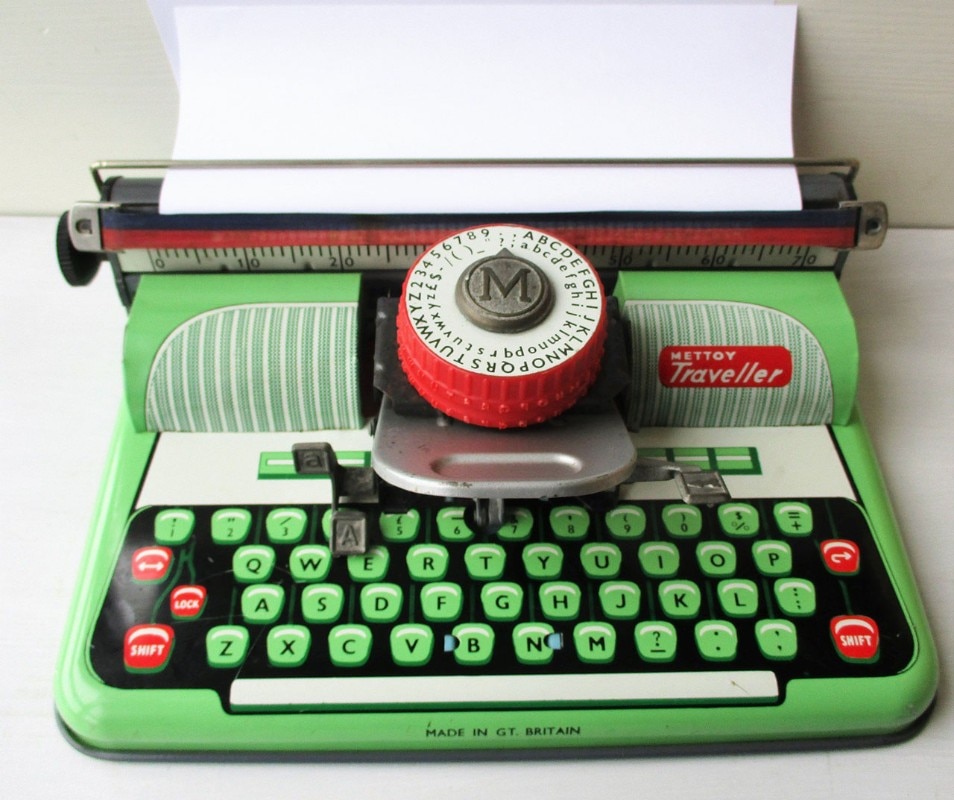
Mettoy Traveller, 1950
A children's typewriter produced in the United States, it is distinguished by the typical pastel colours of the 1950s and the distinct profile of the knobs: an invitation to playful use so that young children can imitate writing as practised by adults. The Mettoy Traveller was inspired by an earlier TippCo model produced in Germany in 1912.
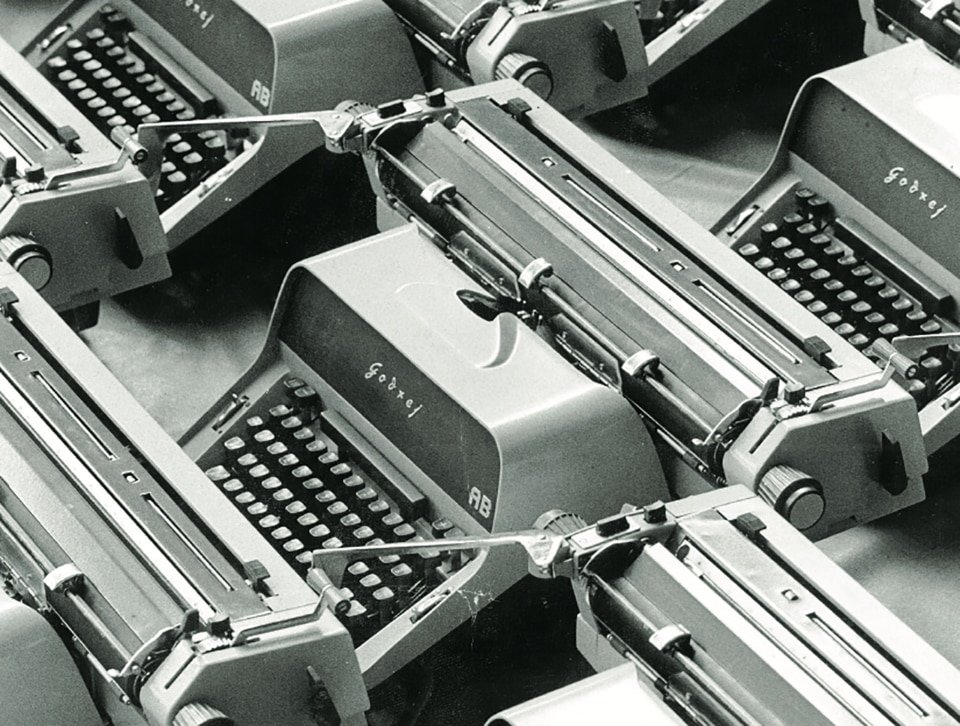
Prima, Godrej & Boyce, 1955
The last typewriter company to cease production in 2011, Godrej & Boyce embodied the emancipation of the Indian continent from foreign models. Since 1955, Godrej & Boyce has supplied millions of typewriters to India and neighbouring countries, spreading to government and private companies alike.
Selectric, Eliot Noyes, IBM, 1961
Known as the "golf ball machine", the Selectric differed from earlier models by the invention of a rotating head which, replacing the hammers, embossed with all the characters on its surface and which, when tilted, struck the ribbon, impressing characters at a higher speed than earlier models. The head could also be easily replaced, allowing the user to change the alphabet and paving the way for multiple alphabets in the same document. The Selectric keyboard would be used as the interface for the IBM System/360, considered to be the archetype of the mainframe.
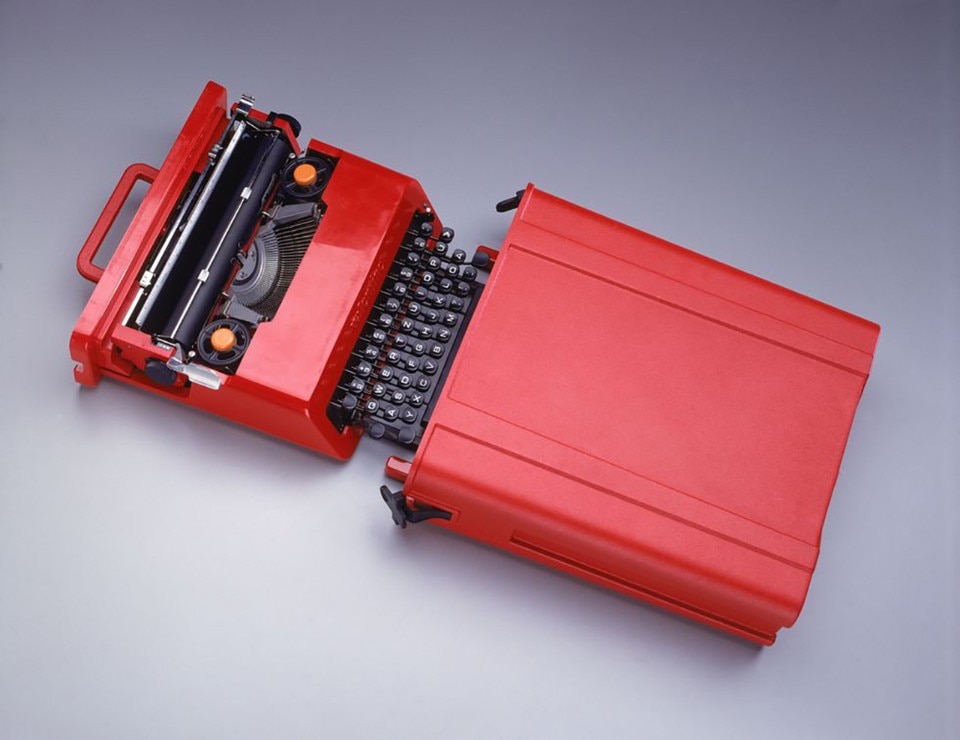
Valentine, Ettore Sottsass, Perry King, Olivetti, 1968
Symbol of informality, compared by Sottsass to the biro of typewriting, the revolutionary Valentine was Olivetti's response to the cheap, portable Japanese models that were beginning to invade the European market in the late 1960s. Prototyped in Moplen plastic and finally launched on the market in injection-moulded ABS plastic, this "Lettera 32 disguised as an activist" was conceived by Sottsass as a personal object capable of responding to the dynamism of new generations. Thanks to the integrated handle and the rubber hooks on the body, the Valentine can be easily transported, eliminating the need for a cardboard or plastic case that distinguished previous models. The communication campaign, coordinated by Sottsass himself, engaged exceptional graphic designers such as Walter Ballmer, Roberto Pieraccini, Milton Glaser and Graziella Marchi, celebrating the pop spirit of the young people it was aimed at. Its flaming red will also go down in the history of design, although it was also available in white, blue and green sold in Italy and Germany.

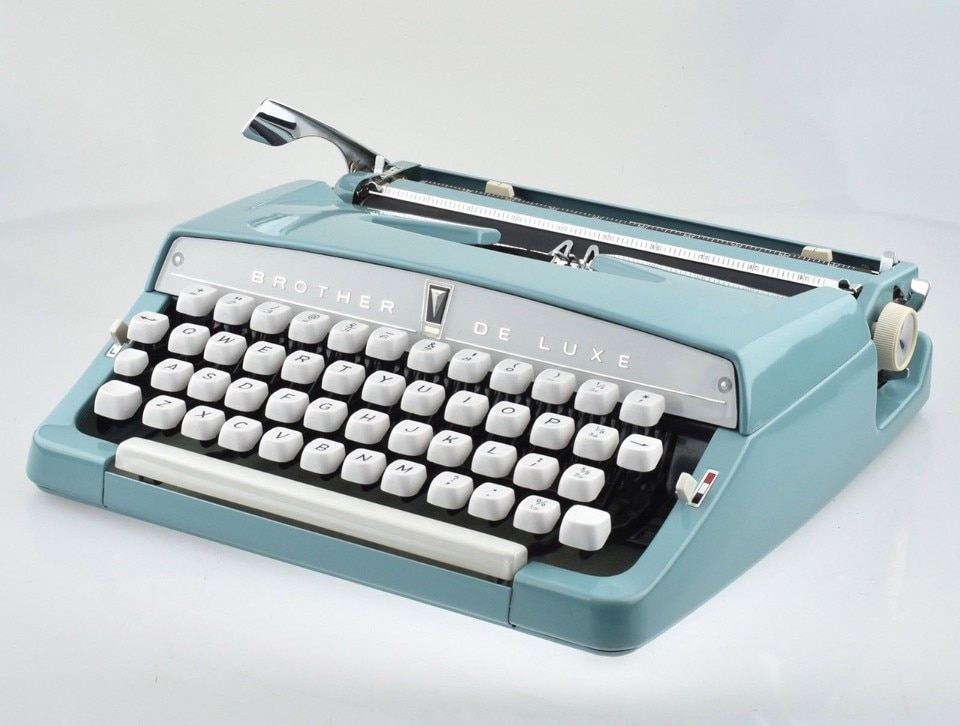
Brother Deluxe 1522, Brother, 1973
Portable and compact, this Japanese typewriter with a metal body is distinguished by its automatic spacing repeat function, which allows the user to keep writing without having to continuously press the space bar.
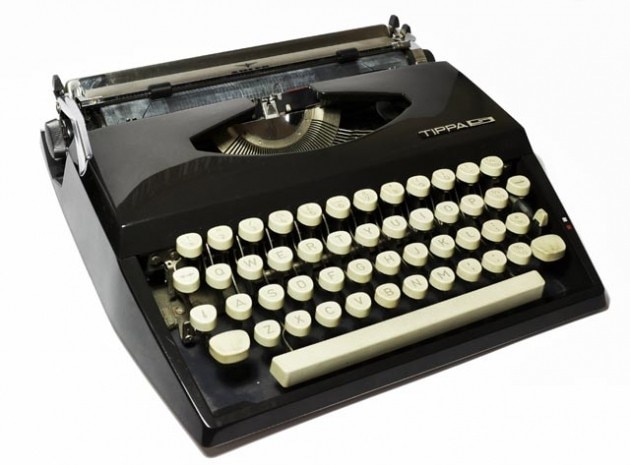
Tippa S, Triumph-Adler, 1975
Produced in Germany, the Tippa S is one of the last examples of the historical Adler production and is distinguished by its angles, which give it a snappy and tense profile.
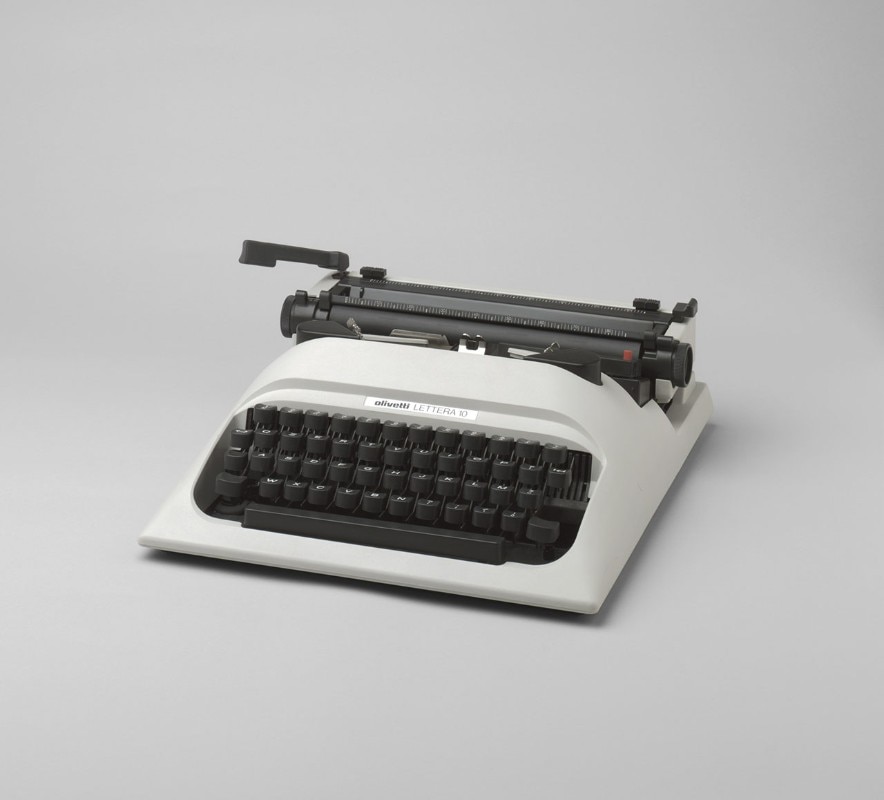
Lettera 10, Mario Bellini, Olivetti, 1976
With the same mechanics as the Lettera 22, the Lettera 10 is distinguished by the unusual fleeting shape of the plastic body, which flattens out at the end of the keyboard and instead takes on a rounded form next to the bars.
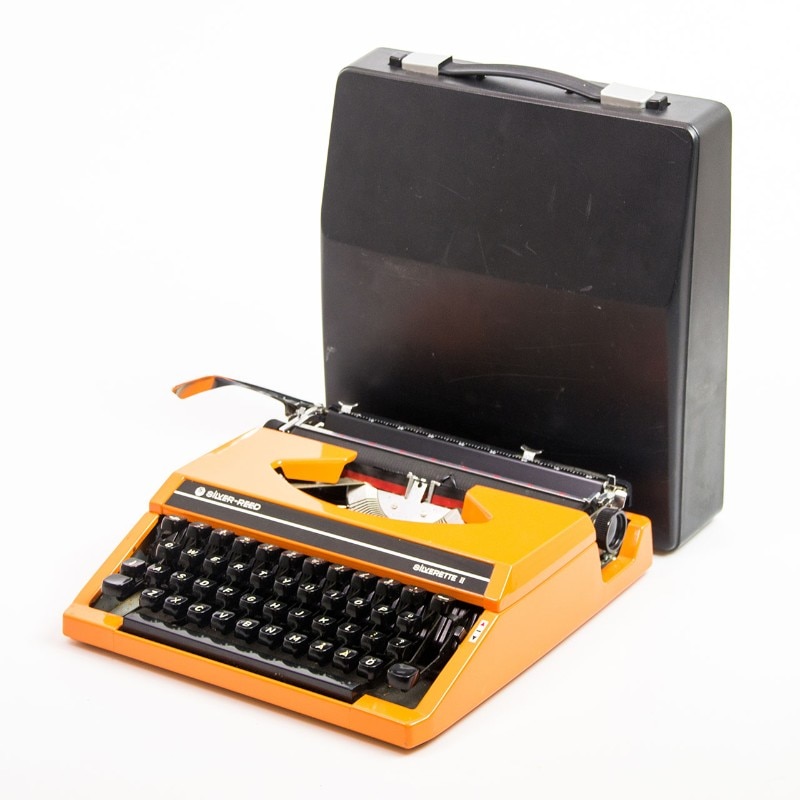
Silverette 2, Silver Reed, 1980
Compact and super-transportable thanks also to the integrated briefcase, with a plastic body in bright colours, it is one of the last mass-produced typewriters.
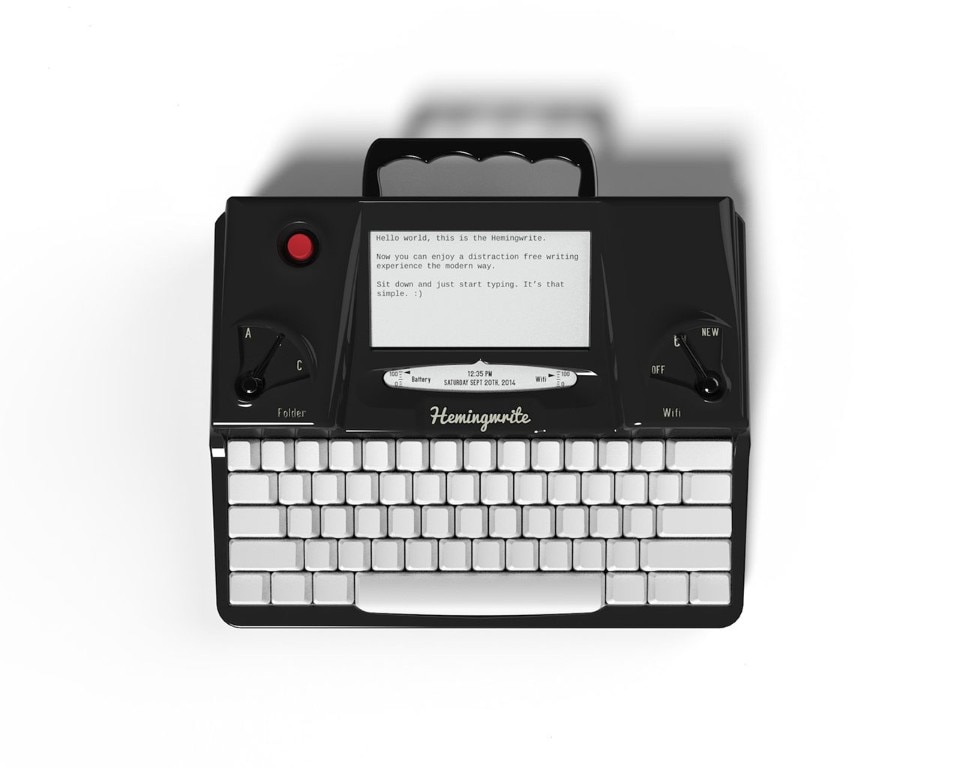
Hemingwrite, Adam Leeb, Patrick Paul, 2014
The typewriter's survivor in the 21st century, it survives in electronic mode by appealing to a niche that appreciates not only its retro aura, but also the possibility of relegating the machine to its primary function: writing. Launched with a crowdfunding campaign, it allows its aficionados to share the digital version of the document with other devices.