-
Sections
-
Keywords
The tallest buildings in Italy, between signature design and urban marketing
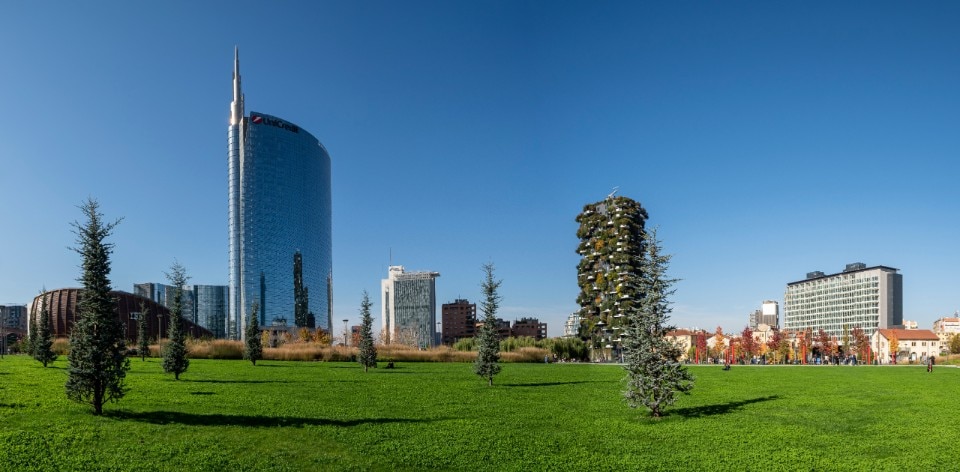
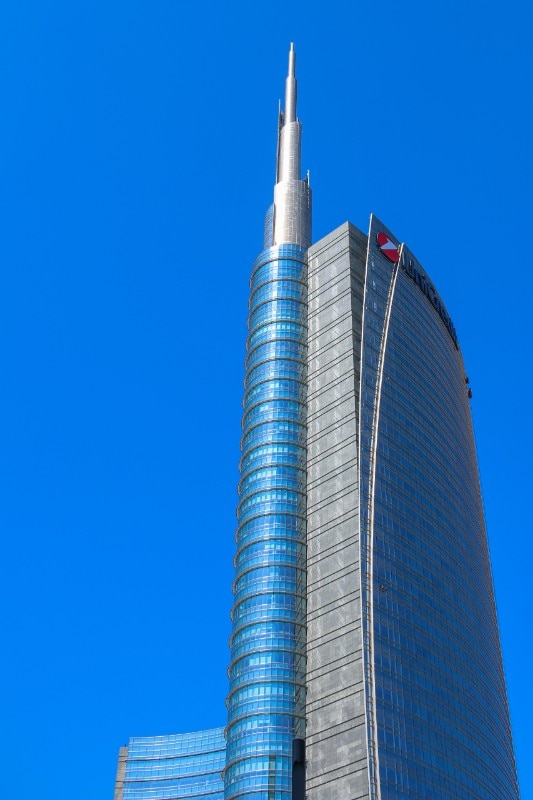
César Pelli, UniCredit Tower, Milan 2012 (231 m)
The tower is part of a complex of three buildings of different heights arranged around Piazza Gae Aulenti (UniCredit Tower, Tower B and Tower C). Its sinuous glazed shape and the imposing spire make it a highly recognisable symbol in the city. At 231 metres high at the spire, it is the tallest skyscraper in Italy.
Photo Restuccia Giancarlo from Adobe Stock
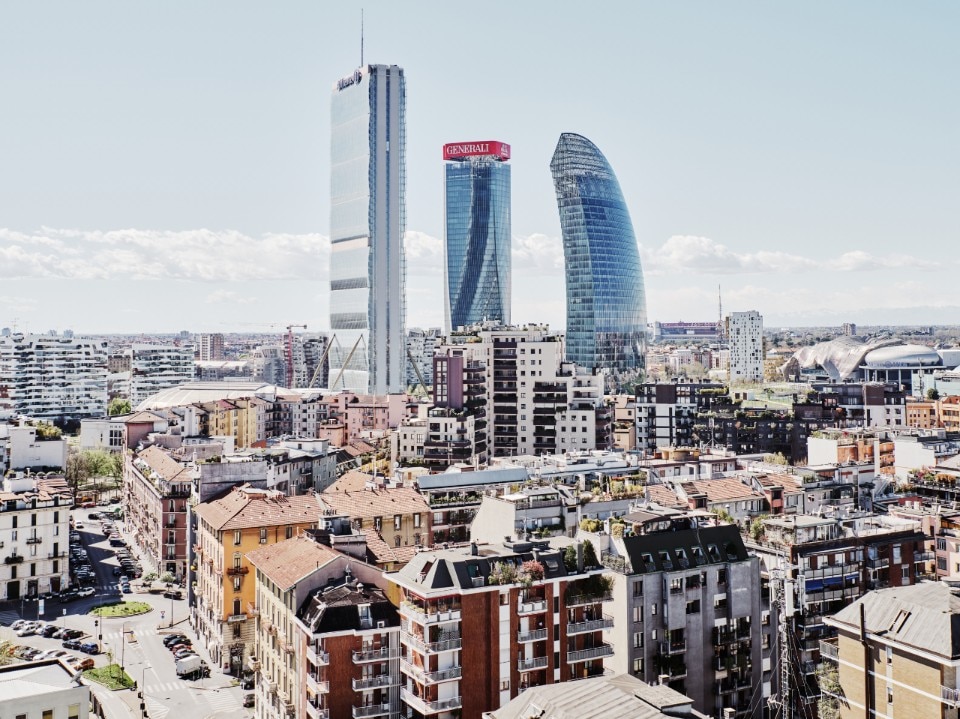
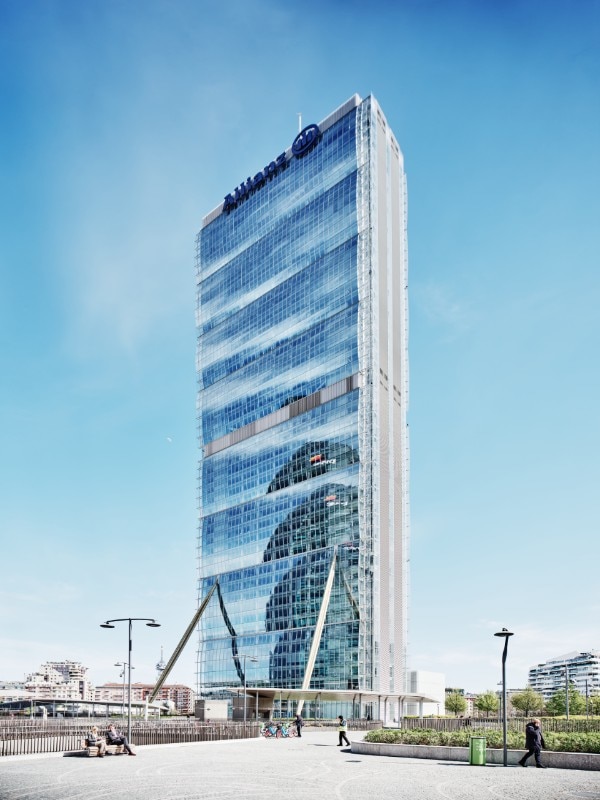
Arata Isozaki and Andrea Maffei, Allianz Tower, Milan 2015 (209 m)
The tower is part of CityLife, the imposing urban regeneration programme of the former Fiera area, together with the two neighbouring towers (one designed by Zaha Hadid, the other by Daniel Libeskind):together with the CityLife residential and commercial complex, the three skyscrapers are now an undisputed symbol of the city of the future and of its international attractiveness. The Allianz building, distributed over 50 floors, 47 of which are for office use, is characterised by a sculptural volume with fronts clad in glass panels. It is the tallest skyscraper in Italy in terms of walkable surface (200.5 metres) and the one with the highest number of floors.
Photo Marco Menghi
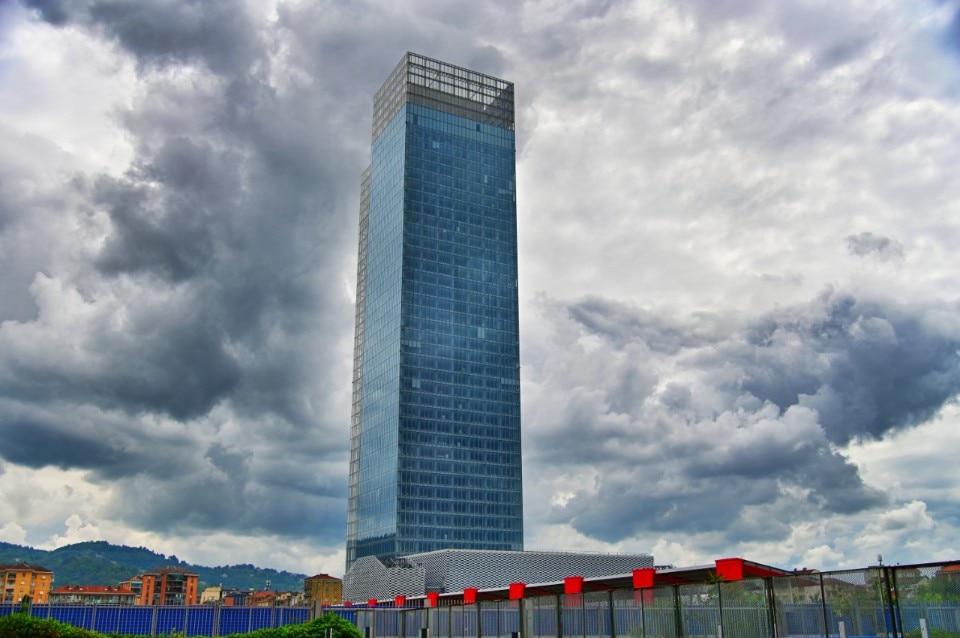
Massimiliano Fuksas, Piedmont Region Skyscraper, Turin 2021 (205 m)
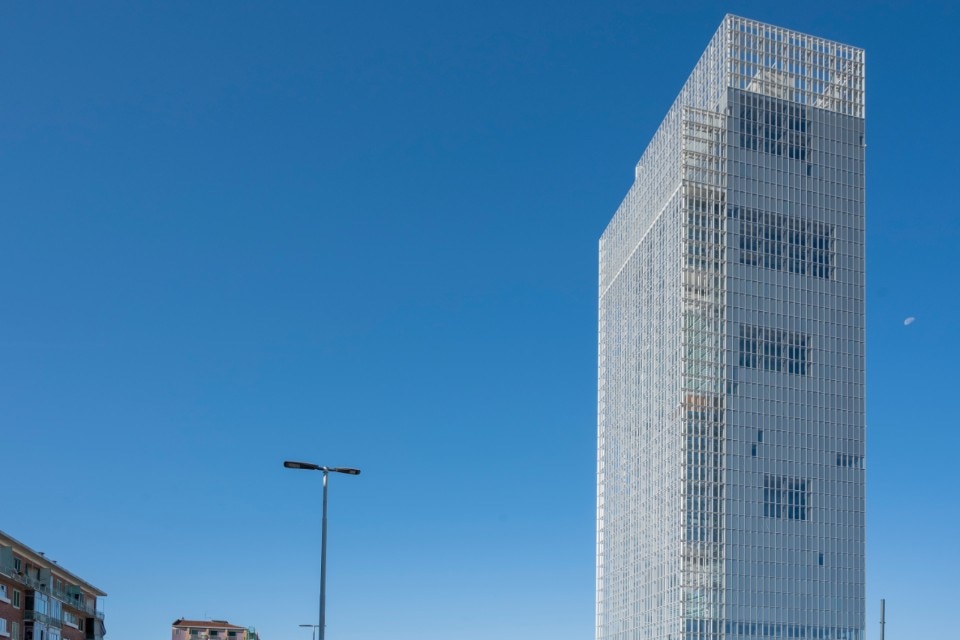
The reinforced concrete and glass building, which houses the central offices and bodies of the Region, comprises 42 floors, the last of which is intended as a roof forest. After more than a decade, amidst various procedural problems, the building was recently inaugurated with features that its architect considered very different from what was originally planned.
Photo antomar from Adobe Stock
Massimiliano Fuksas, Piedmont Region Skyscraper, Turin 2021 (205 m)
Photo massimo_g from Adobe Stock
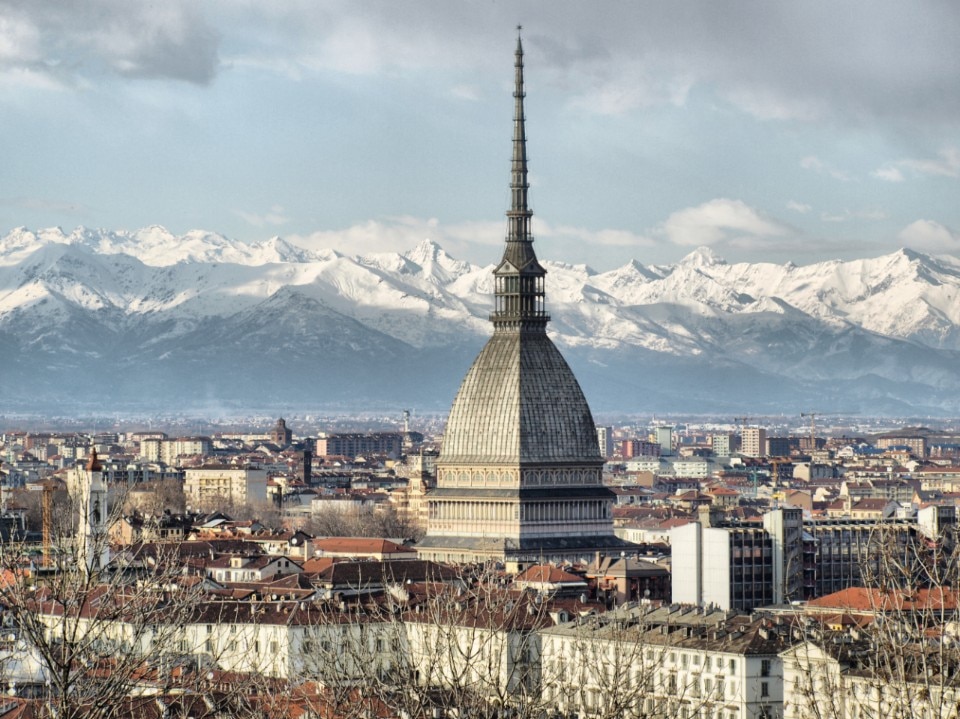
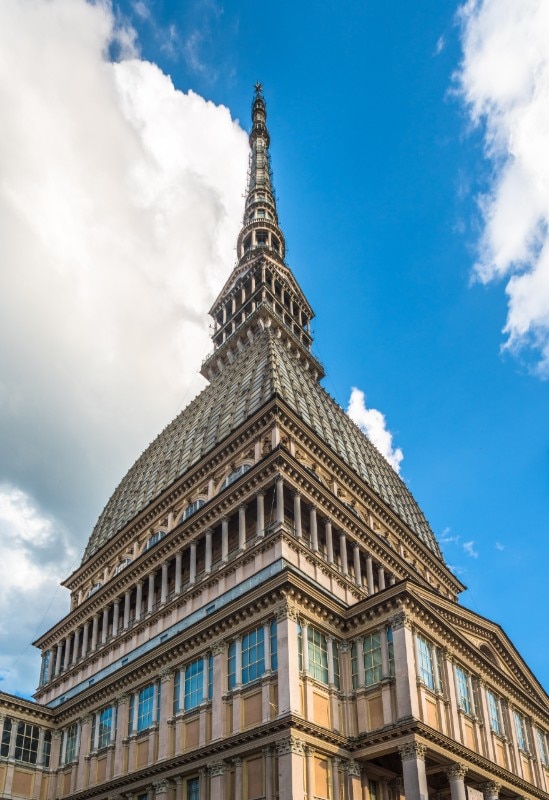
Alessandro Antonelli, Mole Antonelliana, Turin 1889 (167 m)
At 167 metres high, the undisputed symbol of Turin was the tallest masonry building in Europe at the time of its construction. Originally intended as a synagogue, after its acquisition by the City Council the complex became a monument to national unity. The panoramic lift, introduced to commemorate the centenary of Italian Unification and renovated more recently, leads to the rooftop temple, from which a spectacular view of the surrounding urban and Alpine landscape can be experienced. Today the building houses the National Cinema Museum.
Photo Claudio Divizia from Adobe Stock
Alessandro Antonelli, Mole Antonelliana, Turin 1889 (167 m)
Photo javarman from Adobe Stock
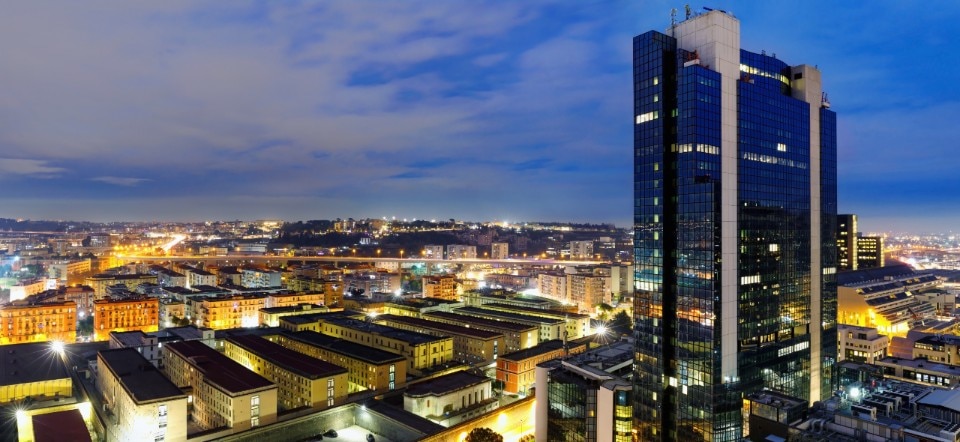
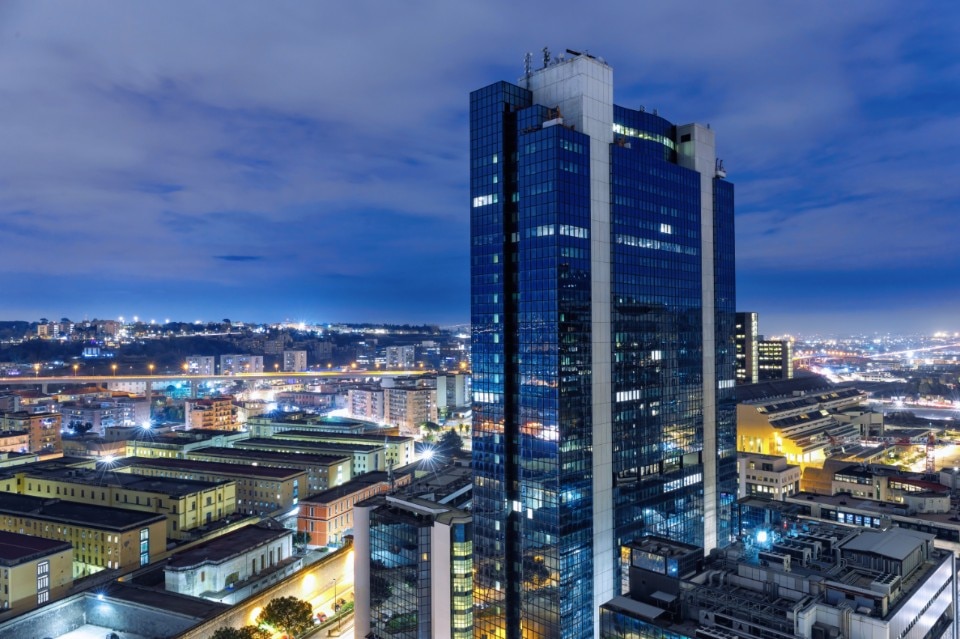
Corrado Beguinot, Telecom Italia Tower, Naples 1995 (129 m)
The complex, located in the Centro Direzionale in Naples designed by Kenzō Tange, consists of the central tower and two adjacent bodies at a lower level. The imposing volumes are lightened on the façade using mirrored glass panels.
Photo Gennaro Leonardi from Adobe Stock
Corrado Beguinot, Telecom Italia Tower, Naples 1995 (129 m)
Photo Gennaro Leonardi from Adobe Stock
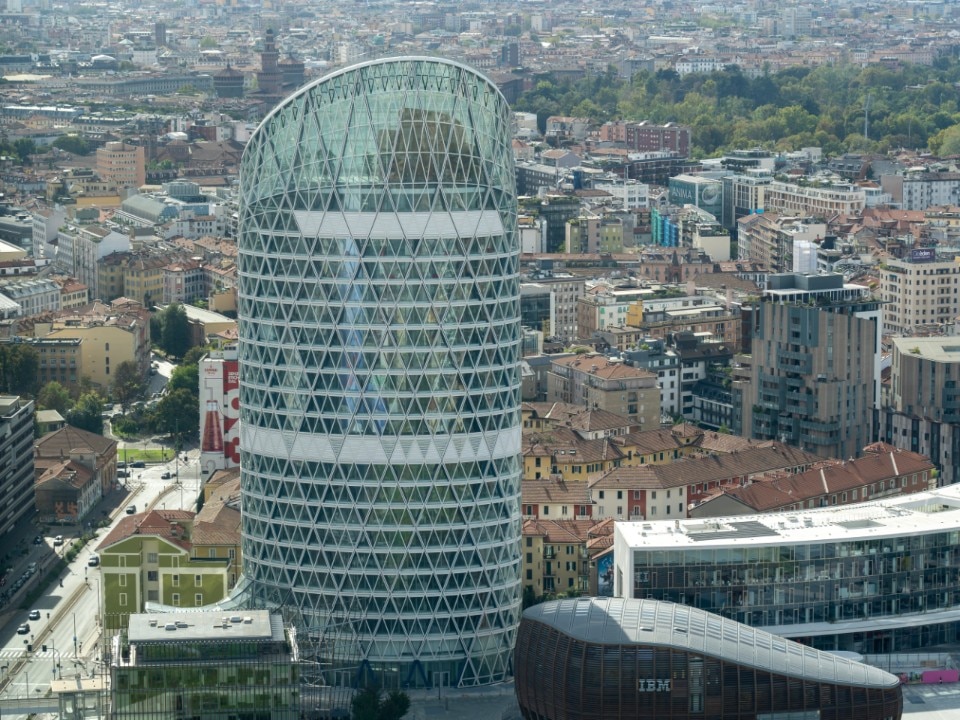
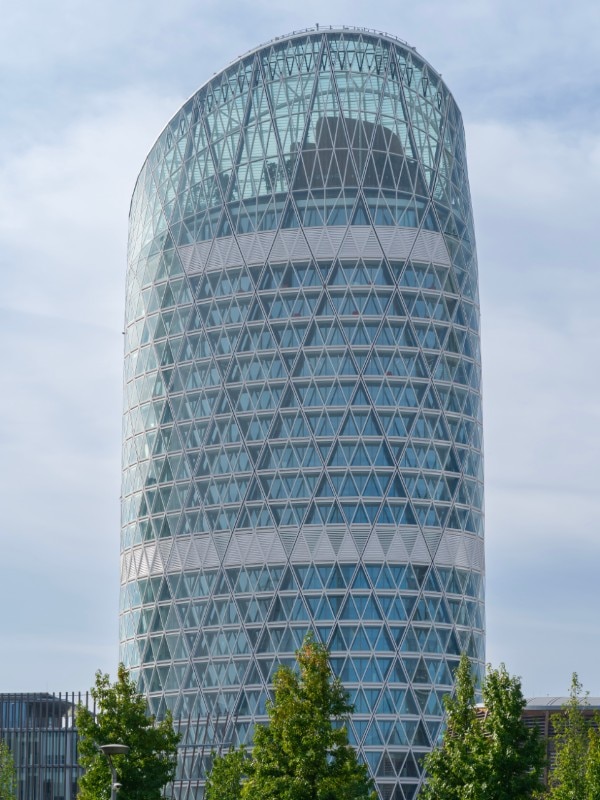
Mario Cucinella Architects, UnipolSai Tower, Milan 2023 (124 m)
The Milan headquarters of the Unipol group, located within the context of the important Porta Nuova urban redevelopment project, is an elliptical-based tower that stands out thanks to the structural latticework defining its sculptural glass-and-steel volume. The work is designed to maximise energy efficiency thanks to the double skin shell mitigating summer heat and insulating against winter cold, solar panels producing electricity, and winter gardens helping regulate indoor temperature.
Photo Matteo Ceruti from Adobe Stock
Mario Cucinella Architects, UnipolSai Tower, Milan 2023 (124 m)
Photo Matteo Ceruti da Adobe Stock
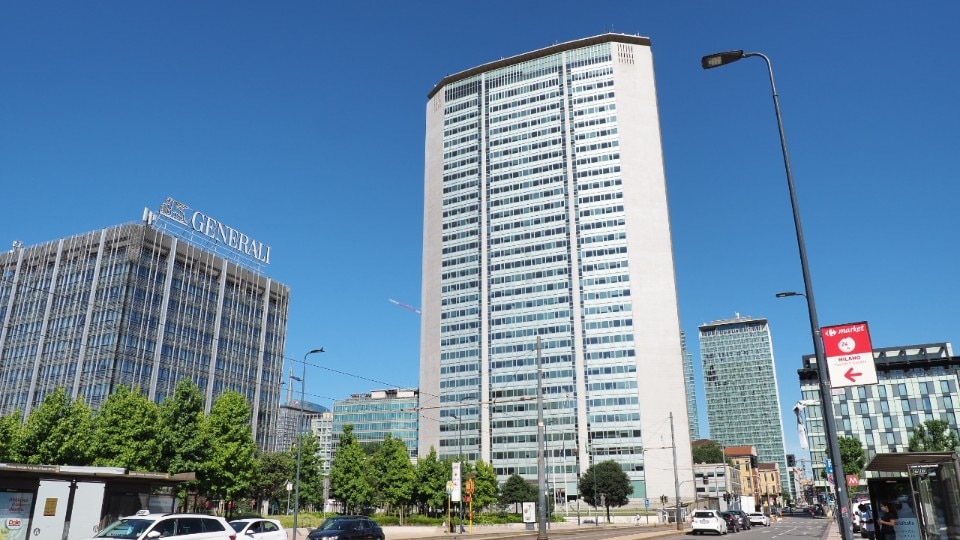
Gio Ponti, Pirelli Skyscraper, Milan 1960 (127m)
The 'Pirellone', with its 127 metres in height distributed over 31 floors above ground and 2 below, has been the tallest building in the city for about fifty years and still is an undisputed symbol of contemporary Milan. Built as the Pirelli tyre company's offices, in 1978 it was bought by the Lombardy Regional Government to make it its headquarters. The modernist building is characterised by a structure made entirely of reinforced concrete and a façade with ceramic cladding and curtain walls of glass, aluminium and steel.
Photo Matteo Ceruti from Adobe Stock
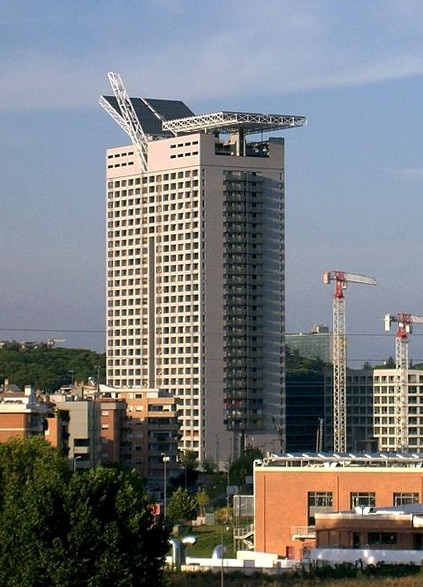
Franco Purini, Eurosky Tower, Rome 2012 (120 m)
The construction, the tallest civil building in the city and one of the tallest residential towers in Italy, is articulated in two vertical prisms, each of which is served by two blocks of stairs and lifts, connected by bridges that house part of the technical installations. The structure, made of concrete and steel, is clad in lamellar granite; the façades are punctuated by the regular cut-outs of the balconies. The work is inspired by the city's medieval towers, including the Torre delle Milizie.
Photo Blackcat from Wikipedia
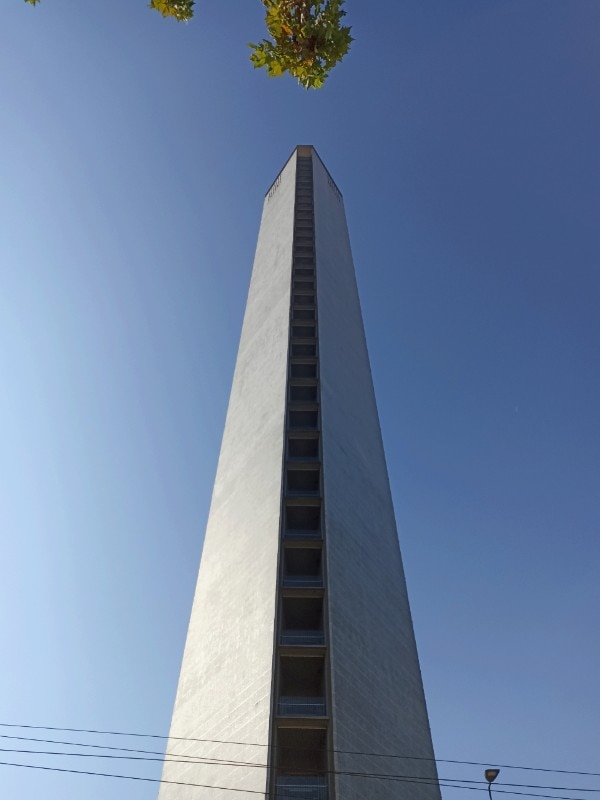
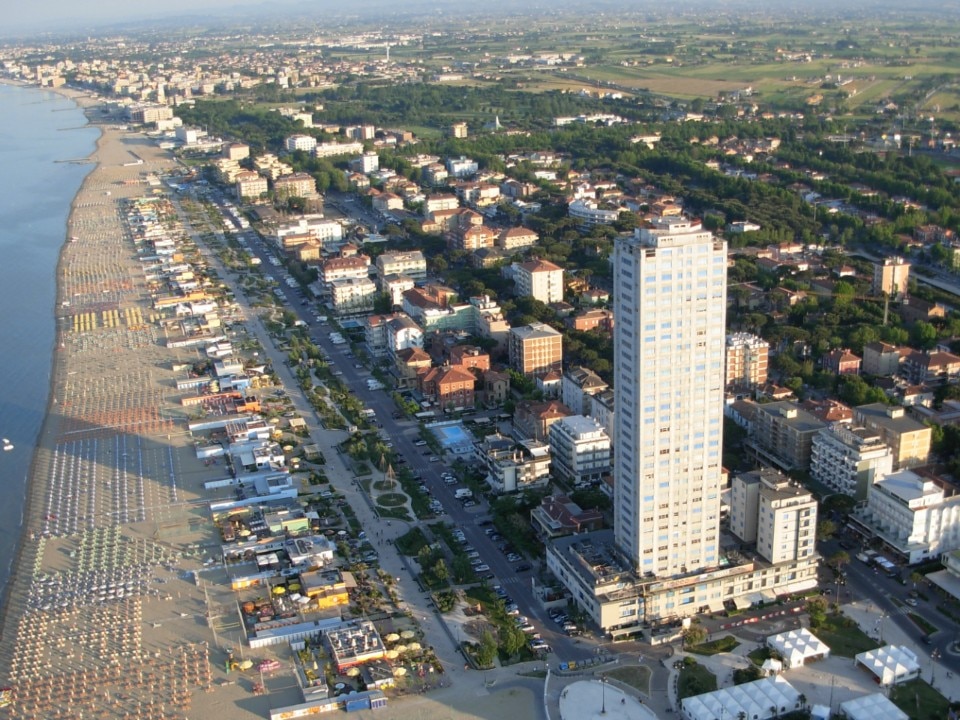
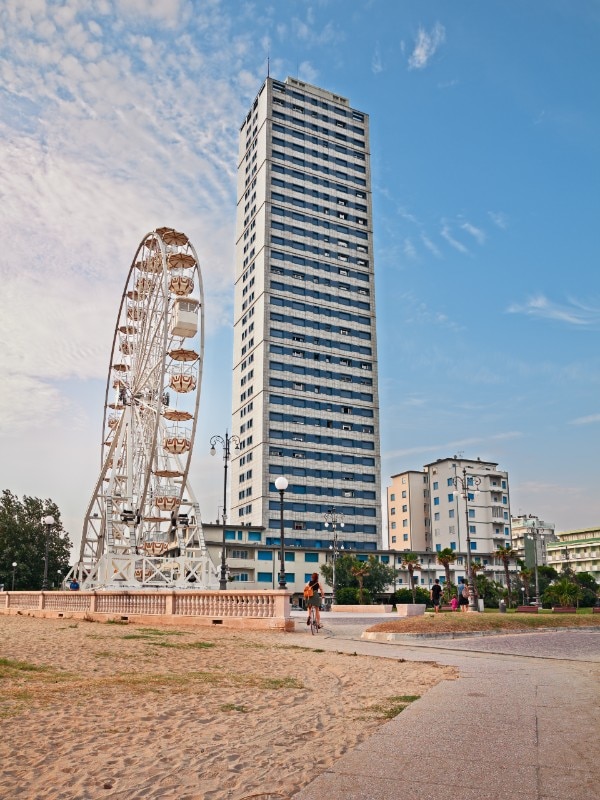
Eugenio Berardi, Cesenatico Skyscraper, Cesenatico 1958 (118 m)
The building on the seafront, at 118 metres high, was at the time of its construction the tallest skyscraper in Italy, until it was surpassed a few years later by the Pirelli skyscraper in Milan. The building, with its structure made entirely of reinforced concrete, has undergone several renovations: the last one between 2003 and 2009, by Giovanni Lucchi, involved installation upgrades, consolidation of the load-bearing structure, redevelopment of the façades with replacement of the original shutters and construction of a ventilated façade with an aluminium structure and Gres porcelain tiles in shades of grey, light blue and blue.

Photo AndreaBonavita from Adobe Stock
Eugenio Berardi, Cesenatico Skyscraper, Cesenatico 1958 (118 m)
Photo ermess from Adobe Stock
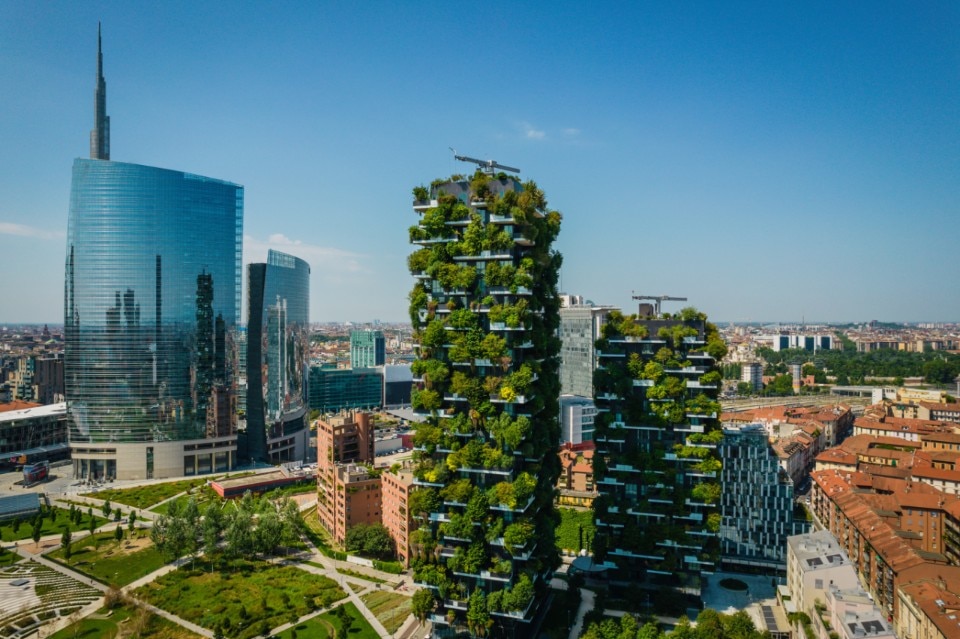
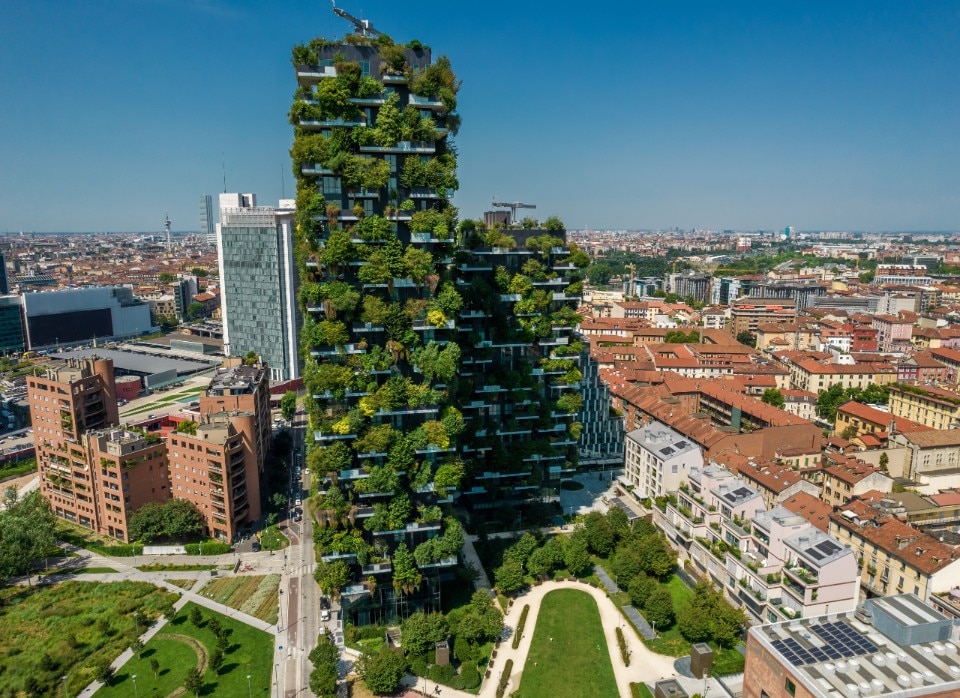
Stefano Boeri, Bosco Verticale (Torre de Castillia), Milan 2014 (110 m)
The Bosco Verticale is composed by the de Castillia tower and the Confalonieri tower, 110 and 76 metres high respectively (26 and 18 storeys), connected by a basement. The buildings, clad with large Gres porcelain panels, feature reinforced concrete balconies with solid parapets protruding on all sides, creating a lively dynamism in the façade. A peculiarity of the work is the presence of more than two thousand species of trees and shrubs on the façades, based on a metropolitan reforestation project aimed at increasing biodiversity and mitigating the microclimate thanks to the vertical densification of greenery.
Photo Audrius from Adobe Stock
Stefano Boeri, Bosco Verticale (Torre de Castillia), Milan 2014 (110 m)
Photo Audrius from Adobe Stock
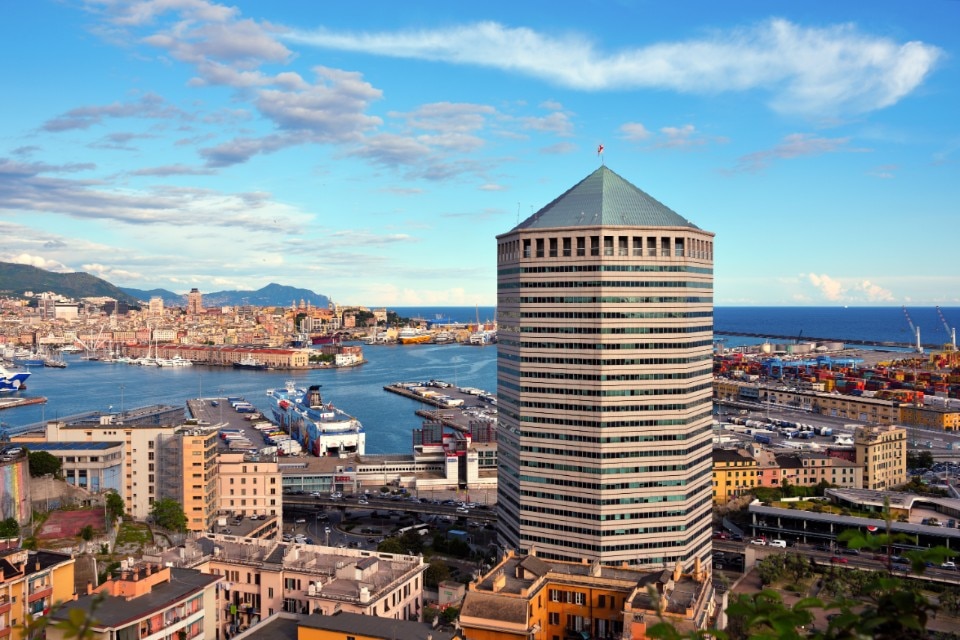
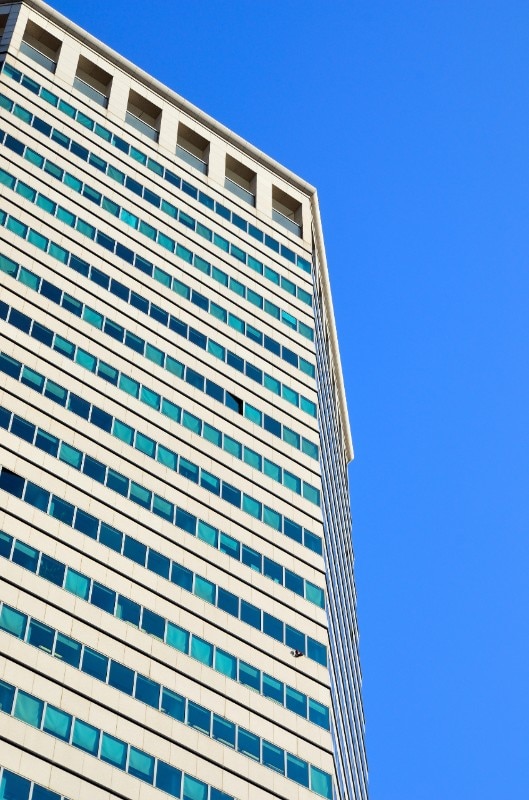
Skidmore, Owings and Merrill, Mario Lanata, Andrea Messina, San Benigno Torre Nord, Genoa 1992 (109 m)
The skyscraper located in the San Teodoro district, with its 109 metres in height and 26 storeys above ground is the tallest building in Genoa and is clearly visible from the harbour and the entire western part of the city. The unusual octagonal shape, which has earned the building the nickname "Matitone" (The Big Pencil), is inspired by the octagonal layout of the Church of S. Donato, located in the city centre. The fronts, dominated by a pyramidal copper roof, are clad with alternating bands of grey granite and green stained glass windows.
Photo maudanros from Adobe Stock
Skidmore, Owings and Merrill, Mario Lanata, Andrea Messina, San Benigno Torre Nord, Genoa 1992 (109 m)
Photo maudanros from Adobe Stock
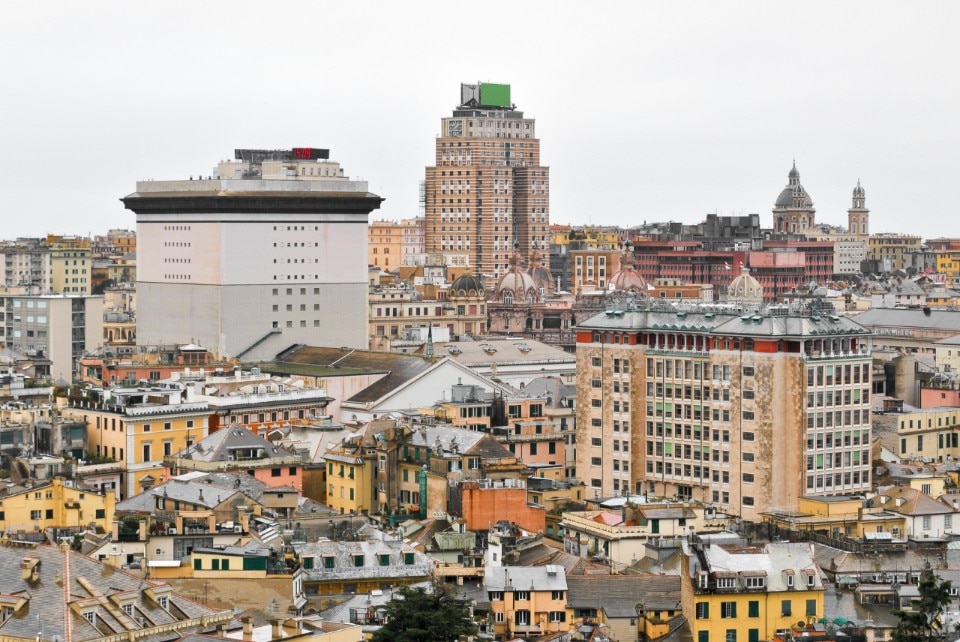
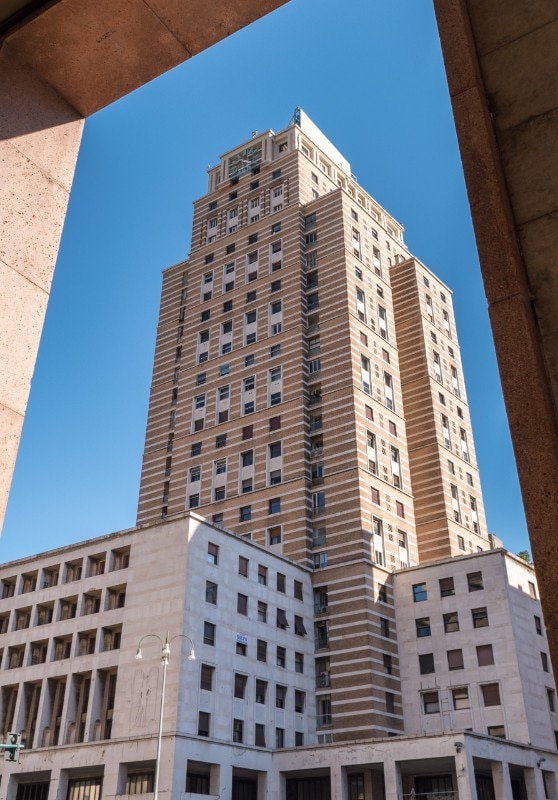
Marcello Piacentini, Angelo Invernizzi, Torre Piacentini, Genoa 1940 (108 m)
Blending Italian rationalism and Novecento style, building has several historical records: it was one of the first skyscrapers in Europe over 100 metres high and with a reinforced concrete structure, and the tallest in Italy until the construction of the 116-metre-high Torre Breda in Milan in 1954. Currently, at 108 metres high, it is the second tallest building in the city, after the "Matitone". A spectacular view of the urban and maritime landscape opens up from the Colombo rooftop terrace.
Photo Roberto Lo Savio from Adobe Stock
Marcello Piacentini, Angelo Invernizzi, Torre Piacentini, Genoa 1940 (108 m)
Photo Roberto Lo Savio from Adobe Stock
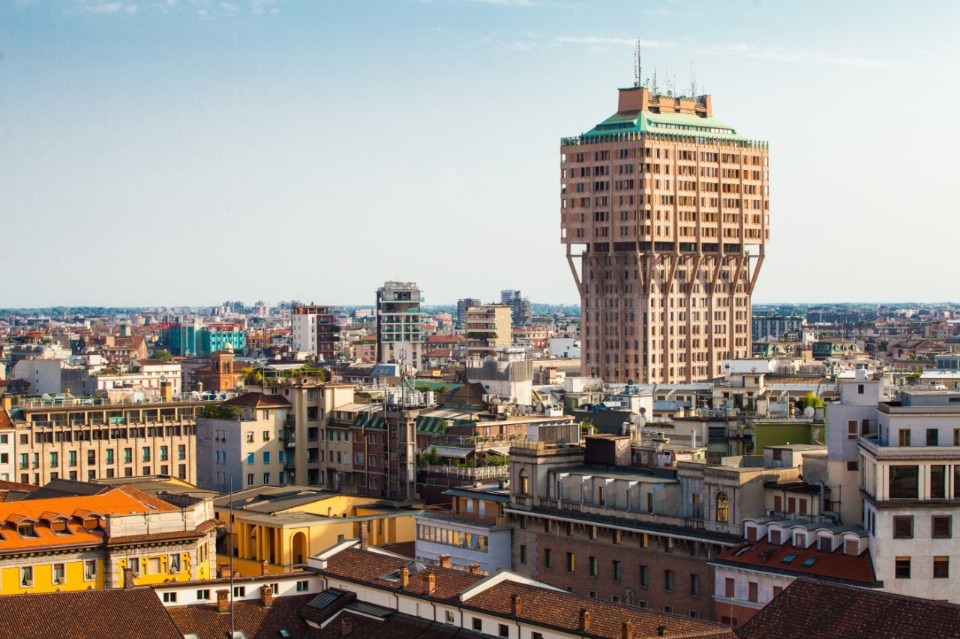
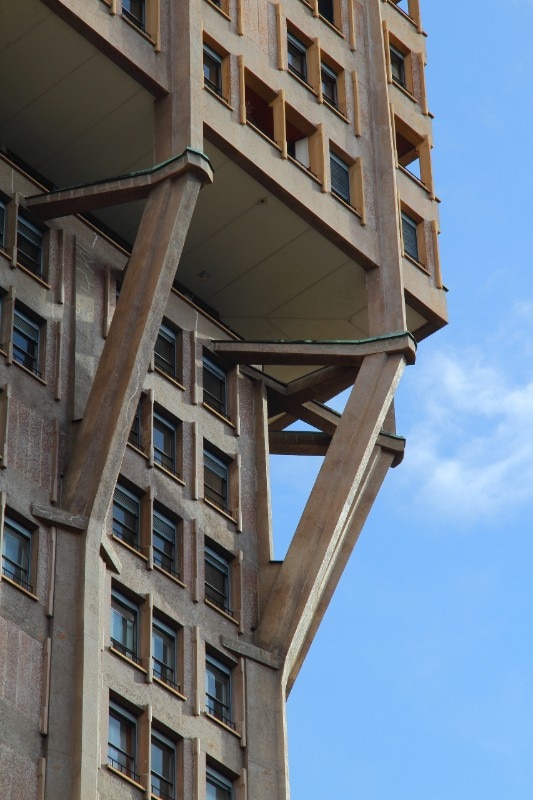
BBPR, Torre Velasca, Milan 1958 (106 m)
An iconic symbol of Milanese urbanitas, the Torre Velasca represents the will to rise of a city devastated by war that looks to the future with a strong reference to the past. Made entirely of reinforced concrete with terracotta grit and pink marble finishes from Verona – which give the building a warm hue – it houses shops, offices and flats; its characteristic morphology is a tribute to the vertical city that was developing in the 1950s, with a reference to the city's historic skyline, punctuated with towers and bell towers, and in particular the tower of the Courtyard of Arms in Castello Sforzesco.
Photo Elisa Locci from Adobe Stock
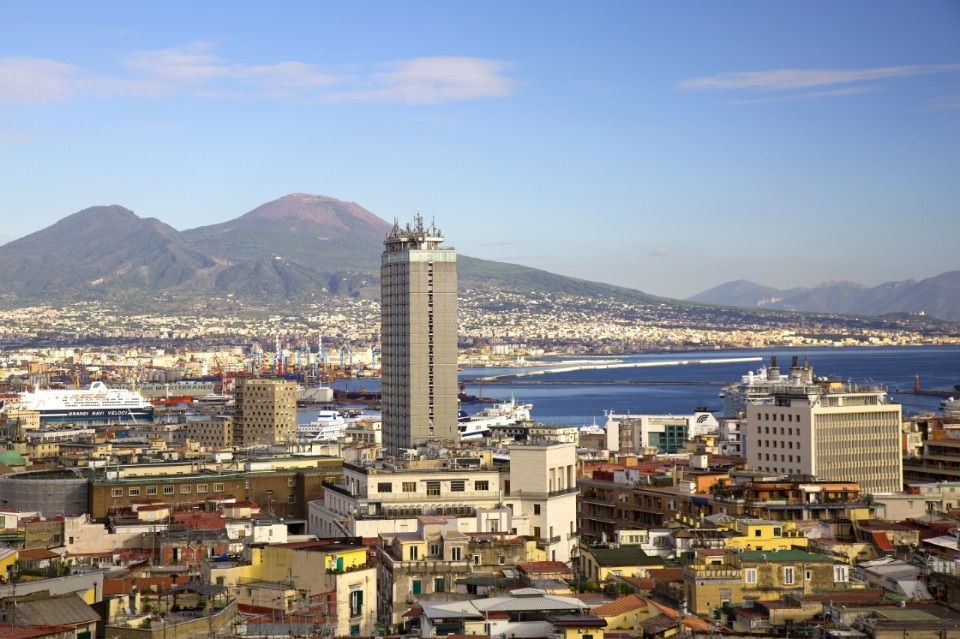
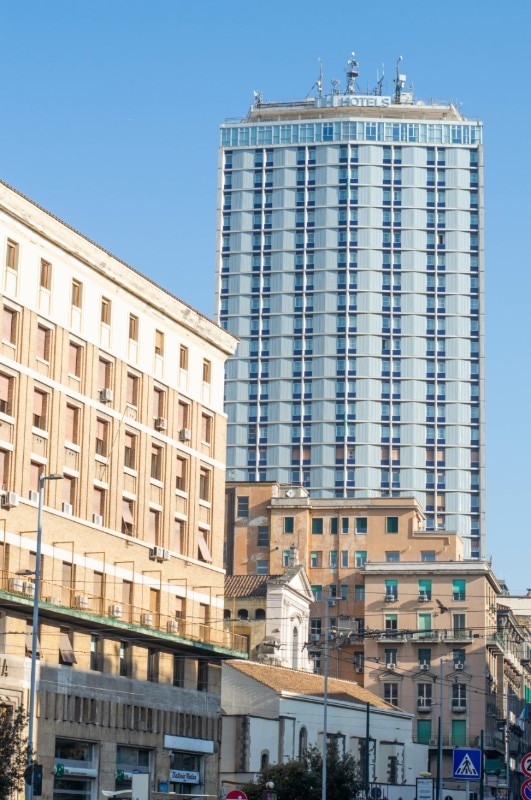
Stefania Filo Speziale, Carlo Chiurazzi, Giorgio Di Simone, Ambassador Palace Hotel, Naples 1957 (100 m)
The building, designed as the headquarters of Cattolica Assicurazioni and now a renowned hotel, with its imposing volume stands out with ease in the dense urban fabric of the historic centre, and for this reason it has not always won the approval of observers who labelled it as an incongruous and unwelcome element. The work is part of the historic process of urban regeneration of the Carità district, of which the Palazzo delle Poste by Giuseppe Vaccaro and Gino Franzi (1936) was also a part. Regardless of judgments, the work was the first skyscraper in Naples and the symbol of the introduction of modern building technology in the city: the 33-storey structure is made entirely of reinforced concrete, visible in the structural grid of the façade completed by light blue infills.
Photo riccardomotti from Adobe Stock
Stefania Filo Speziale, Carlo Chiurazzi, Giorgio Di Simone, Ambassador Palace Hotel, Naples 1957 (100 m)
Photo Ilaria13 from Adobe Stock