OK
Domus Domus
newsstand
SUBSCRIBE
  • Magazine
  • Digital Edition
  • Digital Archive
LANGUAGE
  • it
  • en
Hi Logout
Sign up / Log in
  • News
  • Architecture
  • Interiors
  • Design
  • Art
  • Archive
  • Products
  • Design Essentials
  • Design Stories
  • Submit your project
Sections
  • News
  • Architecture
  • Interiors
  • Design
  • Art
  • Archive
  • Products
  • Covers
  • Biographies
  • Architecture Firms
  • Sustainable Cities
  • Gallery
  • Design Stories
  • Domus for Design
Magazine
  • Subscriptions
  • Digital Edition
  • Current Issue
  • Guest Editor
  • Digital Archive
  • Nordic Design
Specials
  • Design Essentials
  • Modern Work
  • DomusAir
  • Milano Design Week
  • Worldesign
Current Issue

Domus 1106 hits the shelves

Follow us
LANGUAGE
  • it
  • en
Hi Logout
Sign up / Log in
newsletter Icon
results No results Please enter a long search term

      7 new railway stations, from Rome to Hong Kong, from Calatrava to Zaha Hadid

      7 new railway stations, from Rome to Hong Kong, from Calatrava to Zaha Hadid

      Next gallery

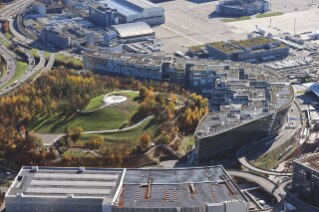
      The Circle, a multifuncional service center designed by Riken Yamamoto

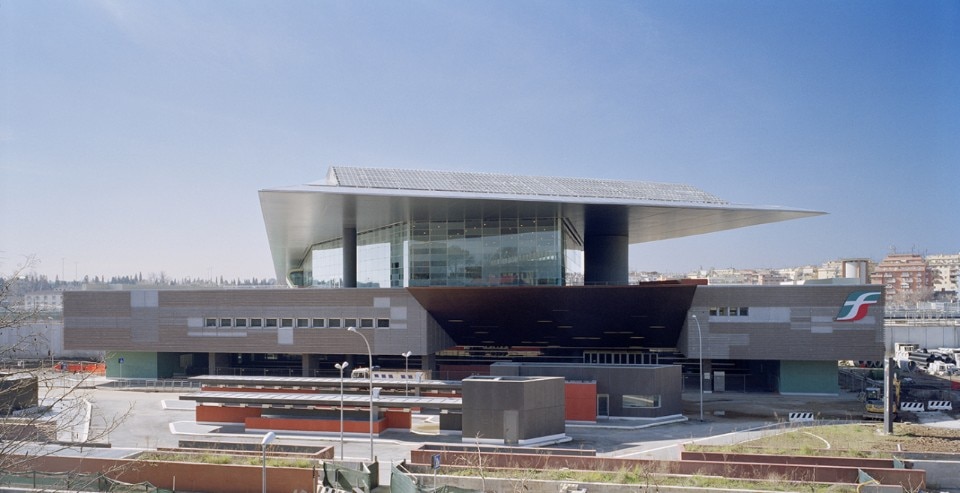
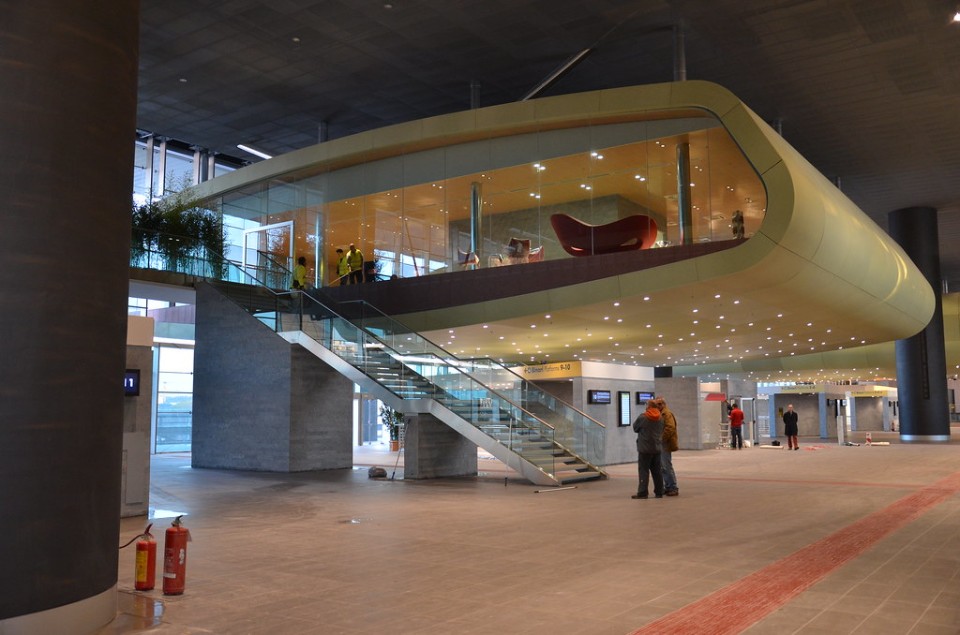
      ABDR architetti associati, Roma Tiburtina High Speed Railway Station, Rome, Italy 2011

      Located at one of the crucial nodes in the capital's metropolitan development, the station was designed not only to fulfil the requirements of a strategic junction for international and regional traffic but also as an "urban piazza" capable of mending the caesura between the Nomentano and Pietralata neighbourhoods, which have always been separated by the railway line. The "bridge" building, inspired by the nineteenth-century passages typology, is an imposing volume about 350 m long and 60 m wide, suspended over the tracks and resting on the two entrance halls from Nomentano and Pietralata. A vast metal roof consisting of an extra-roofed reticular structure serves as protection and screening for the entirely glazed façades, from which the blocks housing VIP lounges, internet offices, offices and restaurants are suspended.

      View article
      View article
      • SHARE
      • PIN IT

      ABDR architetti associati, Roma Tiburtina High Speed Railway Station, Rome, Italy 2011

      Photo Pierina Mariani from CC

      View article
      View article
      • SHARE
      • PIN IT

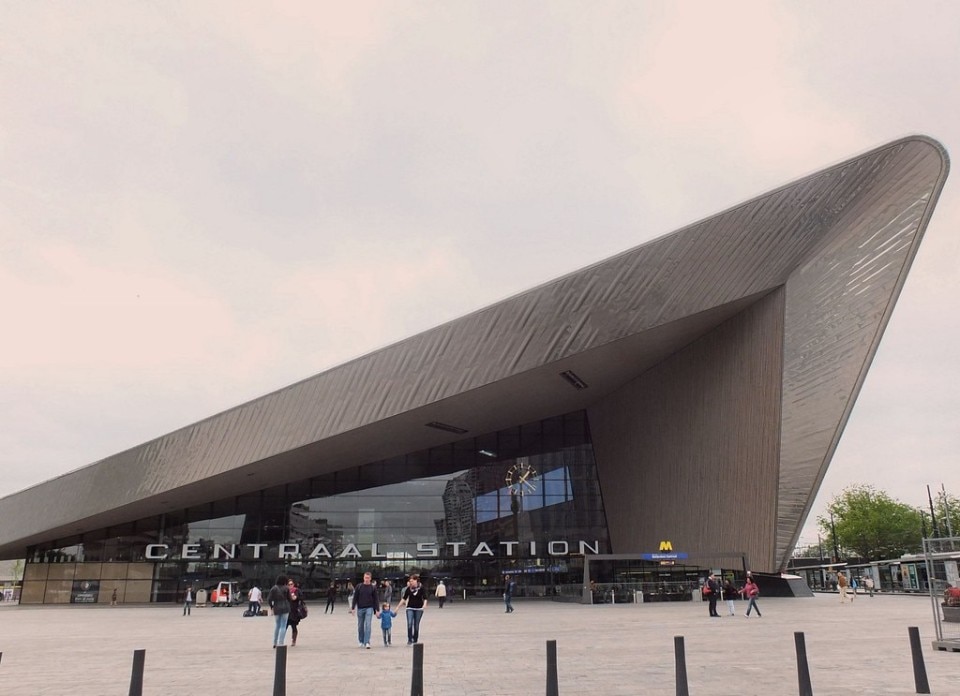
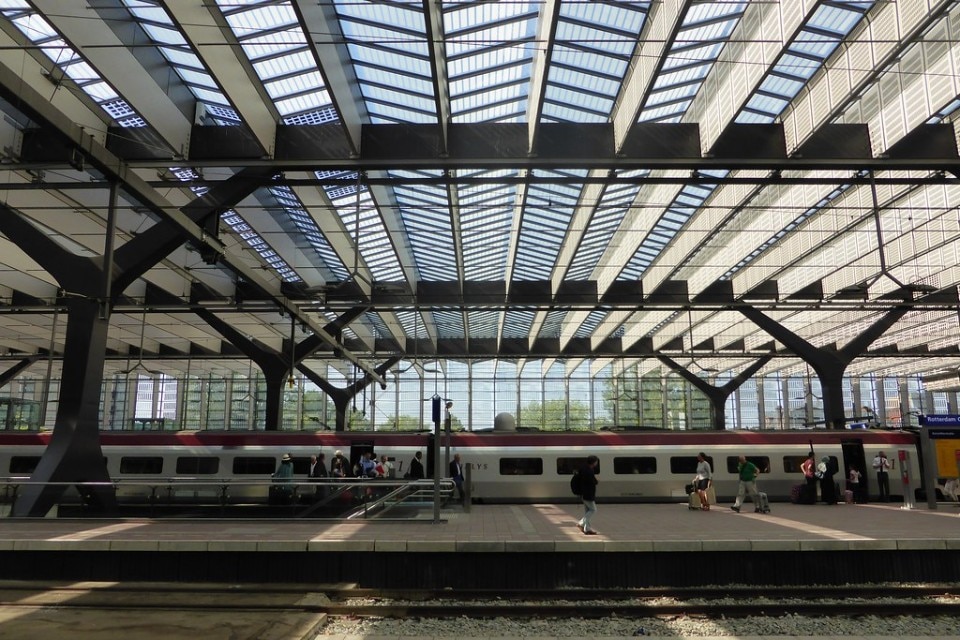
      Team CS (Benthem Crouwel Architects, MVSA Meyer en van Schooten Architecten, West 8), Rotterdam Centraal Station, Rotterdam, The Netherlands 2013

      With more than 110,000 passengers a day, Rotterdam Centraal Station is one of the major transport hubs in the Netherlands. The construction of the imposing building was an opportunity to reconnect a heterogeneous urban fabric: if on the south side, adjacent to a residential district of lesser passage, the façade is sober and transparent, on the north side the work connotes itself as an iconic "gateway" to the city, with a glazed aerodynamic volume entirely clad in steel. Inside, an airy, light-filled environment welcomes travellers: a weave of "Y"-shaped steel columns supports the 250 m long transparent roof, composed of glazed elements integrated with solar cells.


      Photo Gerard Styolk (vers l'automne) from CC

      View article
      View article
      • SHARE
      • PIN IT

      Team CS (Benthem Crouwel Architects, MVSA Meyer en van Schooten Architecten, West 8), Rotterdam Centraal Station, Rotterdam, The Netherlands 2013

      Photo yellow book from CC

      View article
      View article
      • SHARE
      • PIN IT

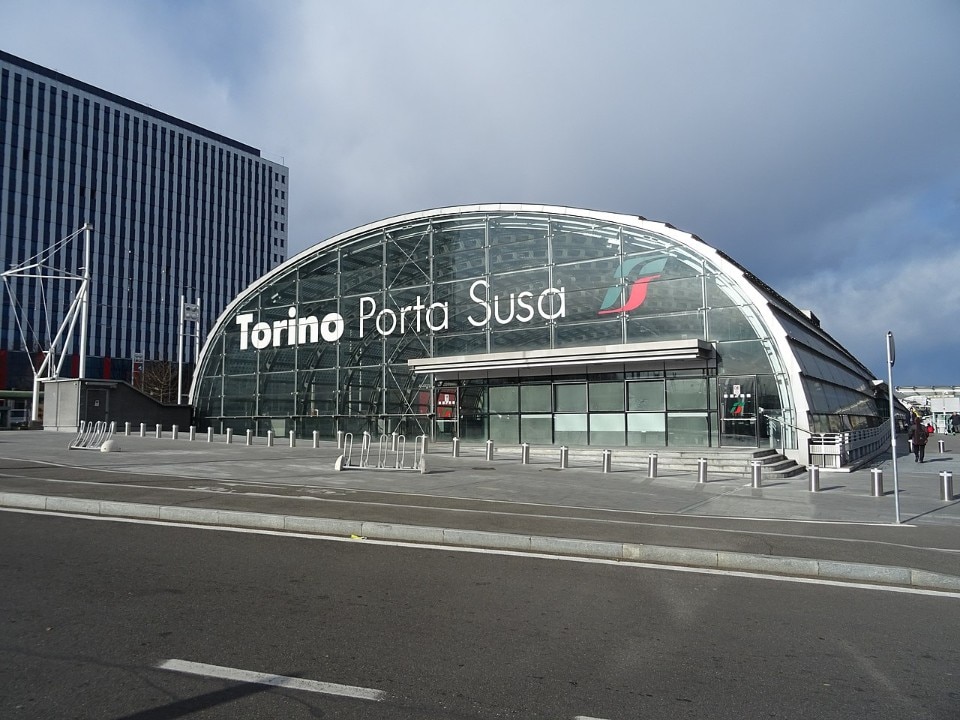
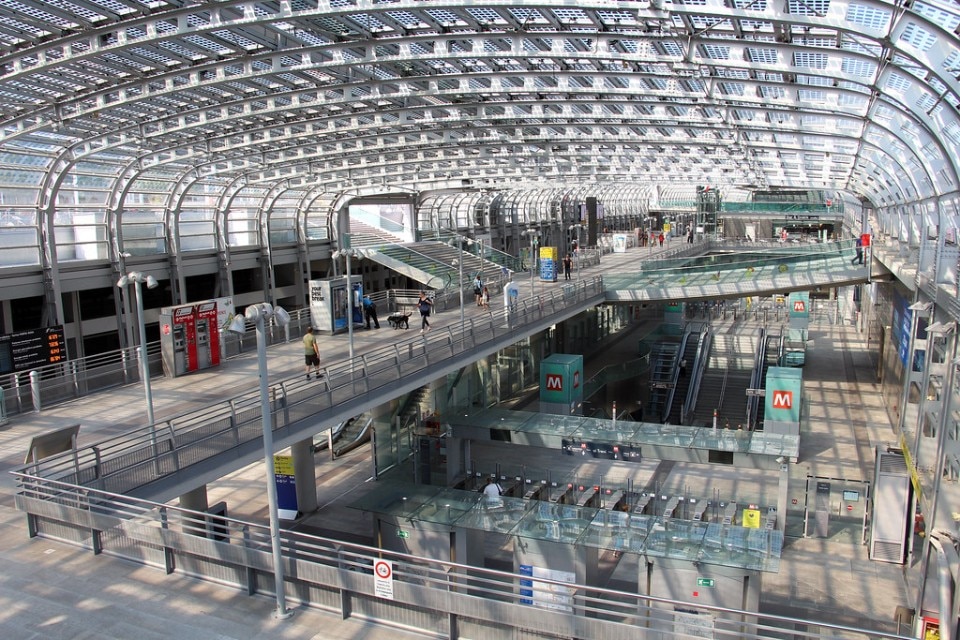
      AREP, Silvio d'Ascia, Agostino Magnaghi, Torino Porta Susa, Turin, Italy 2013

      The gateway to the Piedmontese capital for those travelling on high-speed trains, the 386 m long and 30 m wide building reinterprets in a contemporary key the passages of the 19th century, a consolidated building typology in Turin's urban fabric. The work, supported by 106 arches, is a veritable urban gallery where one can stop at restaurants, bars and shops, and resembles a long glass and steel tube with an envelope of "intelligent" technology: monocrystalline photovoltaic cells integrated in the glass panes create a sunscreen of variable density, producing energy for 680,000 KWh/year and contributing to environmental comfort.

      View article
      View article
      • SHARE
      • PIN IT

      AREP, Silvio d'Ascia, Agostino Magnaghi, Torino Porta Susa, Turin, Italy 2013

      Photo corno.fulgur75 from CC

      View article
      View article
      • SHARE
      • PIN IT

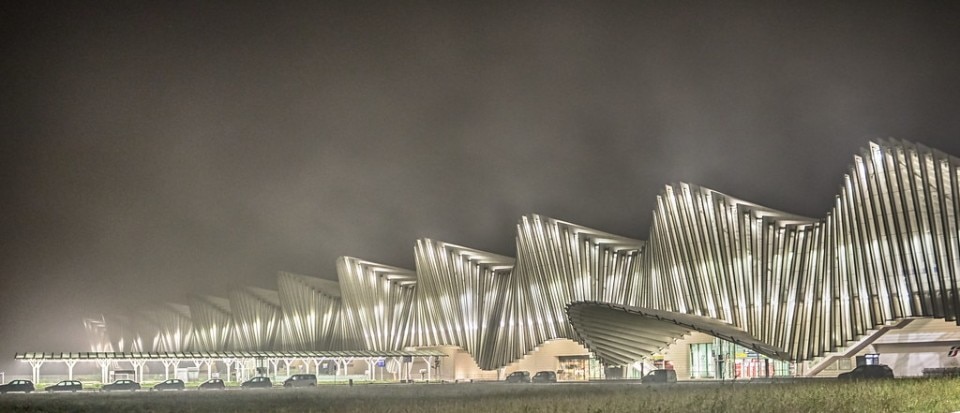
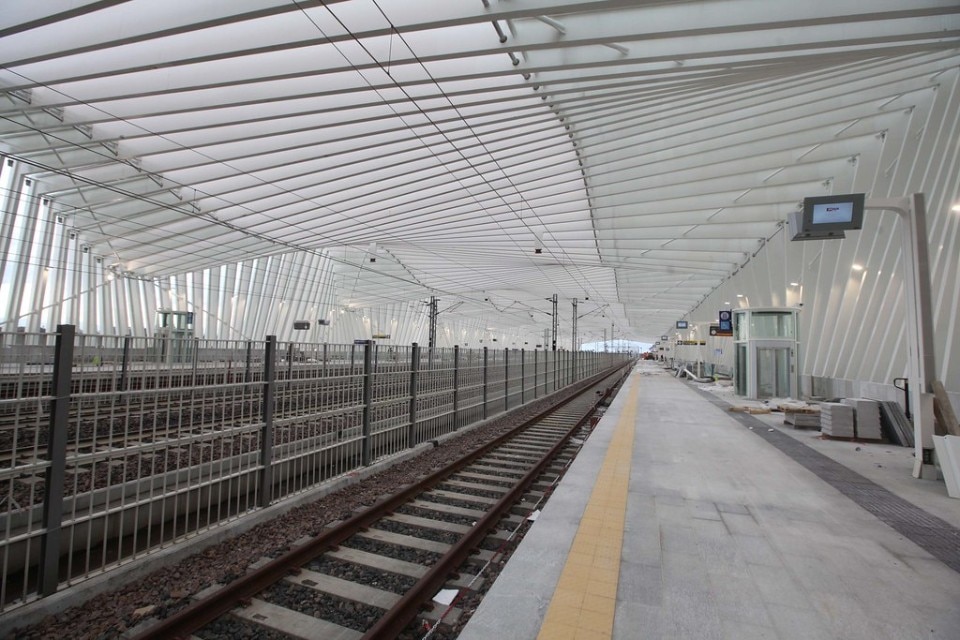
      Santiago Calatrava architects & engineers, Mediopadana Station, Reggio Emilia, Italy 2013

      The Mediopadana station, the only stop on the Milan-Bologna high-speed line, plays a strategically important role in the regional, national and international mobility system and is an iconic presence for those travelling on the A1 motorway. With its gigantic 'wave' volume, composed of 19 modules made up of a tight succession of steel portals staggered and spaced out to create an effect of accentuated dynamism, it is a landmark that stands out vigorously against the flat skyline of the Po Valley and, in keeping with its functional and somewhat futuristic vocation, is best perceived from a moving perspective.

      Photo Enrico Cartia from CC

      View article
      View article
      • SHARE
      • PIN IT

      Santiago Calatrava architects & engineers, Mediopadana Station, Reggio Emilia, Italy 2013

      Photo Municipality of Reggio Emilia from CC

      View article
      View article
      • SHARE
      • PIN IT

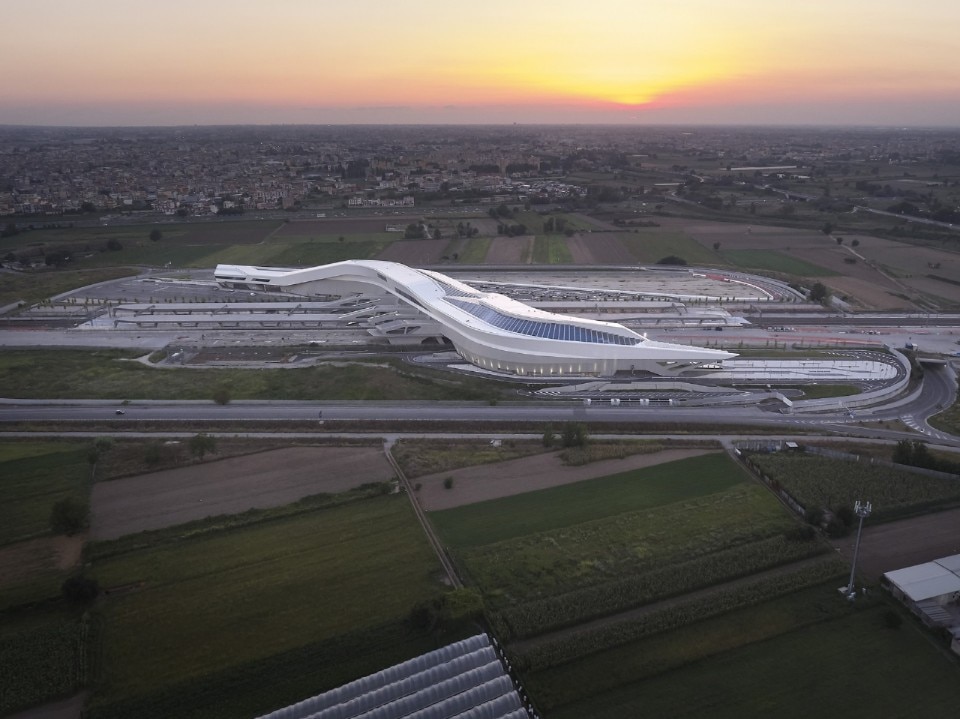
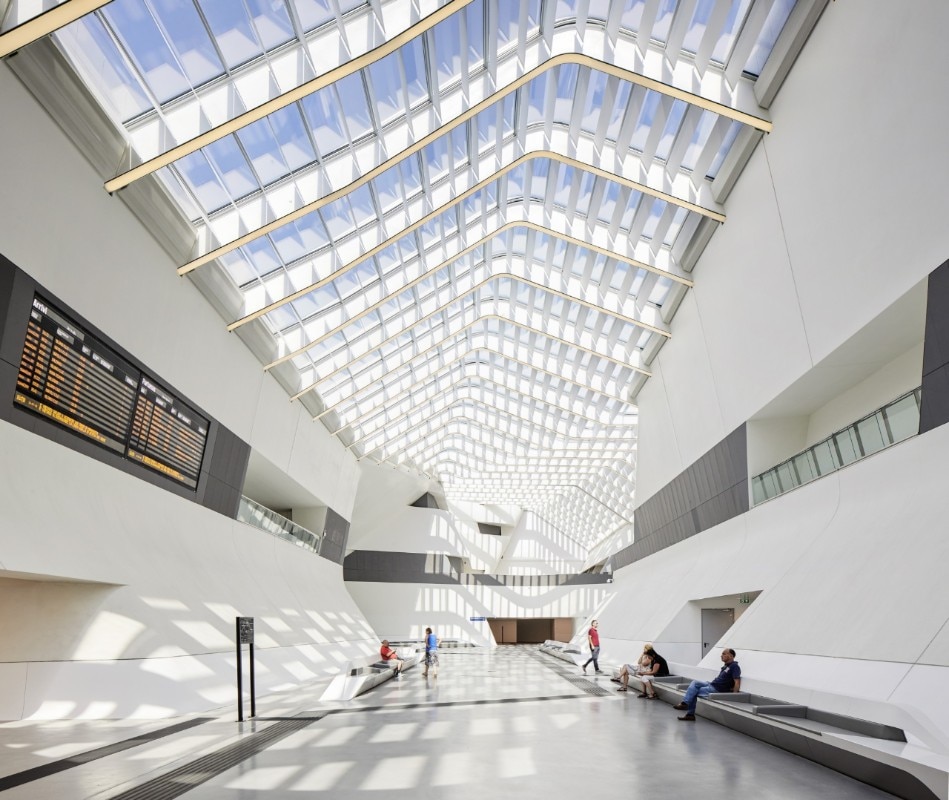
      Zaha Hadid Architects, Naples-Afragola Station, Naples, Italy 2017

      One of the main interchange stations in southern Italy, the building with a length of about 400 m and a width of about 44 m, with a reinforced concrete and steel structure, Corian cladding and glazed panels, is a "bridge" designed with the intention of overcoming the barrier of the existing railway line: its fluid and enveloping forms, vaguely zoomorphic to the point of recalling the skeleton of a dinosaur sleeping on the tracks, welcome visitors into a bright and futuristic environment. Solar panels integrated into the roof of the canopies, combined ventilation and integrated cooling and heating systems make it possible to minimise annual energy requirements.

      View article
      View article
      • SHARE
      • PIN IT

      Zaha Hadid Architects, Naples-Afragola Station, Naples, Italy 2017

      View article
      View article
      • SHARE
      • PIN IT

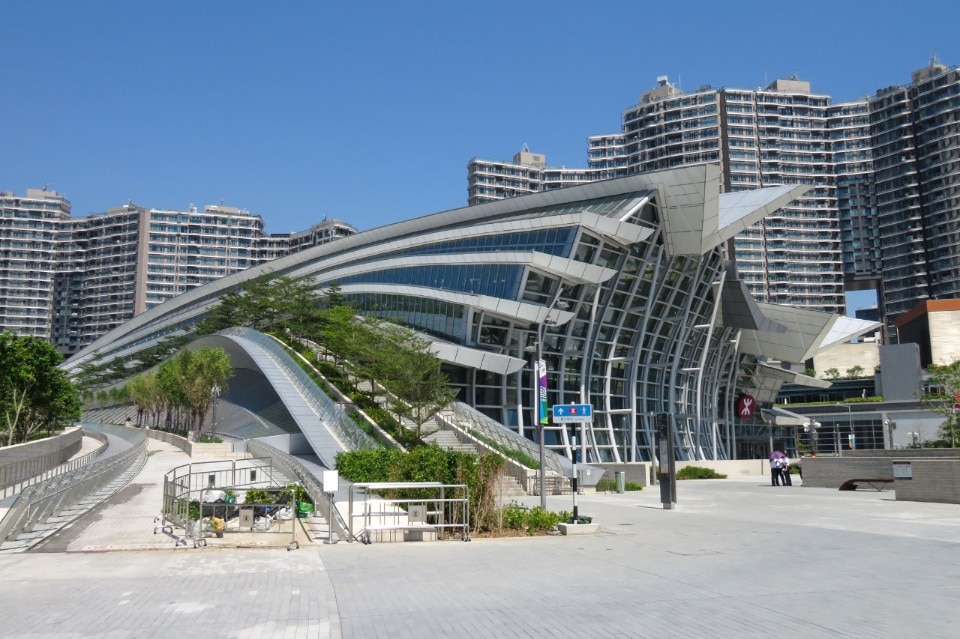
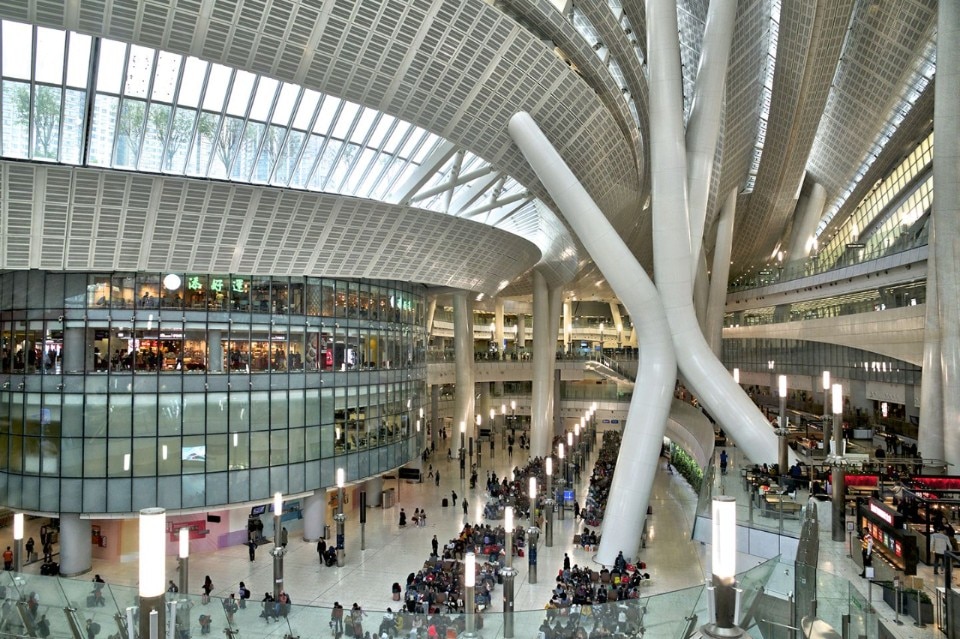
      Andrew Bromberg Architects, Hong Kong West Kowloon Terminus, Hong Kong, China 2018

      In Hong Kong, one of the most overcrowded and congested metropolises on the planet, the KWT station is not only an important national and international railway junction but also an urban park that has increased the city's green space by 15%. The complex, a 180-metre long structure with an average width of 65 metres and 15 tracks, is the largest underground railway station in the world and includes more than 3 hectares of parkland, with a total of 6 hectares of open space. If on the outside visitors walk on the softly curved roofs dotted with greenery, exploring the urban skyline from different perspectives, on the inside an explosion of glass and steel frames a majestic and swarming space that is not at all intimidating, thanks to its pleasantly light-flooded atmosphere and rarefied tones.

      View article
      View article
      • SHARE
      • PIN IT

      Andrew Bromberg Architects, Hong Kong West Kowloon Terminus, Hong Kong, China 2018

      View article
      View article
      • SHARE
      • PIN IT

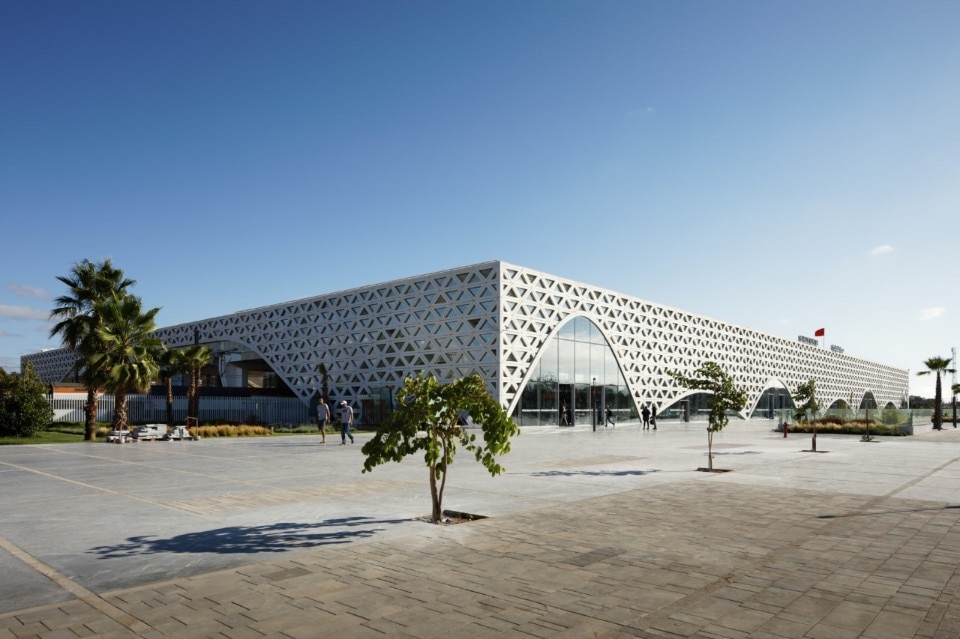
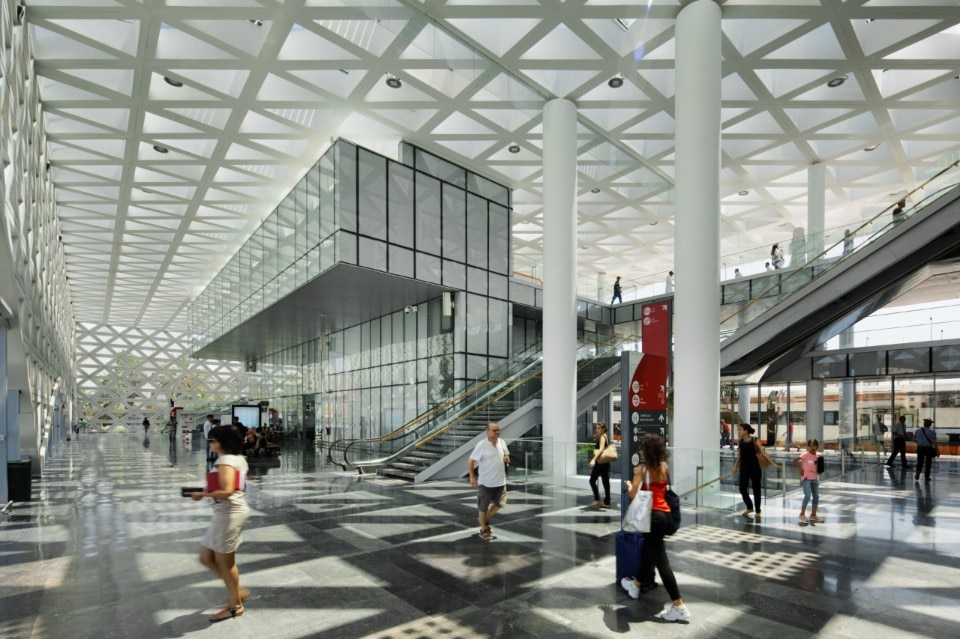
      Silvio d'Ascia architecture with Omar Kobbité Architectes, Kénitra station, Morocco 2018

      The Kénitra station, one of four on the high-speed railway line connecting Tangier to Casablanca via Kénitra and Rabat, is part of an ambitious project for the socio-economic and technological development of the Moroccan territory. Conceived as a trait-d'union between the new city and the historical fabric thanks to the footbridges that bypass the tracks and reconnect the two parts of the city, the complex on three levels and a basement is articulated around a triple-height hall that is the representative and functional epicentre of the place, from which to go to the tracks or where to stop for tea. Paying homage to the architecture of Islamic countries and in particular to the element of the mashrabiyya, a traditional grid that filters light, ventilation and prying eyes, the envelope is conceived as a large screen with triangular elements in high-performance fibre-reinforced concrete, which regulates the building's thermal comfort amidst suggestive chiaroscuro effects.

      View article
      View article
      • SHARE
      • PIN IT

      Silvio d'Ascia architecture with Omar Kobbité Architectes, Kénitra station, Morocco 2018

      View article
      View article
      • SHARE
      • PIN IT

      View article
      View article
      • SHARE
      • PIN IT
      Loading
      Share
      • Sections
        • Architecture
      • Keywords
      • News
      • Architecture
      • Design
      • Art
      • Opinion
      • Archive
      • Products
      • Foreign Editions
      • Biographies
      • Architectural movements
      • Buildings
      • Architecture Firms
      • Design Essentials
      • Urban stories
      • Gio Ponti
      • Contacts & Editorial Team

      • Follow us
      Legal Note

      Editorial DomusEditoriale Domus Spa
      Via G. Mazzocchi, 1/3
      20089 Rozzano (Mi) -
      Codice fiscale, partita IVA e iscrizione al Registro delle Imprese di Milano
      n. 07835550158
      R.E.A. di Milano n. 1186124
      Capitale sociale versato € 5.000.000,00 - All rights reserved - Privacy - Informativa cookie completa - Gestione Cookies

      China Germany India Mexico, Central America and Caribbean Sri Lanka Korea icon-camera close icon-comments icon-down-sm icon-download icon-facebook icon-heart icon-heart icon--mobile-logo icon-next-sm icon-next icon-pinterest icon-play icon-plus icon-prev-sm icon-prev Search icon-twitter icon-views icon-instagram