There is no Wikipedia entry for James Allen
Walter. No Google search yields any information
about the man. For now, the legacy left by James
Walter resides in the homes he designed and built
across Southern and Northern California—at
least 32, that I know of—and the owners who
live in them. When I talk to those owners today,
they call Walter names: Howard Roark (everyone
says that one), Buckminster Fuller, a raw talent,
brilliant, versatile, uncompromising and stubborn.
They tell me about Walter coming over for dinner
and discussing his philosophies, describing his
struggles to build according to his vision. Jaime and
Dana Rummerfield, who live in a 1965 Walter home
on Nolden Avenue in the Eagle Rock neighbourhood
of East L.A., remember Walter pointing to the top of
their property and saying "That's where I argued
with the inspector. Right there." They met Walter
in 2003, just after they had purchased the home. He
knocked on their door and said, "The name on the
listing is wrong." (And it was.) "I just want to make
this very clear: I designed this house." Dana invited
him in, immediately.
The maverick modernism of James Walter—
James Allen Walter cared less about fame than about retaining control over the buildings he designed His legacy: 32 singular residences dotted around California. An architecture report from Los Angeles by Katya Tylevich
Network

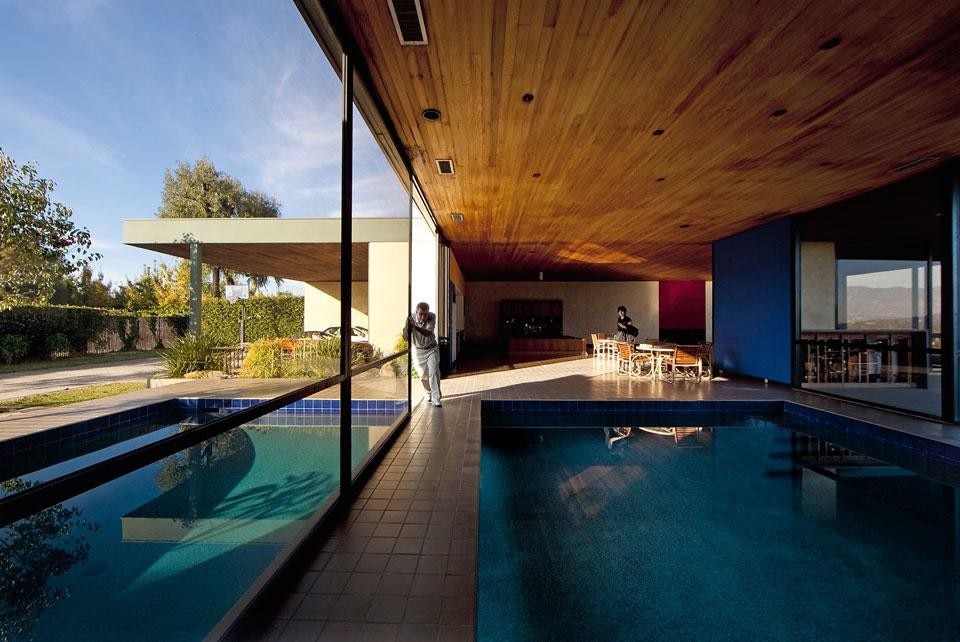
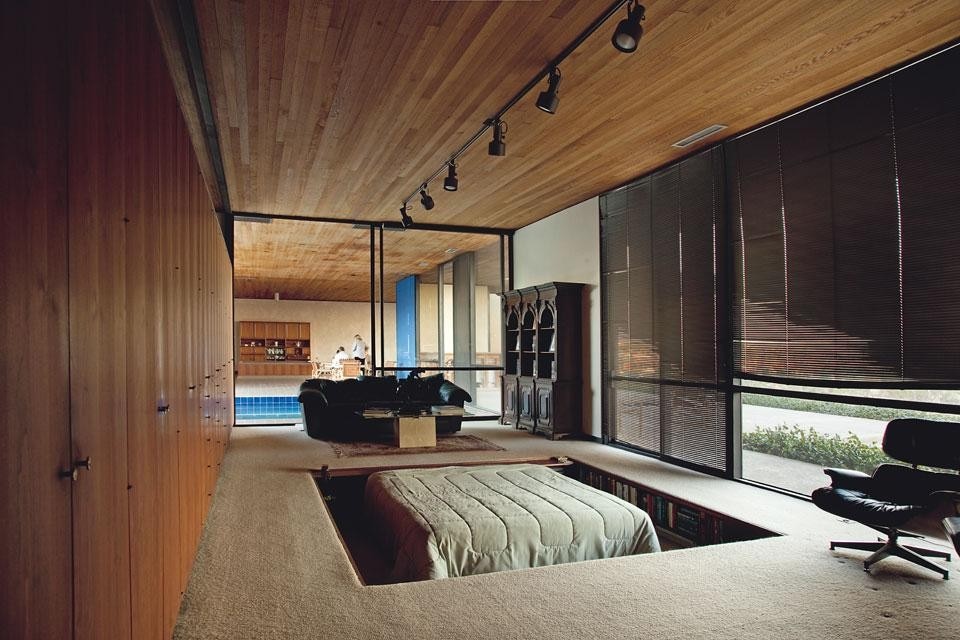
The Via Del Rey House
was built in 1971 in South
Pasadena; the inside is just
over 510 m2. Ernest
A. Vargas, the original client
who still lives in the home
today, recounts: “Jim was
not the kind of guy to follow
tradition for the sake of
tradition. He thought: ‘Why
have a Lamborghini in your
garage if you could have it in
your living room?’”
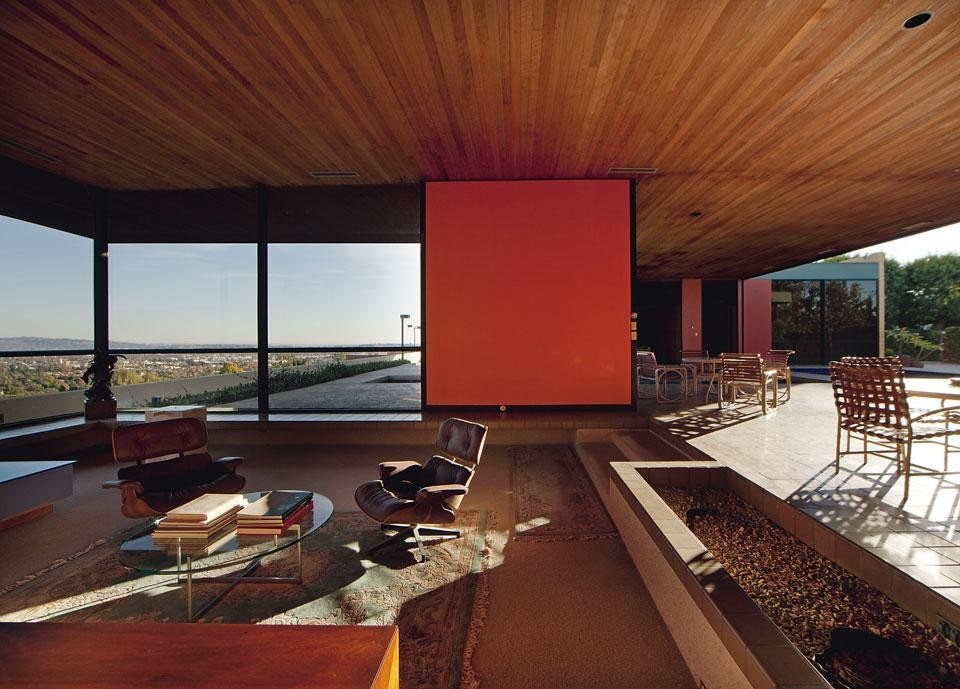
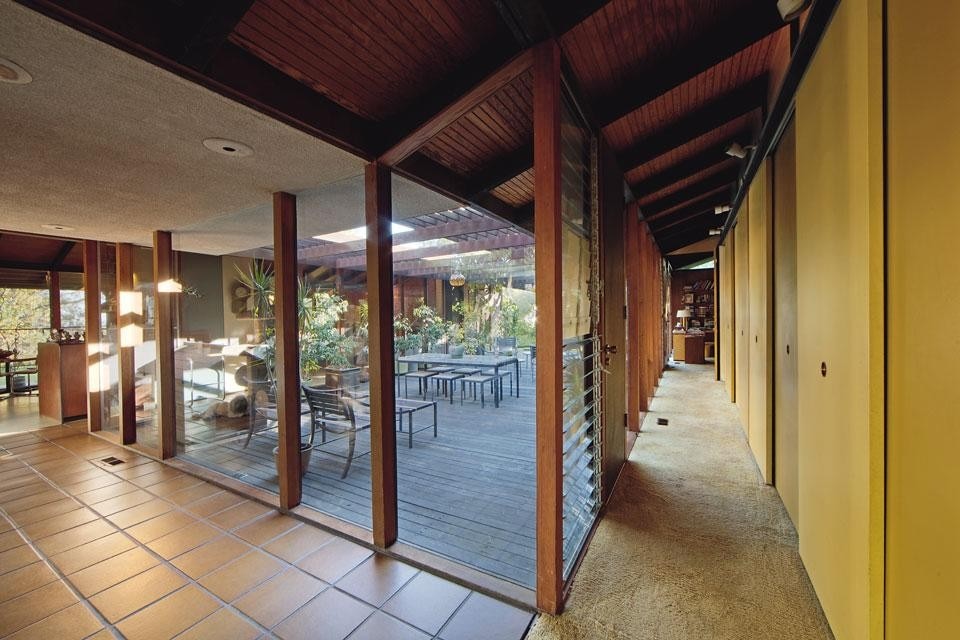
Though temporarily baby-proofed for their sevenmonth-
old son, Jaime and Dana's split-level postand-
beam home has few barriers; even their two
bathrooms are divided by only a bathtub with
clear sliding dividers. The "back" wall is a dramatic
12-foot-high window to the canyon and city beyond;
no other windows pock the sidewalls (a point of
contention between Walter and 1960s' building
codes, apparently). Walter designed this home
with something of the voyeur in mind, says Jaime.
"I think he liked no privacy inside the home. Wild
abandon." At the same time, the home is hard to
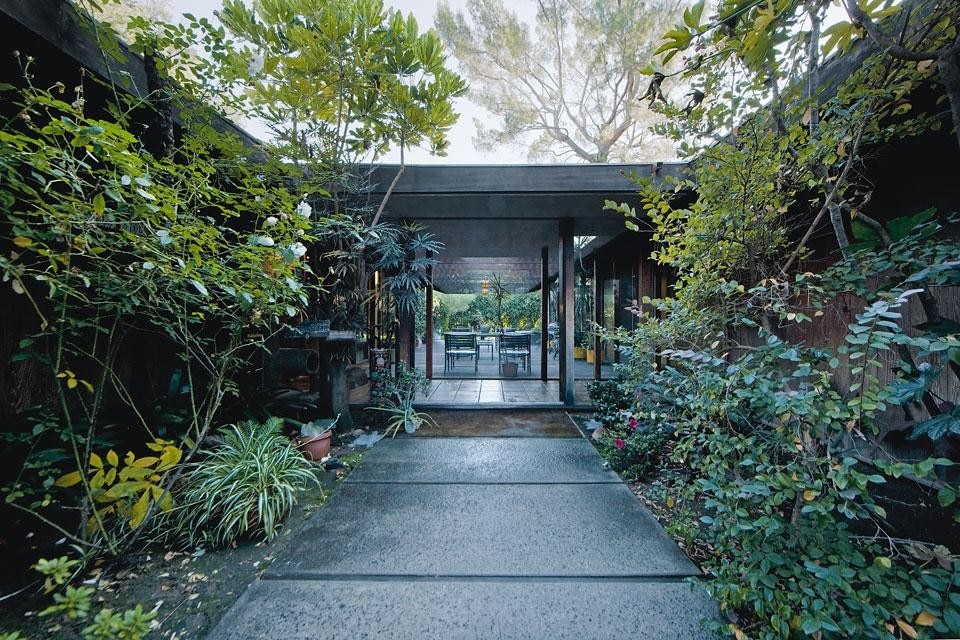
penetrate from the outdoors—as with other Walter
homes I've seen, the main entrance is not clearly
marked, purposefully difficult to find. The interiors
are made that much more striking by humble
exteriors and entryways that build anticipation.
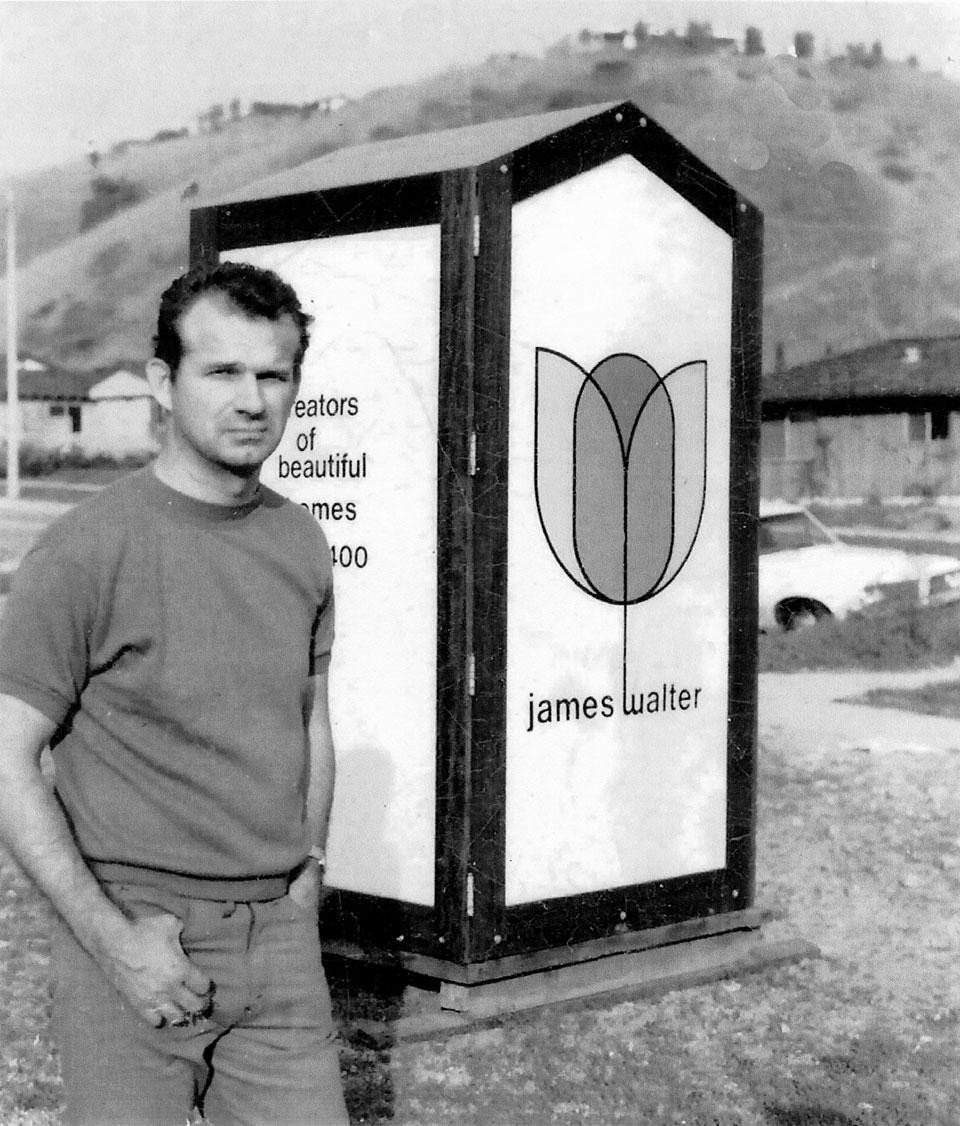
James Walter in
front of the portable toilet he
designed for the construction
sites of his buildings. Photo courtesy of Laura Walter
This space, like others by Walter, marks a tension
between the concept of home as "haven" and "open
stage". It also plays to Walter's particular talent
for riding difficult hillside topography. The Nolden
Home is sited on an extremely challenging slope
that twists like a helix. As Dana put it: "This wasn't
a home being built for a turn; this was a problem
being solved. It is perfectly indigenous to the place
and time in which it was built."
"I don’t use the word ‘easy’. Nothing I’ve ever done has been easy. I march to the beat of my own drummer"

Via del Rey House
"It's a piece of art that keeps evolving," adds Jaime.
I had the pleasure of speaking with James Walter
in October 2009, when I called him to arrange a
meeting. I would be back in Los Angeles in two
weeks, I told him, and would like to discuss his
works and design philosophies when I returned.
We spent close to an hour talking about his varied
career. He was an industrial designer by training,
he told me, a writer and a natural-born storyteller.
"Architecture is a form of telling stories," he said.
Walter apologised for being unable to speak
more freely at that moment—I had caught him
in a "very bad place". I later found out from his
daughter Laura that that place was a hospital. He
was ill, though he never let on. Before hanging up,
I told Walter I looked forward to continuing our
conversation. By the time I returned to Los Angeles,
however, he had passed away, at the age of 78. "I
don't use the word 'easy'," Walter told me before we
parted that day. "Nothing I've ever done has been
easy. I march to the beat of my own drummer."

Built in 1967 in South
Pasadena for Doreen
and Geoffrey Siodmak,
La Fremontia House has
a floor area of 204 m2 and
a garden of 65 m2. In 1969
the house appeared in the Los
Angeles Times Home Magazine
with pictures by Leland
Y. Lee and an article by Barbara
Lenox, who described it
as “an open residential plan
with exceptional privacy”
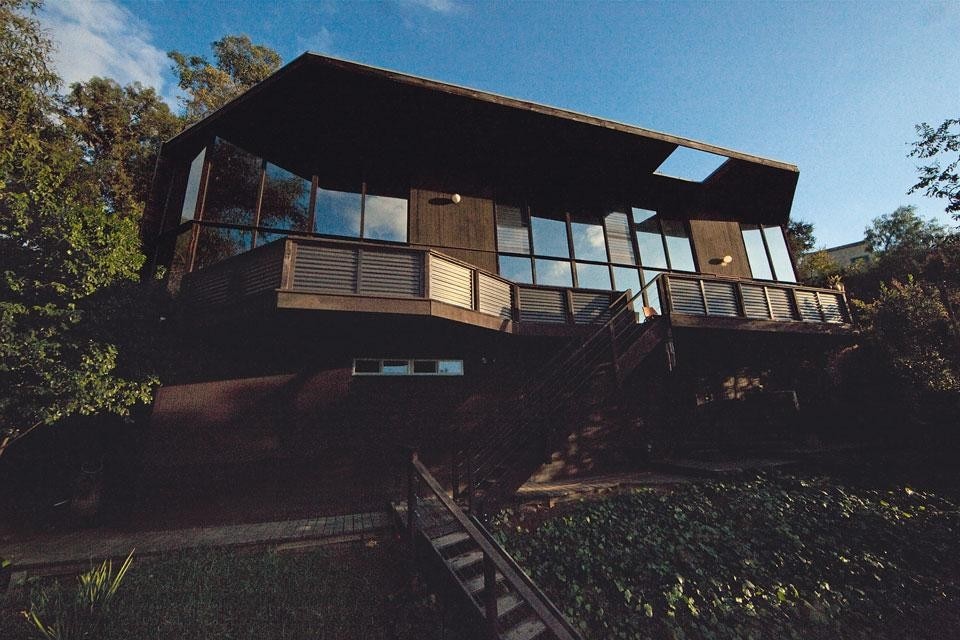
Walter and I spoke mostly of his A-Frame House on
Killarney Avenue, located on the southern slope
of Mount Washington in East L.A. Walter had
originally designed the home for a famous dancer
and her partner in 1964. In the late '90s he came
across the property again, finding it in foreclosure
and, as he put it, "disarray". Walter bought
the home back from the bank and completely
redesigned it. "Sometimes when you work with
clients, you have to do what you don't want to do,"
he told me. "Well, when I came across the home
that second time, I was at a different point in
my evolution of design: 'I do what I want, when I
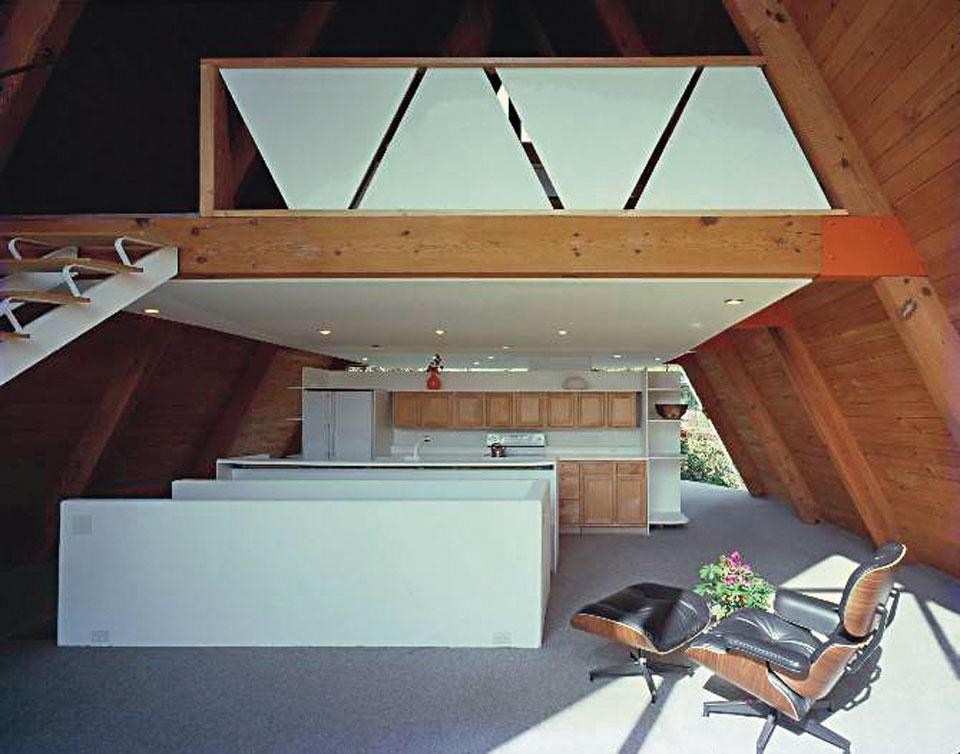
want to do it, how I want to do it.'" Walter replaced
everything but the roof and floor planes, and
sandblasted all wood ceiling surfaces and beams
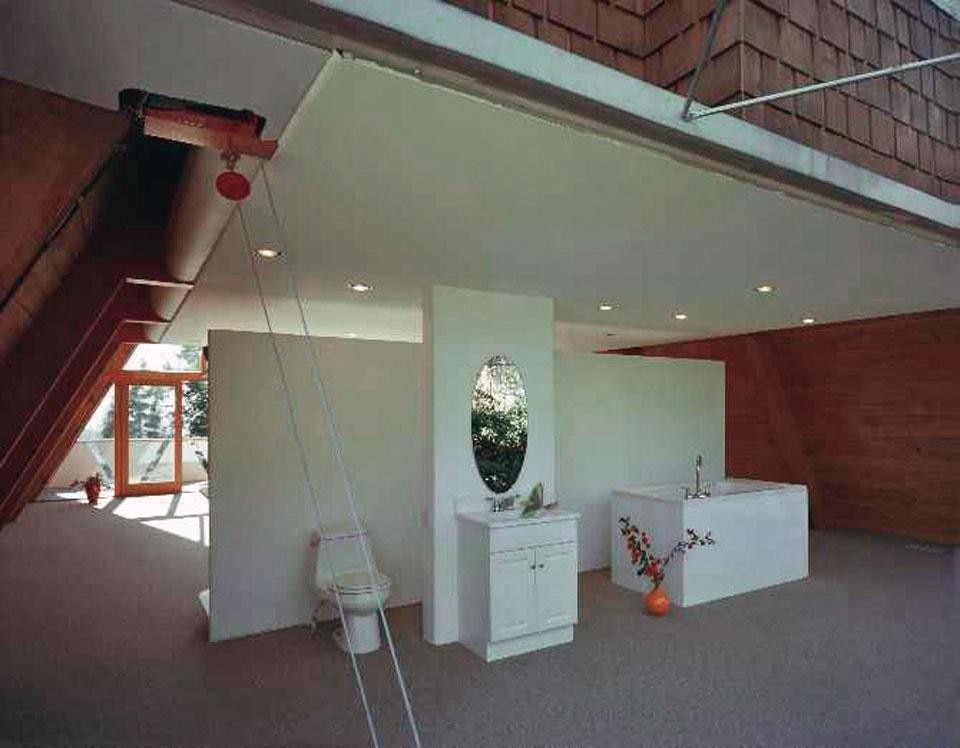
to a honey brown tone. Like the Nolden Home, the
redesigned A-Frame is open in every sense of the
word: no doors, not even on rooms conventionally
deemed intimate; no railings on the steps. The
street-side wall is motorised, opening to become
an outdoor deck, revealing the bath, toilet and sink
inside. As in the Nolden Home, the city views from
the hillside wall of windows are breathtaking, and
the lines between indoor and outdoor blur.

A-Frame House. Photo Marvin Rand
"A-Frames are very difficult to develop because
they don't fit traditional ways of doing things,"
Walter told me. "But since I have a background in
industrial design, I had the insight to see how to
best do that. It is a very unusual structure."
The Italiano-Thomas couple, who purchased
the A-Frame in 2005, would agree with that. As
Graciela Italiano-Thomas tells me: "Culturally,
this house does not fit the traditional American
mentality. Most people want a master bedroom,
large closets, marble and state of the art. But we
understand and like the elegance of something
this simple. We are not looking for outlandish
comfort. We would prefer to be how we are here—
perfectly integrated with our environment."

A-Frame House. Photo Marvin Rand
Indeed, the house was not for "most people": it
took 18 months on the market for the right owners
to find it. In that time, the real-estate agent
Robert Bacon—a former architect for the likes of
Craig Ellwood, now a broker for the architecture
realty Crosby Doe Associates—developed a
friendship with Walter, who sat in on the open
houses upon Bacon's invitation. Bacon first met
Walter through the Nolden home. "That space
just floored me," the broker recalls over coffee in
West L.A. "I thought, 'I have to meet this guy.'"
He did. And with that, he met many more of his
homes. In reference to Walter, Bacon says: "To me,
what most identifies something as really great
architecture is what Louis Sullivan referred to as
'the clarity of simplicity', where the soul of the
house is immediately apparent. You don't have to
stop to think about it or analyse it; you just feel it
immediately."

La Fremontia House
Of course, in his prolific career, Walter did build
homes that had doors and closets, and more
"conventional" elements. No less experimental or
modern than Nolden and A-Frame, these homes
(like the 1967 home of Doreen Siodmak, and the
1971 home of Ernest Vargas, both of whom were
the original clients and still live in the homes)
illustrate the scope of what Walter could do. They
exude the "clarity of simplicity" and "soul" to
which Bacon refers. As Bacon tells me: "Everything
Jim did reeked of creativity—not frivolous
creativity, but hardcore. He could have been much
bigger, but he elected not to be, in order to retain
his ability to do exactly what he wanted."
When selling the A-Frame, Bacon asked Walter for
a written bio, to better explain his background
and design approach. Walter gave him a statement
that raises more questions than it answers.
So if one day Walter is given the recognition and
Wikipedia entry he's due, it might read something
like this:

Situated on a lush hillside,
the Nolden Home was built
in 1965. The loft-style interior
measuring 103 m2 offers
a panoramic view over the
terrace through a 3.6-m-high
glazed wall
James Allen Walter
Graduate, Art Center School of Design, Los Angeles
Industrial designer, architectural designer,
builder, inventor-artist, writer, philosopher,
photographer, furniture designer, graphics
designer, designer of exotic clothing, automobile
collector, illustrator, master craftsman, circus
acrobat and aspiring helicopter pilot.
James Allen Walter discovered an interest in
architecture while growing up in Ohio on a farm.
Rearranging bales of hay up in the loft of the old
tobacco barn, he created magic castles with hidden
rooms and secret tunnels. This early imprint on his
vivid imagination has inspired a wonderful sense
of adventure into many of the various disciplines
that still guide him into unchartered territories of
exciting opportunity today.
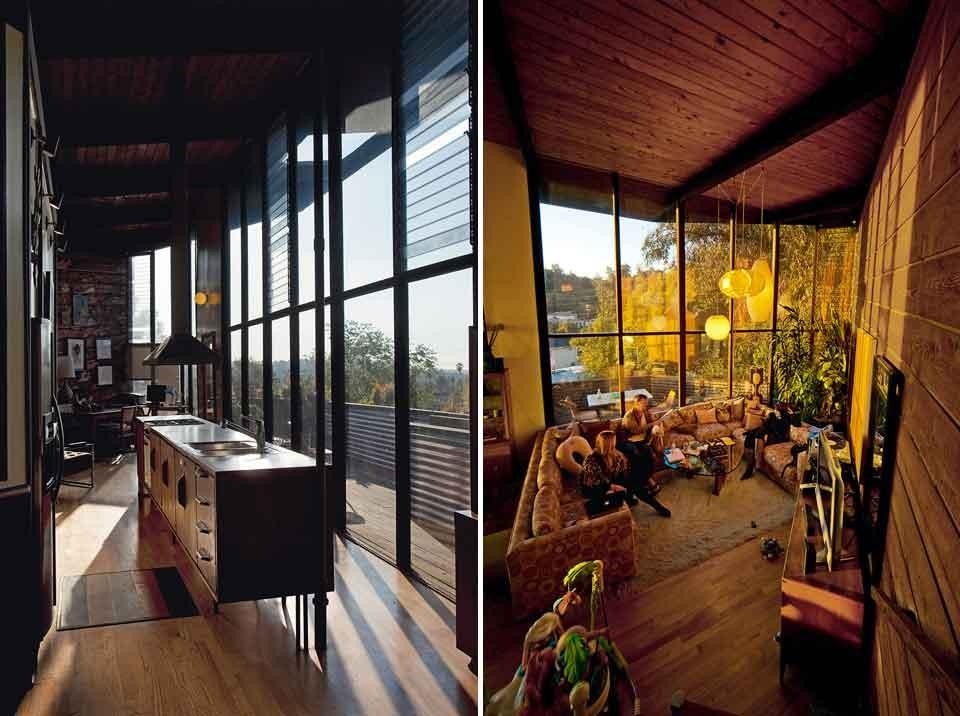
“You might need a
telescope, but the Nolden
Home does have an ocean
view,” gripped Walter with
the owners Jaime and Dana
Rummerfield

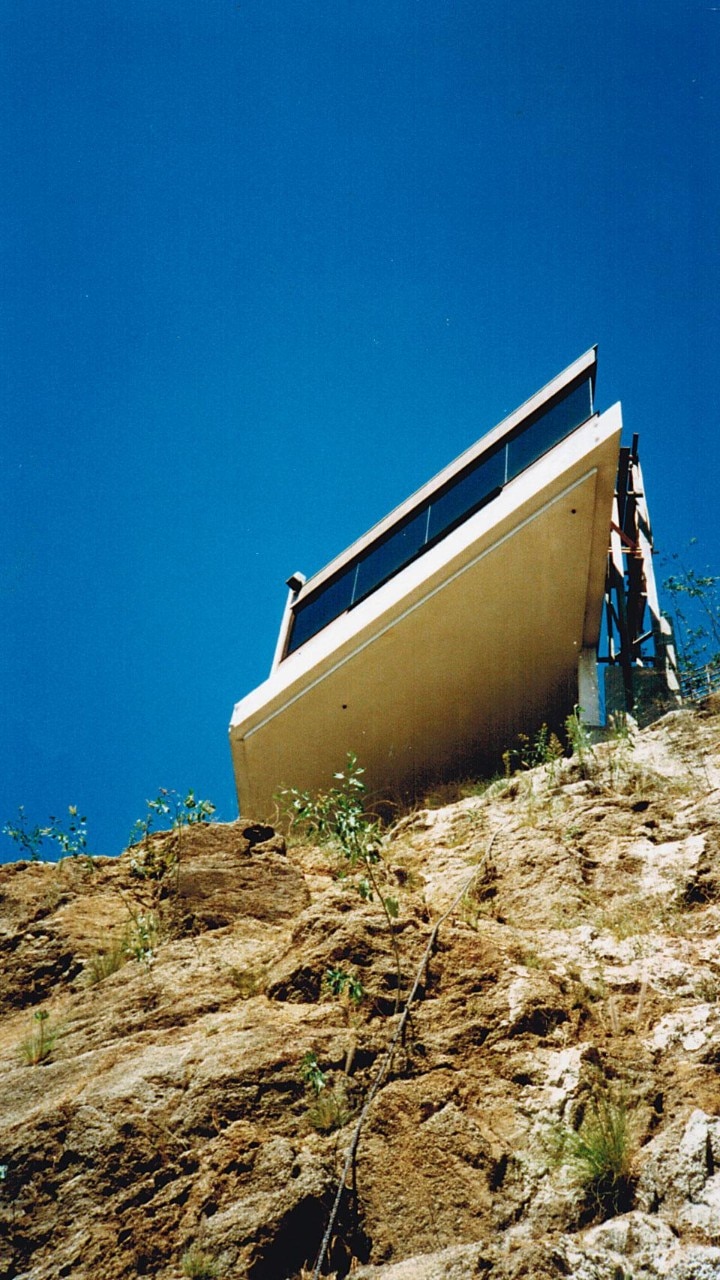
the
Grandview property, James
Walter’s final project, was the
house that he designed and
built for himself. Work on site
began in 1987 and was still in
progress when Walter moved
into the house, remaining
incomplete even at the time of
his death in 2009, at the age
of 78.

A memorial for Mike Kelley—
In this spontaneous recreation of Kelley's work, one finds suggestions and fragments of his life and the lives he touched. An art report from Los Angeles by Katya Tylevich
Freedomland: a biting satire—
Keith Krumwiede's exhibition at the WUHO gallery makes you scratch your head – over the show itself, and that which it parodies. An architecture report from Los Angeles by Katya Tylevich


Architecture