


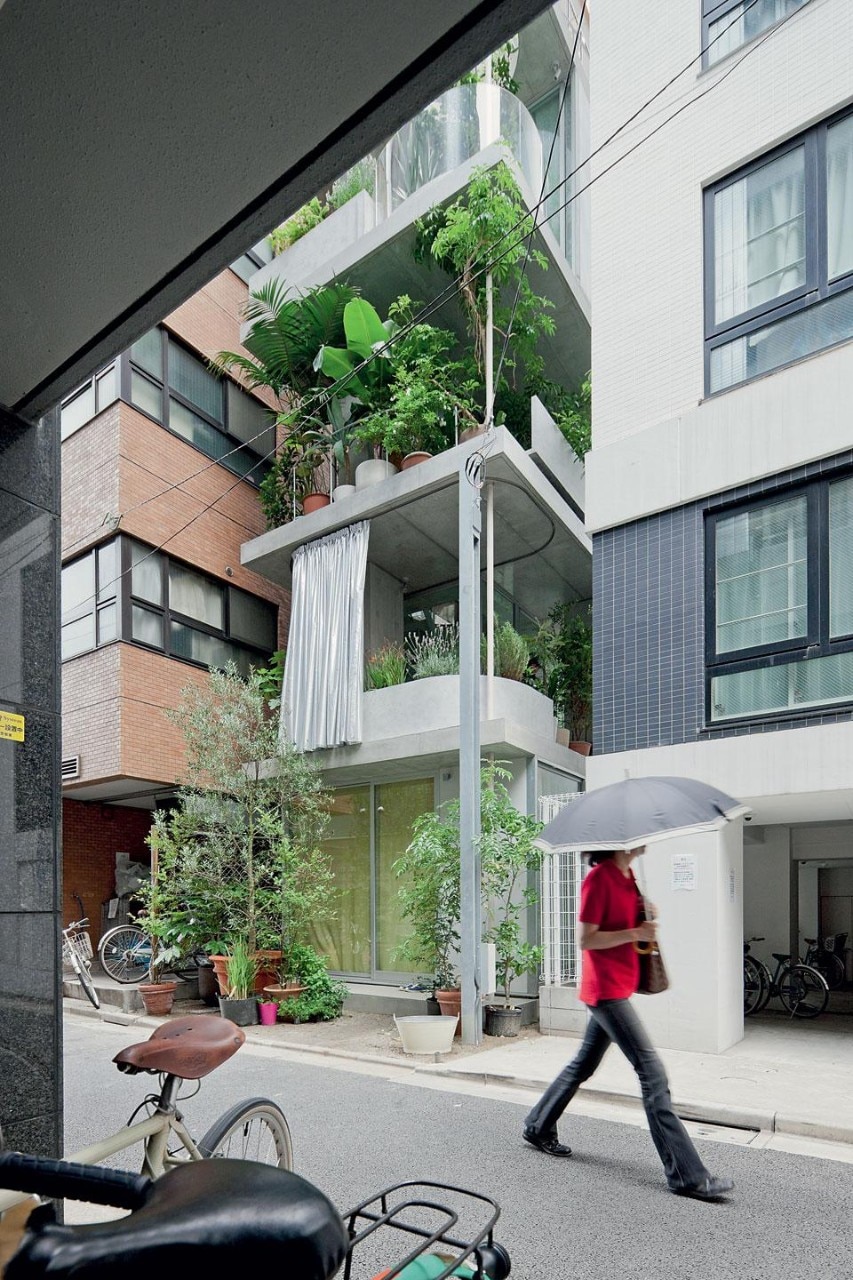
Wedged between two tall buildings and invisible from the main road, the narrow Nishizawa building insists on maintaining its confidentiality via an array of plants and flower vases that screens it from the gaze of passers-by. It might easily be mistaken for some sort of mysterious vertical garden.
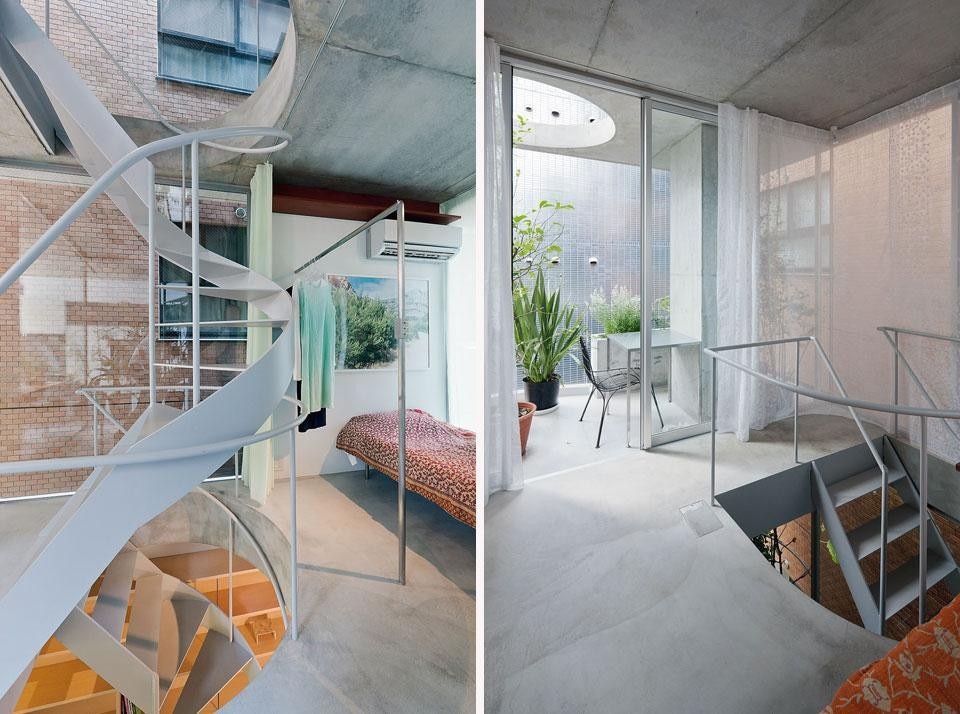
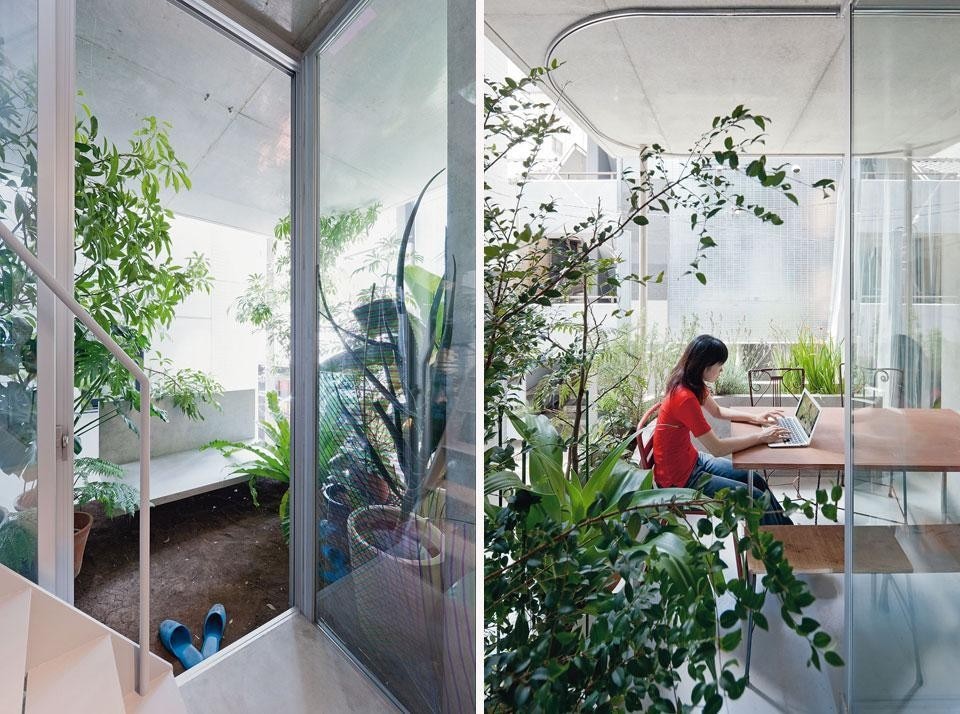
With no true facade, all that emerges in the anonymous front are the from bottom to top: the living room and kitchen on the ground floor, followed by the first bedroom on the floor above, moving on to a bathroom, then to a second bedroom, and finally to the roof-terrace, where a tiny room is located, used either as a guest room or extra storage. No interior walls divide the surface area into "rooms". Only full-height windows and curtains form the separation between the interior and the amenities placed in the exterior: a bathroom and laundry room, along with benches and planters functioning as parapets. Other inventions on these curious terraces include design features such as an oval-shaped "meeting room" created by enclosing a table with a curtain. The feeling of living in a hanging garden is emphasised by a thin layer of soil spread out on the floor of the upper room and by the continuous transition between inside and out, reminiscent of living in the Moriyama House.
However, here, to pass from one "moment" to another, it is necessary to use the stairs, which run the entire height of the building passing through clean, precise and unfinished holes formed in concrete slabs. The steel stairs, painted white, set themselves apart from the rest of the structure, reminding you of the effort required to overcome the threshold of each level change.
Design Architect: Ryue Nishizawa
Design Team: Ryue Nishizawa, Teako Nakatsubo
Structural Engineering: structured environment, Alan Burden, Hiroki Osanai
Plant Engineering System Design: Takehito Sano, Akiko Sano
Construction supervision: Heisei Construction, Hachir o Horigome, Kim Daehwan
Built area: 66.03 m.
Design: 2006
Construction: 2010–2011

 View gallery