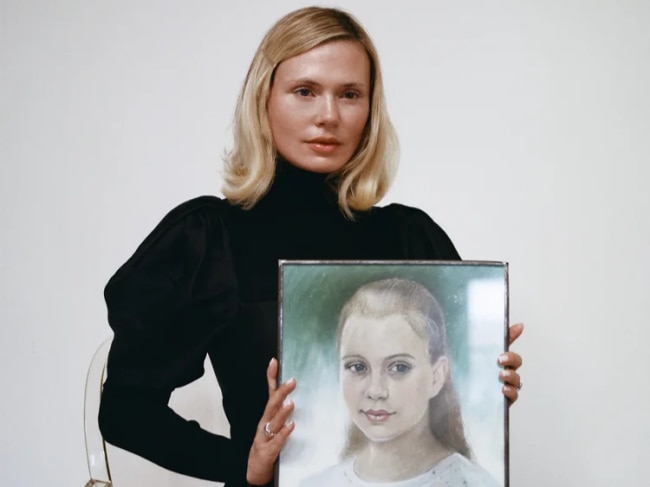
Nuncore: why covering up is the internet’s new radical move
An aesthetic born on TikTok uses veils, silence and subtraction to push back against the saturation of the online gaze.
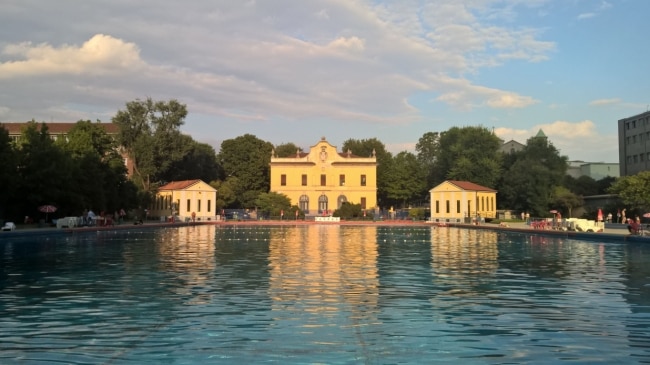
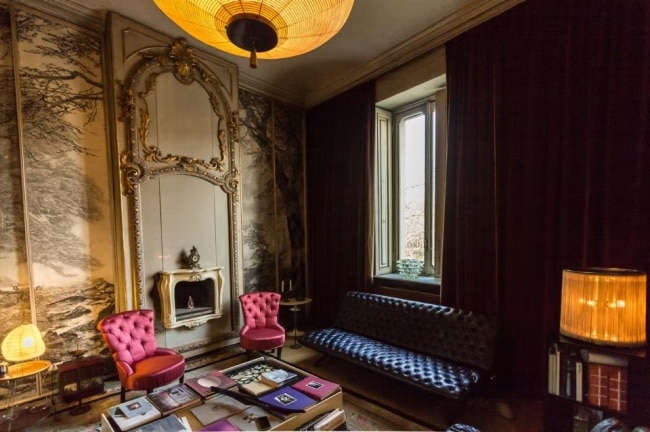
Cannaregio 5251 is the address of a Venetian house that, with recent renovation, reveals its authentic history through traces of the past.
A German prototype reinterprets camping as an exercise in transformable micro-architecture: from a compact parallelepiped on the road to an expanded living space for four to eight people.
Marking the 40th anniversary of the project that wrapped the historic bridge, JR prepares a monumental temporary intervention on the Pont Neuf in collaboration with Snap and Daft Punk’s Thomas Bangalter.
You can share your work through the function by Domus where you can upload your architecture, design, interior, graphics, illustration, photography and art projects.
The Vienna-based artist traces her path from radical painting to immersive spatial environments, culminating in her new intervention in the underpass of Trento.
From Ikea’s Frakta turned into a $2,000 luxury tote to Telfar’s bag inspired by department store carriers, and Lidl’s cart-shaped mini bag, the grocery shopper is no longer just a container — it’s a marker of identity.
OPT100 Neo Film is a miniature digital camera that pays tribute to 35mm film. It comes from Japan, following the success of Kodak Charmera.
A chalet built to house engineers at a coal mine in Catalonia has finally been attributed to Antoni Gaudí. The architect had never claimed authorship.
From her childhood in the mountains of Lebanon to her role chairing the Middle East and Africa jury at the Holcim Foundation Awards 2025, Ghotmeh reflects on craft, resilience, sustainability and architecture as a deeply human act.
Designed by Laura Marino and Julia Yako, Casa Eucalipto articulates its rigorous geometry around a tree, which dictates the rules for the development of the dwelling.
More than twenty years after the installation of the Seven Heavenly Palaces at Pirelli HangarBicocca, Kiefer returns to Milan with an extraordinary exhibition in the Sala delle Cariatidi at Palazzo Reale — the very space that, in 1953, also hosted Picasso’s Guernica.
In this new project, it is the territory of the Salinas Grandes that takes center stage: thus, the large salt architectures transform the visitor into an active part of a shared ecological and cultural cycle.
Gino Barbiere becomes an art gallery: Spazio Morgagni reinvents an iconic neighborhood store just steps from Bar Basso, without turning it into the usual, painfully boring white cube.
Born as a diabetes drug, Ozempic has become, in just a few years, a widespread aesthetic: from celebrity faces to social media feeds, producing a new paradigm of the body, fashion, and space.
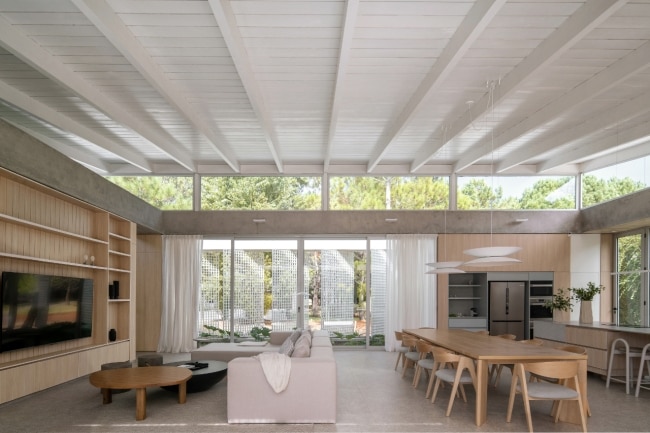
Context interpretation drives the entire project by Santiago Bertotti: a villa immersed in nature, defined by warm tones and carefully calibrated openings toward the outdoors.
After the ten years of silence requested upon his death, conversations about the great Italian writer and semiologist can finally resume. The Domus archive retraces every moment when architecture called him into play, across every possible context.
The artist will be the focus of a show dedicated to the monumental and process-driven dimension of his sculptural research.
From NHL jerseys on European subways to the Milan–Cortina Olympics, a sport long ignored by the mainstream has become a visual language shaping fashion, pop culture, and cities.
A team of professionals led by Archea Associati has unveiled the renovation and expansion project for the 1950s stadium, featuring a new roof and a significant increase in seating capacity.
Designed in the early 2000s, Foster + Partners’ City Hall formed part of a cluster of culturally iconographic buildings. Today, it is being redeveloped to a new design by Gensler, widening its base and its usefulness.
The historic headquarters of the Milan Order of Architects (Fondazione OAMi) on Via Solferino will reopen to the public from April 20 to 26, hosting an exhibition of projects selected through an open call after several years on the sidelines of Design Week.
Pins, plush toys and even volunteers’ uniforms: Milan has become an open-air Olympic village, where hymns to sport have turned into a breathless race for collectible merchandise, complete with endless queues.
Ingenious in its interior layout, installable almost anywhere, light even in concept: the Refuge Tonneau, designed together with Pierre Jeanneret and engineer André Tournon in 1938, was never built until recent years. Her daughter Pernette tells the story to Domus.
From historic architecture to post-industrial conversions, from house museums to vast exhibition spaces: here are the galleries and museums of Milan you should have seen at least once in your lifetime.
Emerald Fennell’s new adaptation with Jacob Elordi and Margot Robbie reignites the craze for Cathy and Heathcliff. Between visually striking costume design and themed interiors, the classic is transformed into an immersive aesthetic.
It is called Spazio Albini and will be a stage for guided tours, co-working, reading evenings, talks, and courses on the Albini Method to reactivate the architect's historical archive and revive his legacy in preparation for Alcova 2026.
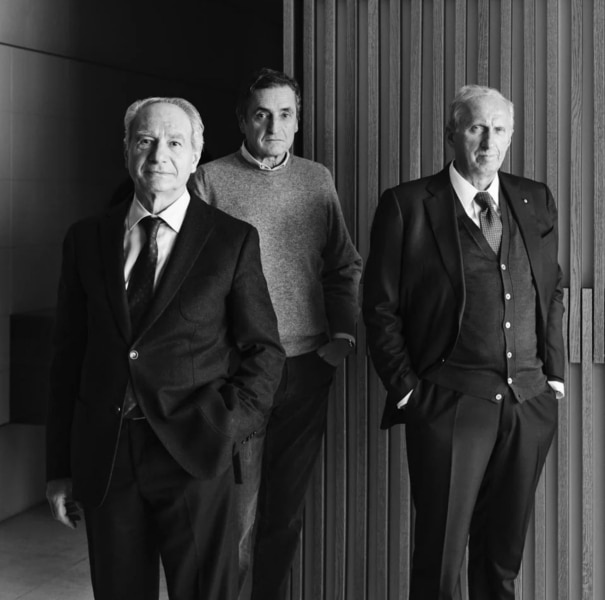
For the Japanese architect, building means creating a harmonious ecosystem in which the artificial and the natural intertwine — as he told Domus.
One of the 48 units designed in 1932 by Le Corbusier and Pierre Jeanneret in the steel-and-glass building—now a UNESCO World Heritage site—has returned to the market: a 277-square-metre duplex preserved in its original state.
From the Winter Olympics to crowd outside Pop Mart stores, the queue has shifted from spontaneous local enthusiasm to a standardized global ritual of consumption—one that is reshaping how cities feel and function.
Ten years after his death, the theorist of capitalist realism has become an unavoidable reference point: amid documentaries, publishing revivals and new systemic crises, the present seems to have caught up with his diagnoses — but also with his demand for alternatives.
The Land Rover Defender is not the end goal but the means: Coolnvintage uses it to build a contemporary work aesthetic, where process matters more than personalization.
From her encounter with Kapoor’s sculptures to the creation of one of Italy’s most influential contemporary art foundations: the trajectory of a personal decision that evolved into a cultural infrastructure spanning Turin, Madrid, and Venice — and the forthcoming Alba 2027 project.