Author
Published
Location
Sections
Keywords
automation, Automobile, Domus 621, irony, machines, mechanics, Philip Garner, post-war, utopia, video games, World War II
Network
Sponsorship
The Domus digital archive includes all our issues since 1928. If you'd like to subscribe click here to find out more.
This article was originally published in Domus 621 / October 1981
Ideas, design and creations by Phil Garner: an expression of the limits and neuroses of American society
Glancing through Home Video
magazine the other day, I came
across some designs by Garner
for a "new generation" of video
machines. It was a pleasant
surprise for me to see the creative
capacity of this American
designer still as active as ever.
In the late 60s Garner was
already working hard at the
design and creation of objects,
décors and instruments that
might easily have been given
the facile label of "radical"
or "anti-design".
In fact, though Garner's work
does have points in common with
European radical trends, he
stands apart for his declared
love of advanced technology.
This technological sophistication
he applies to amazing works,
sometimes ironic, at other times
provocative. The Garner of the
60s, then, expressed the crisis
of a generation never
breaking away completely
from the postwar and still
existent American utopia of an
automatized world.
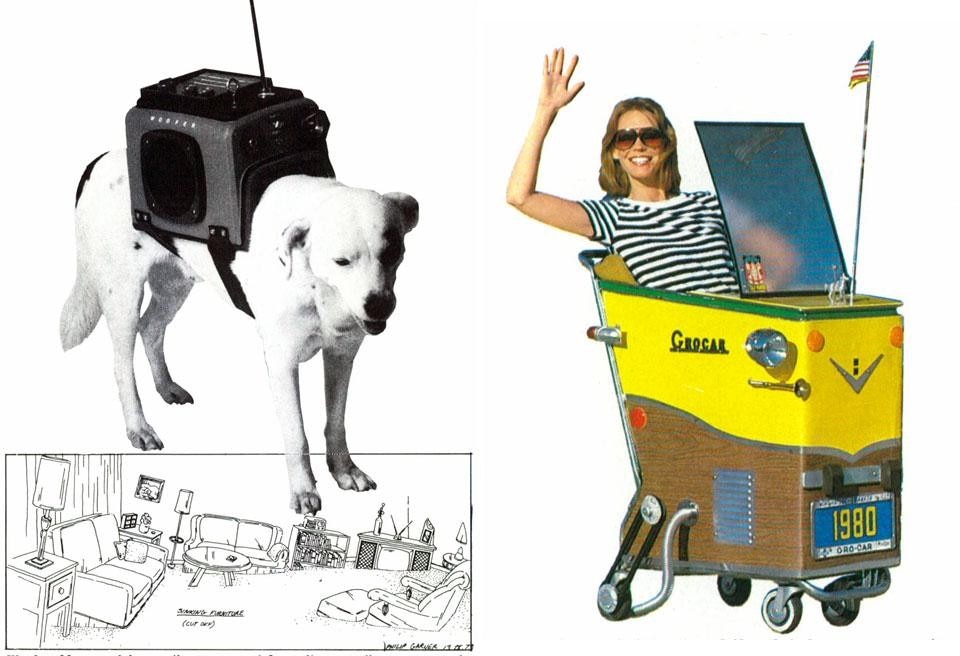
Top: Philip Garner, Closed Circuit Vanity, table and make-up mirror. Above: Left, Philip Garner, Woofer, portable radio for dogs, 1981. Photo by Cari Zappo. Right, Grocar, mini DIY automobile, built over a simple shopping cart. From the pages of Domus 621 / October 1981
We need only look at his mini automobile (the Grocar) built up from an ordinary supermarket trolley. The vehicle has all the characteristics of a large-scale project, as if for one of those gigantic models you see on America's roads. But it expresses all the alienation of the consumer about the needs of the future. It is a mini car which possesses all the efficiency of modern design without sacrificing the self-expression.
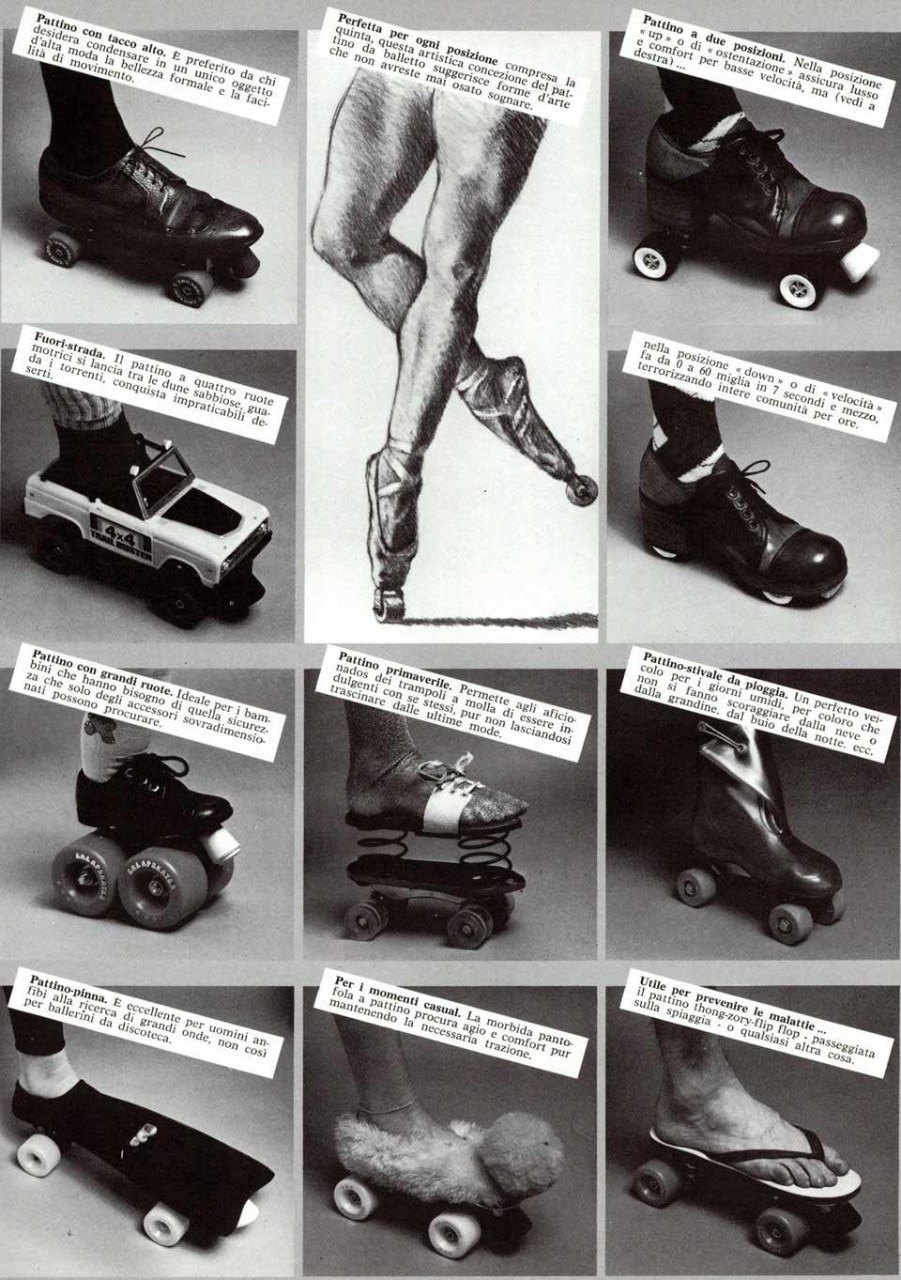
Philip Garner, series of rollerskates. From the pages of Domus 621 / October 1981
"A series of sophisticated mechanical components have been provided for the sturdy frame of the Grocar: an elegant body and a range of optional gadgets, all sold in special boxes containing instructions for easy assembly". The language might be taken from the most banal sales pitch for consumer goods. The aim of the exercise is not revealed until the end: "the cart can be easily obtained from the nearest supermarket". The word "obtained" reminds us of a whole tradition of ideas and projects from the late 60s and early 70s for winning back and transforming the established system of objects and spaces.
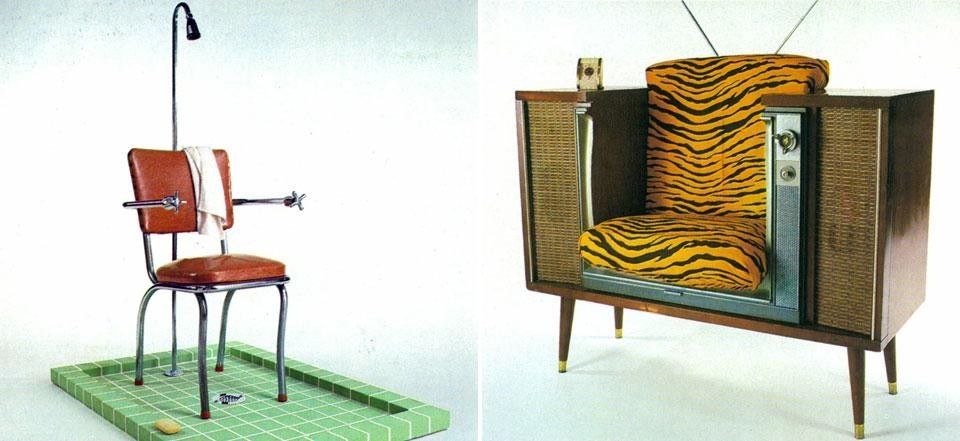
Left, Philip Garner, sitting shower, intended for activities such as "writing, napping, reading, playing solitaire". Right, Philip Garner, TV chair, where an obsolete TV side table is enhanced with a chair, 1981. Photo by A. Rapoport. From the pages of Domus 621 / October 1981
Many then believed that such
change was possible — Garner
is still working at it! But his
projects rather than transform
the society in which he lives
tend to display its limits and
its hidden neuroses. This we
can find confirmed by his
in his autobiography.
Garner's designs thus tell us
about a society that cannot be
objects alone, but also by
articles which, unique though
they are, forcefully express
certain aspects of American
society. Ugo la Pietra
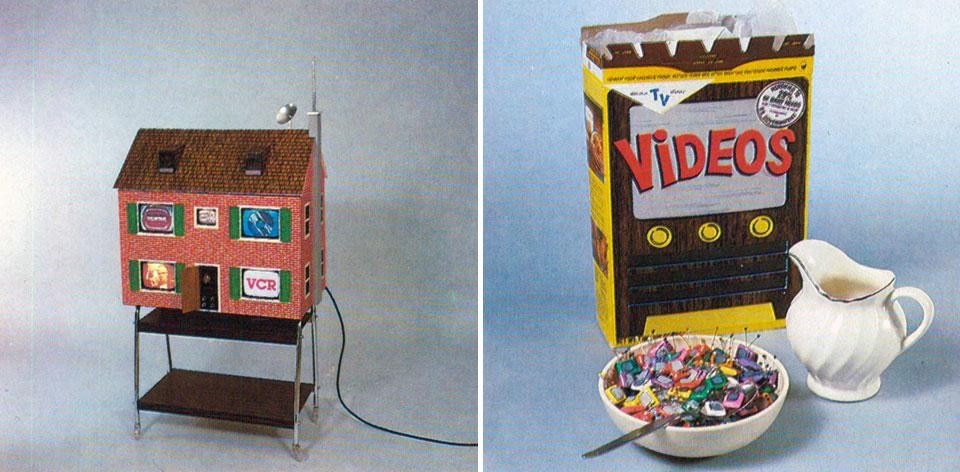
Left, Philip Garner, construction for Home Video magazine, 1981. Photo by Dennis Pursue. Right, Philip Garner, "breakfast of champions", in order to simultaneously watch and eat TV. From the pages of Domus 621 / October 1981
I grew up during what might be called the "Neo-Futurist" period in America, the time just after World War II which saw a frenzied effort to recapture visions of utopia. The means for this was blatantly materialistic and the inspiration came from a combined desire to expurge the horror and hardships of the war plus the need to quickly put the massive defense industry to work producing consumer goods.
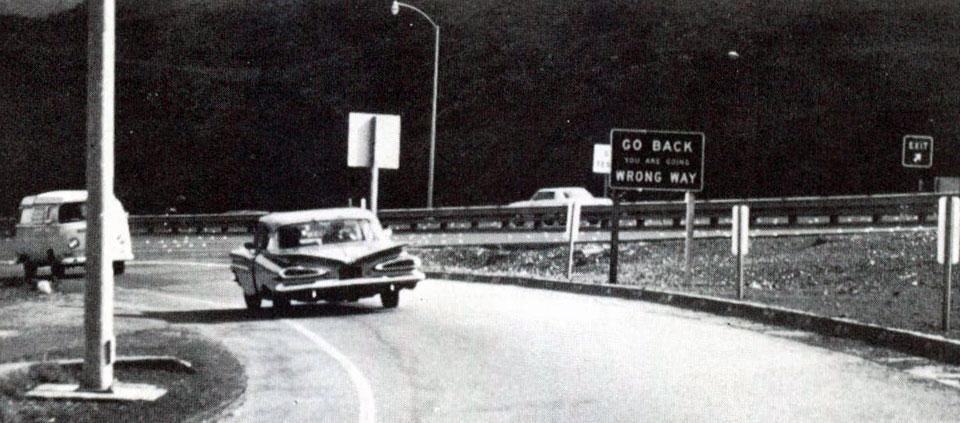
Philip Garner, Backwards Car "I chose the two-door Chevrolet Biscayne for this project, for its exaggerated aerodynamic style. I removed the interiors and then reinserted them in the opposite direction, dealing with all the necessary mechanical alterations myself. (...) According to the California Police, it was only a 'customised car'". 1974. Photo by Jeff Cohen. From the pages of Domus 621 / October 1981
It was
during my formative years when
this phenomenon reached its
peak and the images of industrial
design and science fiction became
almost synonymous. Automation
was to produce a world so
breathtakingly efficient as to
virtually eclipse the ruthless and
barbaric side of man's nature.
Of course, it was easy for a child,
especially one intensely interested
in mechanical things and
endowed with a certain sense of
theatrical style to view this
eventuality without skepticism.
I soon became the consumate
" techno-romanticist".
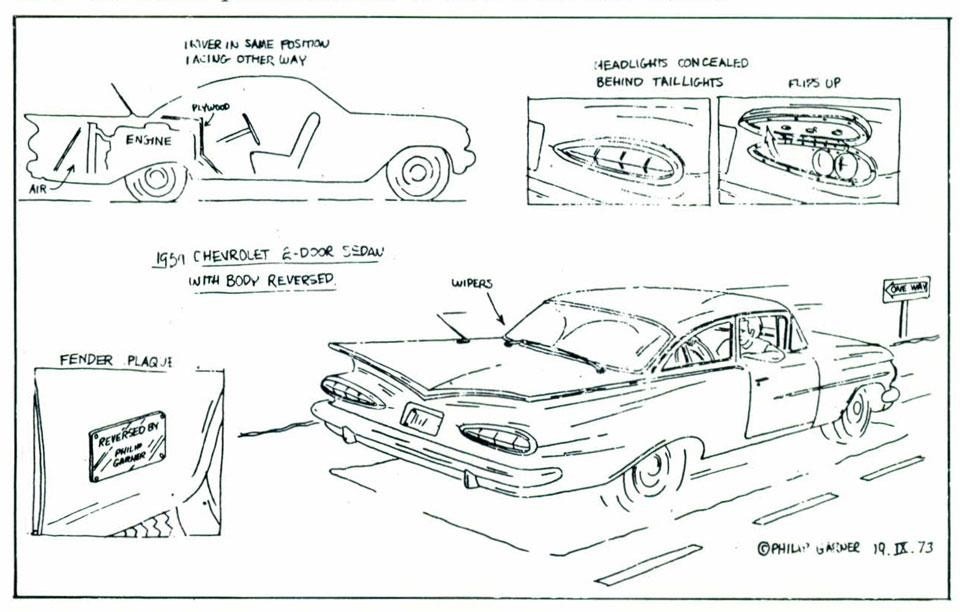
Philip Garner, Backwards Car, sketches. From the pages of Domus 621 / October 1981
My disillusionment came, along
with everyone else's, in the sixties
but I never lost my affection for
futuristic appliances (especially
the automobile) nor my longing
for push-button utopia. I merely
added an awareness of the
absurdity of such things to my
repertory. My work today is based
on these notions.
I feel fortunate to have grown up
in post-war America for I don't
believe the same situation
existed anywhere else in the world
or perhaps ever will. Philip Garner
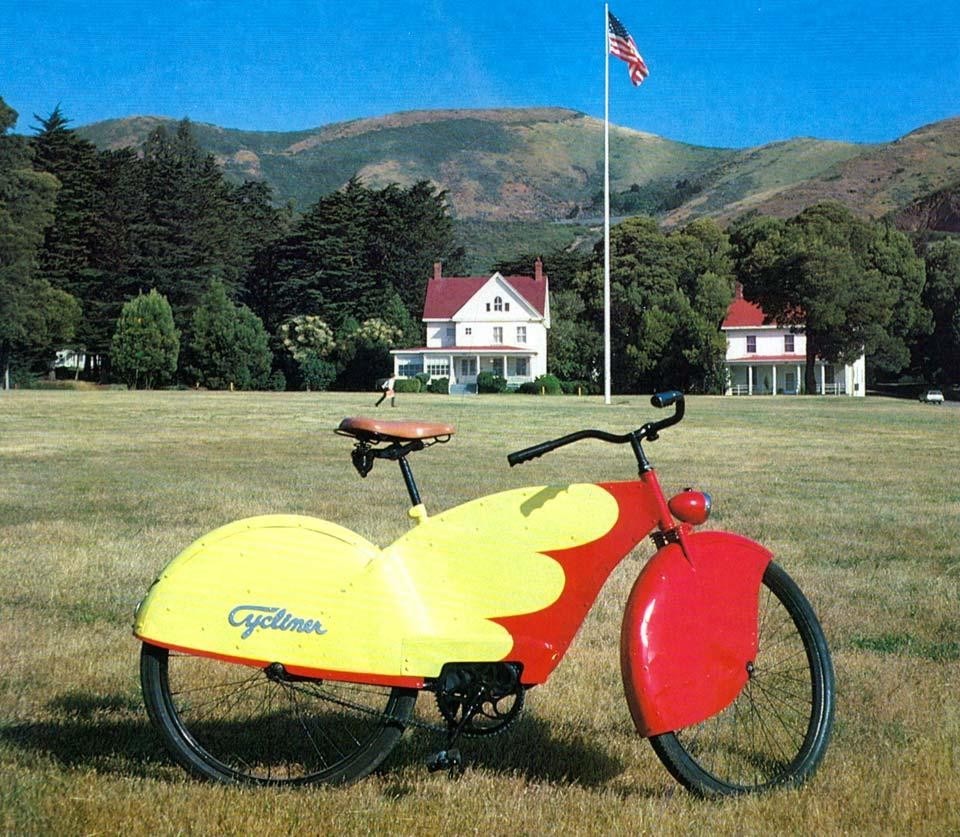
Philip Garner, Cycliner. The application of metal laminate to a 1950s bicycle allows for styling and graphic enhancement of a standard bicycle. "The missing link between the bicycle and the automobile." 1974. From the pages of Domus 621 / October 1981
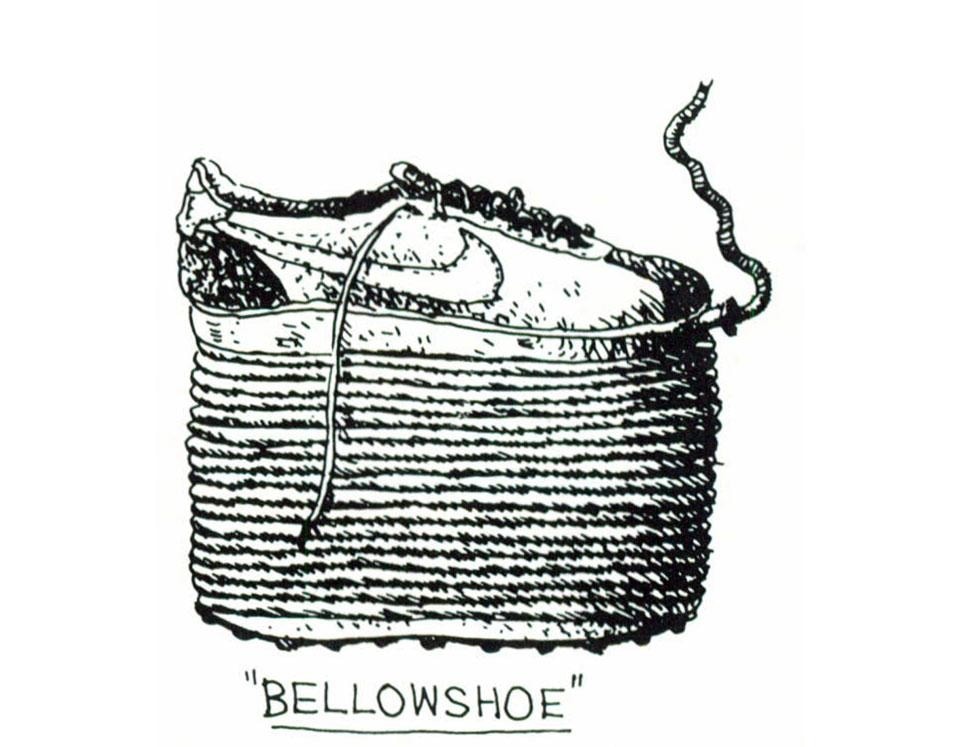
Philip Garner, Bellowshoe, sketch. From the pages of Domus 621 / October 1981
Author
Sections
Keywords
automation, Automobile, Domus 621, irony, machines, mechanics, Philip Garner, post-war, utopia, video games, World War II
Location