



Yanagi was born in Tokyo in 1915 and grew up in the Japanese equivalent of an Arts and Crafts house across the street from the Mingei Kan (Japanese Crafts Museum), which his father Soetsu established together with the ceramicists Shoji Hamada and Kanjiro Kawai. Their understanding of Korean and Japanese folk art was based on an intuitive appreciation of the beauty of things made unselfconsciously, and the discussions which their discoveries provoked led to a cultural awakening in pre-war Japan which had long been absent.
The inadequacy of industrial production and the importance and superiority of objects made by hand for unpretentious everyday purposes were constant themes of his father's essays. Looking at the hundreds of everyday objects which resulted from Yanagi's six-decade design career, from manhole covers to tea cups and drinking water fountains, it seems the message was well received, each one of these having about it all the spirit an object needs to overcome the orphan-like disadvantages of an industrial birth.
His students days were marked by the teaching of Charlotte Perriand, the French designer responsible for most of the furniture attributed to Le Corbusier, who travelled to Japan in the 1940s on a government grant with a mission to inspire young Japanese designers. In 1957 he travelled to Milan, then in its heyday as the design capital of the world, for the 11th Milan Triennale where he exhibited his Butterfly Stool. Back in Tokyo his design office finally settled in the studio where he was to continue working for the last four decades of his career.
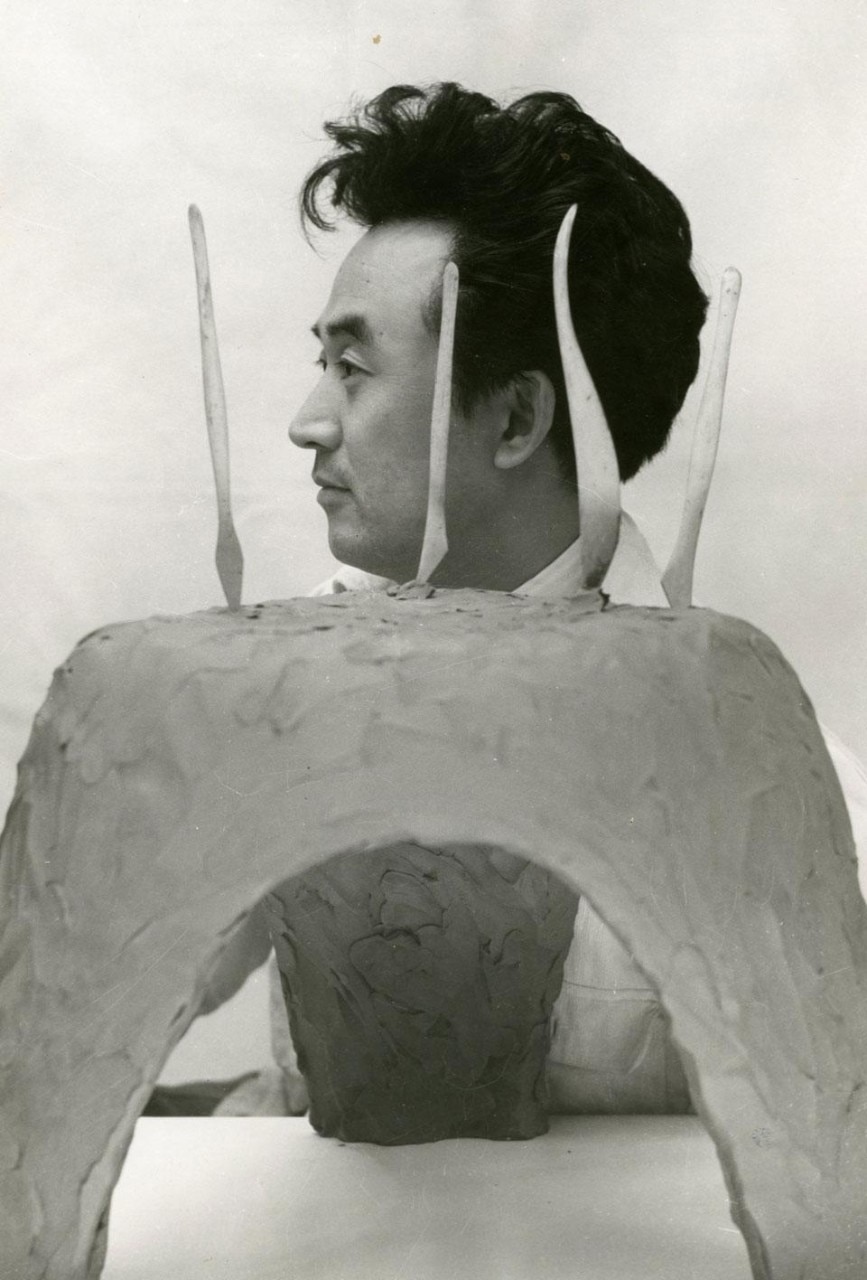
In recent years his kitchenware designs have attracted something of a cult following, appreciated for their usefulness as much as their beauty. It seems probable that Yanagi spent his life trying to invent a future for his father's appreciation of things, reconciling the two worlds of craft and industry by adapting the benefits of the handmade with the advantages of industrial production, with a mind and an eye trained from an early age to know how to do it.
His recent decline in health, combined with a certain lack of attention from Europe's design media and institutions, denied the West the retrospective exhibition and magazine coverage he deserved. Though he rarely made public appearances in later years, in 2006 he attended an exhibition curated by Naoto Fukasawa and myself called Super Normal, which featured a number of his pieces. Wandering among the exhibits he stopped to appreciate some of them, finally settling on a salad bowl with combined strainer that he had designed several years earlier "It's beautiful. Who did it?" he asked with a slight smile and twinkling eyes.
Jasper Morrison