




Natural stone is an eternal material
Now in its 59th edition, Marmomac returns to Verona from September 23 to 26 to showcase the role of stone in contemporary design.
I am at table with Francesco Librizzi and his father in Gratteri, Sicily, in their family home. This architecture is designed and entirely built by Librizzi Sr., and the house is nothing like the one illustrated in this article. So why are we here? Because to understand Francesco's logic and his thinking about design, it is very useful to observe him in situations that take him back to his boyhood, when he would be tinkering with a motorbike or something. For here is the child who transmigrated into the adult person's heart.
While showing us this interior, Francesco tells us: "I must have been eight. The food blender broke and my father opened it to notice that a cog had broken. So he pottered about for a while and all of a sudden he produced a micro-mould. It was incredible. By melting a plastic comb he cast a new cog to substitute the broken one. That was my childhood. A mixture of my dad as a domestic-style Robinson Crusoe, and my uncle who could transform a Ducato into a vehicle that looked like something out of an A-Team episode that I used to watch on TV. It was a marvellous childhood, during which I learnt that design is not about skills, but attitudes."
The adult Librizzi's spatial abstractions would seem light years away from the boy Francesco who played with his uncle in the Sicilian countryside. But maybe this isn't the case. The man and the boy are more like two sides of the same coin. The story continues: "My father taught technical education at a middle school in Cefalù for 40 years. He wasn't an architect. Both of them — my father and my uncle — were incredibly gifted designers in the great Mediterranean tradition. Whether building their own house, or busy converting a van into a phantasmagoric camper ready to set off on a trip to North Cape, they were absolute designers. From spoon to city: except that instead of Gropius at the Bauhaus, this was the real, harsh island of Sicily. With me as a little boy watching, enchanted and thrilled."
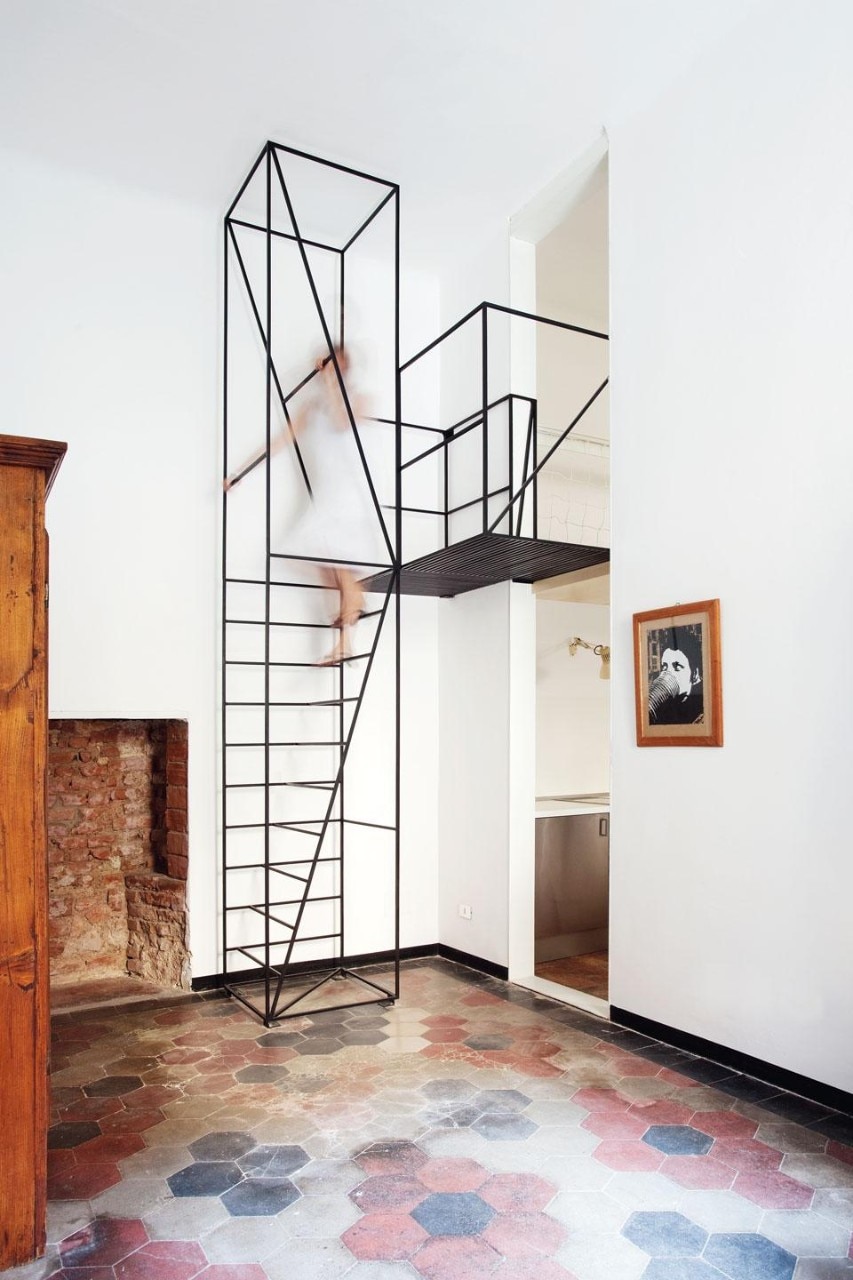
Looking at these images, one can picture his uncle Achille sharpening for the umpteenth time the blade of the knife he had been working on for months with boundless passion. Herein lies, perhaps, the key to our understanding. Working by short circuits. Or comparing this Milan interior with the projects developed by Albini in the 1930s and '40s: "Room for a man" (1936), "Sitting room in a villa" (1940), the Scipione exhibition design at the Brera Academy (1941), or again, the Zanini furrier's shop (1945).
Intent on looking and comparing, Francesco breaks off to tell me something important. "Did you know that Mies was born in the same period and year as Coca-Cola?" From the great Italian tradition, in a split second, we have switched to YouTube videos. On one hand, we have his status as a Rhino and AutoCAD black belt, and on the other his tales of work in the factory with a joiner. Aware that there is always a very narrow border between reality and the stage, and that the quality of a design lies precisely there, on that border.
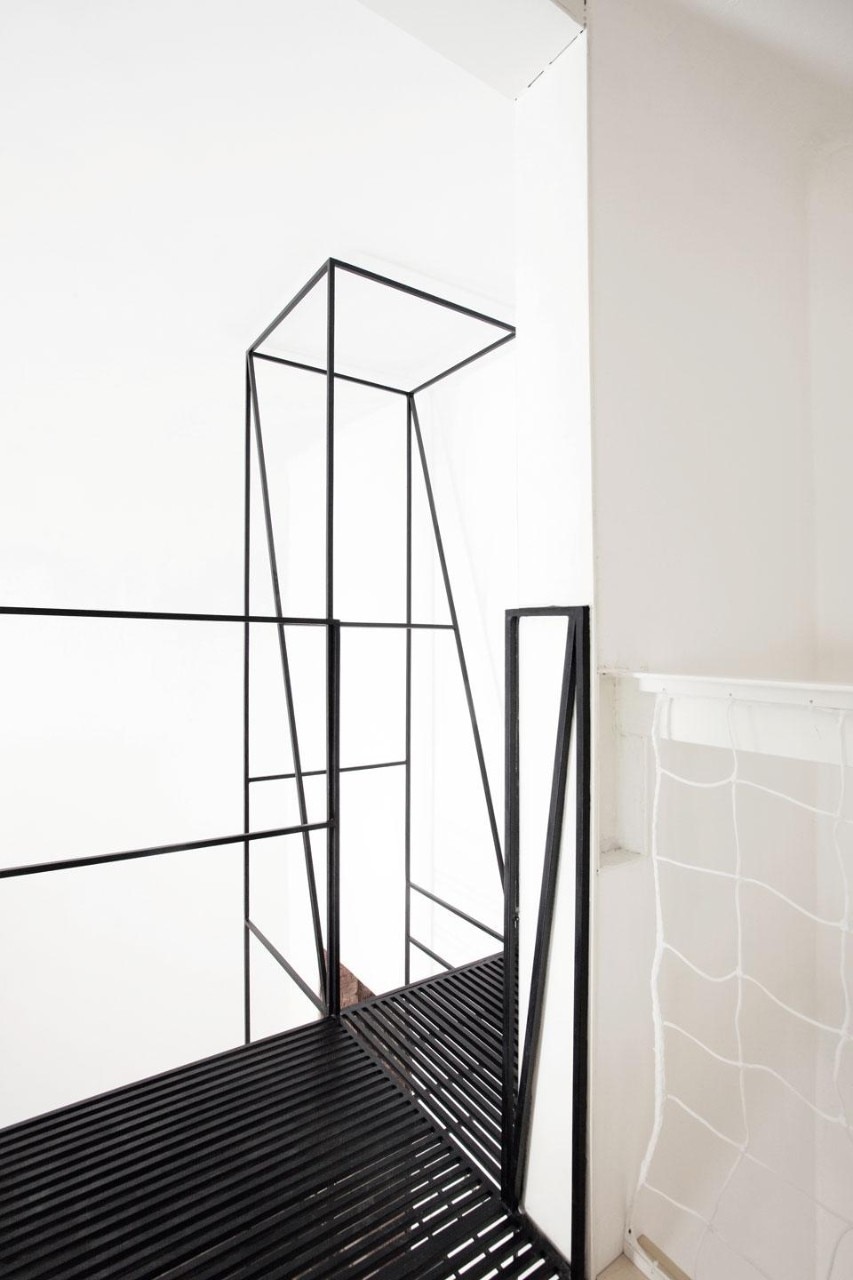
I have always liked this approach of his to work. Albini's "magic realism" slides into the background, ousted by a very curious "pop impatience", perfectly attuned to the third millennium. We shall close with an explanation of iperstasia.
A neologism coined by Librizzi himself, it refers to a physical state of being: above, just beyond. The term is a hybridisation of ipostasi (or "hypostasis", a rhetorical figure indicating the personification of an abstract concept) and isostasia (or "isostasy", the gravitational phenomenon whereby a rocky mass floats on the mantle beneath it, in a constantly changeable balance).
So what we see here is the continually changeable balance of a physical mass. What we do not see, but which is at the heart of Librizzi's design system, is the underlying mantle — which has an even more changeable (conscious and unconscious) balance. We look forward to seeing the next instalment.
Francesco Librizzi: Interior with stairs
Design Architects: Francesco Librizzi Studio
Design Team: Francesco Librizzi with Matilde Cassani
Collaborator: Carolina Martinelli
Structural Engineering: Federico Santarosa
Steel Structure: Mario F23
The adult Librizzi's spatial abstractions would seem light years away from the boy Francesco who played with his uncle in the Sicilian countryside. But maybe this isn't the case. The man and the boy are more like two sides of the same coin
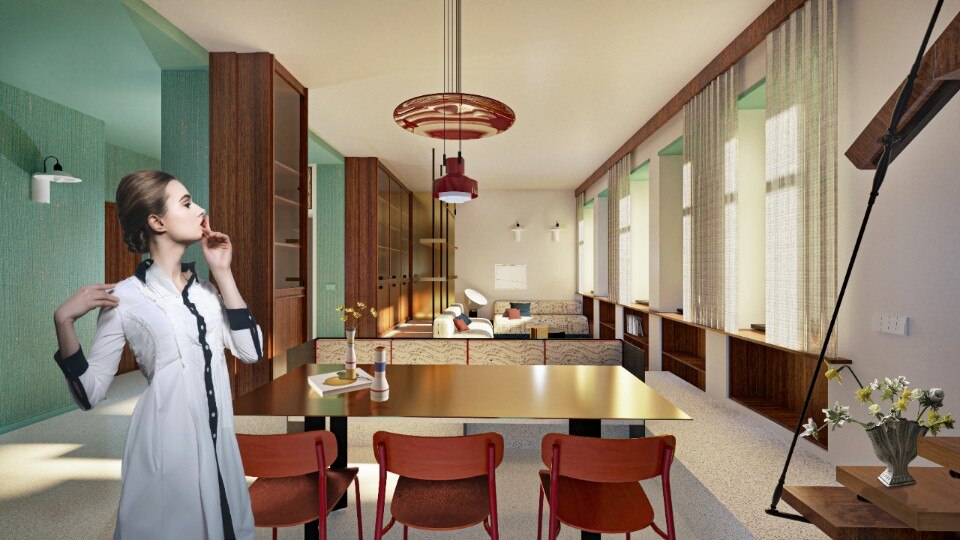
For a new ecology of living
Ada Bursi’s legacy is transformed into an exam project of the two-year Interior Design specialist program at IED Turin, unfolding a narrative on contemporary living, between ecology, spatial flexibility, and social awareness.