Zaha Hadid's Riverside Museum

Rejuvenating post-industrial cities through institutional projects proceeds with the new transportation museum in Glasgow.


Architecture / Beatrice Galilee

The Riverside Museum in Glasgow exists due to the city's infinite nostalgia for its lost industrial past and chest-beating zeal for a new cultural and tourist-driven present. Relocated and upgraded from the museum's original home, what was once the Museum of Transport now occupies part of a derelict stretch of land between banks of the Clyde and a thundering dual carriageway close to Foster's armadillo-like conference centre and Chipperfield's BBC.

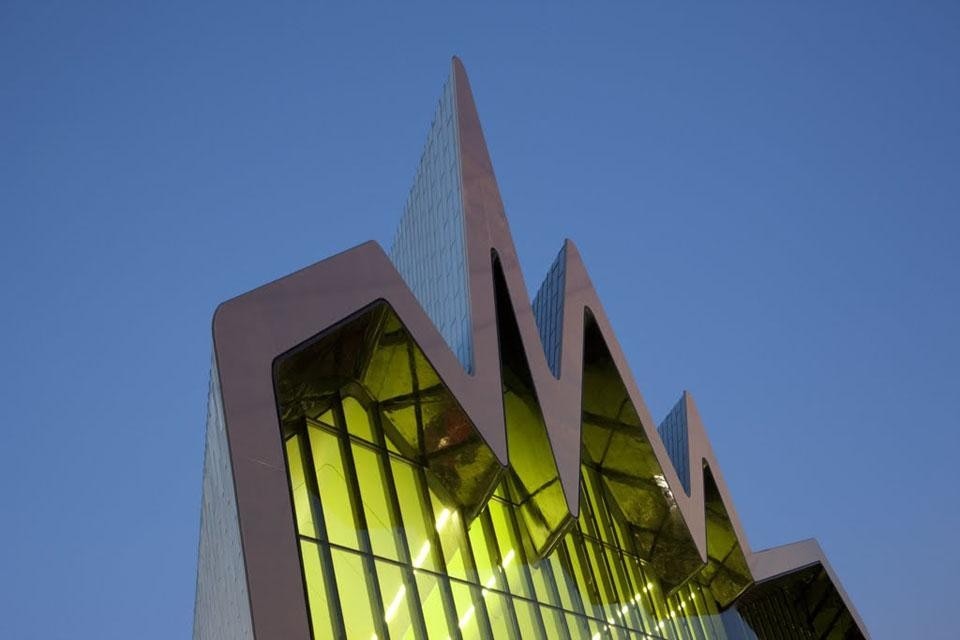
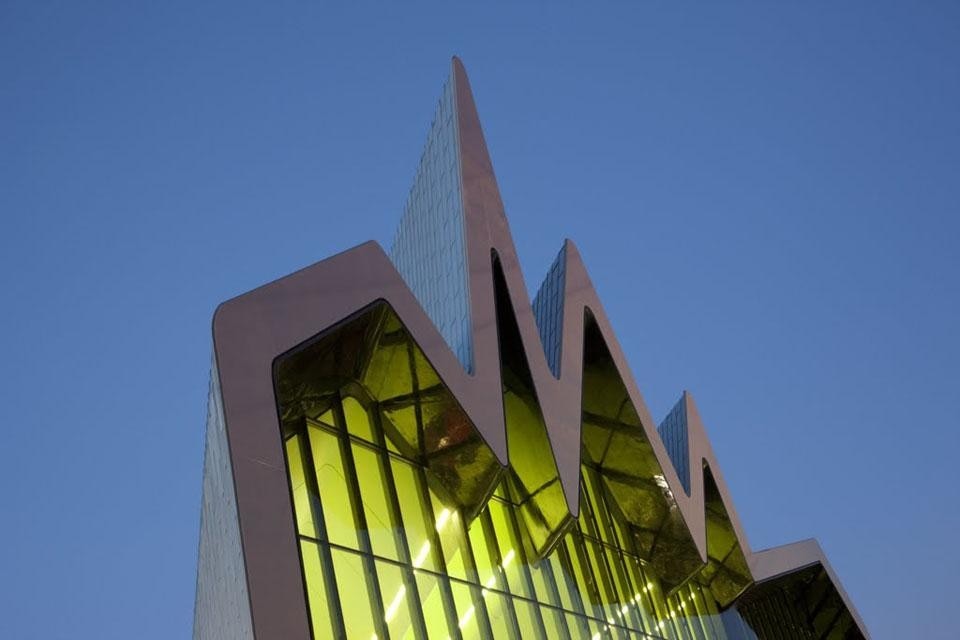
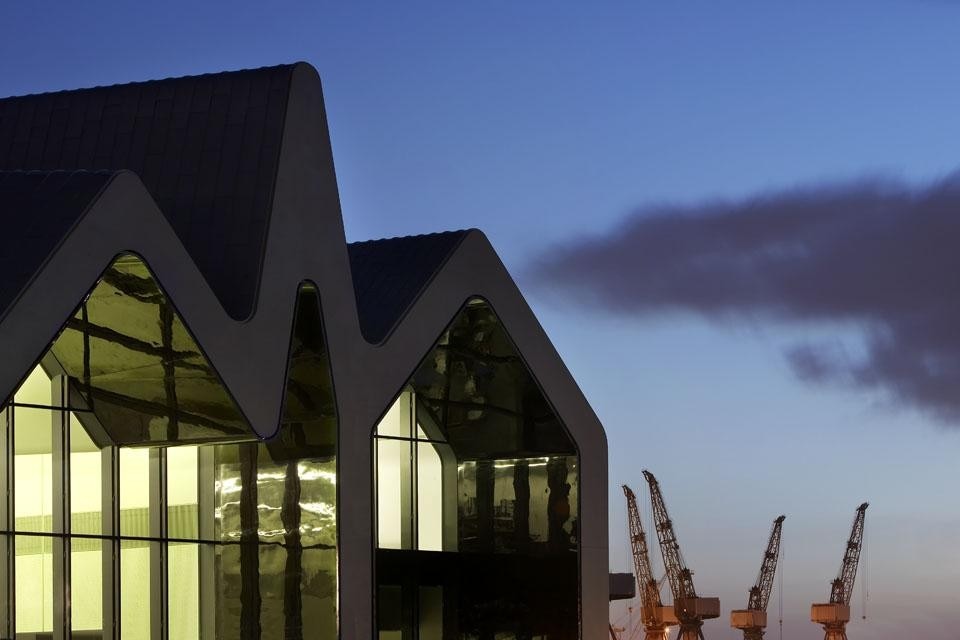
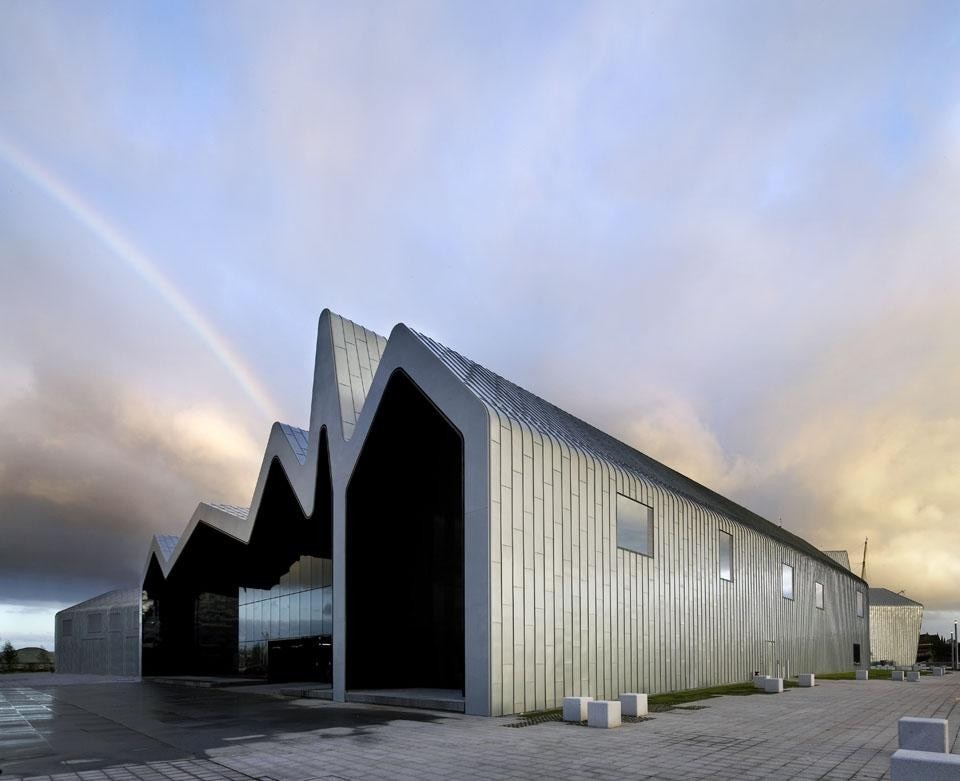
Zaha Hadid has made much of the dynamism and energy the building draws from the tensions of industrial ruin, the river and motorway. Indeed, in plan the Z-shaped train-shed design zig-zags across the site and its heart-beat roofline poignantly faces both city and river.
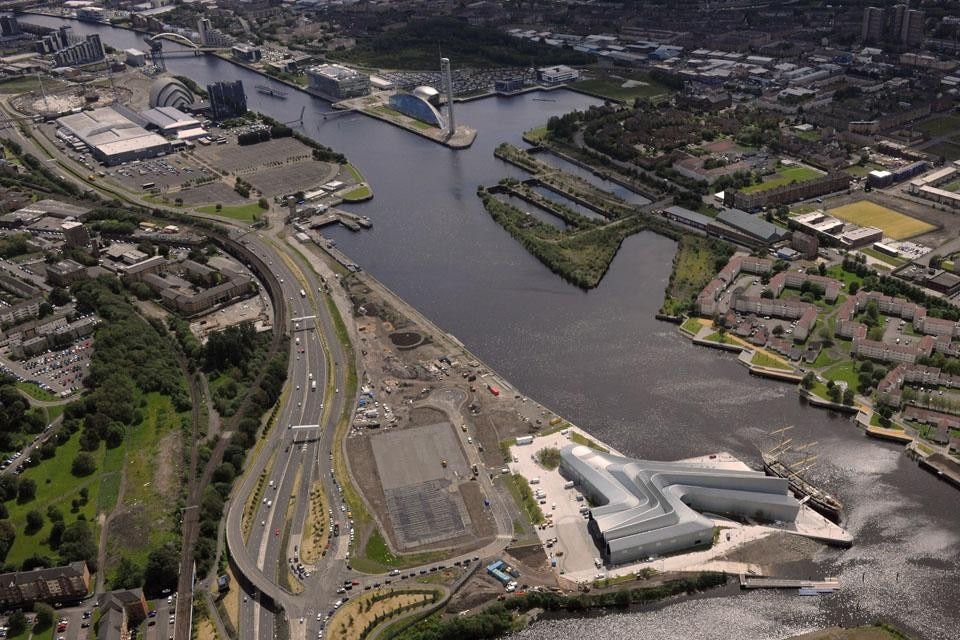
The Riverside Museum, Glasgow. Photo by Hawkeye Aerial Photography.

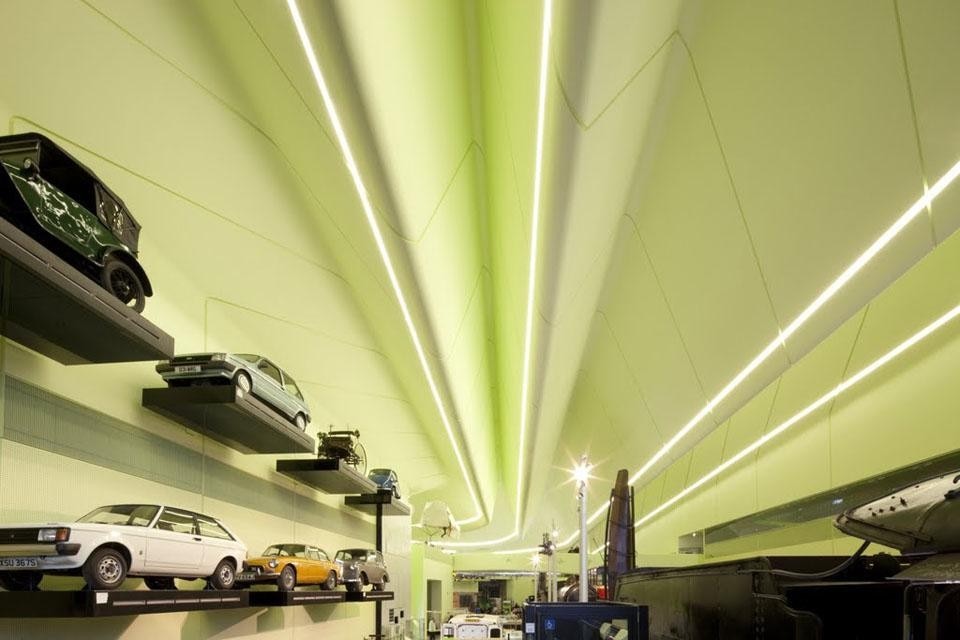
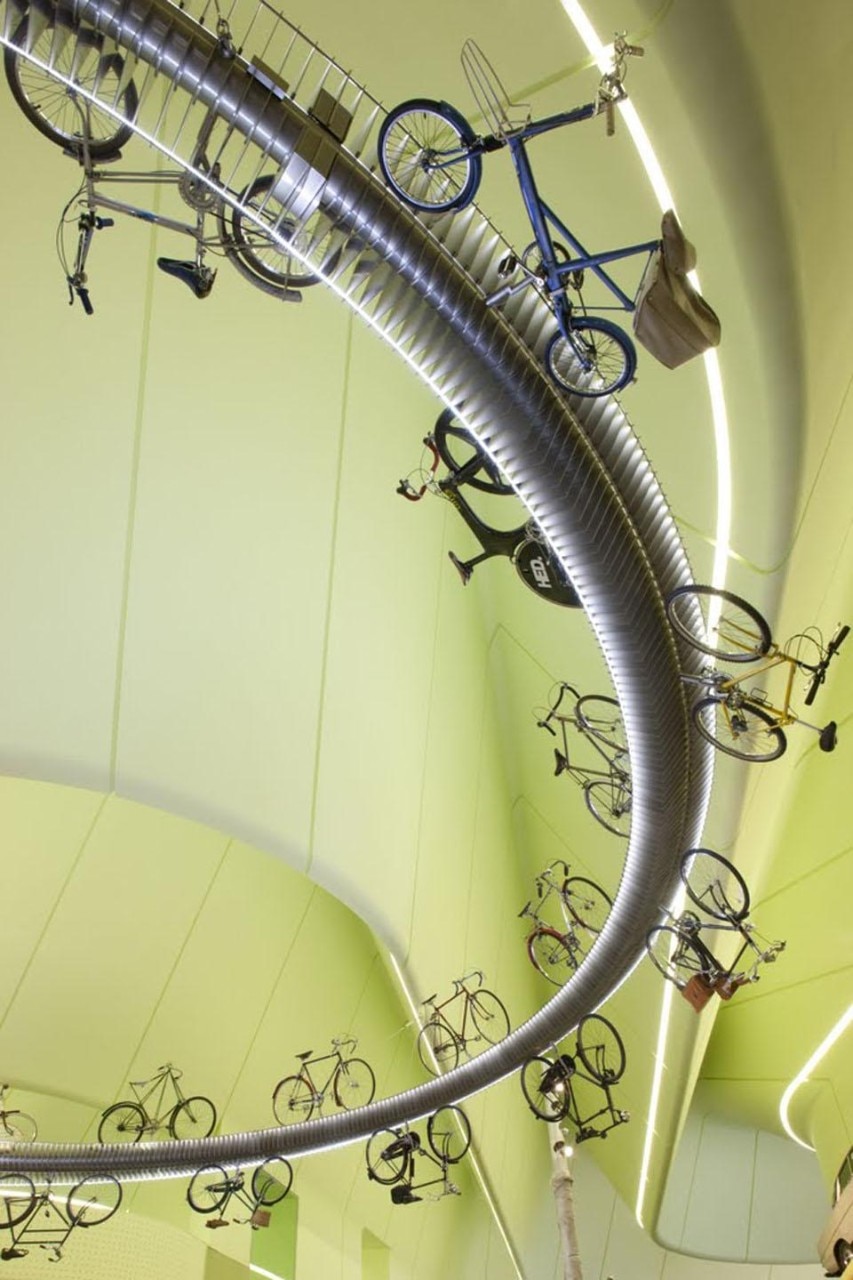
Internally the dynamism is less convincing. For a collection of machines it feels pretty static despite the ubiquitous pale chartreuse interior, which adds a cool 'dentist waiting room' or 'primary school corridor' backdrop. The 11,000sqm building is stuffed to the rafters with 3,000 objects, double the number at the former museum. Bicycles loop around overhead in the vast columnless expanse as cars, models of paddle steamers, motorbikes, replica gliders and a 150 tonne locomotive all seem to be in stasis, coexisting but unaware of each other's presence. Congested in an endless traffic jam.

Interior of the Riverside Museum, Glasgow. Photo by McAteer Photograph/Alan McAteer.

"A museum is not about the space around the objects, it's about the objects and the stories," says project architect Jim Heverin. "For the objects to work the building has to be robust and strong. It also needs to become background at lower level."

 
A museum is not about the space around the objects, it's about the objects and the stories. For the objects to work the building has to be robust and strong.
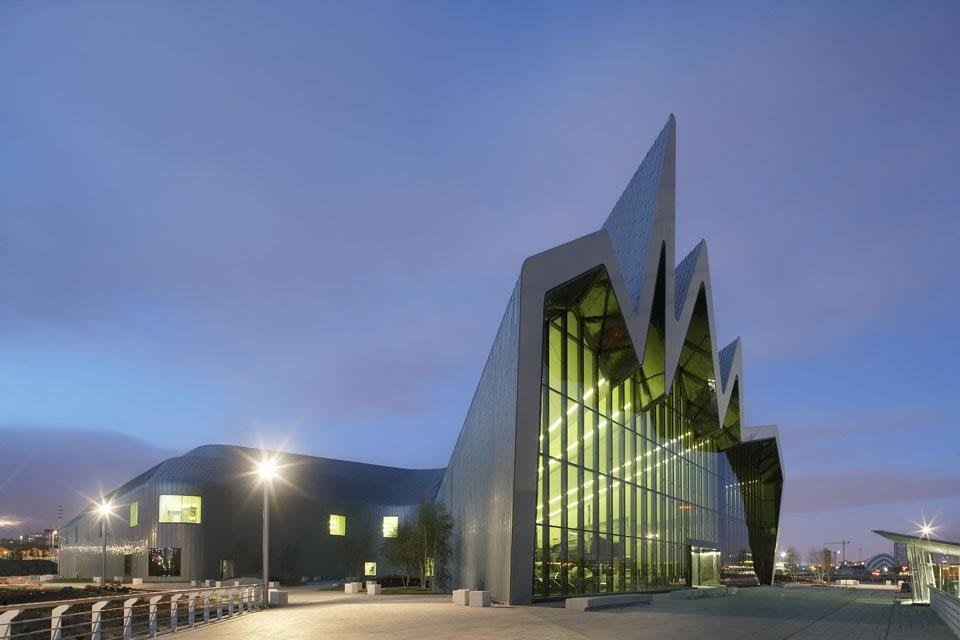
 

The Riverside Museum, Glasgow. Photo by Hufton + Crow.

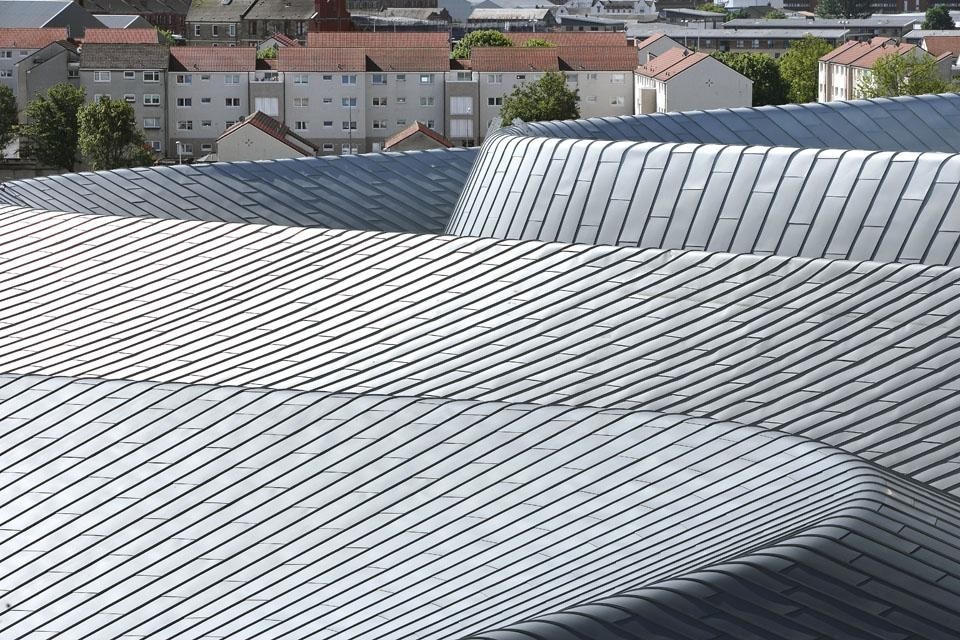
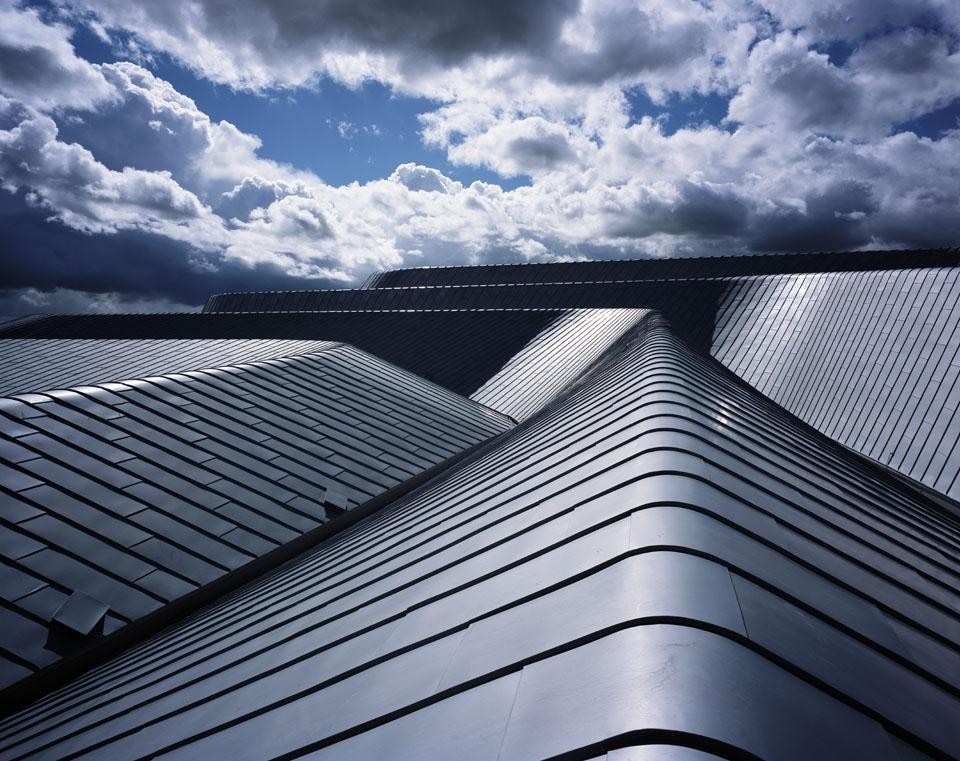
Externally, the shell is a sharp neat grey. The engineering, plants and services are stored in the roof so the building is public-facing on all sides and joins onto a riverside path. The pixellated landscaping is provided by Edinburgh-based Gross. Max, but the tidy site is flanked by a grim looking chunk of undeveloped land. Heverin says the building is part of a move to 'connect the dots' in this area.

"The river has changed to a vacuous leftover industrial to something about the future. This project is just one of a whole lineage with Glasgow is involved with."
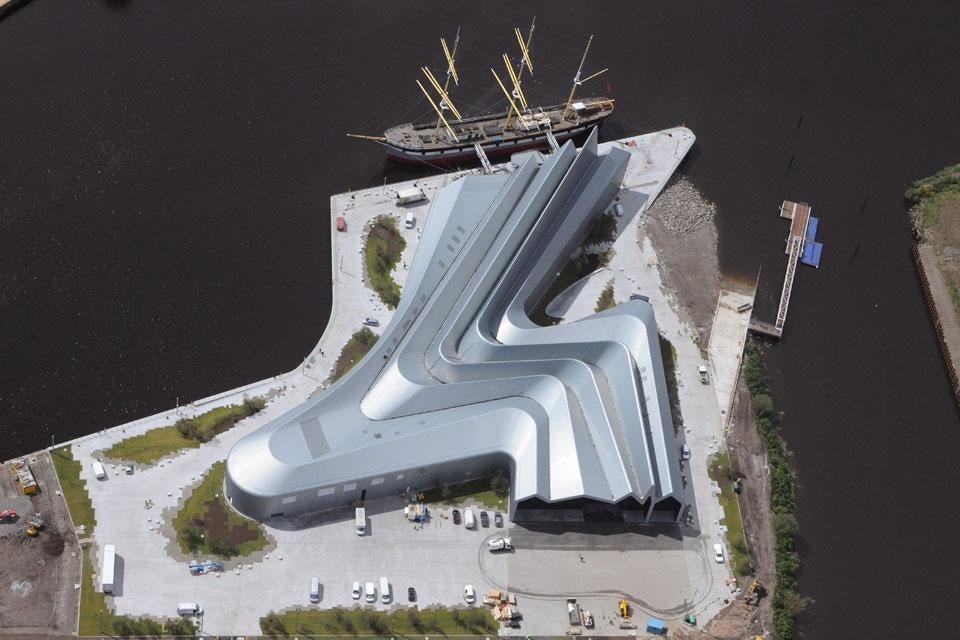
The Riverside Museum, Glasgow. Photo by Hawkeye Aerial Photography.

It is a fact that there are now more jobs in retail and tourism in Glasgow today than there ever were in shipbuilding and engineering. The professions that used to be the pride lifeblood of Scotland now replaced by a wooing and entertaining a transient fickle mass may not seem a cause for celebration, but there is good reason for the positive mood around this project says Heverin. "The city can only build what they need. This is not something like an idea that never existed before—it's a sure bet. It's the best-visited non-art museum in Scotland. They already know they have something that is amazingly successful; they're not taking a gamble like Sheffield did. It's not something where people are trying to reinvent art or culture. For this time of post-recession, this is a great story."

The Riverside Museum, Glasgow. Photo by Hufton + Crow.

Riverside Museum
100 Pointhouse Place, G3 8RS Glasgow
Architectural Design and Contract administration: Zaha Hadid Architects
Project Manager and cost control: Capita Symonds Ltd
Structural Engineer: Buro Happold
Landscape Architect: Gross Max
Lighting Design: Inverse Lighting Design
Project construction: Event Communications
Site Area: 22.400 m2
Gross area: 11.300 m2 (excluding basement)
Exhibition Area / Public space: 6.600 m2 (including public areas and café)
Overall building dimension:
North facade: Width: 45.8m; Maximum height:16.6m
South facade:
Width: 63.6m;
Maximum height: 25.7m
Cost: £ 60,000,000 for building and landscape design (excl. fit-out)
The Riverside Museum, Glasgow. Photo by Hufton + Crow.

The Riverside Museum, Glasgow. Photo by Hélène Binet.

Interior of the Riverside Museum, Glasgow. Photo by McAteer Photograph/Alan McAteer.

The Riverside Museum, Glasgow. Photo by Hufton + Crow.

Zaha Hadid in Guangzhou
 

Zaha Hadid in Guangzhou

A spectacular new opera house photographed by Roland Halbe.


Architecture / Beatrice Galilee

Manhattan in Moscow
 

Manhattan in Moscow

Philip Sayer's photographs on show at Marsden Woo Gallery portray 7 Stalinist skyscrapers built in late 1940s/early 1950s.


News / Rachael Crabtree

Zaha Hadid's Mobile Art for Chanel

Itinerant since its inception in 2007, Zaha Hadid's mobile pavilion has found its home in front of Jean Nouvel's Arab World Institute in Paris.


Architecture / Ivo Bonacorsi

EDF Archives Centre by LAN
 

EDF Archives Centre by LAN

An archives storage facility reflects the surrounding landscape and provides a positive environmental effect on the region.


News / Julien Lanoo