Didier Faustino: The Wild Things

Didier Faustino: The Wild Things

At Galerie Michel Rein, Didier Faustino plays with the narrative aspects and linkages among science fiction and architecture An art report from Paris by Ivo Bonacorsi

The formal aspect of the works in Didier Faustino's first solo show at the Michel Rein gallery in Paris is impeccable. It is much more than a piece of his precise theoretical discourse linking different works and materials ranging from technology to crafts; it is the display of a kind of thinking that, on its own, can keep alive that 360° interest in the work of one of the most exciting and radical architects of the moment that has developed in the world of the visual arts. The energies deriving from performance or body art which changed conceptual artistic research, forcing it directly into the body of architecture, is reflected in his works, but never slavishly and never as a copy or cast. A process-oriented trend that, over time, has "contaminated" such giants as Vito Acconci or Chris Burden.

An echo of this work and experimentation is only a distant undertone in this "doing architecture with blood, hair, sweat and semen" which is also the "manifesto" phrase that has characterized the program of the Franco-Portuguese architect from the beginning of his art career. In the Paris show, we find, rather, tools and projects as well as some pieces summarizing his most recent ideas. Some constructions and typologies, while glimpsed in previous installations, bear witness to his persistence in claiming this discourse in absolute contiguity with architecture. This provides the public with not only a predefined principle of classification but also with a more general idea of moving through the world. Without a doubt, the work is to be read in a critical key in terms of what happens, rather, outside the spatial limit of the exhibition.
Didier Faustino, Exploring Dead Buildings (video 13'52'', 2010).
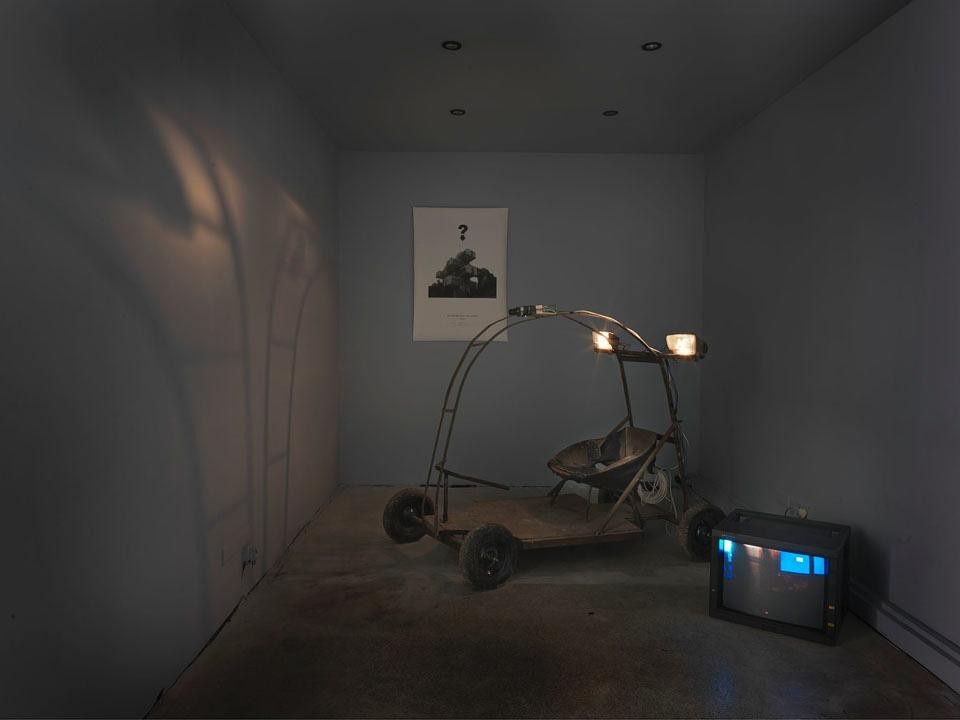
Exploring Dead Buildings is a video made in the abandoned headquarters of the former Ministry of Highways of the Soviet Republic of Georgia. The video shows the discovery of this dilapidated space by a wheeled drone that is operated remotely.
Testo alternativo Immagine Didier Faustino, Exploring Dead Buildings (video 13'52", 2010). Exploring Dead Buildings is a video made in the abandoned headquarters of the former Ministry of Highways of the Soviet Republic of Georgia. The video shows the discovery of this dilapidated space by a wheeled drone that is operated remotely.

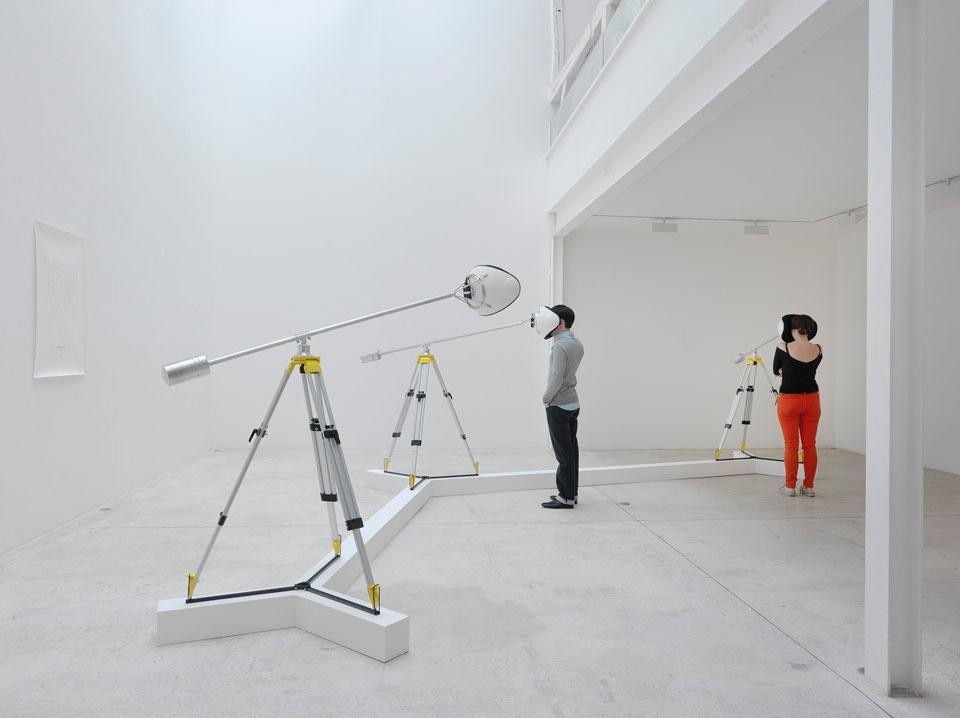
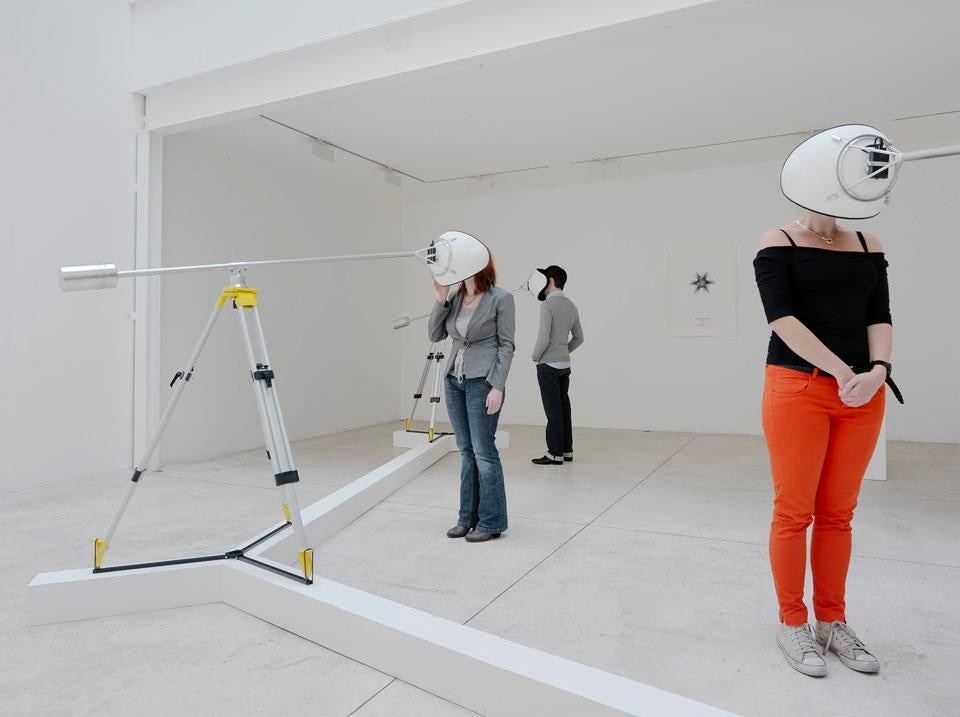
The title The Wild Things suggests that the energy behind these tools/projects (instrument for a blank architecture) testifies to an infinite operation of moving towards the realm of pure fiction. In the white gallery, the surveyor's tripods on which helmets are installed have abandoned their function, inviting the viewer to listen to frequencies that refer to mental landscapes—developed in cooperation with the Haswell office. Interacting with these instruments, we find ourselves interpreting an improbable performance defined, from a visual point of view, by objects of torture and, in any case, surrounded by a sort of sound perspective. As if to underline the development of narrative starting from minimal materials as a base for the work of making architecture is a project for a makeshift domestic shelter for one of the female characters in Virginie Despentes' next film; Bye Bye Blonde is first a drawing, subsequently reused as cryptic scheme for microarchitecture and eventually as a most elegant invitation to the exhibit.

Didier Faustino, The Wild Things, at Galerie Michel Rein, Paris, 2011.
Testo alternativo Immagine Didier Faustino, The Wild Things, at Galerie Michel Rein, Paris, 2011.

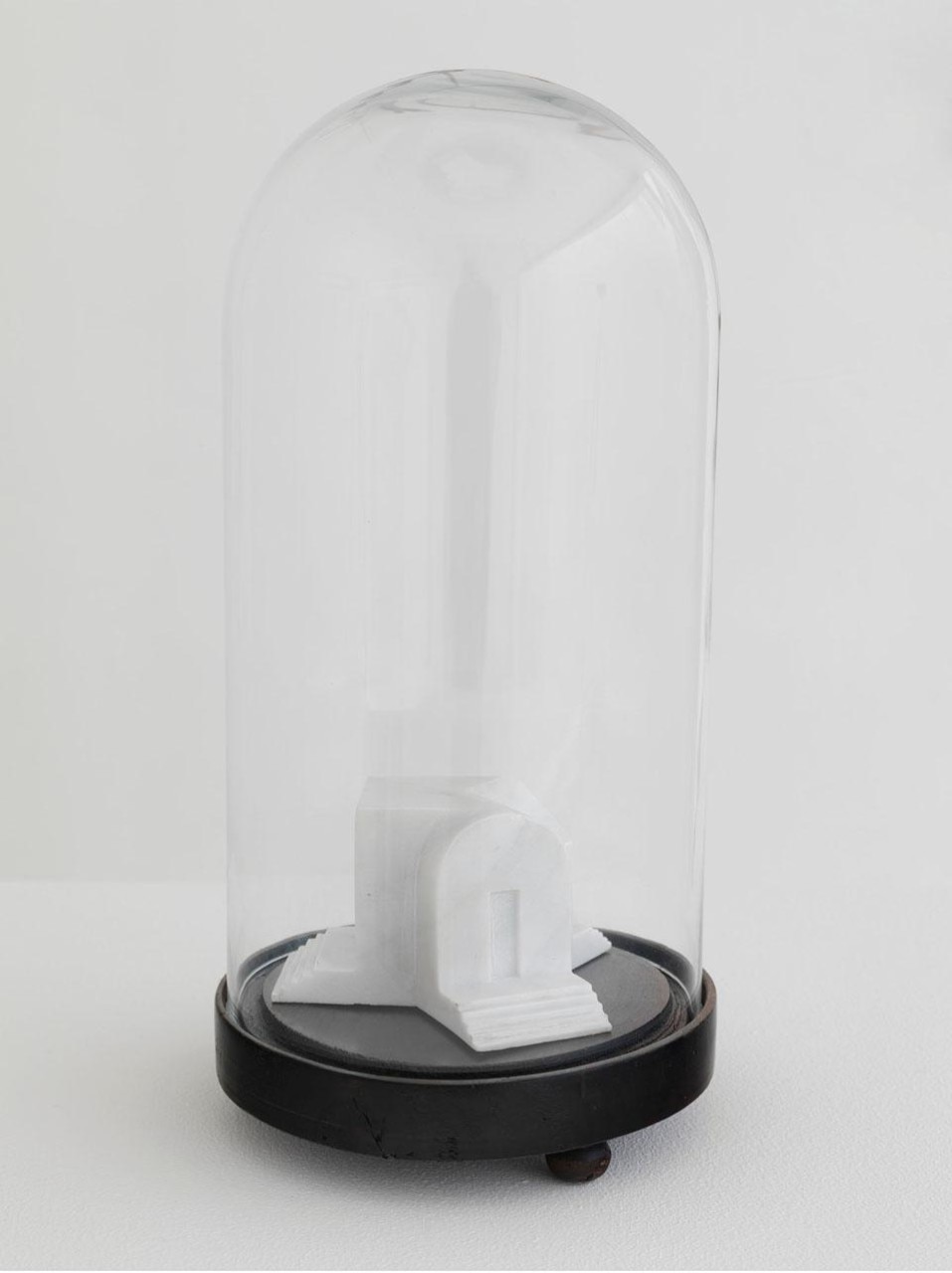
A gorgeous video shot inside the abandoned Ministry of Highways in Tbilisi, maintains intact the freshness of the intuition of an old project—the Exploring Dead Buildings series. Here it is reassembled with drone vehicles serving to create videos starting from recovered materials found in the same building. Pure literature and a document of daily and contextual science fiction that takes place in a summary, standardized and ephemeral architecture with its empty monumentality. To disseminate the definition of wild things, again, a model of mathematical reproduction developed by expert bamboo craftsmen with chestnut branches and a base with a hidden pavilion. The marble object refers to statues and reproduces—without literally becoming it—the maquette for three founding architectural themes: ornament and relics seem to materialize the trust-no-architects spirit that inhabits the place.
Ivo Bonacorsi

"An echo of this work and experimentation is only a distant undertone in this 'doing architecture with blood, hair, sweat and semen' which is also the 'manifesto' phrase that has characterized the program of the Franco-Portuguese architect from the beginning of his art career."

Didier Faustino, Instrument for Blank Architecture (aluminum, polyester resin, plastic foam, headphones and mp3 reader. 260 cm x 180 cm., 2010).  A cantilevered tripod generally used by land surveyors to document here becomes an instrument dedicated to the exploration of mental landscapes.
Testo alternativo Immagine Didier Faustino, Instrument for Blank Architecture (aluminum, polyester resin, plastic foam, headphones and mp3 reader. 260 cm x 180 cm., 2010). A cantilevered tripod generally used by land surveyors to document here becomes an instrument dedicated to the exploration of mental landscapes.

Didier Faustino
The Wild Things
Galerie Michel Rein
until 14 May 2011
42 rue de Turenne, Paris
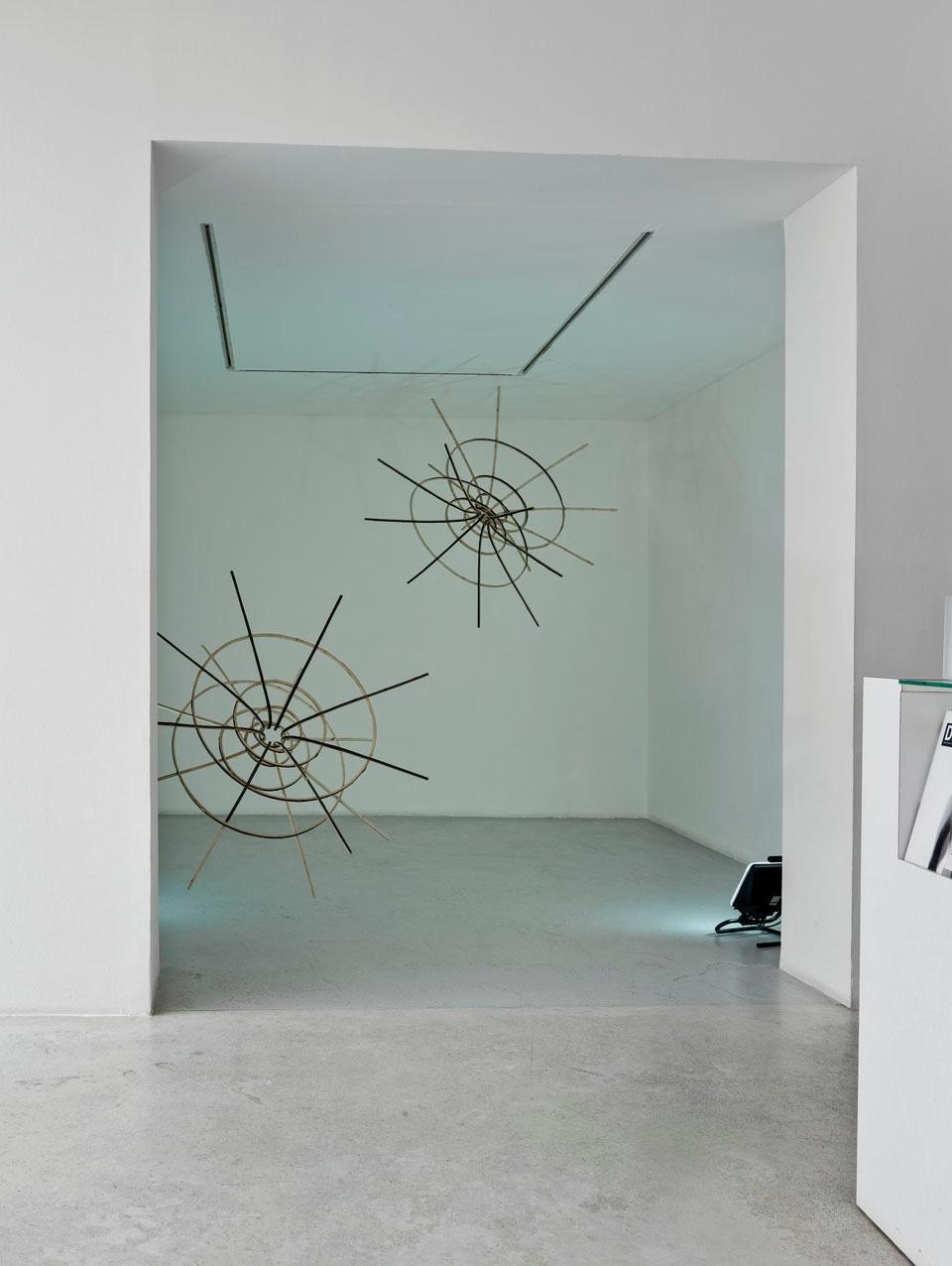
Didier Faustino, Balance of Emptiness, (bamboo, 2010).
The proposal for the CCA Kitakyushu is an installation inspired by wormholes, generating a visual and physical disturbance.
Testo alternativo Immagine Didier Faustino, Balance of Emptiness, (bamboo, 2010). The proposal for the CCA Kitakyushu is an installation inspired by wormholes, generating a visual and physical disturbance.

Cyprien Gaillard: UR

The winner of the Marcel Duchamp Prize brings his ironic humor to the show at espace 351, Beaubourg An art report from Paris by Ivo Bonacorsi

Global Design: interview with Angeli Sachs

The curator of the Museum of Design in Zurich describes how the design world is changing in an ever more global world. Edited by Elena Sommariva A design report from Zurich

Video in a Box

H BOX is an easily demountable and portable container made from aluminium and plexiglas, the interior of which is fitted with highly sophisticated devices for transmitting sound and images. A design report

Add your annotation here
Testo alternativo Immagine
Testo alternativo Immagine Close
Testo alternativo Immagine