This article was originally published in Domus 948/June 2011
How sharing can be structured
When we talk about the architecture of the Internet, the image
that comes to mind is of a map of Internet nodes. It was printed
onto a poster that was taped to a wall in the Wired.com offices
when I worked there. Groups of servers clustered together like
neurons, connected by electricity and organised according to
some gravity-live principle, the network effect. What mattered
was the structure of the information–what servers were
connected to what other servers.
That was the vision of the first generation of the Internet. While
nominally networks connected together people, really they
connected people with stuff, be it physical or digital. Google,
eBay and Amazon were the defining companies of this era
because they were the best at connecting you with what you
wanted. You searched and found within the giant pulsating pile
of computers hooked together by fibre-optic cables.
Open Source Design 04: The architecture of Facebook—
The arbiter of social sharing has decided to release its own designs for Web servers—and the buildings that house them. Detailed instructions and drawings now online An architecture report from Palo Alto by Alexis Madrigal
Network

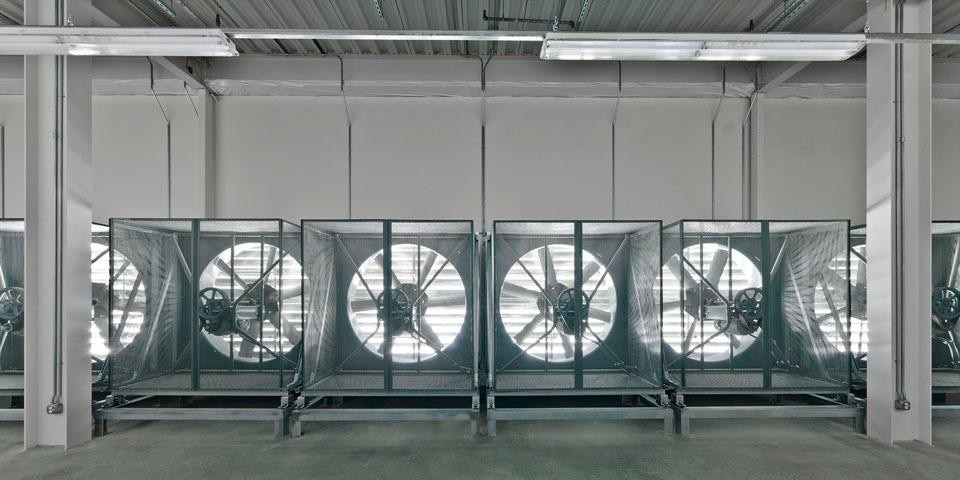
Exhaust fans of the new
ductless hvac system for
blowing hot air from the data
centre. Above: interior components of the
cooling system, which is 38%
more efficient and 24% less
expensive to build and run
than other state-of-the-art
systems.
In the first years of the millennium, the idea that people wanted information alone began to wane. There were early warning signs of different types—BlackPlanet, LiveJournal.com, Match.com, Friendster—which, if you'd had the right divination skills, might have told you that a blue giant was about to make an appearance, accompanied by a little speedy bird that tweeted. People wanted to find people. They wanted to share their lives. To meet this need, dozens of new companies bloomed into being. While Twitter provides the Internet's racing pulse, Facebook provides its social plumbing. Mark Zuckerberg's creation is used by 700 million people. While the details of Facebook's success can be debated, the impulse it taps cannot. People have become spectacularly willing to share their lives with other people on the Internet. The definition of privacy is as unstable as the concept of intellectual property. In many different spheres, cooperation seems as viable a strategy as competition. Everyone shares and likes.
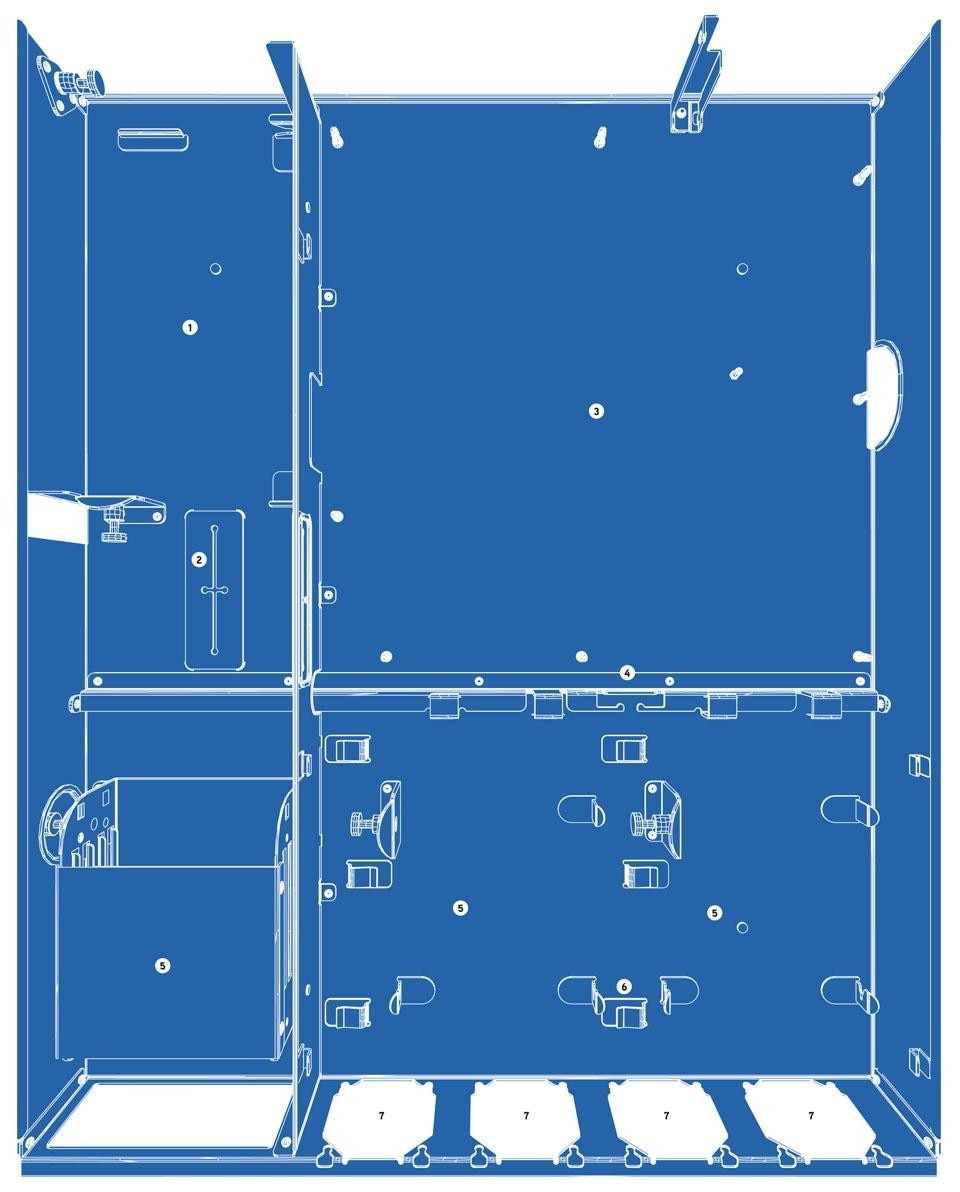
Facebook’s
server chassis
blueprint. 1. Power supply, 2. Partition rubber, 3. Motherboard, 4. Chassis stiffener and cable
management channel, 5. Drive bay, 6. Integrated cable management, 7. four rear-mounted 60 mm fans.
The questions that matter now are ones about how sharing
should be structured. Some are simple. Like buttons on Facebook
restrict any sort of commentary, providing only the simple act
of saying, "I was here." Creative Commons licenses for creative
work allow content creators to define exactly who can and
cannot use their work. Wikipedians navigate the difficulties of
creating the world's most stupefying storehouse of knowledge.
The most complex arrangements relate to open-source projects
like the Linux operating system. Far-flung networks of
collaborators come together to create something they all want.
The drama and production of such enterprises is Dilbertian, but
it challenges many of the stricter notions of how capitalists are
supposed to think.
But for all the success of digital projects of this type, what about
the real world? It's one thing to get a bunch of nerds together to
build software, but try and design a building like that.
Well, maybe you can. Or at least it's HVAC system.
Facebook, the arbiter of sharing, has decided to push out its own
designs for Web servers—and the buildings that house them—into the open ecosystem without any constraints on their usage.
The company's Open Compute Project describes in detail how to
construct an energy-efficient data centre from the components
inside the servers to the racks they're held on, and to the
electrical and mechanical systems that feed and cool them.
Presumably, Facebook stands to gain from the improvements
other people make on its ideas in creating their own data
centres. In the meantime, they're willing to give what they've
got away.
"The definition of privacy is as unstable as the concept of intellectual property. In many different spheres, cooperation seems as viable a strategy as competition. Everyone shares and likes."

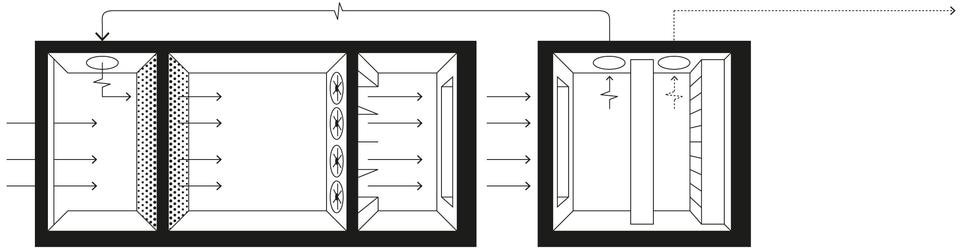
Airflow overview
Outside air mixes with
data-centre return air and
passes through the filter
bank. The air then enters the evaporative cooling/
humidification room and
is sprayed by the misting
system. From here air enters
the supply fan room and is pushed down the supply
air openings to the data
centre’s cold aisles. It then
returns to the filter room or is
exhausted from the building.
The company's data-centre support systems, at least as presented in the Open Computer Project, can be finely tuned to the climate and location of its latest data centre in Prineville, Oregon. The ductless cooling system automatically changes its operation–deploying its economiser, evaporative cooling and humidification–based on what the air outside is like. The electrical system depends on the installation of a new substation that was built to bring power into the building. There isn't much revolutionary that meets the eye in Facebook's open designs for its data centre, certainly nothing quite as fascinating as you'd find on the Open Architecture Network.

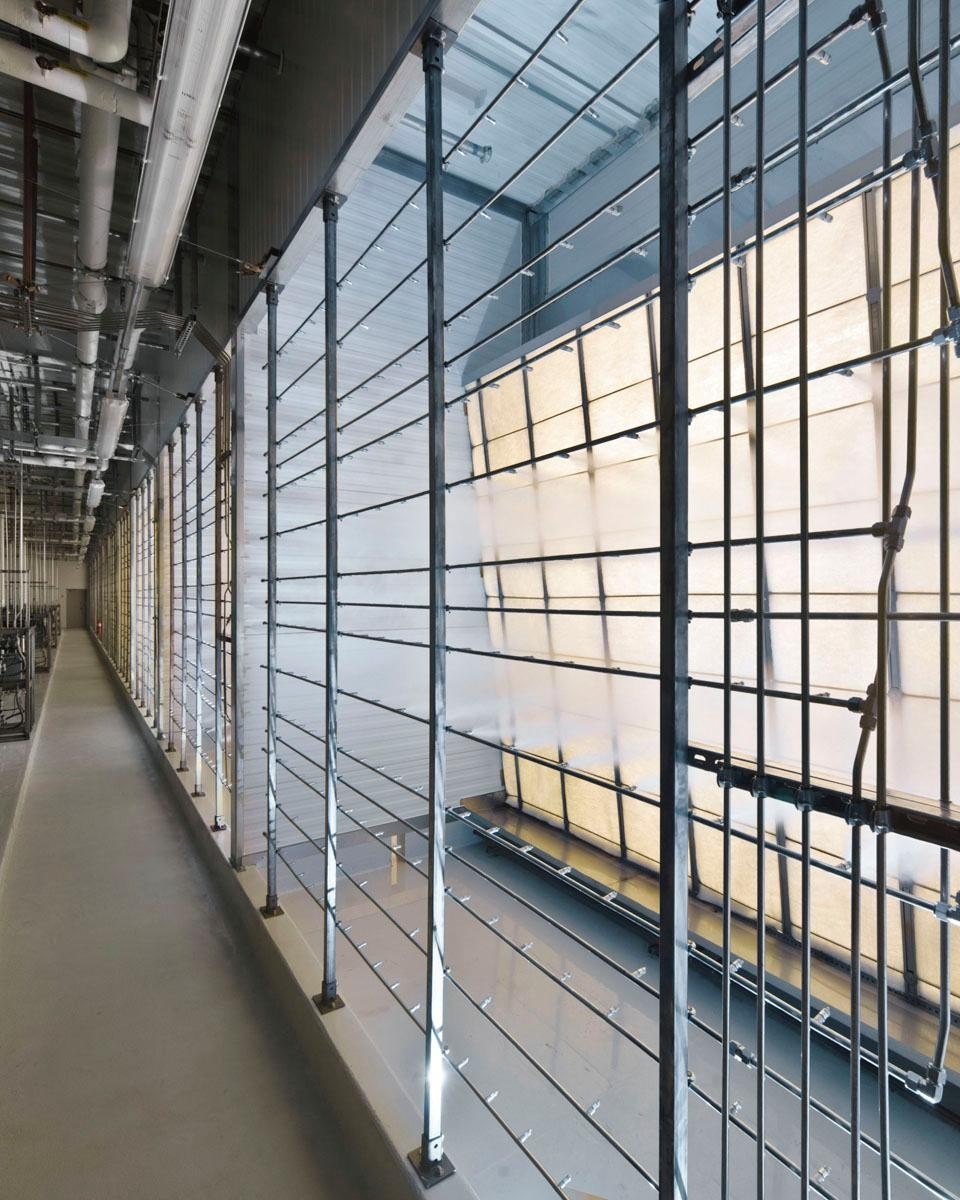
Evaporative cooling system
for warming and humidifying
the air as needed.
But the company says building and running their computers in the
way they've described is cheaper and less energy-intensive than
the alternatives. That's something. It should also remind us that
the Internet is a real thing, made up of computers and people
and buildings that house them both. The maps we used to make
of the architecture of the Internet were blinded by the fact
that there was an Internet. It was so novel to send information
flying around the world and the production of digital goods so
relatively small that it was easy to be starstruck by the Internet,
to forget its thingness. The maps that matter to today's datacentre
architects are less the ones on the wall at Wired and more
the ones that show climate and the location of power lines. The
bigger the Internet becomes, the more it is a part of the normal,
physical world.
While the climate and strictures of the real world bear down on
Internet companies, Facebook, at least, is attempting to meet
those challenges with the share and share alike consciousness
that has developed online.
Alexis Madrigal, journalist and writer
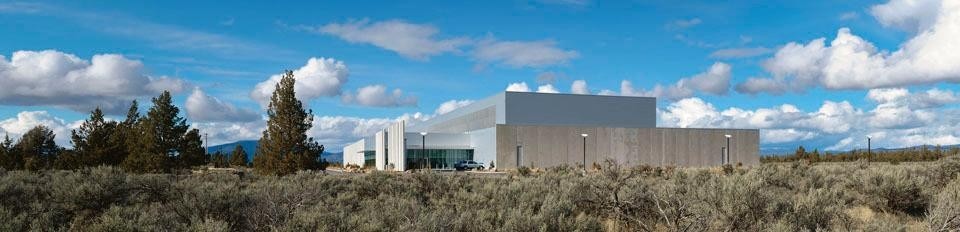
Facebook’s new data
centre in Prineville will
accommodate the enormous
volume of information posted
by its over 700 million
members. The city’s dry
climate favoured the decision
to install the new cooling
system for the servers.


Architecture