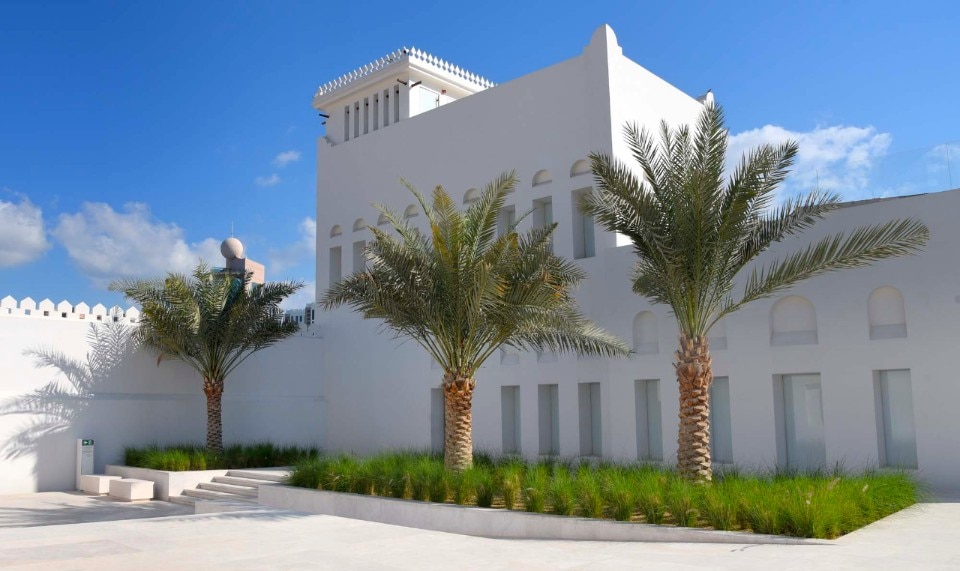
Everything starts from here. It was around this site that the first permanent settlement of the Bani Yas tribe developed in the 18th century, giving rise to the urban evolution of Abu Dhabi. The complex, built in 1790 as a military fort to defend the population and control maritime traffic, has over the years served as a royal residence, seat of institutional power and archive. Enlarged in 1945, it underwent a major renovation that transformed it, in 2018, into a museum where it is possible to learn about the history of the city, from its foundation to contemporary times.
The Architects' Collaborative, Hisham Al Ashkouri, The Cultural Foundation, 1981
Photo Mikkel Frost
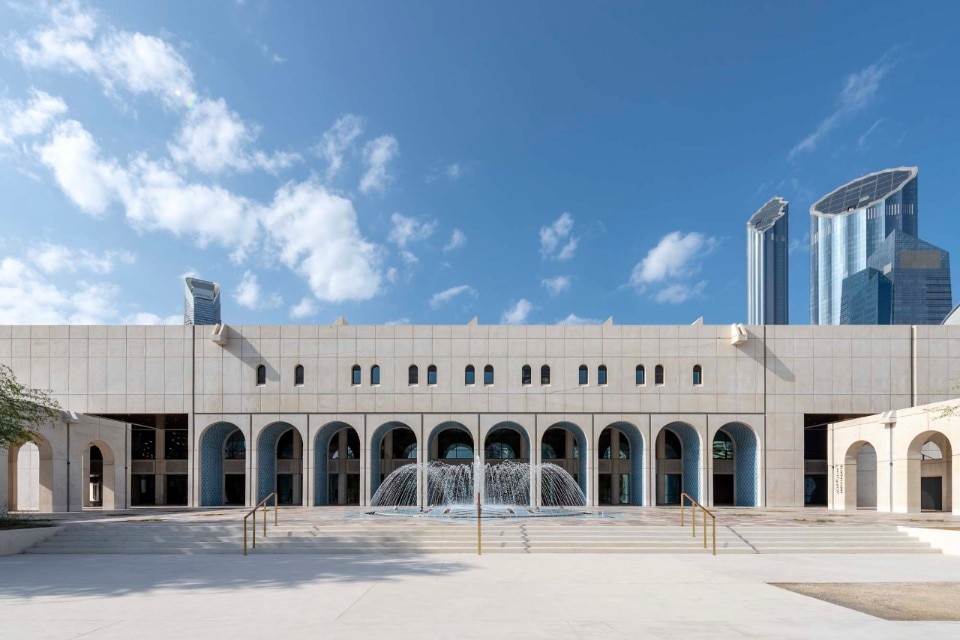
The complex, built at the behest of Sheikh Zayed bin Sultan al Nahyan to enhance the region's artistic and cultural heritage, is now a renowned centre that hosts exhibitions, events, an auditorium and the city's first children's library. The building, designed by The Architects' Collaborative (TAC), a group founded by Walter Gropius, and subsequently completed by the Iraqi Hisham Al Ashkouri, is characterised by a modernist language "contaminated" by Islamic suggestions: from the articulation of internal courtyards as the heart of the architecture, to the decorative pattern of the coloured tile cladding.
The Architects' Collaborative, Hisham Al Ashkouri, The Cultural Foundation, 1981
Photo Mikkel Frost
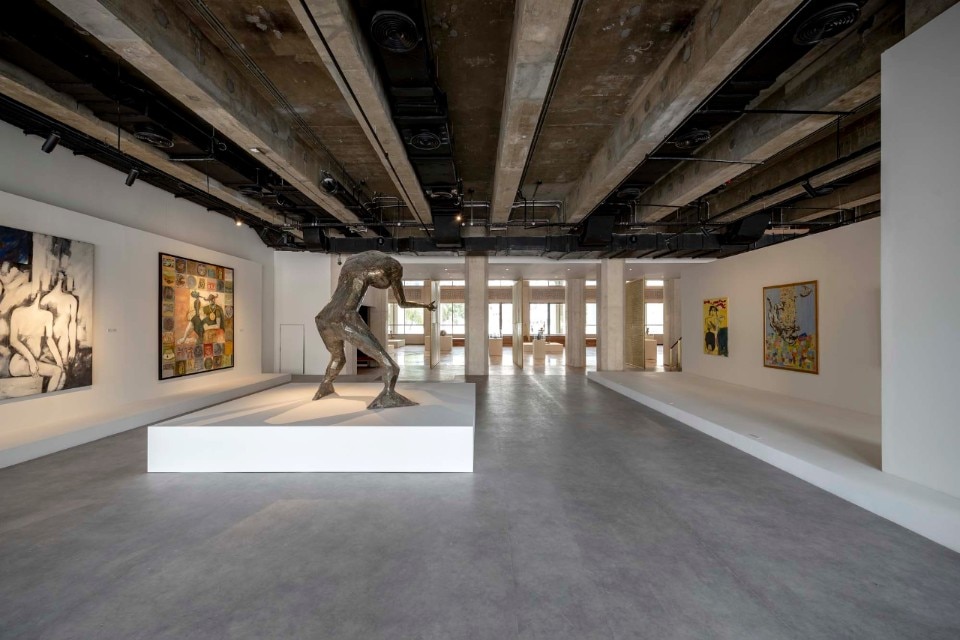
The building was recently renovated by the Danish studio CEBRA, which has preserved the materiality and atmosphere of the original building, enriching it with new functions, routes and services.
Foster + Partners, World Trade Centre, 2014
Photo Makaty via Adobe Stock
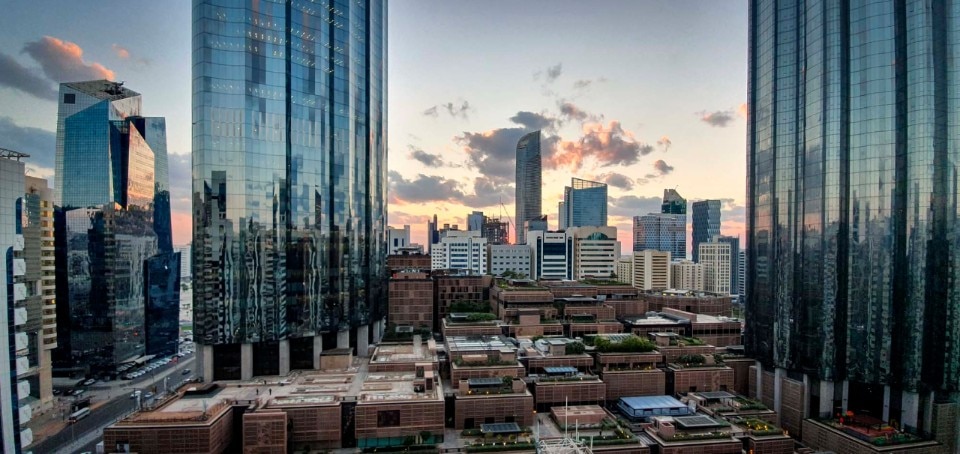
Abu Dhabi's central market is one of the city's most historic and beloved sites. Foster's project is located in the area of the demolished old souk, re-proposing its original spirit as a space for commerce and sociality as an alternative to the "aseptic" and globalised typology of the mall. The intervention, inspired by traditional Arab architecture, is arranged in a sequence of squares punctuated by water features, courtyards and internal alleys where changing light filters through the perforated screen of the façade according to the time of day. On the commercial platform, two reflecting surface towers of different height and volume stand out, housing offices, flats and a hotel.
CEBRA, Al Hosn Masterplan, 2019
Photo Mikkel Frost
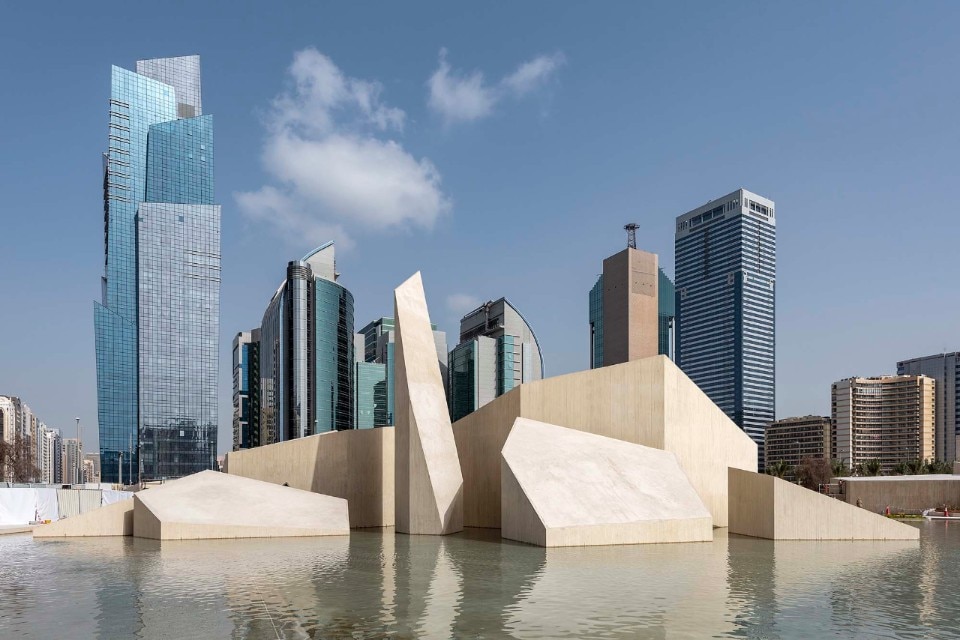
The area around Qasr Al Hosn was recently redeveloped as part of a masterplan by Danish studio CEBRA, which proposed a figurative lexicon for paths, open spaces, street furniture and planting strongly inspired by the characteristics of the desert landscape. The pedestrian surfaces, dotted with indigenous essences and made of cement that recalls the colour of sand, seem to be cracked by the heat and deconstructed among horizontal walking surfaces and inclined planes that gradually transform into service buildings, for catering and worship. Among these, the "Al Musallah" prayer hall is composed of sculptural and essential volumes, impermeable from the outside and irradiated with light on the inside, resembling fragments of rock emerging from the water.