


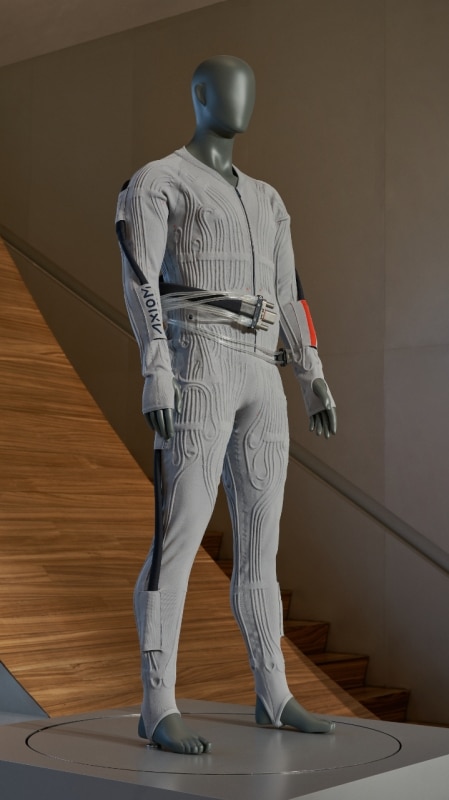
Space has always been one of fashion’s great obsessions. From futuristic uniforms imagined by cinema to the continuous incursions of space aesthetics on the runways, the cosmos has functioned for decades as a laboratory of projections and fantasies. Today, however, the relationship seems to have inverted: it is no longer fashion imagining space, but space requiring the know-how of fashion.
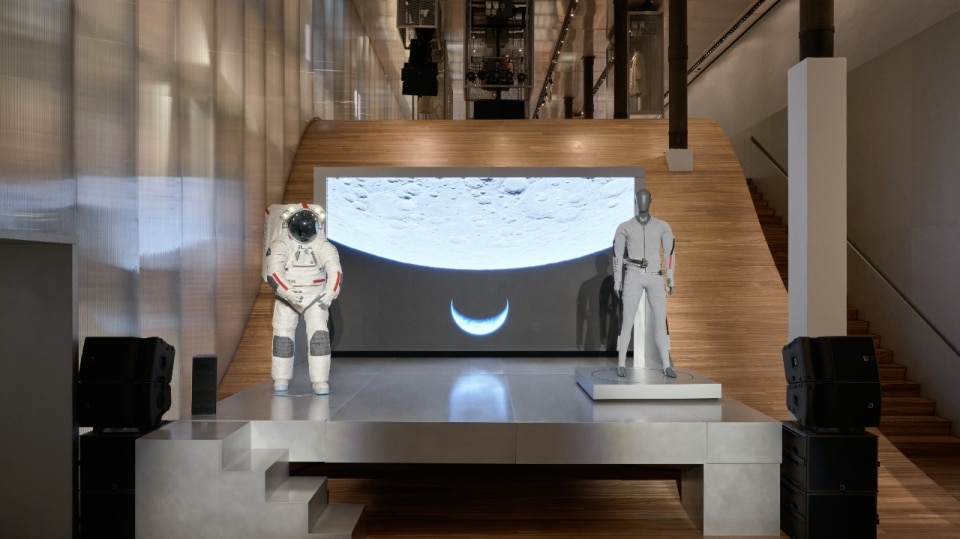
This is precisely what is happening with Prada which, after participating in the development of the AxEMU (Axiom Extravehicular Mobility Unit) lunar spacesuit presented in 2024, has collaborated once again with Axiom Space, the company commissioned by NASA to develop the new generation of spacesuits for the Artemis missions.
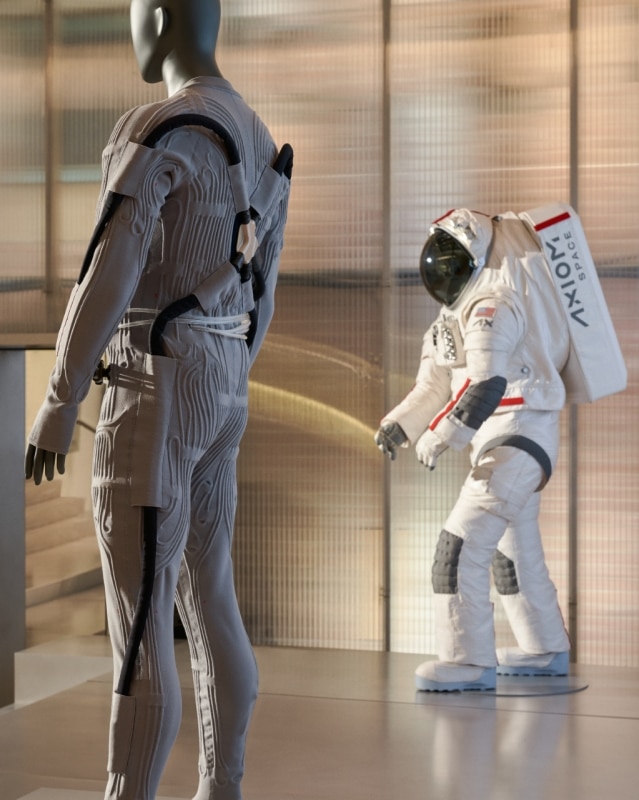
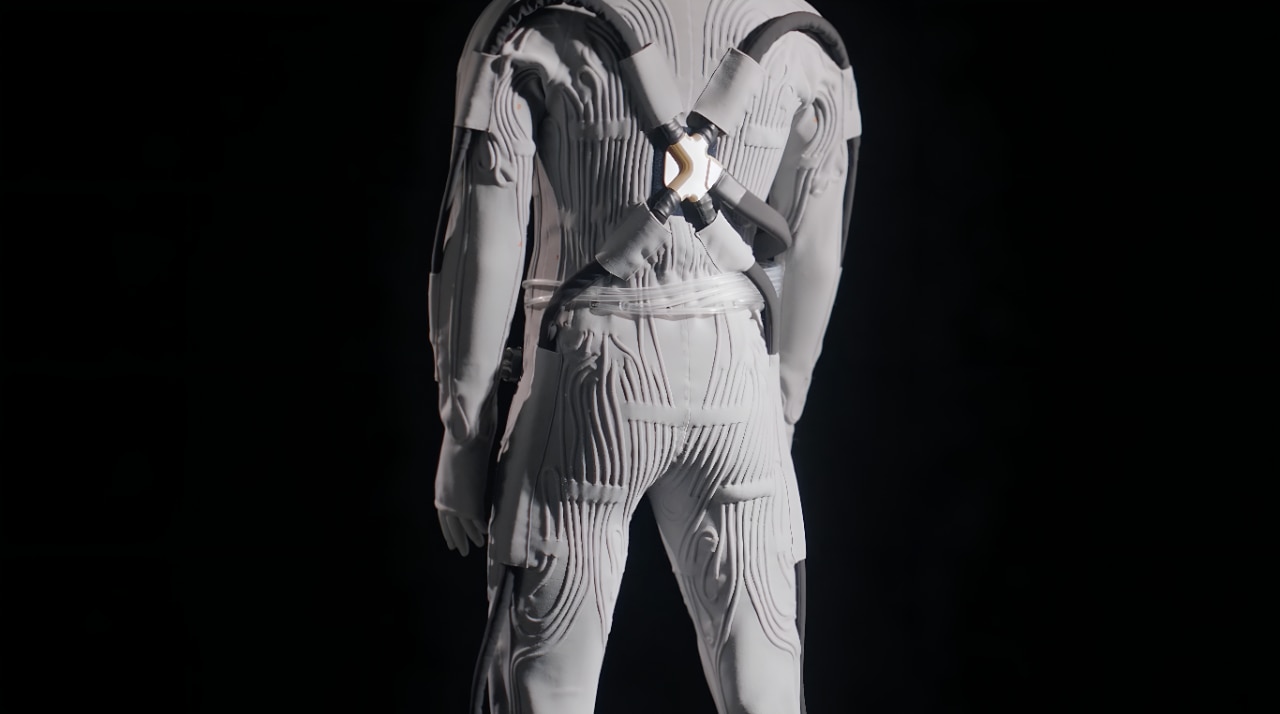
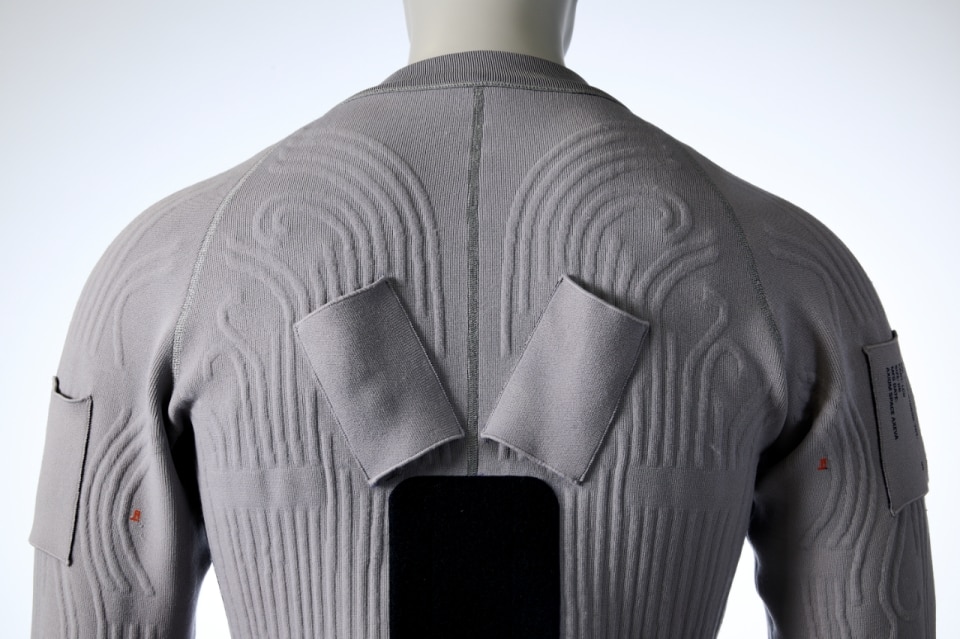
The result is the new LCVG (Liquid Cooling and Ventilation Garment), the innermost layer of equipment that will accompany astronauts during the lunar landing scheduled for 2028, marking the return of human beings to the Moon more than fifty years after the Apollo missions. Back then, the spacesuits that accompanied Neil Armstrong and Buzz Aldrin onto the lunar surface were designed by ILC Dover, a company specialized in engineered textile and rubber products which at the time was part of the Playtex group, known primarily for the production of bras and corsetry.
This is a unique combination of Axiom Space’s expertise and Prada’s know-how in design, pattern making, and advanced materials
Lorenzo Bertelli, Prada Group's Chief Marketing Officer and Head of Corporate Social Responsibility.
If the 2024 AxEMU spacesuit represented the astronaut’s external architecture, the new LCVG constitutes their second skin instead: invisible, yet essential to allow human beings to inhabit increasingly hostile environments.
When fashion designs space
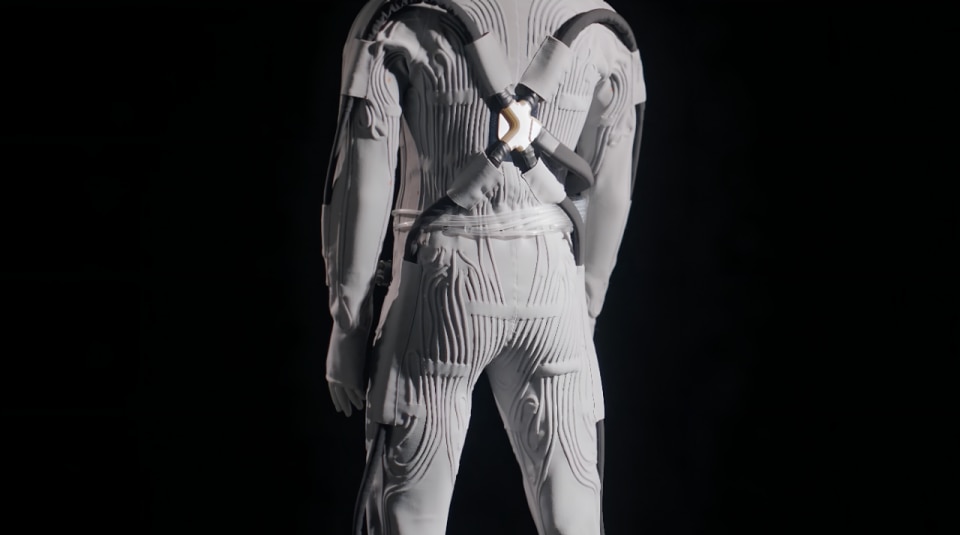
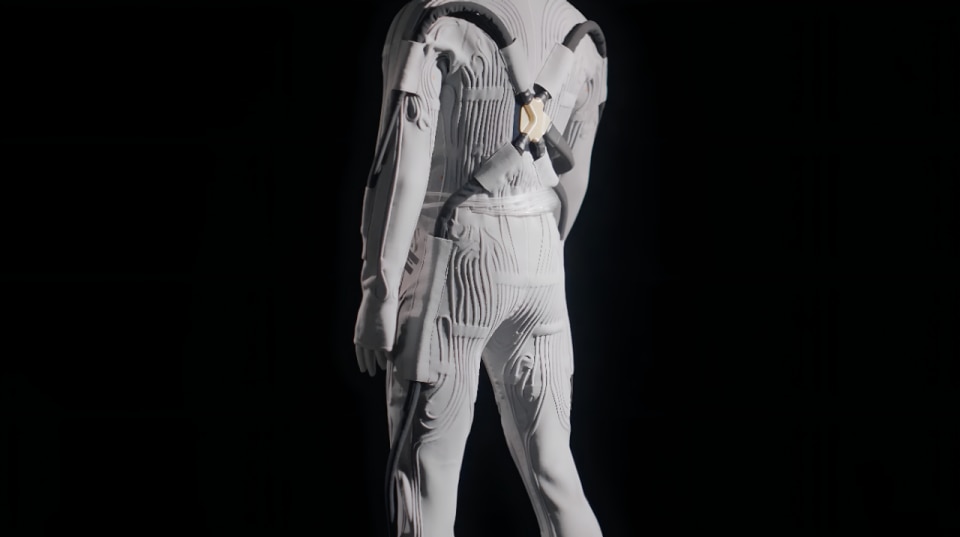
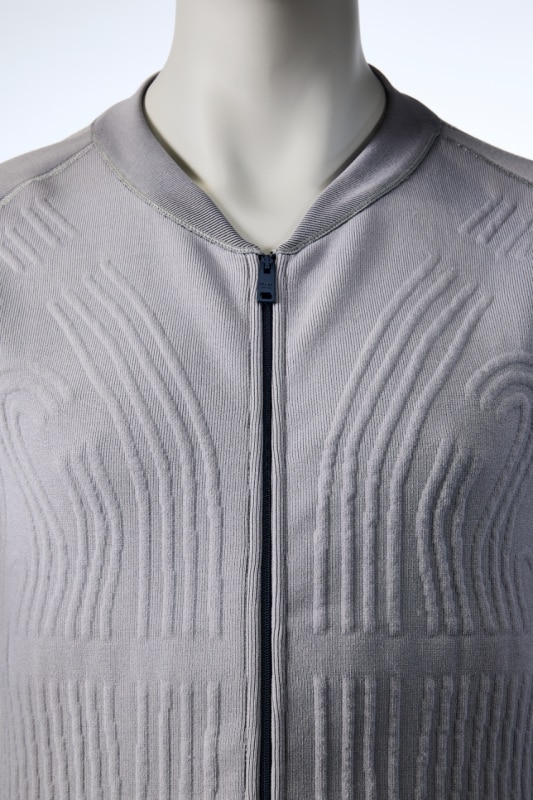
Presented in New York during the AxEMU Leadership Team Summit, the new LCVG is a form-fitting garment designed to be worn under the pressurized shell of the AxEMU. At first glance, it resembles a sophisticated technical-sports garment, but its task is far more complex: to create an artificial microclimate around the astronaut’s body.
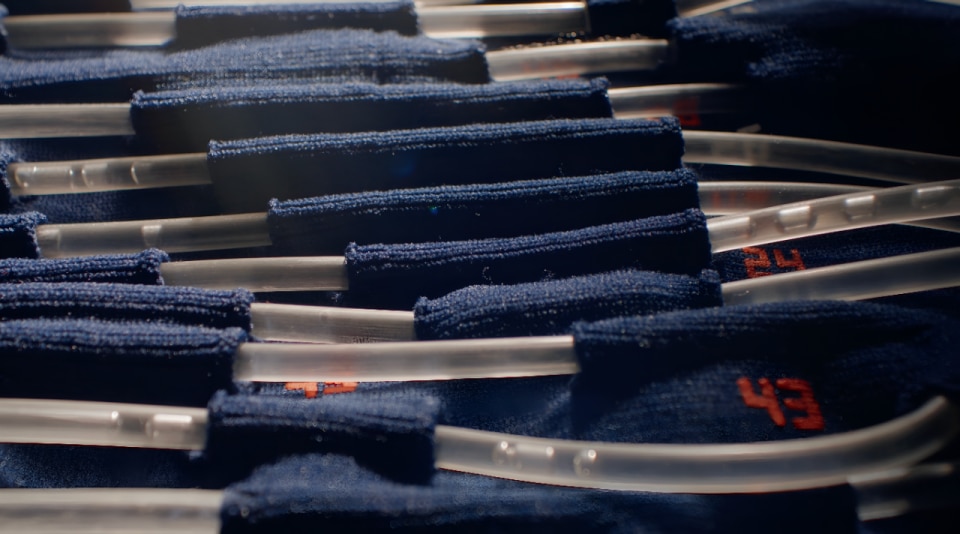
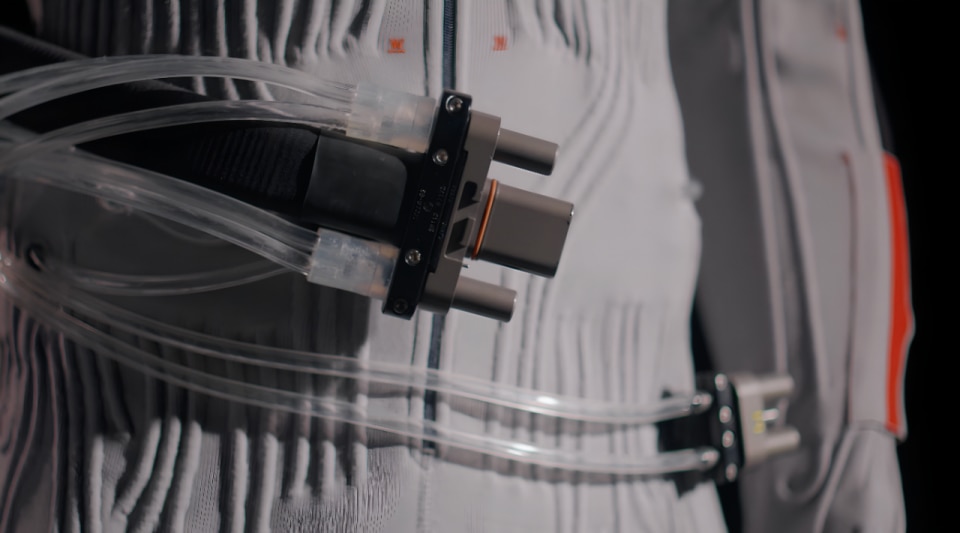
While the outer shell protects against radiation, lunar dust, and thermal shocks, the new garment developed by Prada and Axiom works on a more intimate scale: that of human metabolism. Inside the fabric runs a network of thin tubes that circulate chilled water to dissipate the heat produced during long activities on the lunar surface, while a ventilation system contributes to the management of oxygen and carbon dioxide inside the spacesuit.
“The future of space exploration will not be built by a single entity,” stated Jonathan Cirtain, CEO and president of Axiom Space, emphasizing how Prada’s know-how – from engineered knitwear to three-dimensional modeling – was fundamental in developing the project.
“This is a unique combination of Axiom Space’s expertise and Prada’s know-how in design, pattern making, and advanced materials,” added Lorenzo Bertelli, Chief Marketing Officer and Head of Corporate Social Responsibility of the Prada Group.
When fashion designs space
The collaboration with Axiom Space represents one of the most unusual projects ever tackled by the Milanese maison, yet it fits into a trajectory that Prada has been pursuing for a long time. From Fondazione Prada to collaborations with architecture firms, artists, directors, and researchers, the group has often used design as a ground for cultural experimentation, even before using it as a brand communication tool.
In space too, Prada seems to follow the same path. In the new LCVG there are no visible logos or details designed to make the maison’s signature immediately recognizable. Instead, the brand’s contribution is found within the structure of the garment, the materials, and the design solutions that make its operation possible.
While for decades fashion imagined how we would dress in space, today one of the most influential brands in Italian luxury is helping to design the conditions that will make it possible to live there.
In the 1960s, the Apollo spacesuits were born thanks also to the experience of a company known primarily for bras and corsetry. Today, for the return to the Moon, NASA relies on the know-how of an Italian fashion house as well. Brands and technologies change, but the idea remains the same: to explore extreme environments, you need skills that come from seemingly distant worlds.
Opening image: Axiom Space x Prada, Lcvg (Liquid Cooling and Ventilation Garment), 2026. Courtesy Axiom Space