

by Alessandro Scarano
At the latest Milan Design Week, while abandoned military hospitals became temporary immersive sets, luxury brands occupied centuries-old cloisters, listening rooms turned into the new protagonists of design and thousands of people queued for hours for a gadget, a tote bag or a branded matcha omakase, what impressed many the most was not a brand. It was a nation.
A nation — Uzbekistan — located in one of the strangest regions of the contemporary world: distant enough to still appear exotic to European eyes, yet close enough to have become in recent years an obsessive destination for the avant-garde “weroader” generation of post-Instagram cultural tourism. While Georgia and Armenia have mostly built an imaginary based on monasteries, natural wine, techno, mountains and post-Soviet lifestyle aesthetics, Uzbekistan seems to have chosen a more ambitious — and probably riskier — path: using art, architecture and design not as a simple national narrative, but as infrastructure for its future.
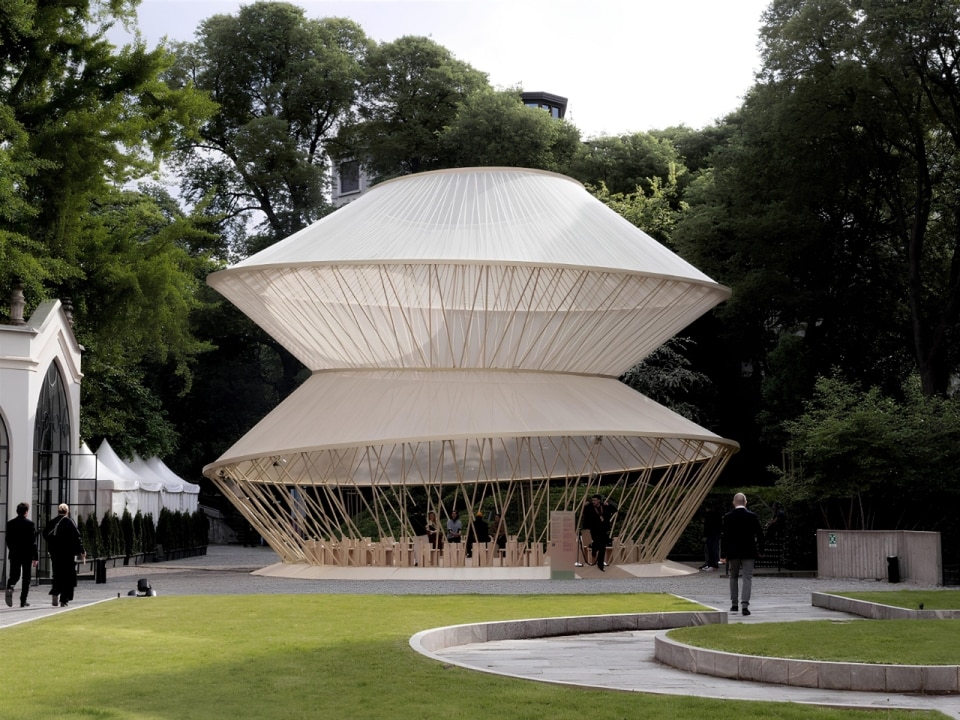
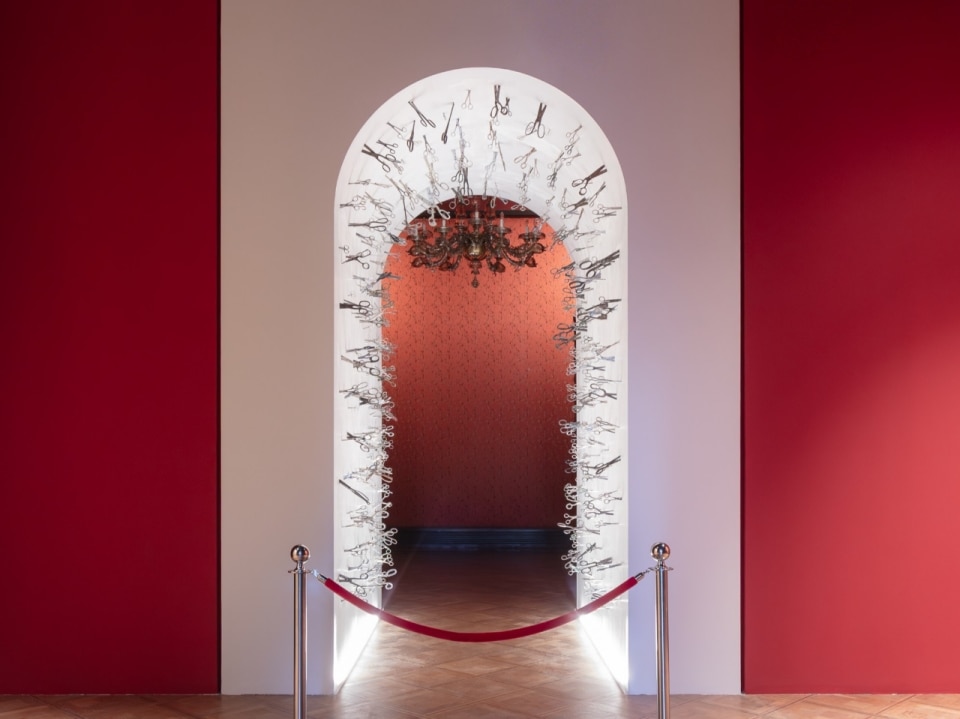
In Milan, this ambition could be physically perceived. Inside Palazzo Citterio, “When Apricots Blossom”, the large-scale project created by the Uzbekistan Art and Culture Development Foundation through contemporary craft, immersive installations, materials, spatial storytelling and landscape, occupied the palace more like a dispersed biennial than a Fuorisalone installation. More than in individual objects, it was in the overall construction of the narrative that something unusual emerged: the almost cinematic darkness of the basement, the staircase installation, the large central pavilion, the bar, the Uzbek sweets offered to guests, the craft, the materials, the almost museological feeling of the entire device.
Taken individually, these are all elements that now belong to the standard vocabulary of contemporary Design Week. But together they produced a different sensation. Not that of a successful activation, but of a cultural machine. Almost a state presence. As if behind the exhibition there was something much larger than a simple exhibition project.
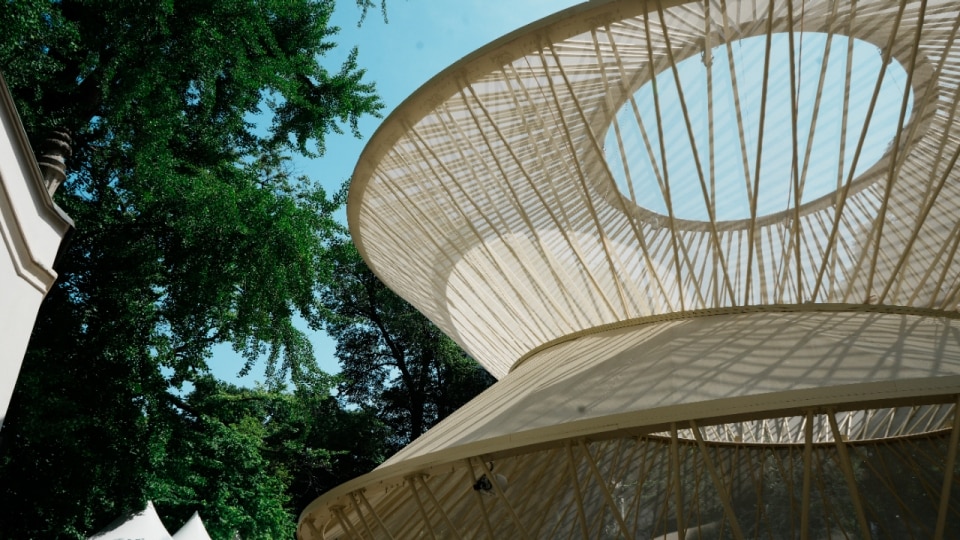
A vision that is incredibly complex even from a logistical and bureaucratic perspective, as a representative of AAC — the Architecture and Culture Agency working with Acdf on several international projects — tells Domus a few weeks later over baccalà mantecato and bigoli in salsa in Venice. And perhaps the real victory of the Milan operation is that the pavilion will remain in the city for months. Uzbekistan understood that, in order to truly leave a trace within the noise of Design Week, one must build narrative infrastructures, not just images.
Venice as a platform
Then comes Venice. Where Uzbekistan no longer appears as an emerging presence, but as a structural actor within the cultural geography of the Biennale. And the fact that the national pavilion stands next to the Italian one, at the heart of the Arsenale, already says a lot.
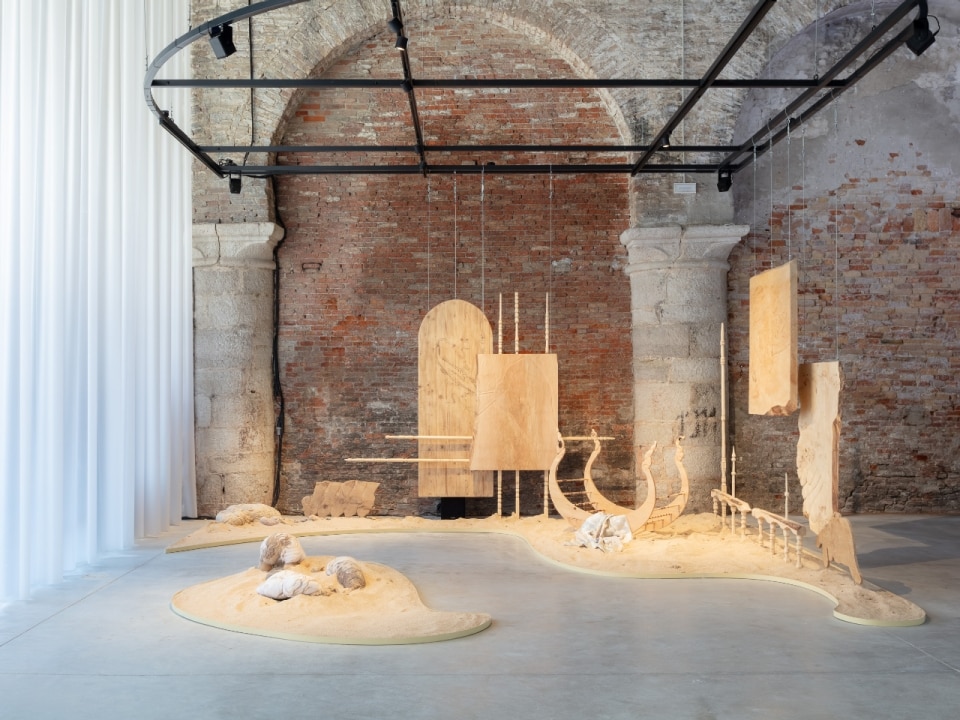
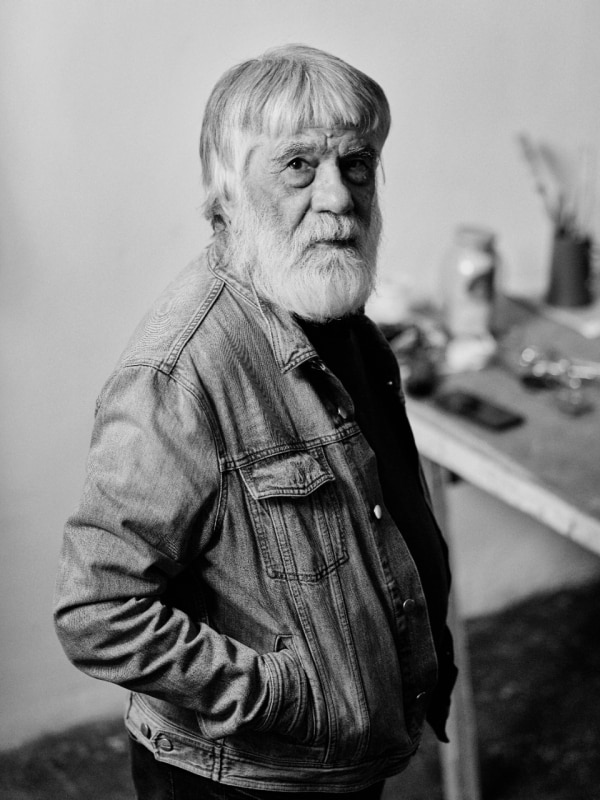
This year the country presents itself through two projects that seem to speak different languages while actually revolving around the same axis: on one side “The Aural Sea”, the national pavilion at the Arsenale dedicated to the Aral Sea — an ideal continuation of the Milan Design Week exhibition — built through myth, ecology and speculative futures; on the other “Instruments of the Mind”, the exhibition at Palazzo Franchetti dedicated to the great Uzbek artist Vyacheslav Akhunov, who wanders through the exhibition dedicated to himself with the total nonchalance of a tourist, in one of the strongest collateral exhibitions of this Biennale.
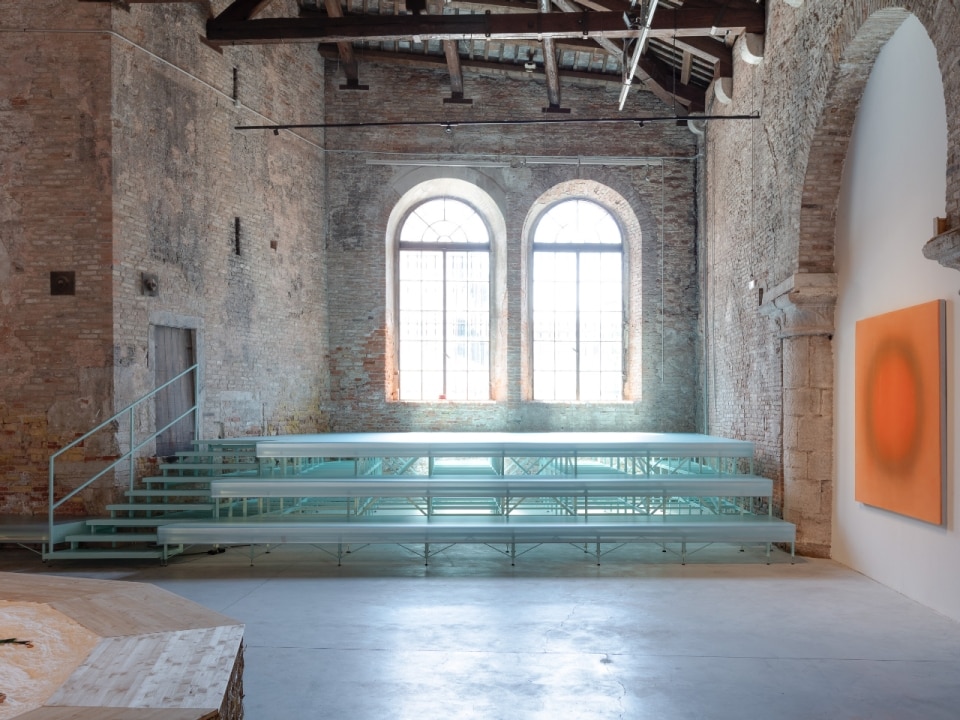
Akhunov, a central figure of Central Asian conceptualism and a living memory of the late Soviet period, almost seems to embody the historical counterpoint of the entire contemporary Uzbek cultural project. His works — between Soviet slogans, towers made of matchboxes, linguistic installations and precarious structures — constantly speak about ideology, propaganda, memory, systems and survival. Yet while the exhibition clearly revolves around him, it quickly becomes evident that part of the relational and organisational energy of the evening also revolves around Gayane Umerova.
It was important for us to stop talking only about the catastrophe. Stop talking only about it. We cannot always focus on the negative aspects. We have to give solutions.
Gayane Umerova, Uzbekistan Art and Culture Development Foundation
Chairperson of Acdf and a figure directly connected to the Uzbek institutional apparatus, Umerova is one of the people who in recent years have built the country’s new cultural ecosystem. Wearing a light-coloured dress, controlled in tone and measured in kindness, she appears exactly as one might expect from a certain post-Soviet managerial tradition: prepared, extremely solid, perfectly inside her role. Never a smile too many, never the search for the kind of performative empathy that dominates much of the contemporary Western curatorial system. Even when she speaks about the Aral Sea or younger generations, her language remains one of infrastructures.

“When we founded the foundation in 2017,” she says, “it became the home of all these initiatives: youth programmes, cultural infrastructure, dialogue with the outside world, cultural diplomacy. So many layers.”And indeed, the word that constantly returns throughout the conversation is “infrastructure”.
Building cultural infrastructure
Do not expect Acdf to behave like a cultural foundation in the European sense of the term. It is something more capillary and much larger: a machine of cultural diplomacy, an accelerator of creative infrastructures, almost a parallel ministry for the country’s cultural transformation. Not simply exhibitions or pavilions, but ecosystems. Not isolated events, but permanent platforms.
“It’s important to be on the same page with the outside world,” says Umerova. “It’s important to have the opportunity to present your country and to raise these platforms and dialogues.” And again: “For developing countries like us, it’s important to engage here.”
“Here”, of course, means Milan and Venice. Not simply Italian cities, but platforms of global legitimation. Places where a significant part of the contemporary international imaginary is now constructed. And Uzbekistan seems to have understood this very well.
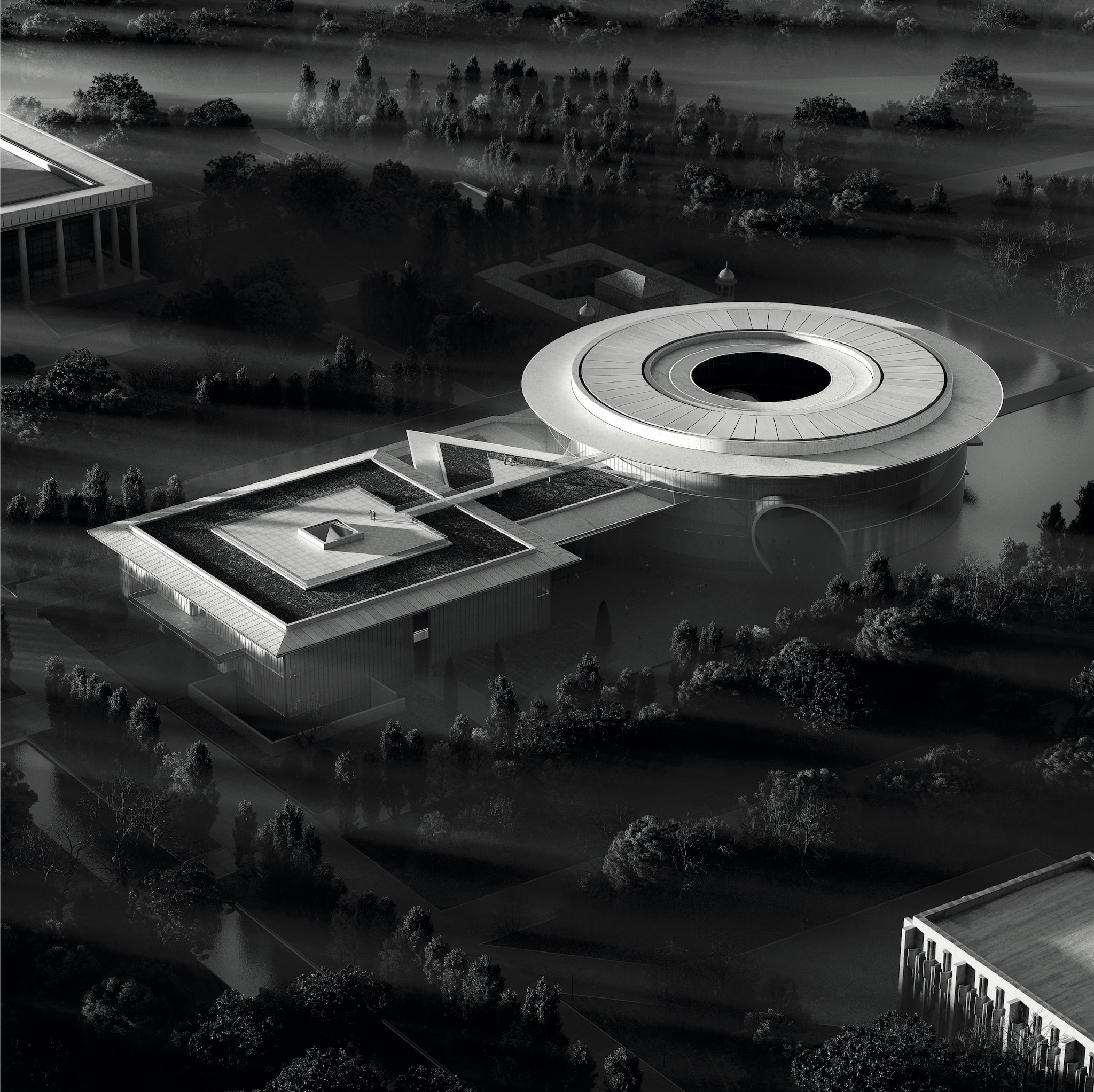
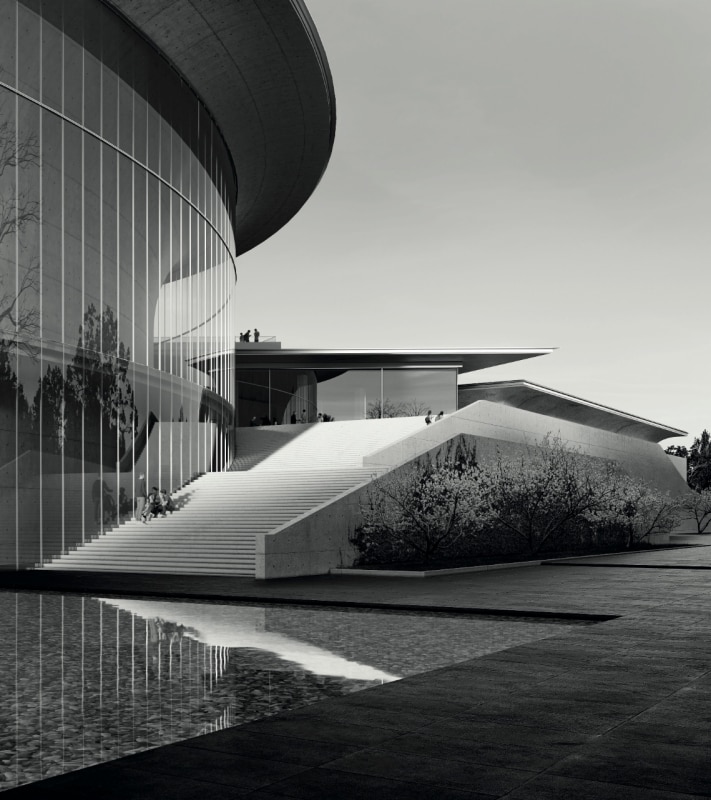
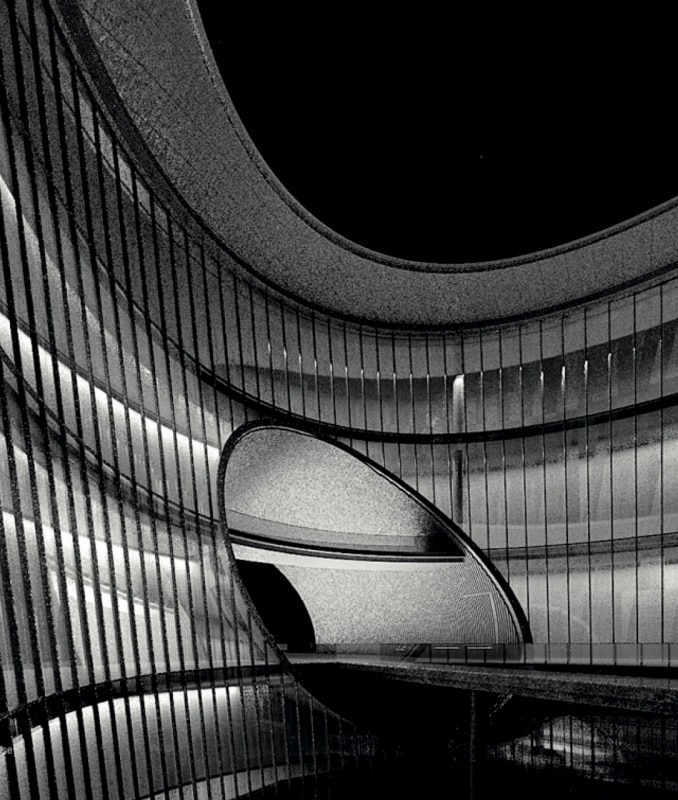
ACDF’s initiatives move simultaneously on multiple levels: the new Centre for Contemporary Arts in Tashkent designed by Studio KO; the gigantic National Museum of Uzbekistan by Tadao Ando; the Bukhara Biennial; the Aral Sea programmes; collaborations with the Louvre, the British Museum, the Uffizi and the Arab World Institute; the Tashkent Modernism XX/XXI research project born after the demolition of the House of Cinema in Tashkent in 2017. But above all: young people.
“It feels like our destiny to invest in youth,” says Umerova. “We have a young generation. We have to give them solutions.” Then she adds what is probably the true operational manifesto of the entire project: “We are building a creative economy.”



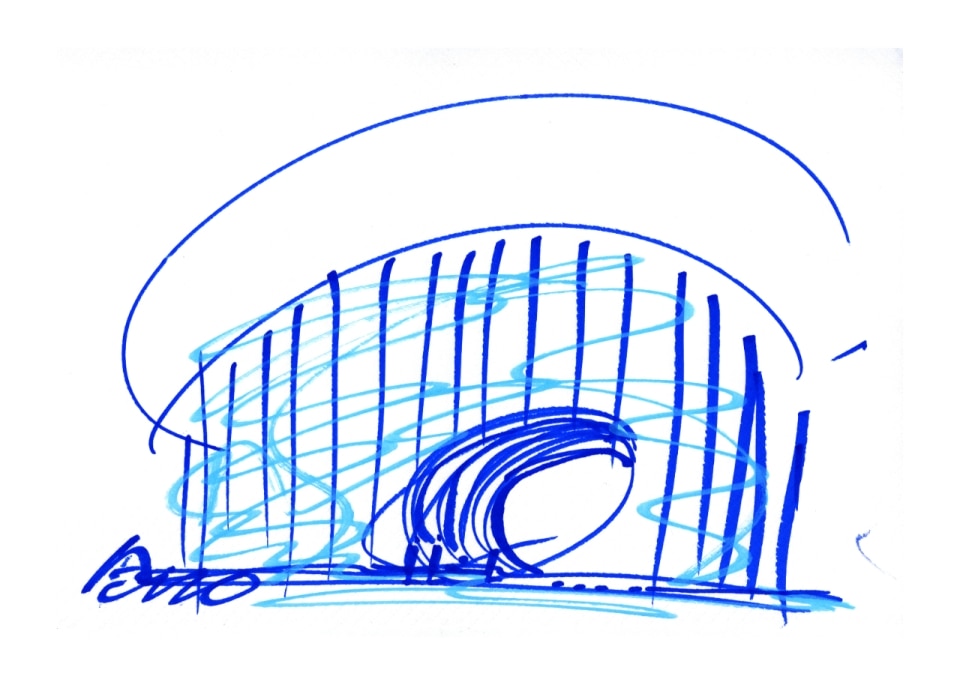
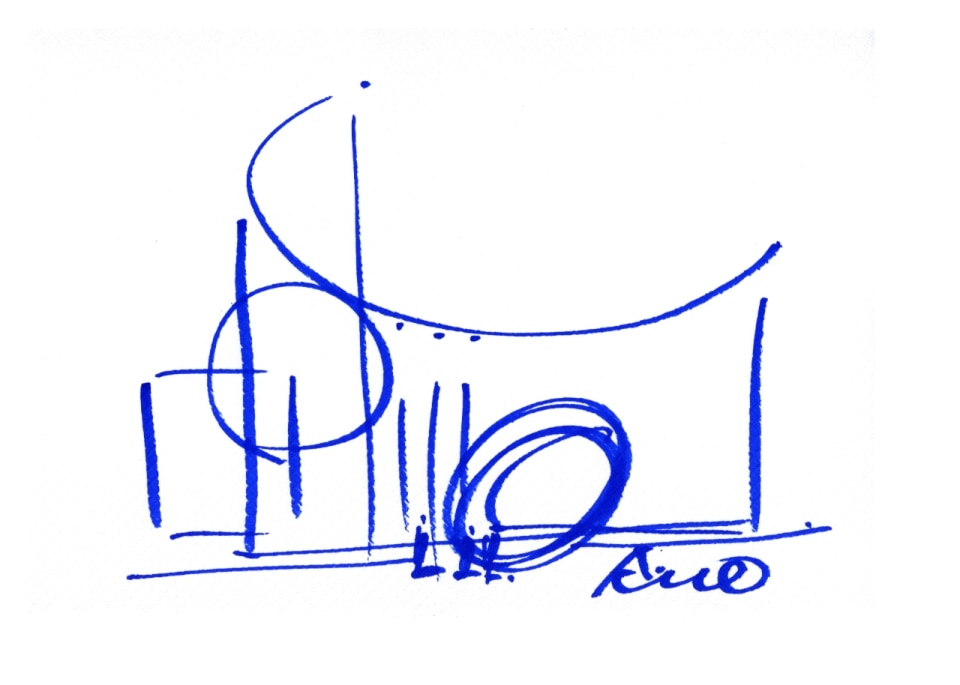
Suddenly everything connects: craft, tourism, design, contemporary art, museums, biennials, schools, residencies, archives, research, infrastructures. Uzbekistan presents itself as a young nation trying to build its own contemporary cultural economy before even building a simple international image.
“We are trying to support more and more young talent so they stay within the industry,” Umerova continues. “So they’re not moving either to other countries or to different industries.”
And it is probably here that the Uzbek project stops looking like a simple soft power operation and begins to appear as something much more structural: an attempt to build a contemporary cultural ecosystem strong enough to retain skills, create jobs, produce imaginaries and redefine the country’s position within an increasingly less Eurocentric cultural geography.
Tashkent as an invisible origin
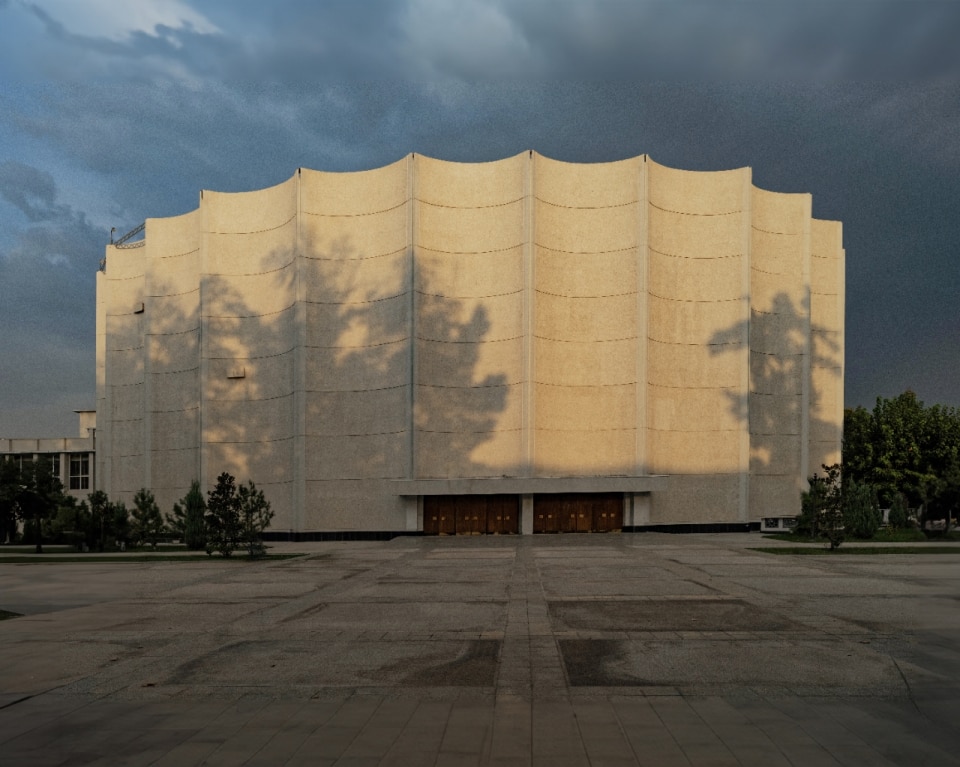
Tashkent is the invisible point of origin of all this. For a European audience, Uzbekistan still evokes above all the Silk Road, Samarkand, turquoise domes and a certain archaeological orientalism. Yet the cultural project built by Acdf seems to want to shift the focus elsewhere: towards Soviet modernism, climatic infrastructures, brutalist scientific centres and an entire architectural season that, in many other post-Soviet countries, has either been erased or left to decay.
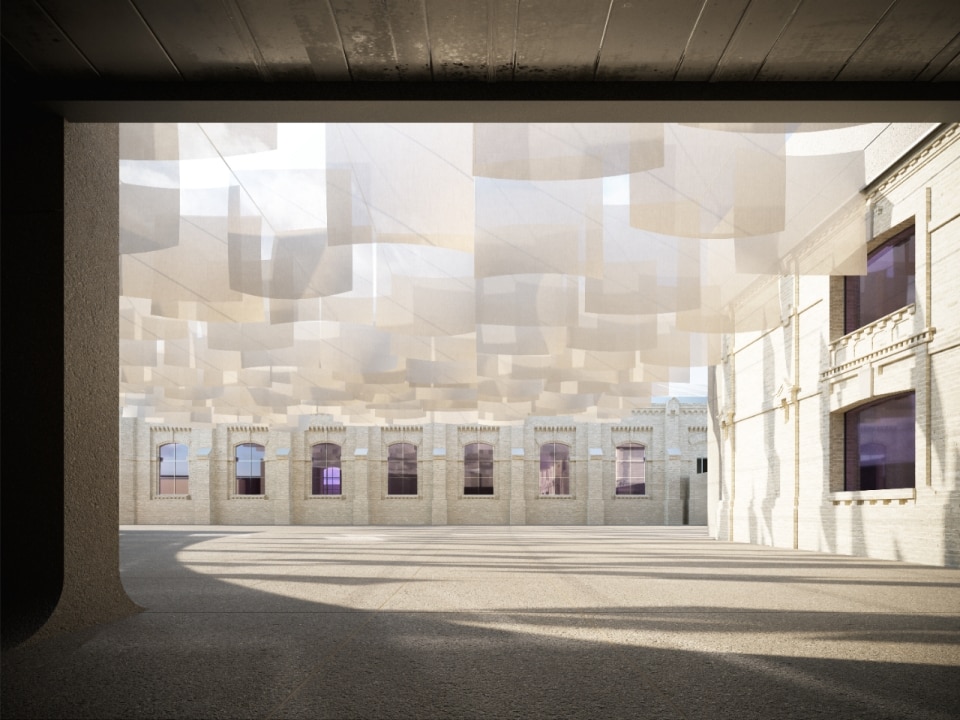
“Uzbekistan has a huge legacy in architecture,” says Umerova. And for a magazine like Domus, it is difficult not to immediately perceive a certain cultural proximity with this imaginary made of large modernist infrastructures, urbanism, climatic research, Soviet monumentality and new global icons. Tashkent Modernism XX/XXI itself was born from a loss: the demolition of the House of Cinema in 2017. From that moment emerged a vast project of research, archiving, preservation and reinterpretation that is slowly transforming Tashkent into one of the most interesting cases of post-Soviet architectural rediscovery.
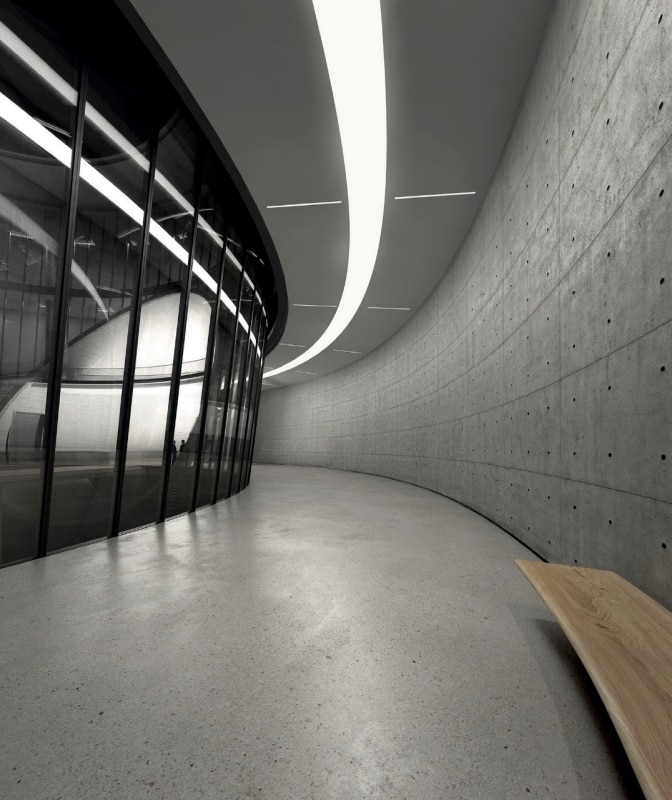
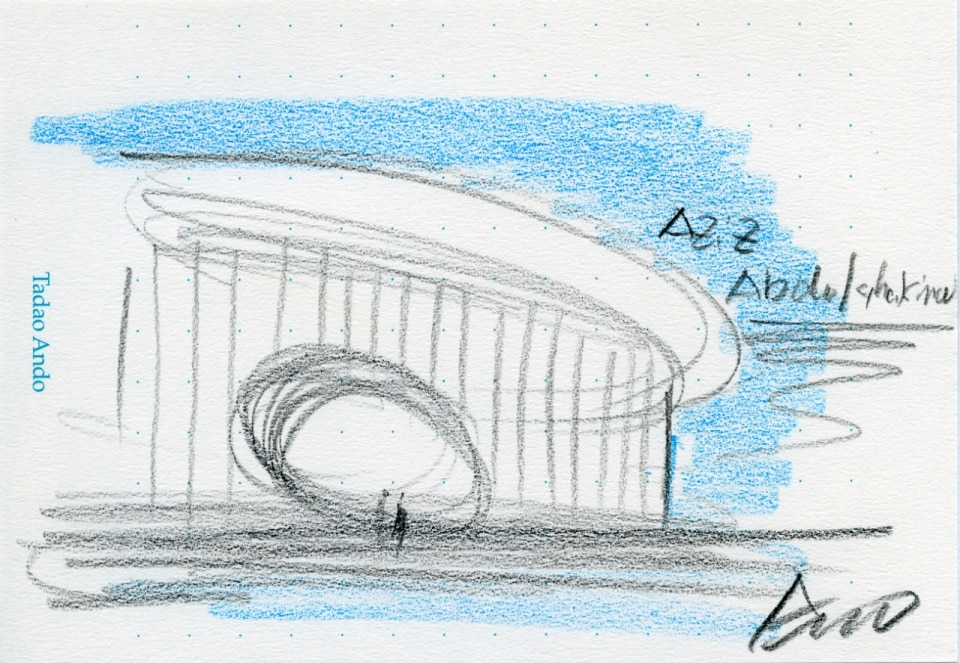
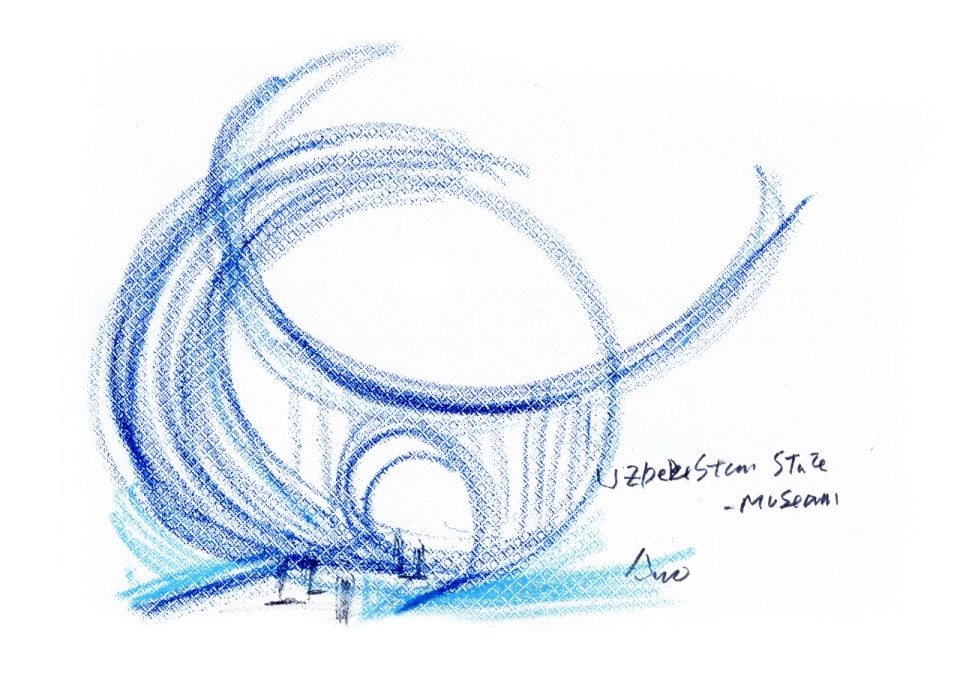
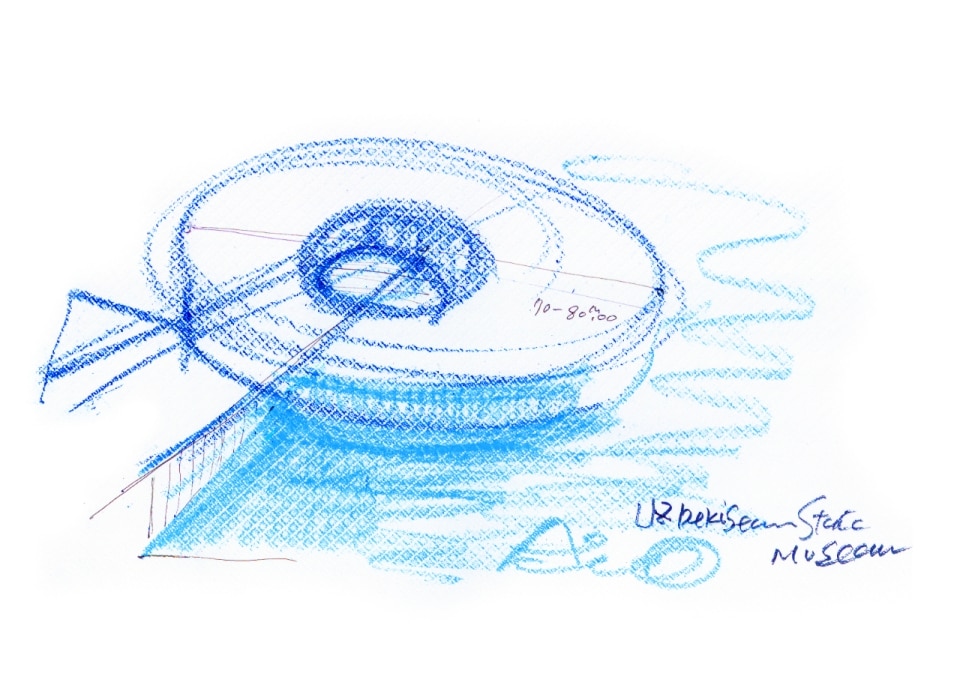
Within this trajectory, the future national museum designed by Tadao Ando almost appears as an inevitable climax. A huge project — more than 40,000 square metres, destined to become the largest museum in Central Asia — seeking to place Uzbekistan inside a new global cultural geography without erasing its previous stratifications. Not a small “quality museum”, but a monumental landmark intended to redefine the cultural role of the entire region.
“Not only geography, but histories, traces, the Silk Road,” says Umerova while speaking about the connections Uzbekistan is trying to build between Central Asia, Latin America, the Middle East and the Global South. And it is interesting how her language constantly returns to connections, networks and ecosystems. Never to nostalgia.
The Aral Sea as narrative infrastructure
If Tashkent represents the urban identity of this new Uzbek narrative — with its modernist architecture and its projection toward a future built through large cultural infrastructures — another territory this year seems to become the emotional and theoretical heart of the entire project: the Aral Sea. One of the most ecologically fragile areas on the planet. The wounded heart of a country that chose to transform its own vulnerability into a cultural platform.
At Design Week the narrative unfolded through materials, craft, installations and spatial storytelling; at the Art Biennale through “The Aural Sea”, the national pavilion built through myth, ecology and speculative futures. Two different manifestations of the same narrative. And above all, a conscious choice. “We decided this year would be dedicated to the Aral.”
It is probably here that the Uzbek project becomes truly interesting. Because instead of hiding a territorial wound, it places it at the centre of its contemporary narrative infrastructure. “For us it was important not to continue to talk about the catastrophe,” says Umerova. “Enough had enough. We cannot always focus on the bad things. We have to give solutions.”
When we established the foundation in 2017, it became the home for all these initiatives: youth programs, cultural infrastructure, external dialogue, cultural diplomacy. So many levels.
Gayane Umerova
And so the Aral Sea stops being merely a symbol of ecological collapse and becomes a cultural platform: Aral School, Aral Culture Summit, material research, biodiversity, new energies, education, contemporary art. “We are building not isolated programmes, but an ecosystem where creativity can thrive in the Aral region and across Uzbekistan.”
Even the Arsenale pavilion itself emerges from this infrastructural logic: not entrusted to an international superstar curator, but developed through the Bukhara Biennial Curatorial School, a curatorial programme created by Acdf to train a new generation of curators between Uzbekistan and Asia. In other words, the curatorial process itself becomes part of the national project.
Like every large-scale cultural operation supported by a state, the Uzbek one inevitably moves within an ambiguous territory between diplomacy, representation and actual production. But dismissing it as simple artwashing would mean ignoring the quantity of infrastructures, research, commissions and public programmes that Acdf is effectively producing. For Umerova, the horizon seems extremely clear. And completely open. “The question is what this region might yet become”, she says shortly before saying goodbye, while the noise of the Biennale preopening continues to flow through Palazzo Franchetti.
Meanwhile, the Biennale has only just begun.
Opening image: Garden Pavilion 'Deconstructed Yurt' by Kulapat Yantrasast and Why Architecture, Palazzo Citterio. When Apricots Blossom, Milan Design Week 2026. Courtesy of Acdf.
.