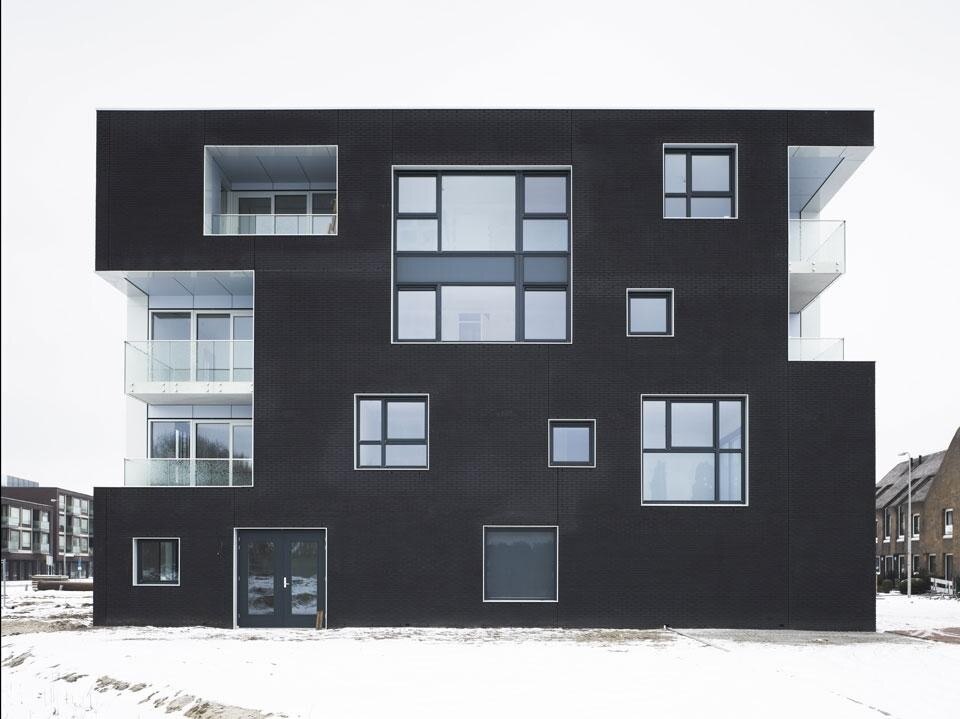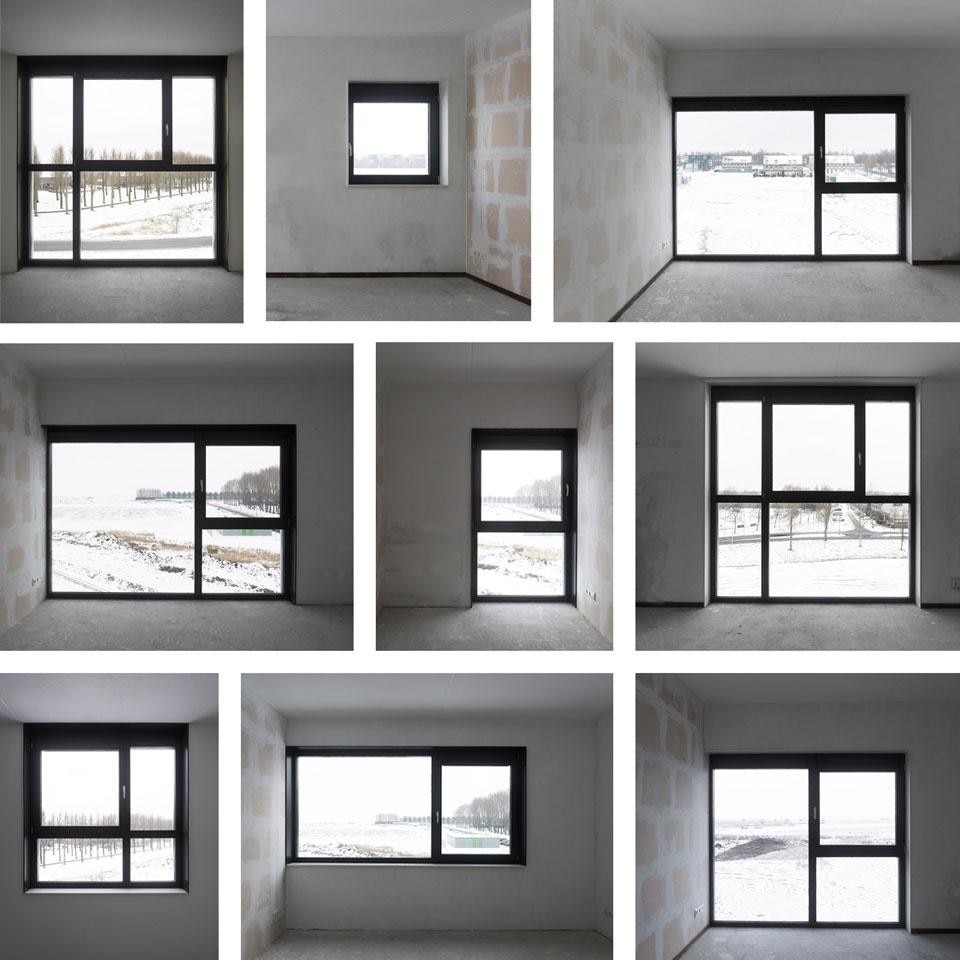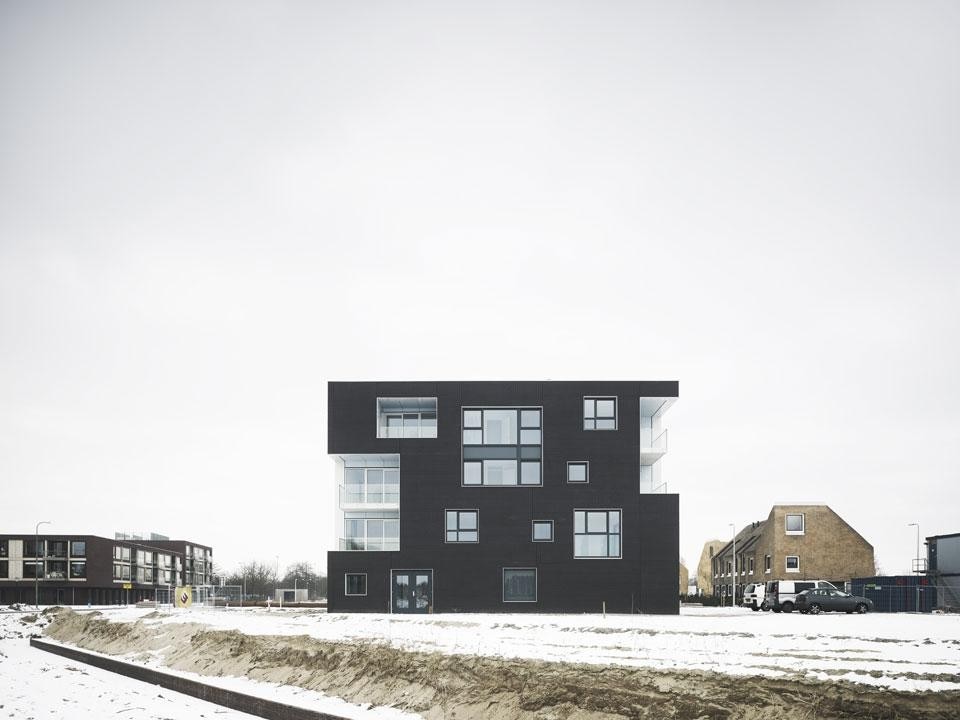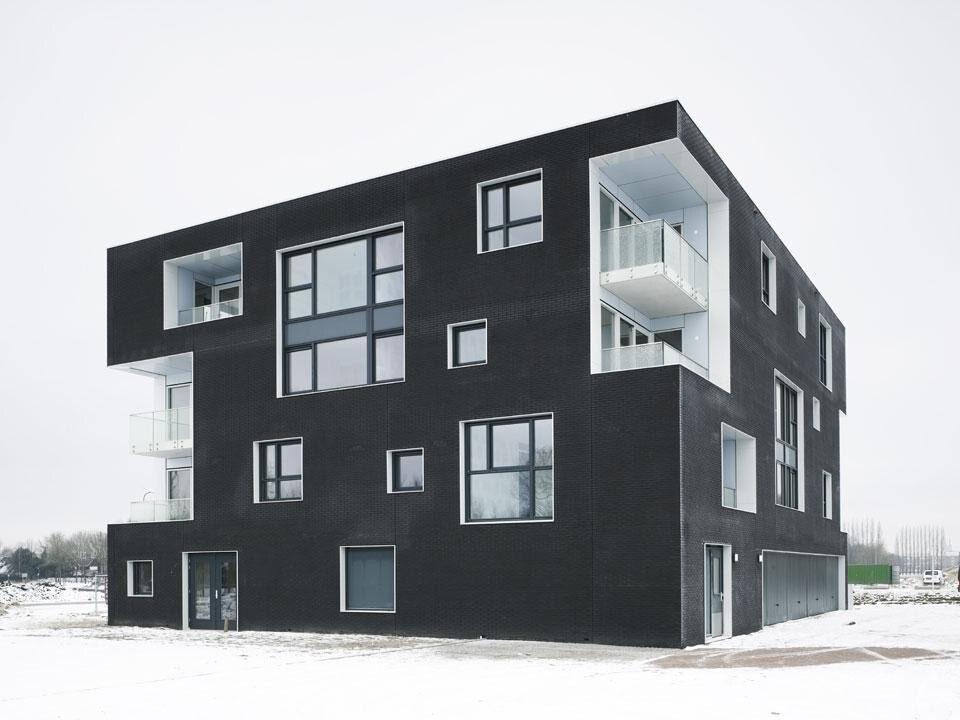
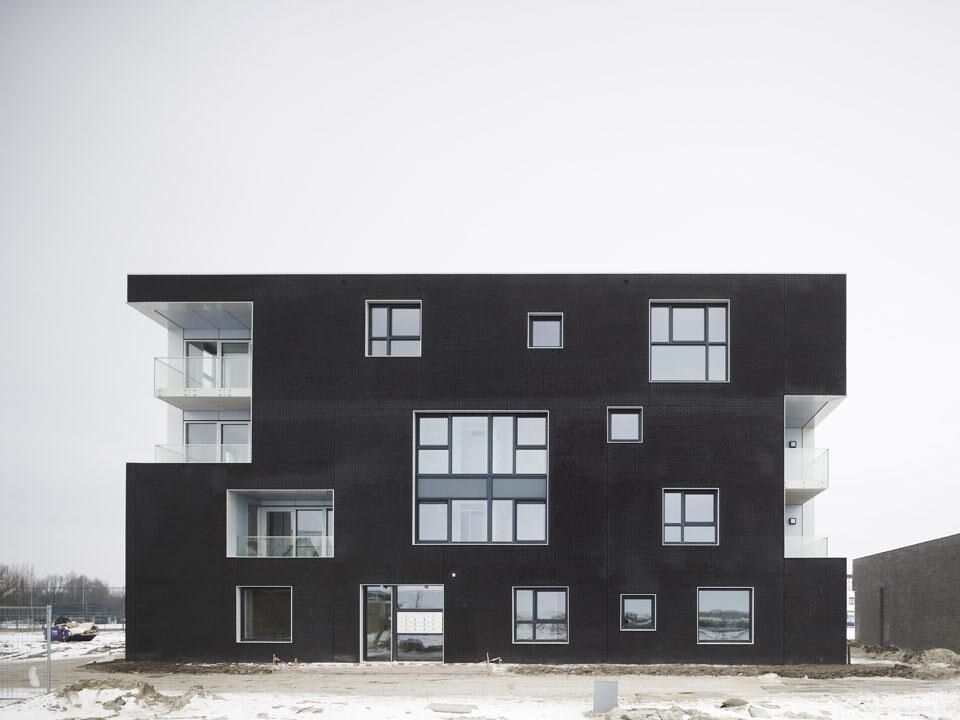
The twin apartment blocks feature an outer black skin perforated with windows and voids that wrap the inner part of the building. The the open air spaces are coloured in white. The chromatic contrast between the two parts emphasizes the conceptual autonomy of the skin of the building. This architectural device visually integrates the building into the scale of its urban context, and from the inside, diversely frames the exterior views creating differentiation among the apartments.
Extra-large windows created by the integration of four different windows within a single frame are combined with small, medium and large windows. Large voids located on the corners of the buildings combine two balconies placed on top of each other to create a single visual element.
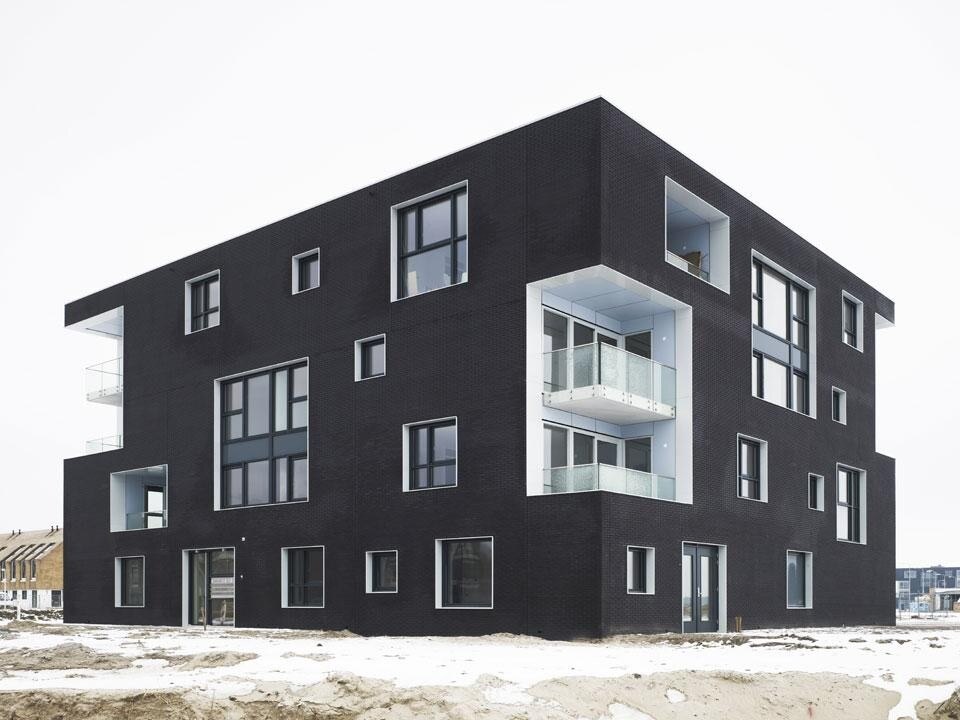
The different size of windows and the variety of their relative positions inside the rooms produce a large diversity of interior spaces, making it impossible to find two identical apartments within the building.
Each apartment contains a balcony, which works as an extension of the living room. The balconies are located in between the outer skin of the building and its inner space becoming an "in between space" that relates the interior of the apartments to the green areas.
Location: Beekbergen, The Netherlands
Programme: 26 dwellings: 18 apartments, 8 row houses
Project: Casanova + Hernandez Architects
Main Architects: Helena Casanova, Jesus Hernandez
Main responsible for development: Thomas Been
Design team: Robert Taapken, Rutger Huiberts, Marta Marotta, Isabel Illanes Yerón, Robbert van de Straat, Pablo Viña
Site area: 2,000 square metres
Built-up area: 4,300 square metres
Cost of Construction: 110,000 € per housing, excluding installation costs
Year of completion: 2011