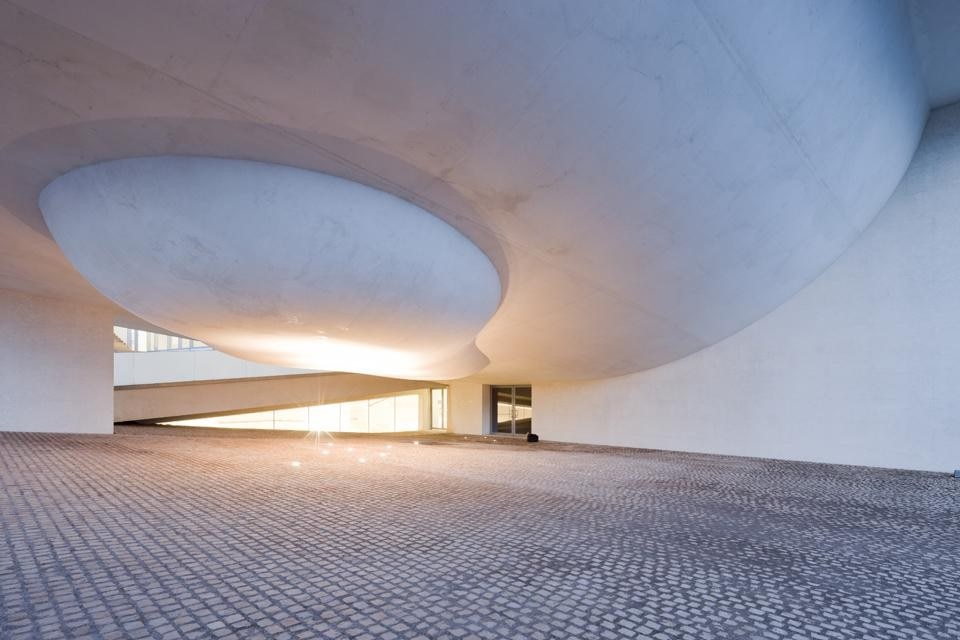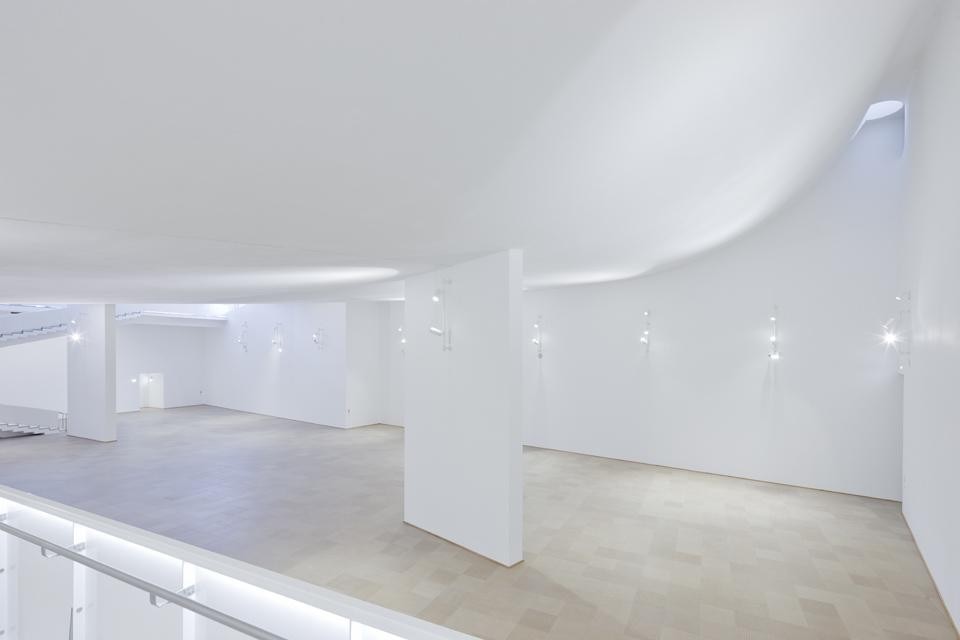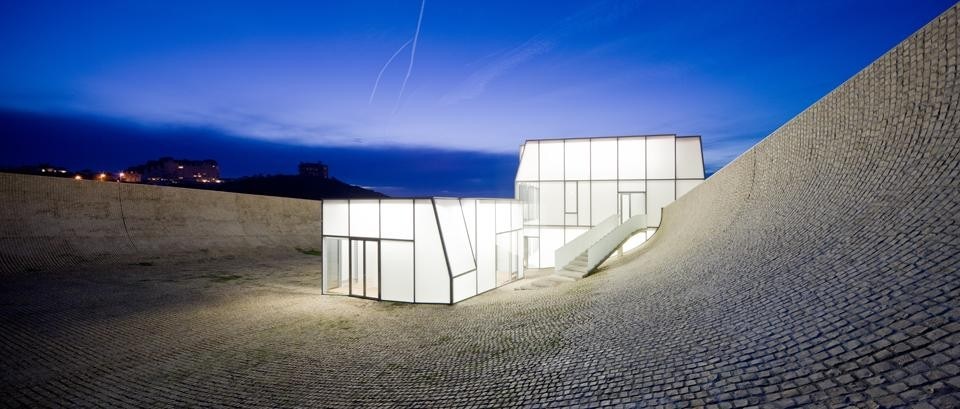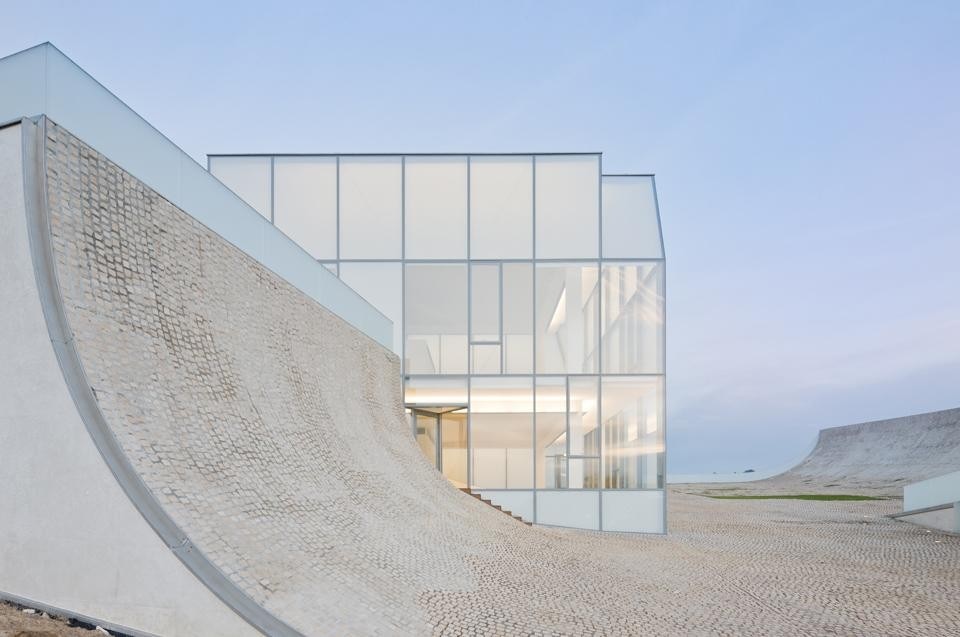
The building form derives from the spatial concept "under the sky"/"under the sea." A concave "under the sky" shape forms the character of the main exterior space, the "Place de l'Océan." The convex structural ceiling forms the "under the sea" exhibition spaces. The building's spatial qualities are experienced already at the entrance where the lobby and ramps give a broad aerial view of the exhibition areas, as they pass along the dynamic curved surface that is animated by projected images.
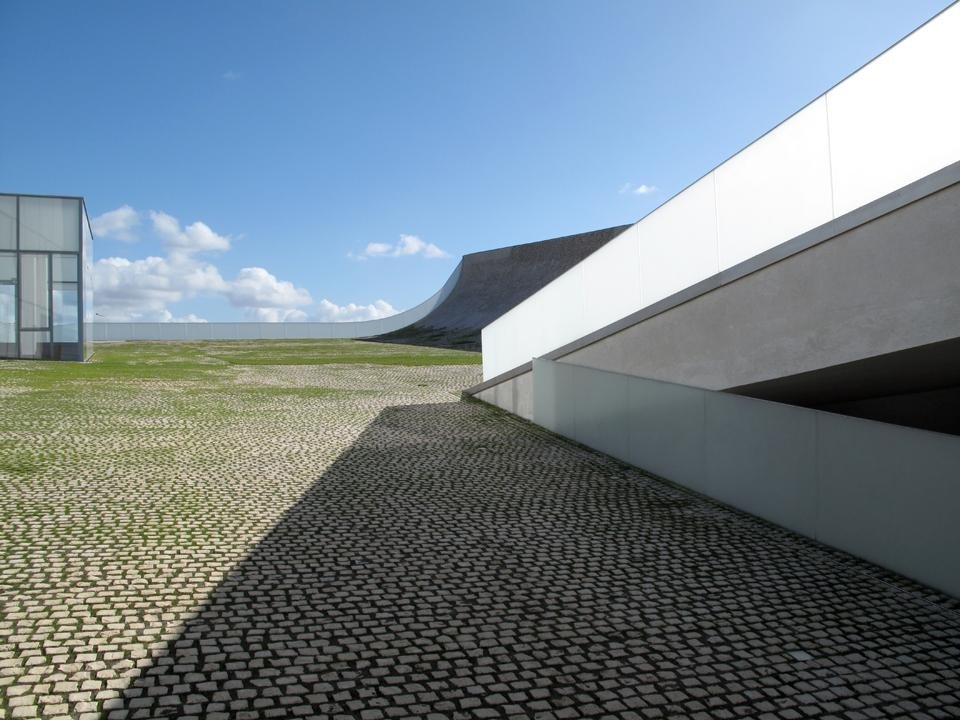
The gardens of the Cité de l'Océan et du Surf aim at a fusion of landscape and architecture. The plaza is paved with a progressive variation of Portuguese cobblestones, which allows for the growth of grass and natural vegetation, and on axis with the ocean towards the west, the concave form of the building plaza is extended through the site. With slightly cupped edges, the landscape, a mix of field and local vegetation, is a continuation of the building and is integrated in the museum facilities, offering a space to host festivals and daily events.
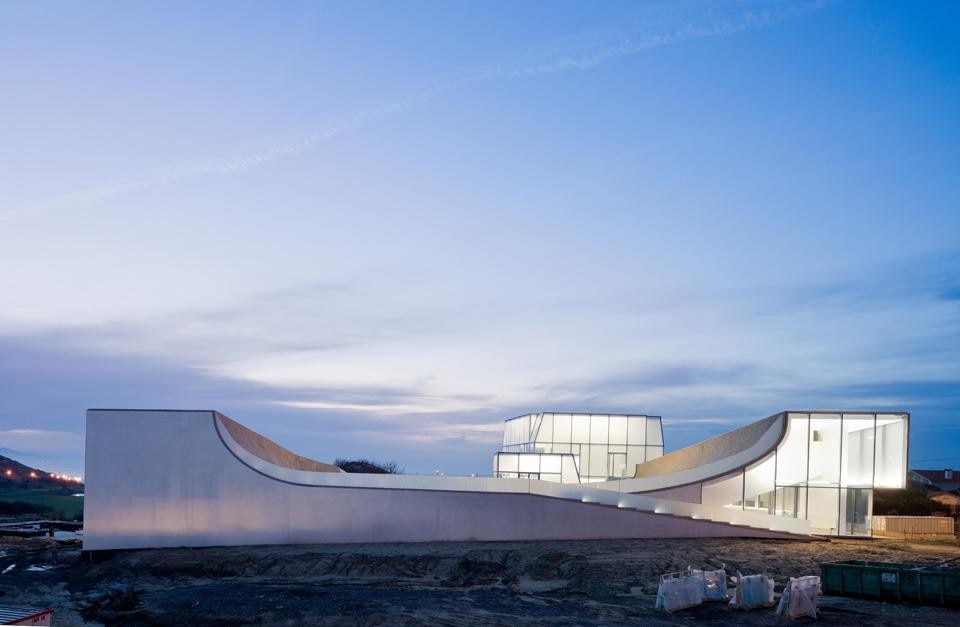
At the building's southwest corner, there is a skate pool dedicated to the surfers' hangout on the plaza level and an open porch underneath, which connects to the auditorium and exhibition spaces inside the museum. This covered area provides a sheltered space for outdoor interaction, meetings and events.
2005 — 2011
Program: exhibition area, auditorium, restaurant, cafeteria and offices
project type: competition (first prize)
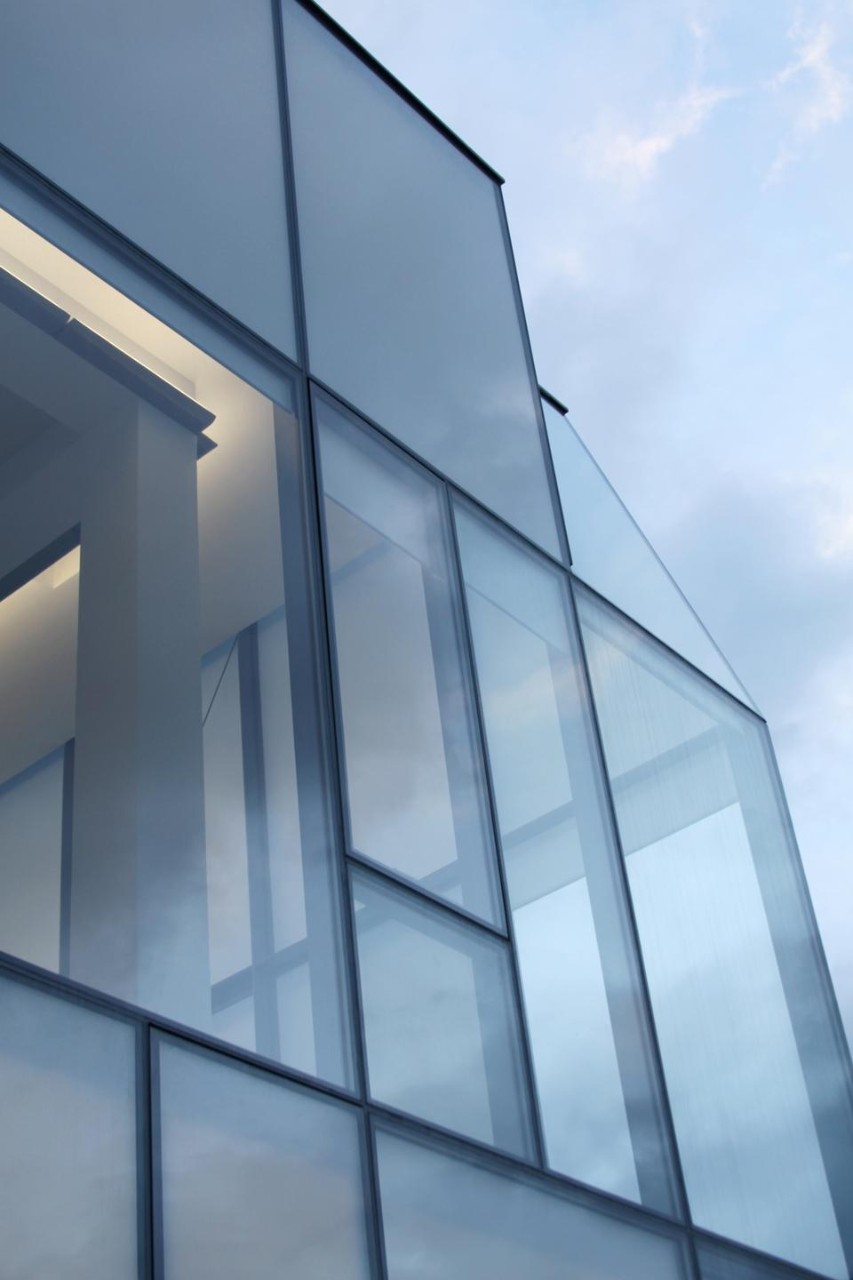
Major materials: concrete structure, white concrete facades, steel mullion curtain wall, stone, wood, terrazzo, steel guardrails, acoustical plaster
Building area (square): 50,859 sf / 4,725 sm
Site area: 37,6740 f / 35,000 m
Landscape area (square): 349,830 sf / 32,500 sm
Net floor area (square): 40,903 sf / 3,800 sm