Mystics or Rationalists?

An exhibition of conceptual works "invites the viewer to make the leap between an idea and an object".

Mystics or Rationalists? is a group show at Edinburgh's Ingleby Gallery, organised as part of the series of festivals that take over the city each August. Spread over the Gallery's two floors is recent work by nine artists, including Susan Hiller, Cornelia Parker, Jeremy Millar and Simon Starling, brought together by a forty-year old sentence from the pioneering Conceptual artist Sol LeWitt. According to the gallery, the chosen artists exemplify the continuing currency of Conceptualism; each makes work that "invites the viewer to make the leap between an idea and an object." Yet as the reference to LeWitt suggests, they also say something about the world beyond that which we can rationally know and see, be it a belief in or dismantling of this concept.

On the gallery's upper floor, two of the artists explore this shared interest in concepts such as magic, perception and ritual through explicit reference to other well-known early proponents of Conceptual art. Using photographs from the internet, Hiller's 2008 Homage to Yves Klein (Levitations) reworks Klein's 1960 Leap into the Void in which he appears to jump from a second-floor window. Running along the centre of the space are Millar's Untitled (Mirror Cubes) from 2008, based on Robert Morris' 1965 Mirror Cubes. Purifying rock salt has been heaped around the four cubes, each 'protecting' smaller, unseen, objects within.
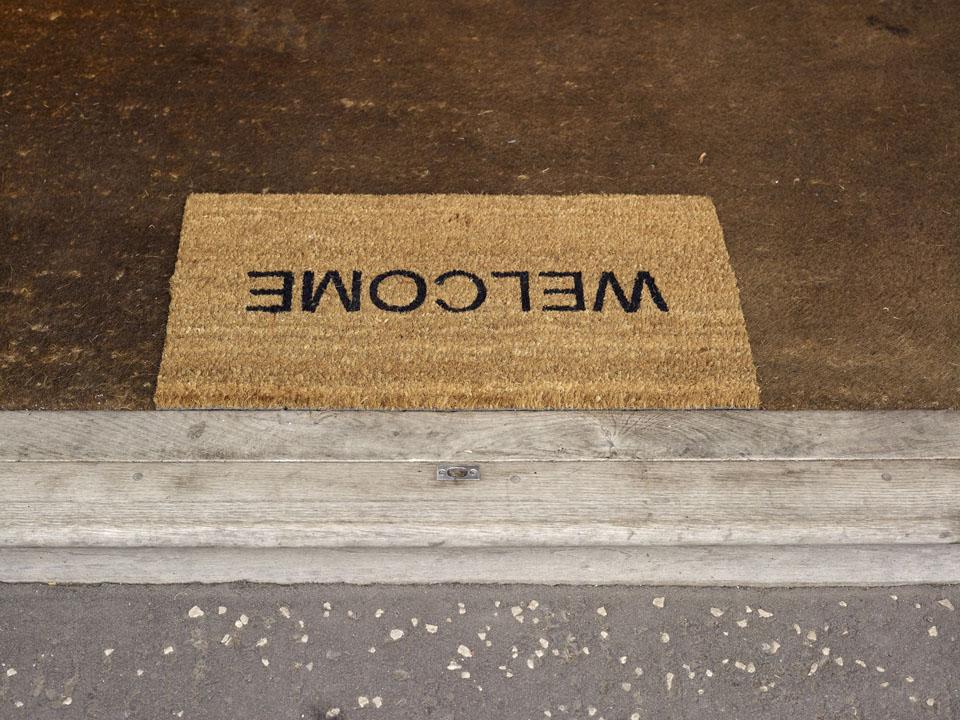
Above: Floyer, <i>Welcome,</i> 2011.<br />Above: <i>Mystics or Rationalists?</i>, installation view at the Ingleby Gallery.
Above: Floyer, Welcome, 2011.
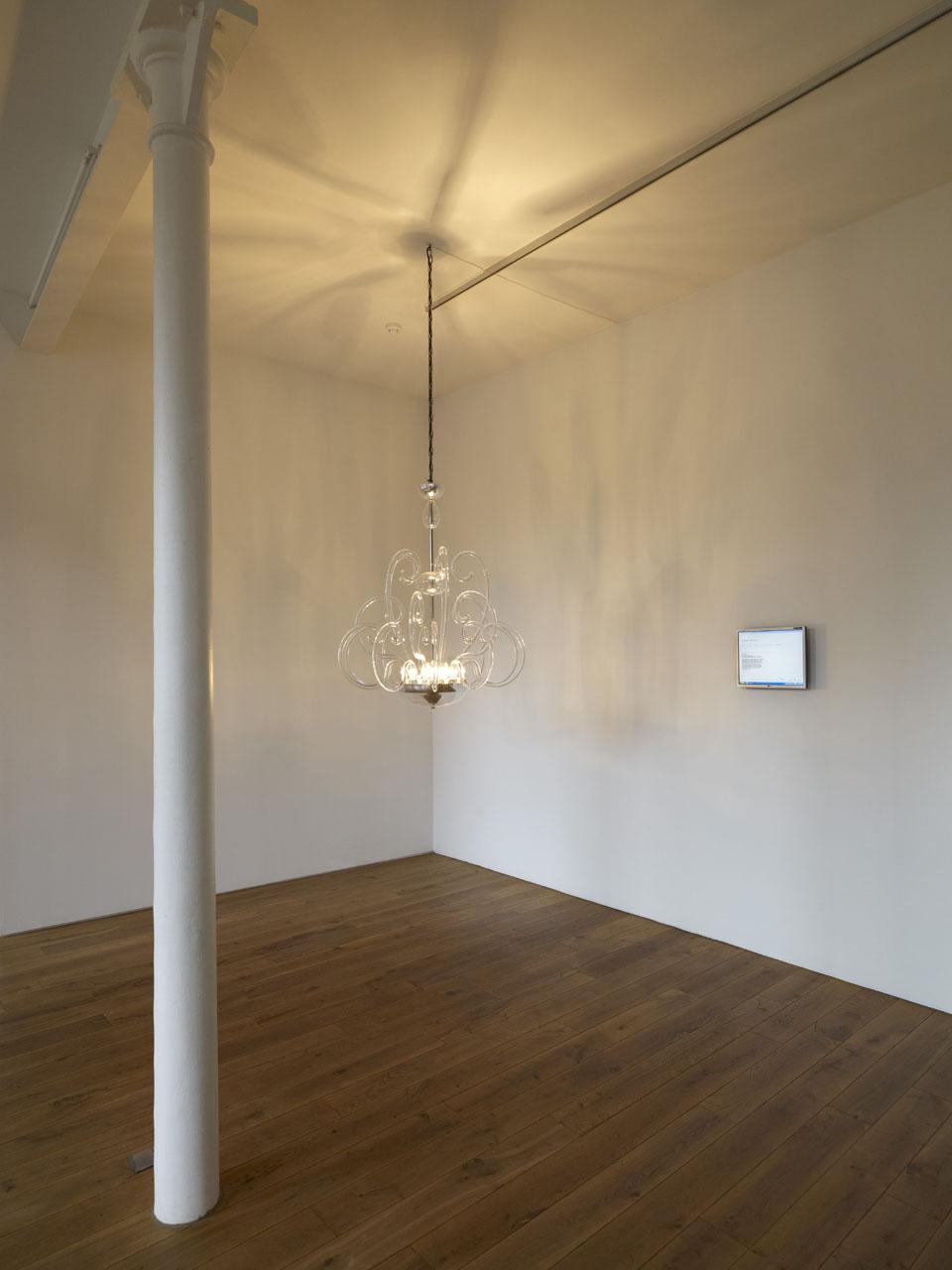
Above: Mystics or Rationalists?, installation view at the Ingleby Gallery.
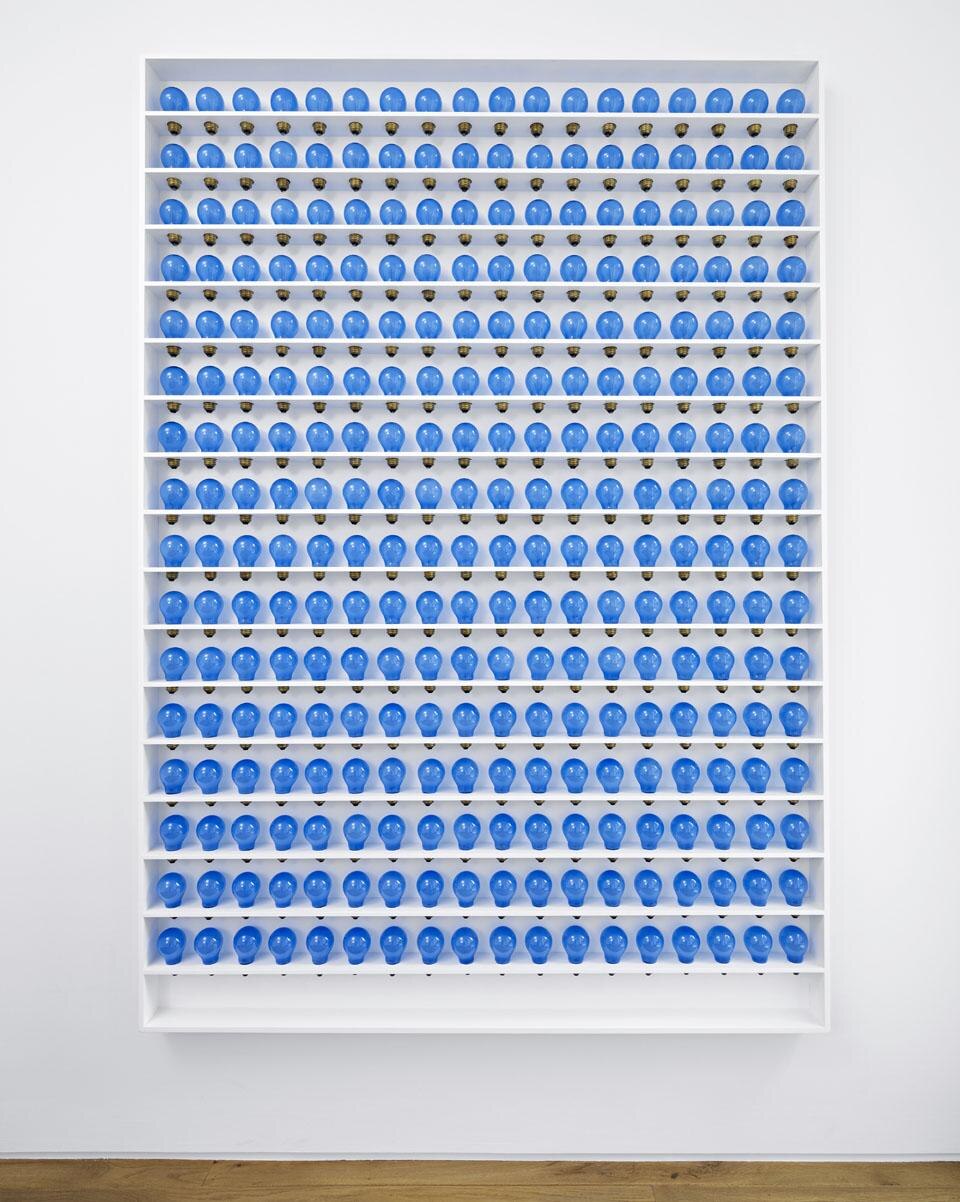
The reference to fakery and the talismanic in Hiller and Morris respectively chimes with LeWitt's preference of "mystics", but this exhibition shows that it is art that combines the two that is most compelling. This is the case with Katie Paterson's Light Bulb to Simulate Moonlight, developed with the lighting manufacturer Osram in 2008. While the installation of one lit bulb in a small, darkened room was underwhelming, the rack of 288 unlit bulbs emitted a powerful existentialist message. The total number corresponds to the average human life span: once the last one goes out, life is extinguished with it.
Susan Hiller, <i>Homage to Yves Klein - Levitation.</i>
Susan Hiller, Homage to Yves Klein - Levitation.
Another pair of artists demonstrated the potential of combining poetry and science by their turn to alchemy. Made this year, Susan Collis' You Again exemplifies her strategy of "reverse alchemy": a closer look at the haphazard assemblage of scraps of wood reveals them to be precious hardwoods and veneers, held together with platinum nails and gold and silver screws, all painstakingly crafted to look worthless.
As the reference to LeWitt suggests, the chosen artists also say something about the world beyond that which we can rationally know and see, be it a belief in or dismantling of this concept.
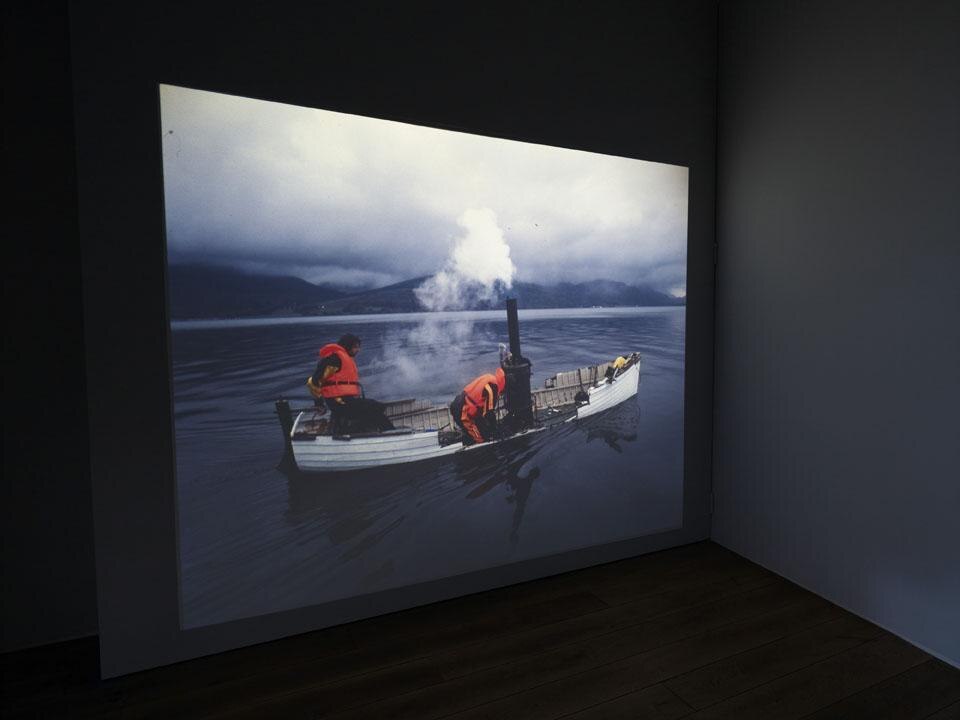
Simon Starling, <i>Autoxylopyrocycloboros,</i> 2006.
Simon Starling, Autoxylopyrocycloboros, 2006.
In a similar vein was Starling's Autoxylopyrocycloboros from 2006, based on the mythical symbol of a dragon or serpent eating its own tail. A slide show depicts the travails of a steam-powered boat on a Scottish loch that Starling proceeds to saw up, feeding each piece into the boat's boiler in a process of self-destruction captured with each click of the carousel.
Katie Paterson, <i>Light bulbs to Simulate Moonlight,</i> 2011, installed at Ingleby Gallery.
Katie Paterson, Light bulbs to Simulate Moonlight, 2011, installed at Ingleby Gallery.
Collis and Starling also exemplify one of the unspoken themes that emerge to unite the exhibits. From Parker's "drawings" made last year from bullets from a Magnum 44, to Iran do Espirito Santo's marble translations of vintage globes and light fittings from 2011, these artists' work demonstrates a shared emphasis on materiality. This is perhaps surprising given the show's debt to an artist bent on dematerialization in his own practice. What this engaging and highly contemporary exhibition therefore ultimately suggests is that while LeWitt's sentence is still valid for interpreting conceptual art, the binary opposites it implies is not. Today's artists are both mystics and rationalists, for whom the material qualities of their artwork are as important as the ideas behind them.
Catharine Rossi
Wyn Evans, <i>Scripts for the Pageant</i> installed at Ingleby Gallery.
Wyn Evans, Scripts for the Pageant installed at Ingleby Gallery.
Mystics or Rationalists?
On view through until 22 October 2011
Ingleby Gallery
15 Calton Road, Edinburgh

Latest on Art

Latest on Domus

China Germany India Mexico, Central America and Caribbean Sri Lanka Korea icon-camera close icon-comments icon-down-sm icon-download icon-facebook icon-heart icon-heart icon-next-sm icon-next icon-pinterest icon-play icon-plus icon-prev-sm icon-prev Search icon-twitter icon-views icon-instagram